Photo source: Uber, image published in the statement on the launch of Wayve rides in London.
Uber and Wayve launch supervised autonomous rides in London with the Ford Mustang Mach-E
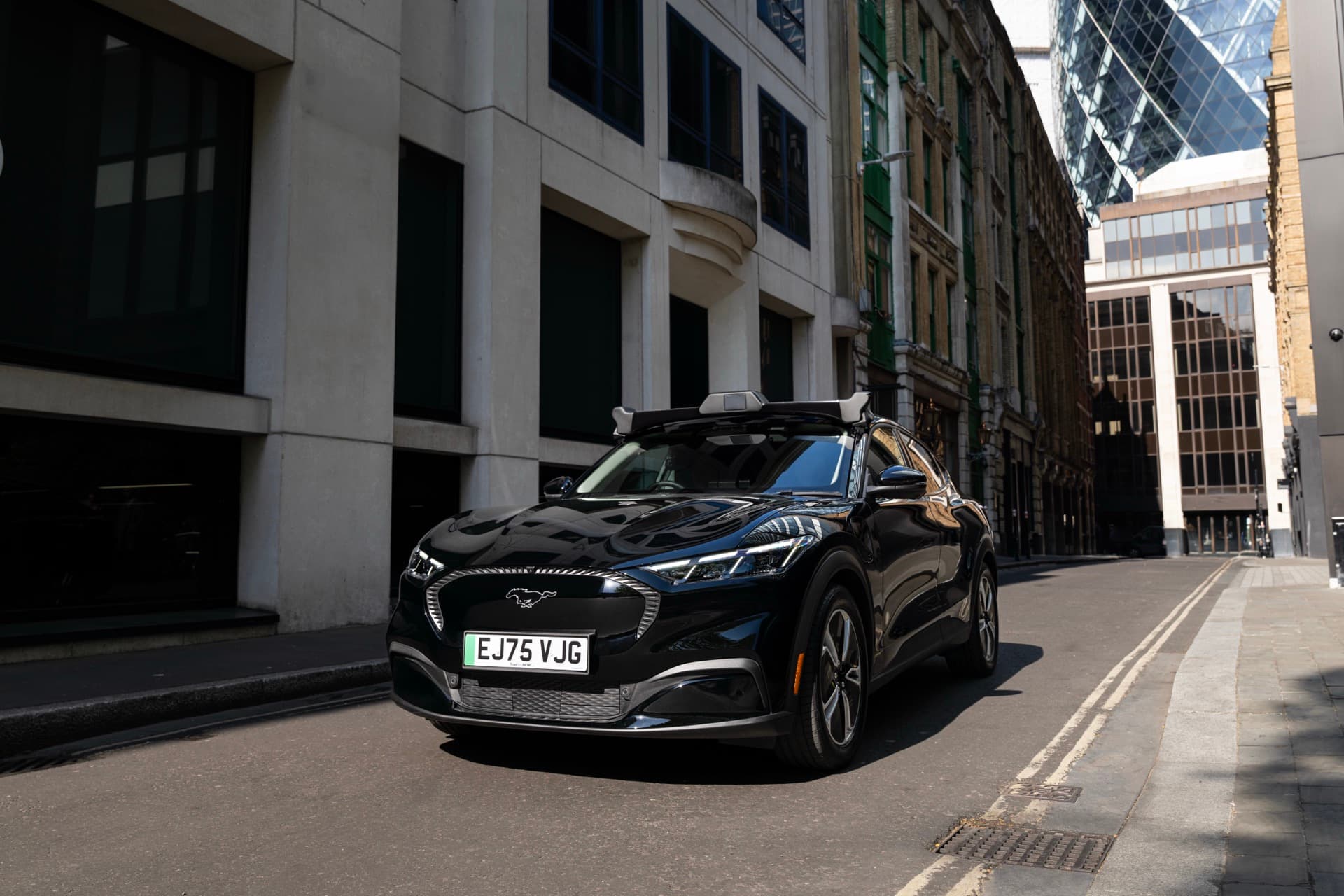
Uber and British company Wayve have started, in London, the first autonomous rides available to the public in the United Kingdom. The service is integrated into the Uber app and uses electric Ford Mustang Mach-E SUVs equipped with the Wayve AI Driver system.
The launch does not mean passengers are already travelling without a driver. In the initial phase, each car has on board a private-hire driver licensed by Transport for London (TfL), who supervises the ride and can intervene when needed.
How Wayve rides can be booked
A user in London who requests an UberX, Uber Electric or Uber Comfort ride can be matched with a Wayve vehicle at no extra cost. The passenger can accept that option or choose a driver-operated car before the vehicle arrives at the pickup point.
At launch, the service can operate in London, except airport zones. Doors unlock and the ride starts from the app, and cabin screens show the planned route and are available in 64 languages.
Uber says more than 140,000 Londoners have already signed up for a higher chance of being matched with an autonomous car. The company has not disclosed the exact size of the initial fleet, saying only that it will be small and will grow gradually.
What makes the Wayve system different
Wayve says its system does not rely on detailed HD maps and extensive sets of hand-written rules. AI Driver is trained from experience accumulated in traffic, and the company says the technology has been developed and trained on London roads since 2018.
That approach can help adapt the system to different cities, but the London stage remains a supervised service. For the user, the important difference is simple: the vehicle drives automatically, but operational responsibility has not been transferred fully from human to software.
Why it matters for the European market
London is one of the first European cities where autonomous-driving technology reaches a public ride-hailing service, in complex urban traffic and with ordinary passengers. The launch offers a real commercial test of a model in which autonomous vehicles and drivers work in parallel, not a direct shift to fully driverless taxis.
The Uber-Wayve partnership targets 12 markets internationally, and the next announced step is introducing Nissan Leaf cars equipped with Wayve technology in Tokyo, later in 2026. For Europe, the move from supervised rides to services without an operator on board will depend on operating results, authorisations and local safety requirements.