
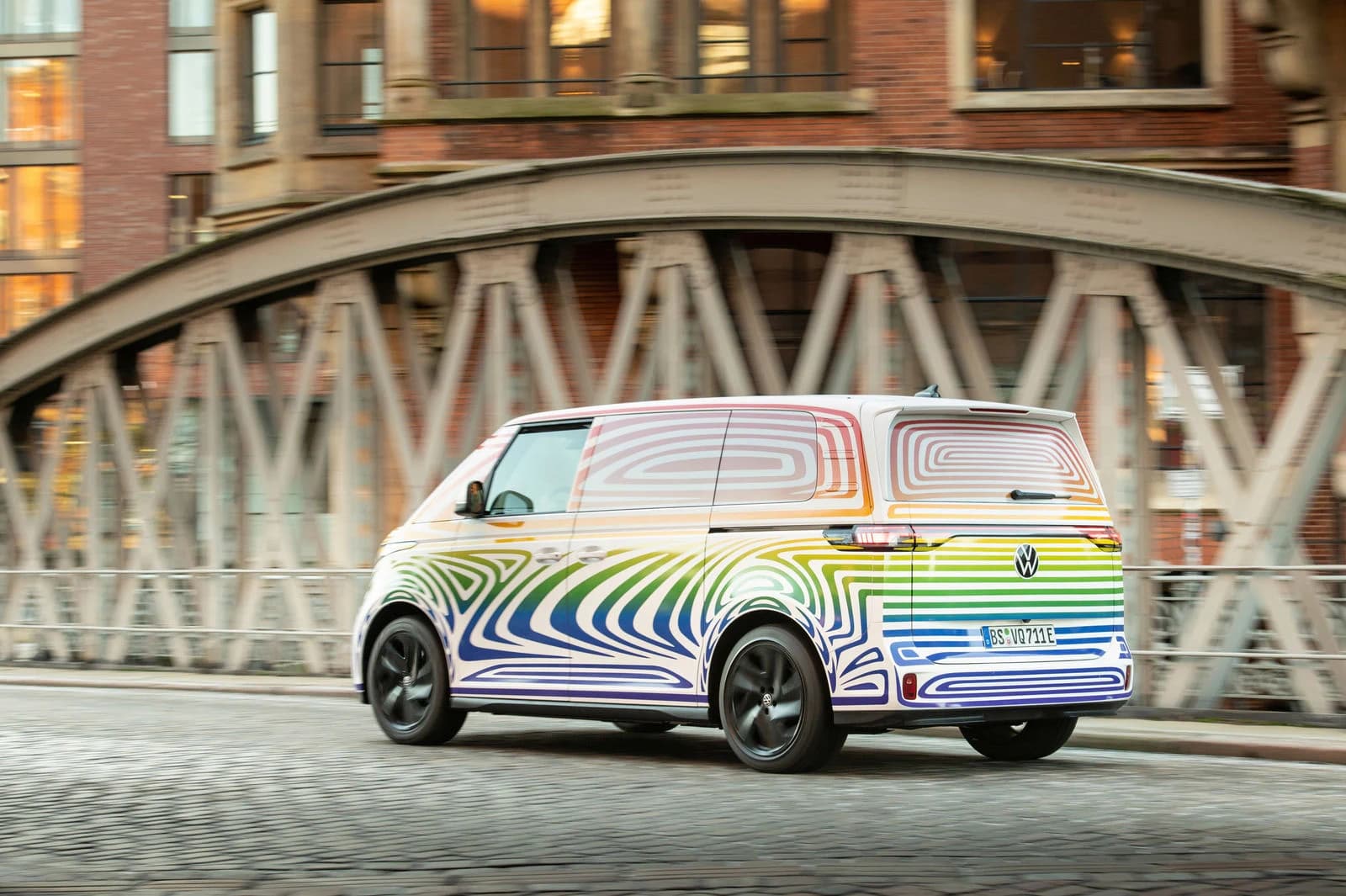
Volkswagen is developing a second-generation ID. Buzz, and the new electric van will move to the company’s SSP architecture. Volkswagen brand CEO Thomas Schäfer confirmed the project in an interview with Auto Express at the 2026 Paris Motor Show. He said work on the successor is under way, while the existing ID. Buzz will receive updates before the completely new vehicle arrives.
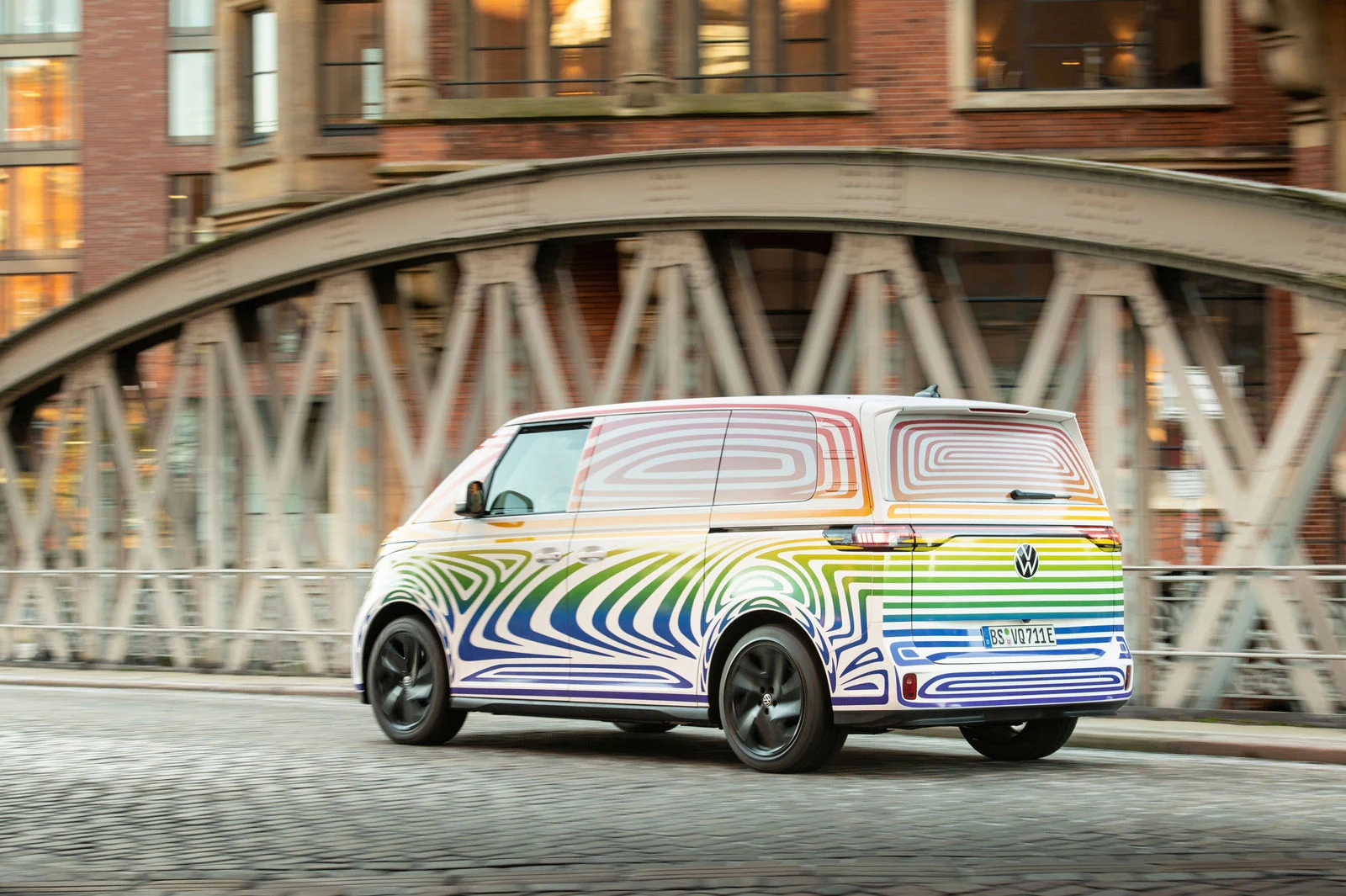
Official Volkswagen Newsroom image. It shows the current production ID. Buzz; Volkswagen has not yet released official images of the second generation.
What has been confirmed
Schäfer did not announce a launch date, a final price or a technical specification sheet for the next van. The central confirmation is the platform. The second-generation ID. Buzz will use the Scalable Systems Platform, or SSP. Volkswagen Group has described SSP as a next-generation mechatronics architecture for electric vehicles, intended to replace several existing platforms over time and to reduce technical complexity across the group.
Volkswagen Group’s New Auto strategy said production of pure-electric vehicles on SSP was planned from 2026. That statement describes the wider group architecture and does not set a launch date for the ID. Buzz successor. Auto Express reports that the first Volkswagen model on SSP is expected to be a flagship SUV and that the new Buzz will follow later. The suspected name of that SUV and the exact Buzz timetable have not been confirmed in the official materials reviewed for this article.
Why the platform matters
The current ID. Buzz uses MEB, Volkswagen Group’s modular electric-drive matrix. Volkswagen Newsroom describes the existing van as an electric passenger and cargo vehicle built around efficient use of space, a raised seating position and a flat battery installation in the floor. It has been offered in different body lengths and configurations depending on market and model year.
SSP is intended to bring several types of electric vehicle onto a more unified technical base. Volkswagen Group has associated it with common components, lower complexity and the ability to develop batteries, electronics and software more consistently across brands. The company has also presented SSP as a basis for future improvements in range, charging speed and connected driving. These are platform objectives, not confirmed specifications for the next ID. Buzz.
For customers, the change could affect three practical areas. The first is efficiency. A newer platform can integrate more recent motors and batteries, but real-world consumption will still depend on mass, aerodynamics, tyres, temperature, payload and driving style. The second is charging. SSP is meant to support faster charging, yet Volkswagen has not announced the maximum charging power or the charging curve for the next Buzz. The third is software. A new electrical architecture could improve processing power and update capability, but no functions have been confirmed.
The price problem
Schäfer acknowledged that the current ID. Buzz sits on the wrong cost base for high-volume success. Auto Express contextualised the British-market price of the existing model at close to £60,000. That figure is not a Romanian price and should not be converted into a forecast for the new model. It illustrates the problem Volkswagen says it wants to address: a distinctive electric van needs to reach more customers without losing its practical and design identity.
The SSP architecture could lower costs if the same technical foundation is used across a large number of Volkswagen Group vehicles. Schäfer also suggested that more affordable lithium-iron-phosphate batteries could play a role in reducing cost. That is a possible strategy, not confirmation that the new ID. Buzz will use LFP cells. Volkswagen has not announced the battery chemistry, usable capacity, range, charging power or price of the successor.
A lower price would not automatically make the van inexpensive. The ID. Buzz is a large, upright vehicle with a spacious cabin, sliding-door packaging and a design that differs from a compact electric SUV. Battery size, seat count, motor output, traction, equipment and production location will all influence the final figure. European buyers will need a local price list, a battery warranty and service details before they can compare the successor with electric vans, MPVs and large SUVs.
The design question
The second-generation exterior has not been shown. Volkswagen executives have nevertheless signalled that the ID. Buzz’s recognisable character will remain relevant. The current model draws on the visual ideas of the historic T1 Microbus, but Volkswagen design chief Andreas Mindt has also warned against repeating a retro formula indefinitely. He told Auto Express that a new van needs its own character and that the design team wants to make future vans interesting rather than anonymous.
That creates a clear design challenge. If the next Buzz looks too similar to the current model, it may appear to be a facelift rather than a new generation. If it moves too far away from the current proportions, it could lose the reason many buyers choose it over a conventional electric van. Volkswagen will need to retain usable interior volume, a distinctive front and family-friendly access while making the design feel new.
What happens before the successor
The existing ID. Buzz is not being left unchanged. Auto Express reports that updates are planned for the four-year-old model, including improvements to technology. The publication also points to the current van’s touch-sensitive temperature controls as an area where newer Volkswagen interiors have moved towards better functionality. Volkswagen Newsroom already lists passenger and Cargo versions, long-wheelbase derivatives and different electric specifications across markets.
This transition matters to anyone considering an ID. Buzz today. An updated MEB vehicle will not automatically receive the SSP platform, an LFP battery or the successor’s software architecture. Current inventory, model-year equipment and local pricing must be checked with Volkswagen Commercial Vehicles. A buyer who needs a van now has a different decision from someone who can wait for an unpriced future model.
What is still unknown
Volkswagen has not confirmed the second-generation vehicle’s launch date, factory, dimensions, seating layout, battery capacity, WLTP range, charging power, motors, drivetrain or price. Romanian availability is also unconfirmed. Information about the first SSP model or the possible use of LFP cells cannot be presented as a specification for the new Buzz until Volkswagen publishes technical data.
The announcement does establish the direction. Volkswagen is not abandoning the ID. Buzz; it is preparing to move the nameplate to a newer electric architecture and to tackle the current model’s cost base. Until prototypes or official technical documents appear, any claimed range, power output, price or delivery date for the second generation should be treated as an estimate rather than confirmed product information.


