
World Car Awards has published the provisional candidate list for the 2027 season, and Chinese brands account for a striking share of the 56 vehicles eligible for the main World Car of the Year title. The list is not a shortlist and does not predict the winner. It is the starting point for the jurors’ test drives and two rounds of voting.
A 56-car field with a different balance
The official World Car of the Year page includes familiar names such as BMW, Hyundai, Kia, Mercedes-Benz, Mazda, Renault, Subaru, Volkswagen and Volvo. It also includes a long group of brands associated with Chinese manufacturers: BYD, Changan, Chery, Deepal, Exeed, GAC Aion, Geely, iCAUR, Jetour, Leapmotor, Lepas, Lynk & Co, MG, Omoda, Onvo, XPeng and Zeekr.
The models range from the compact Leapmotor T03 and Geely EX2 to larger vehicles such as the BYD Ti7, Jetour G700 and Volkswagen Atlas / Teramont Pro. Several entries are electric, while others use plug-in hybrid or combustion powertrains. That mix matters because the main award is not restricted to battery-electric cars. The jury is assessing eligible new or substantially revised vehicles across the market, not a single propulsion type.
Reports describing the list as “more than half Chinese” require a qualification. World Car Awards lists model names, not a nationality field. A count can change depending on whether it includes Chinese-owned international brands, joint ventures, vehicles developed with Chinese partners or cars built in China for a global brand. The defensible conclusion is that Chinese groups and brands occupy a major share of the field, while the official list itself does not publish a separate nationality breakdown.
The eligibility rules are demanding
World Car of the Year candidates must be produced at a volume of at least 10,000 units per year. They must also sit below the luxury-car price level in their primary markets and be on sale in at least two major markets on two continents. World Car Awards names China, Europe, India, Japan, Korea, Latin America and the United States among the relevant markets.
For the 2027 season, the eligibility window runs from January 1, 2026 to March 19, 2027. “On sale” means more than a motor-show appearance or a reservation campaign. The official criteria refer to physical availability for purchase or lease through a dealer network. That requirement is particularly relevant to newer brands that announce overseas expansion before regular deliveries have started.
Each vehicle must be new or substantially revised. Cars that qualify for another vehicle category are automatically eligible for World Car Design of the Year. The design category therefore gives the Chinese entries another route into the final stages, even when the main award discussion focuses on price, range or market reach.
Chinese brands cover the full market
The candidate list does not show Chinese automakers competing in only one narrow niche. BYD Ti7, Jetour G700 and Exeed Exlantix ET address the larger SUV market. GAC Aion UT, Geely EX2, Leapmotor T03 and MG4 EV Urban sit closer to the urban and compact-car space. XPeng, Zeekr, Deepal and Onvo bring electric models into several body styles and price positions.
The corporate map is also more complicated than the badges suggest. MG belongs to SAIC, Omoda, Exeed and Jetour are linked to Chery, while Lynk & Co and Zeekr are part of the wider Geely ecosystem. Onvo was launched by Nio, and Polestar is associated with Geely even though it is presented as an international premium EV brand. These relationships do not change the name of a candidate, but they explain why a badge-by-badge count can understate the industrial weight of Chinese companies in the list.
There are also models that sit in an international or joint-venture context. Buick Electra E7, Chevrolet Captiva EV / PHEV, Nissan Frontier Pro and Mazda CX-6e / EZ-60 cannot be described in exactly the same way as a model from a Chinese-only brand. Their inclusion shows how production, engineering and market strategy are becoming more distributed across regions.
The other categories add more Chinese entries
World Car of the Year is only the best-known category. The 2027 World Luxury Car list includes Avatr 06, Avatr 07, Avatr 12, Denza BAO 5, XPeng G9, XPeng G9L, XPeng X9 and Zeekr 9X. They appear alongside Audi Q7 and Q9, BMW X5, Genesis GV80 Hybrid, Jaguar Type 01, Polestar 5, Porsche Cayenne Electric and Range Rover EV, GT and Sport EV models.
The luxury rules use a lower production threshold of 5,000 units a year and retain the two-market, two-continent requirement. The World Performance Car list includes Lynk & Co 02 and Zeekr 7GT, together with performance-focused models from Alpine, Cadillac, Chevrolet, Genesis, Kia, Lotus, Mercedes-AMG and Porsche. Here the threshold is 1,000 units a year, but the vehicle must have an overt performance character.
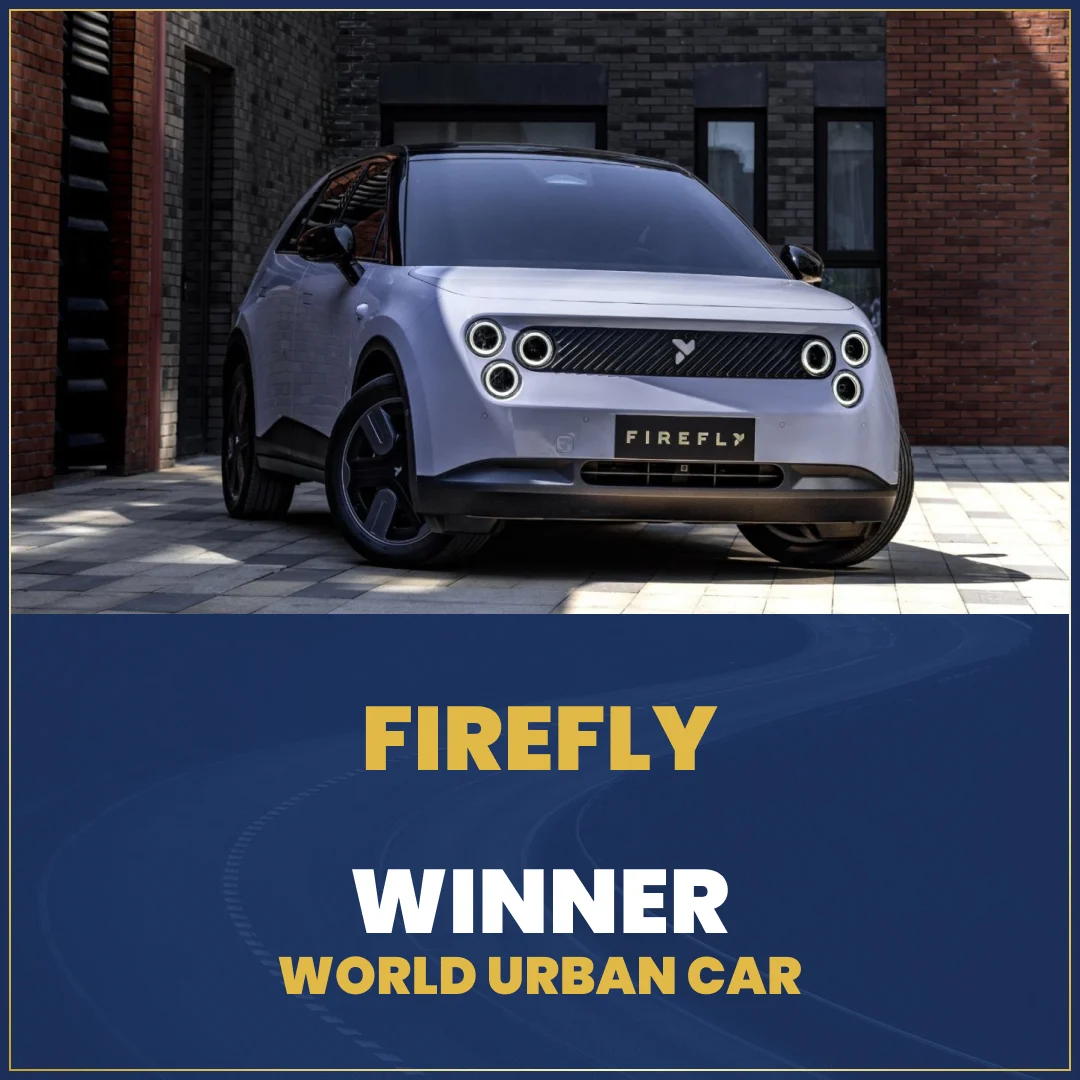
World Urban Car has its own criteria, including a maximum length of 4.25 metres, public-road approval and production of at least 5,000 units per year. The separate electric category must also be read on its own terms. An EV is not automatically a candidate in every award group, while every eligible vehicle is automatically considered for the design award.
Finalists will be announced in January
The World Car Awards timeline calls for jurors to test-drive the eligible vehicles from September 2026 into January 2027. Round One voting closes on December 28, 2026. On January 5, 2027, the organisers will announce the Top Ten for World Car of the Year and the Top Five finalists for the luxury, performance, urban and design categories.
Round Two voting closes on February 16. The winners will be announced on March 24, 2027, at the New York International Auto Show. Until then, an eligible vehicle should not be called a finalist or a likely winner. The current list confirms participation in the process, not success in the voting.
For European buyers, the most useful part of the 2027 list is the test of real market access. Chinese manufacturers now appear with city cars, family SUVs, premium models and performance vehicles. Their next challenge is not simply to be listed, but to show that the products are available across markets, meet the award rules and stand up to evaluation by an international jury.


