
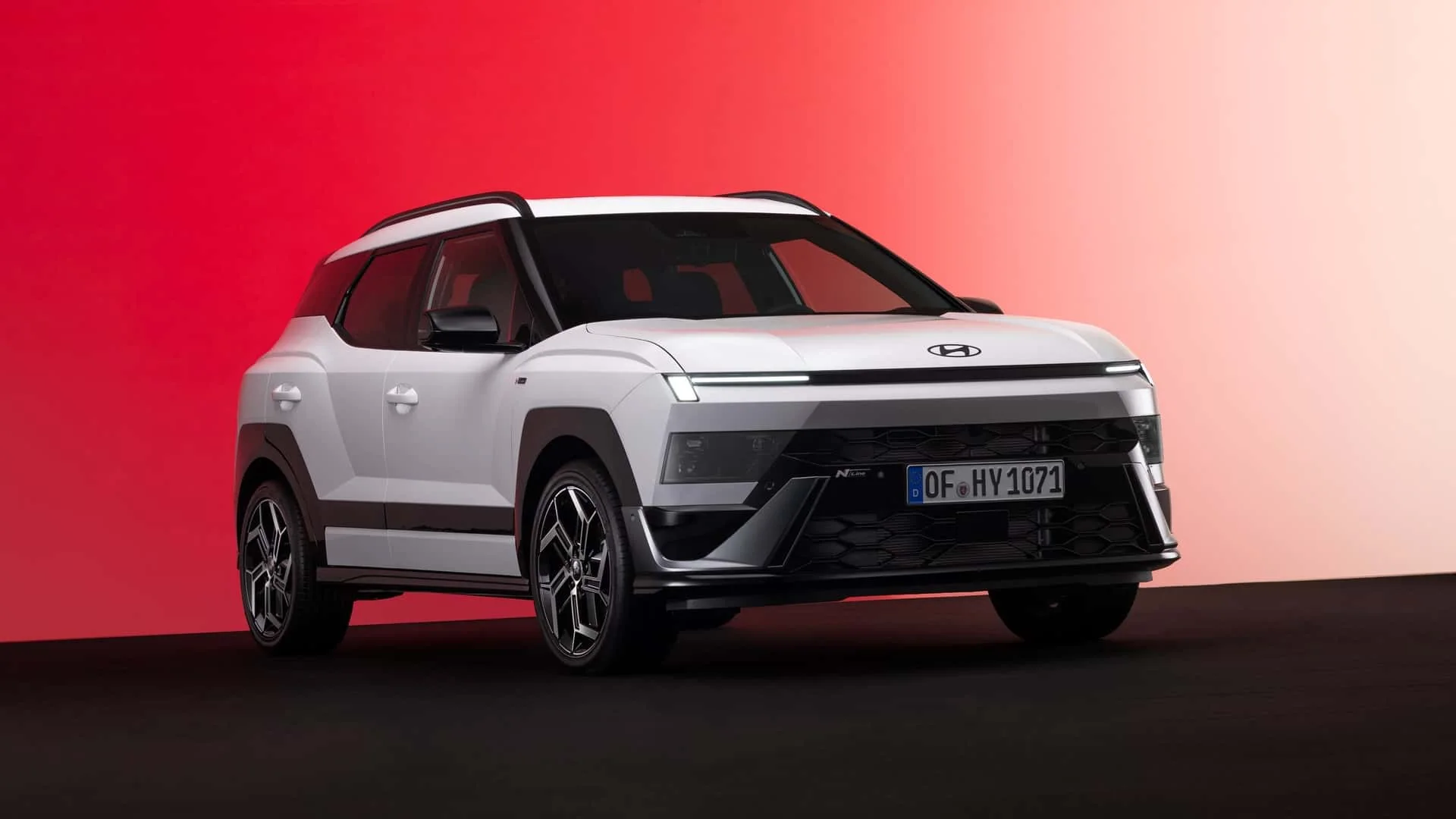
Hyundai has revealed the next-generation Bayon, its small crossover aimed primarily at European buyers. The 2027 model is longer and wider than its predecessor, uses a more angular design and brings a more digital cabin. The launch range starts with a turbocharged 1.0-litre petrol engine, while a full-hybrid system using a 1.6-litre petrol engine and an electric motor is planned for a later stage.
The new Bayon measures 4,245 mm long and 1,810 mm wide, with a 2,600 mm wheelbase. Hyundai’s published figures represent gains of 65 mm in length and 35 mm in width over the previous generation. The crossover remains compact enough for city use, but the longer wheelbase and larger body are intended to improve passenger and luggage space.
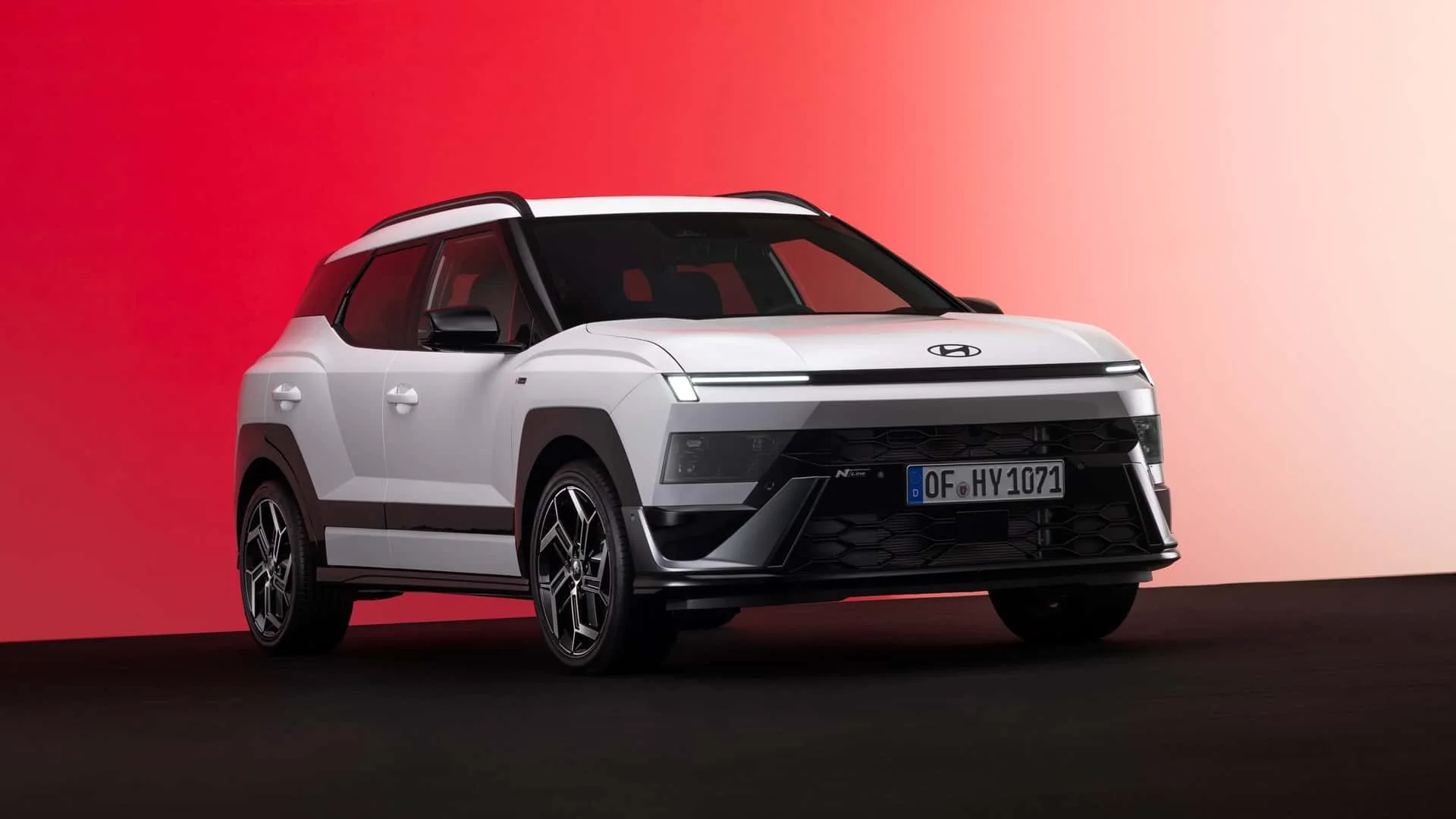
The Motor1 image shows the Bayon’s full-width front light signature. Photo: Hyundai / Motor1.com.
A sharper exterior
The front is defined by a horizontal light bar that visually stretches across the nose. Projection LED headlights with static bending lights sit lower in the bumper area. The grille, wheel-arch cladding and lower skid-plate treatment use more pronounced angles than before, while the body has a more upright stance.
The rear repeats the horizontal lighting theme and uses angular lamp shapes. Buyers can choose wheels up to 18 inches, a contrasting roof and solid, metallic, pearl or matte exterior finishes. The N Line is available from launch with dedicated 18-inch wheels, technical mesh details, high-gloss black cladding and a rear diffuser with twin exhaust outlets.
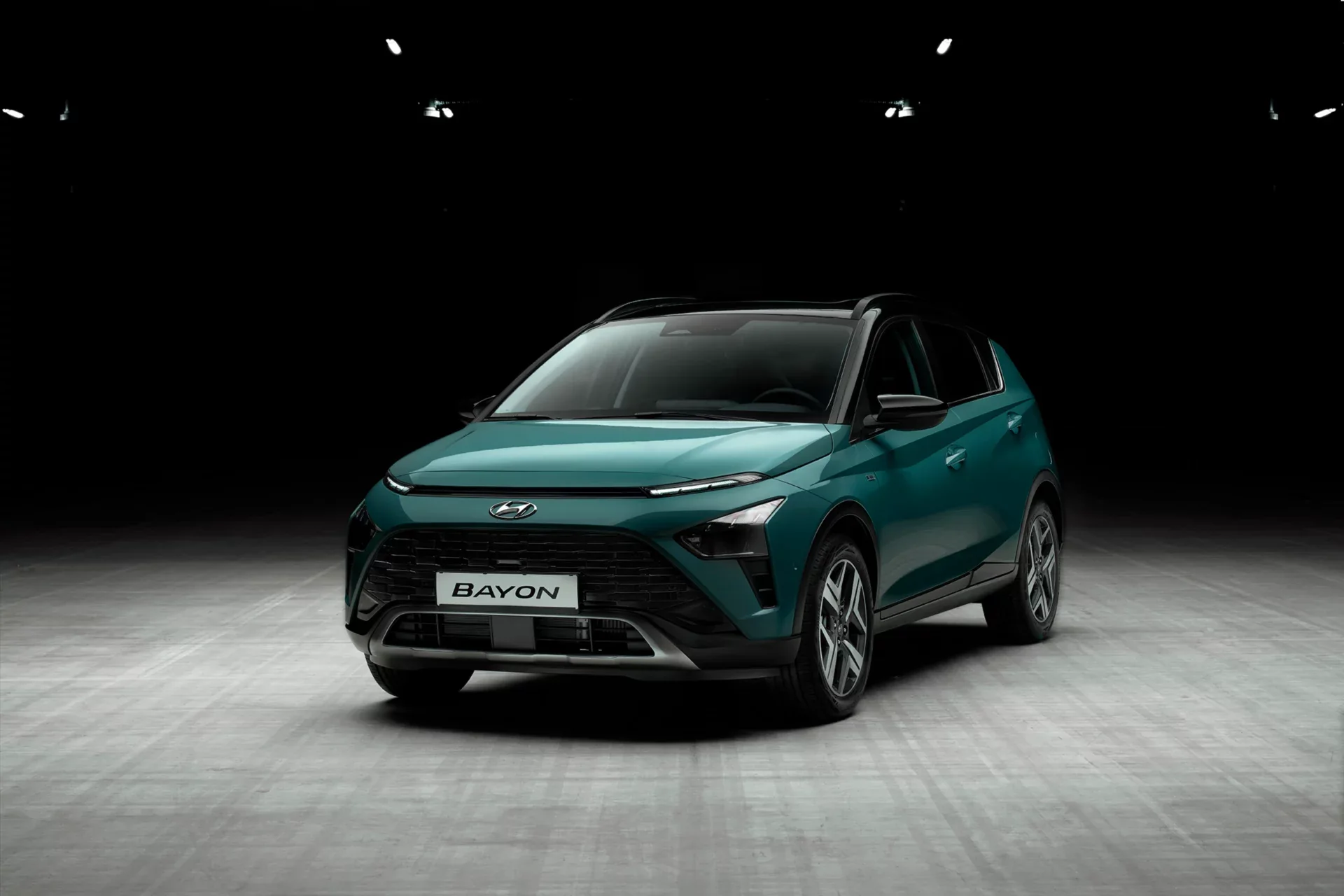
The official Hyundai Europe profile image shows the crossover’s longer proportions and wheelbase. Photo: Hyundai Europe.
Ground clearance varies with the powertrain and wheel size. Hyundai has not published every combination in the material reviewed, so the final clearance figure for a specific market and trim should not be assumed from the general dimensions alone.
More luggage space, with a hybrid compromise
Combustion-powered versions provide 440 litres of luggage capacity, including additional storage below the cargo floor. The later full-hybrid version has a smaller 397-litre boot because its battery and hybrid hardware occupy part of the available space. The 43-litre difference is a practical trade-off for customers who prioritise lower fuel use over maximum cargo volume.
The 2,600 mm wheelbase is intended to give rear passengers more legroom than before. Hyundai also lists reclining rear seatbacks, dedicated rear air vents and, depending on specification, heated rear seats. These features give the Bayon equipment associated with larger crossovers while the exterior remains relatively short.
A dashboard with two 12.3-inch displays
Depending on specification, the dashboard combines a 12.3-inch infotainment screen with a digital instrument cluster of the same size. The two displays form a curved panoramic layout, while the centre console retains a substantial number of physical controls. The vertical air vents are unusually long and frame the central section.
Available technology includes wireless Apple CarPlay and Android Auto, wireless phone charging and the option to use a smartphone or smartwatch as a digital key. Other equipment includes heated and ventilated front seats, heated rear seats, an opening panoramic sunroof and a Bose sound system. Exact availability remains market- and trim-dependent.
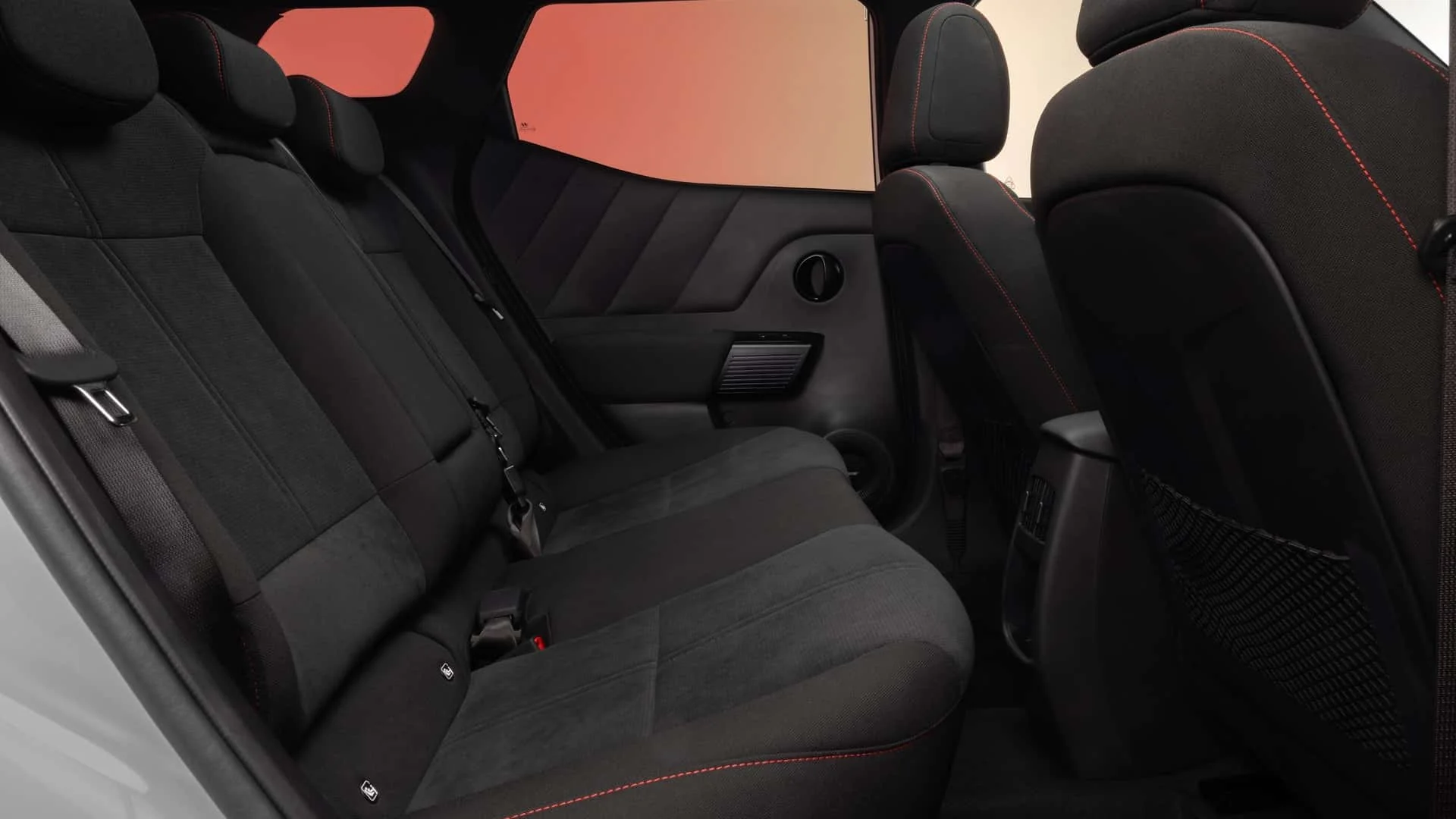
The Motor1 gallery image shows the rear-seat area of the new Bayon. Photo: Hyundai / Motor1.com.
Hyundai describes the Bayon as a compact crossover with advanced safety and connectivity features. The full standard-equipment list for every European market has not been published in the material reviewed. Buyers in each country will therefore need to check the local trim walk and option list before comparing versions.
Petrol power at launch, full hybrid later
The launch engine is a turbocharged 1.0-litre petrol unit available with either 90 or 115 hp. Depending on version, it uses a six-speed manual gearbox or a seven-speed dual-clutch automatic. Hyundai quotes a 171 km/h top speed for the 90 hp version and 180 km/h for the 115 hp version.
The more significant change is the future full-hybrid option. It combines a 1.6-litre petrol engine with an electric motor and a six-speed dual-clutch transmission. Total output is quoted at 136 hp. The system includes adaptive regenerative braking, and steering-wheel paddles allow the driver to adjust the level of energy recovery.
Hyundai has not yet released a complete European price list or a market-by-market delivery schedule. Fuel consumption, WLTP CO2 figures, battery capacity and the exact arrival date of the hybrid version remain to be confirmed. A direct price comparison with the current Bayon would therefore be premature.
Still a city-sized crossover
The added length, wider body and later hybrid option change the Bayon’s position without turning it into a large SUV. The model continues to target drivers who want an elevated driving position and useful luggage space but still need a relatively manageable vehicle for urban streets and parking areas.
Hyundai has not explained how the new Bayon will be separated from the Kona in every market, or whether the two models will share a clear price boundary. For now, the confirmed information covers the dimensions, design, luggage figures, cabin technology and announced powertrains. Local prices, equipment, WLTP data and the hybrid launch timetable remain open.


