
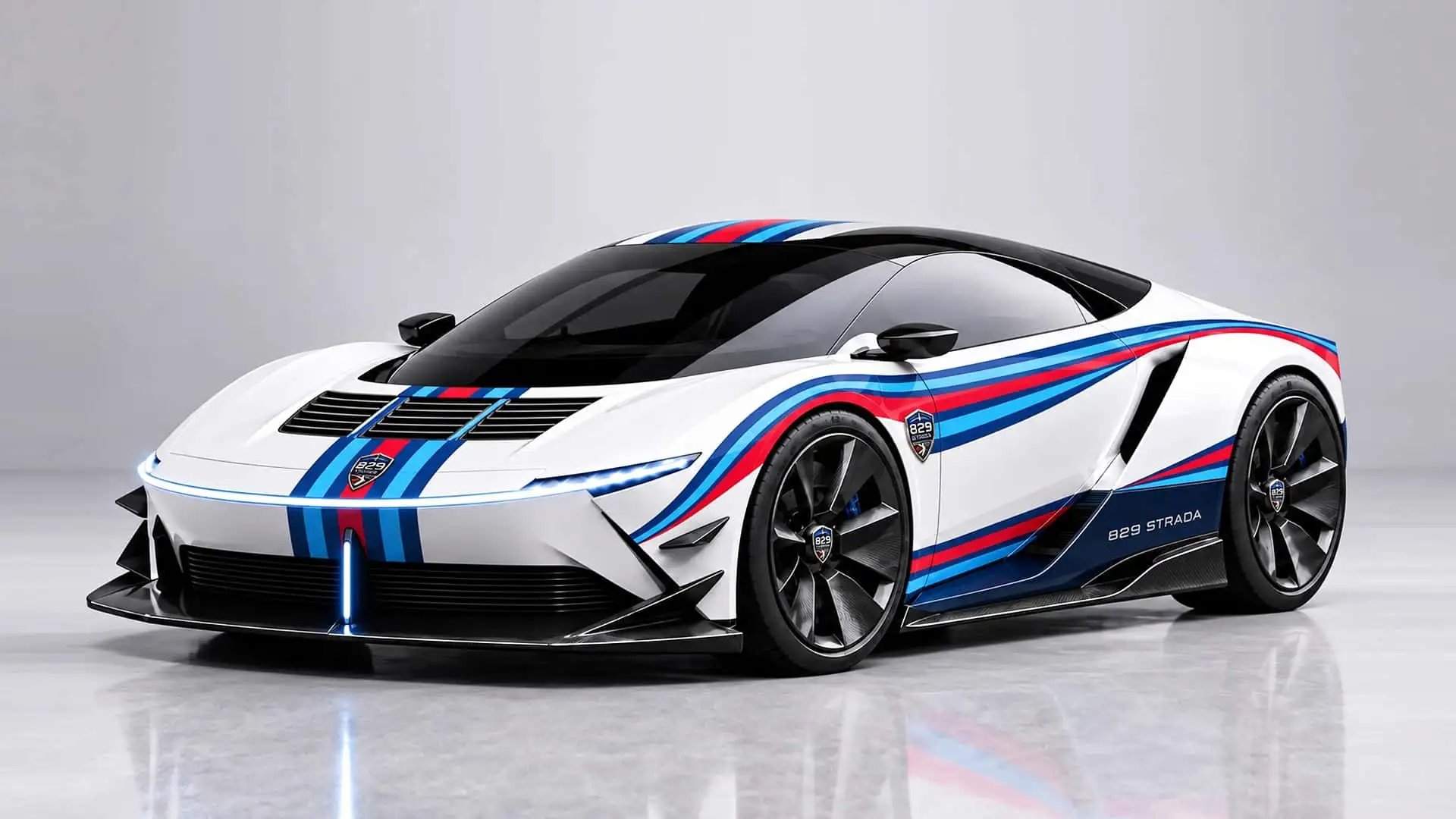
Angelelli Automobili has introduced the Tipo 829 as a three-part Italian sports-car project. The Terra, Strada and Pista versions share a common technical idea but are meant for different environments: mixed surfaces, fast road touring and circuit driving. The Roman company describes the project around a V6 producing roughly 500 horsepower. It has not yet published final weight, acceleration, top speed, aerodynamic data, price or delivery schedule.
A seven-year project
Angelelli’s official presentation, dated October 3, 2026, describes the Tipo 829 as the third chapter of a trilogy developed through seven years of work with engineer Nicola Materazzi. The company places Hintegrale and Effequaranta before the new project. That context matters because the Tipo 829 is being presented as a continuing design and engineering programme, not as a fully homologated volume-production car with a completed specification sheet.
The project name also has a specific historical reference. Tipo 829 was the internal code associated with the Lancia Stratos HF rally car. The Stratos won three consecutive World Rally Championship manufacturers’ titles, but Angelelli does not claim a direct technical connection between that car and the new Tipo 829. The link is the project code and the rally-minded role of the Terra version.
Angelelli’s own description focuses on lightness, simplicity, efficiency, character and driver involvement. Those are stated engineering aims, not figures measured by an independent test. The public material currently shows a direction for the car and a split into three products; it does not establish the final performance of any of them.
Terra: the mixed-surface interpretation
The Tipo 829 Terra is the most clearly described version. Angelelli positions it around rally stages, hill climbs and fast mixed-surface roads. The company refers to increased ride height, greater suspension travel, dedicated damping characteristics and geometry intended to preserve precision when grip is inconsistent.
Those changes would affect how the car works. More ride height changes the centre of gravity, while additional suspension travel gives the wheels more room to follow uneven ground. Damping and geometry must be calibrated around those compromises. Angelelli says the aim is a car that can be fast without becoming excessively fragile or too specialised.
The company has not released ride-height figures, suspension-travel measurements, tyre sizes, approach angles, kerb weight or a measured gravel performance result. Terra can therefore be described by its stated purpose and announced chassis direction, not by a confirmed rally-stage time or a claimed off-road capability that has not been documented.
Strada: the road-going GT idea
Angelelli Automobili presents the Tipo 829 Strada as the version closest to a traditional Italian GT formula. Davide Angelelli describes it as the road-focused interpretation for fast touring and enthusiastic driving on asphalt. In practical terms, this gives Strada a different job from Terra: it must combine sustained road speed with a level of usability that is not the central requirement of a gravel-oriented car.
The shared project does not mean that all three versions will use the same suspension calibration. Angelelli says it wants the variants to feel like genuinely different machines, rather than trim levels with identical chassis settings. The company has not yet provided details of the Strada’s gearbox, brakes, tyres, cabin, driver assistance or luggage capacity. The word GT describes the intended character; it does not confirm a specific comfort level or touring range.
That distinction is useful when reading early supercar announcements. A rendering or early image can show bodywork and positioning, but it cannot prove that the final road car will meet a particular certification standard, noise limit or emissions requirement. Those details remain part of the development programme.
Pista: built around lap time
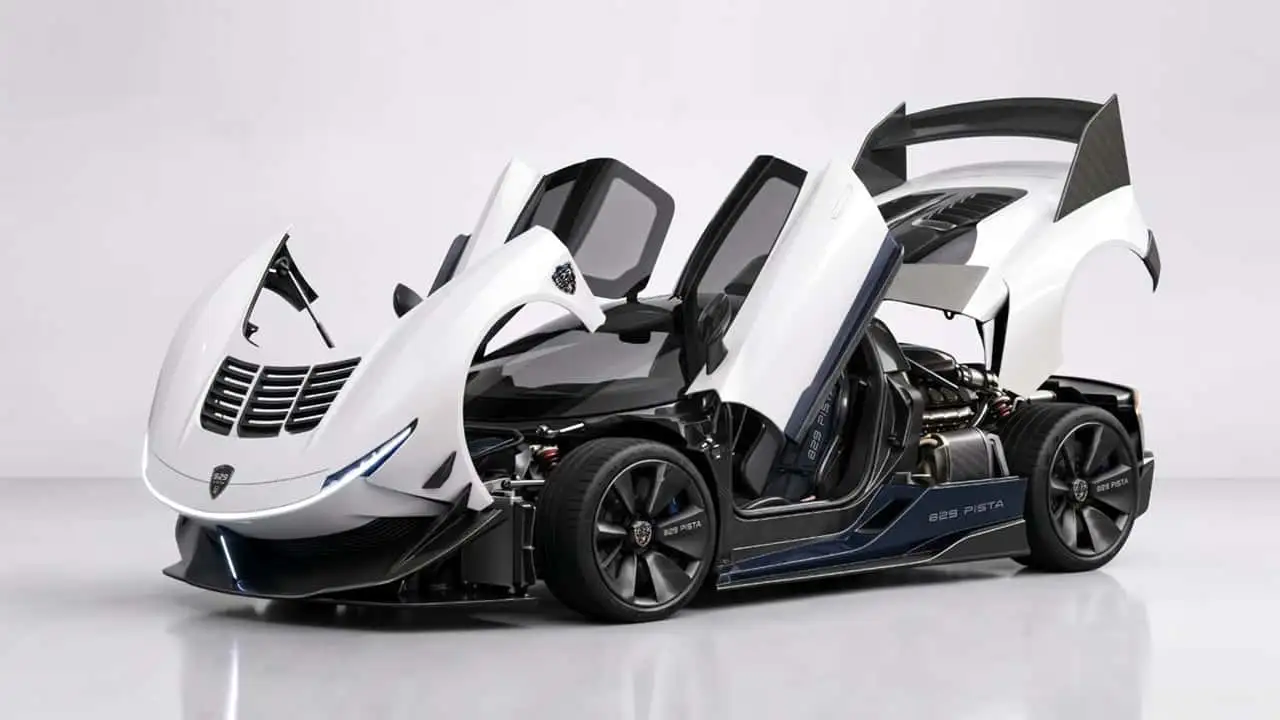
The Tipo 829 Pista is aimed at circuit driving and outright lap-time work. Motor1 reports that Angelelli Automobili is considering different engine-output targets and dedicated accelerator and steering calibration for the track version. The description points to a separate driving tool rather than a cosmetic package.
The available information is still limited. The company has not disclosed final Pista power, confirmed mass or aerodynamic data for a track-focused evolution. It is also unclear whether the version will be road-legal, whether customers will be able to adjust the setup themselves, and what tyres or braking system will be specified.
The three-way split is nevertheless understandable. Terra is being developed for changing grip and uneven surfaces, Strada for fast asphalt travel and Pista for repeatable performance in a controlled environment. A common engine does not make those cars equivalent. Suspension, steering, throttle mapping, cooling and aerodynamic load can change the way a vehicle is used even when the basic body and power unit are related.
What is known about the V6
The supplied Motor1 article and Angelelli’s project material point to a V6 with approximately 500 hp. Public secondary descriptions are not consistent about displacement: some cite 3.2 litres, while the Motor1 article text refers to 3.4 litres. Angelelli’s official Tipo 829 page does not currently provide a final technical table that resolves the discrepancy. The safest description is therefore a roughly 500-hp V6, without treating either displacement figure as confirmed.
Torque, engine speed, gearbox, kerb weight and acceleration are also undisclosed. The power figure is a project indication, not an independently tested result or a completed homologation figure. That limit matters to any prospective customer because customisation and the final Terra, Strada or Pista specification could change the delivered car.
Limited production, no published price
Angelelli Automobili says production will be very limited and highly customisable. The Terra programme is described as open to commissions, but the company has not announced a price, exact production volume, manufacturing timetable or first-delivery date. Being open to commissions is not the same as having a fully certified car ready for delivery.
For buyers outside Italy, the Tipo 829 should currently be treated as a low-volume atelier project rather than a model with an established dealer network and published running costs. Until Angelelli releases a complete specification and commercial terms, it is not possible to calculate registration, tax or maintenance costs responsibly. The firm’s clearest announcement so far is the three-version structure and the roughly 500-hp V6 at the centre of it.
Sources
- Angelelli Automobili official Tipo 829 presentation
- Motor1, Tipo 829 Terra, Strada and Pista
- Tom’s Hardware, Tipo 829 and the current data limits
- The local Strada and Pista images were taken from the supplied Motor1 article at the user’s explicit request. Copyright remains with Angelelli Automobili/Motor1; no rights transfer is implied.


