
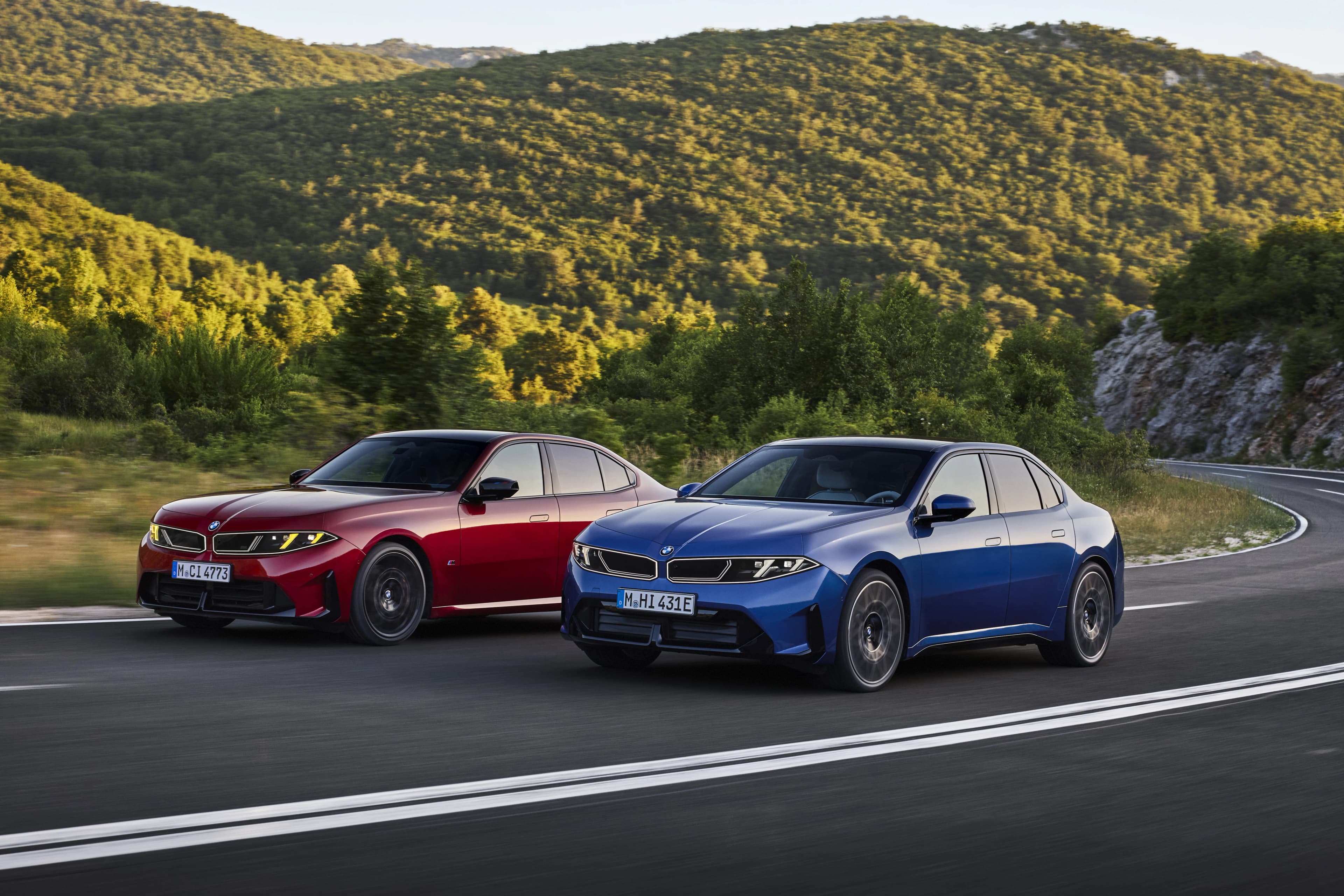
BMW has confirmed that diesel will leave the European 3 Series range when the next generation arrives for the 2027 model year. Two BMW spokespeople told Motor1 and Motor1 Germany that the new European 3 Series will not be offered with a diesel engine. That removes the 320d and the other diesel derivatives from the future line-up, including the high-performance M340d.
The decision applies to the new generation, not to every BMW diesel car already on the road. The current 3 Series continues to be offered with diesel power, including the 320d, while stocks and market-specific ordering windows remain. BMW is expected to begin the transition as production of the new combustion-engined car starts in the second half of 2026 and sales of the new generation begin in 2027.
BMW’s new range keeps several powertrain types
The official BMW launch material presents the new 3 Series as a shared family rather than as one car with one engine. The first electric 3 Series is called the BMW i3, and two electric versions are available from launch. They sit beside petrol-powered 3 Series models using 48-volt mild-hybrid technology. BMW also says a plug-in-hybrid version will join the range over the following year.
The European combustion flagship is the BMW M350 xDrive. It uses a 3.0-litre straight-six petrol engine supported by a 48-volt system and produces 326 kW, or 443 hp, in BMW’s German-market information. BMW quotes 0–100 km/h in 4.1 seconds and an electronically limited top speed of 250 km/h. This is a petrol M Performance model, not a replacement diesel with a different name.
BMW’s technical material from the final testing programme also describes the M350 xDrive as the only six-cylinder version of the new 3 Series. Taken together with the direct confirmation about diesel, the published information points to a European launch range built around four-cylinder petrol models and the six-cylinder petrol M350, rather than the familiar diesel hierarchy.
The current 320d is not disappearing overnight
There is an important timing distinction for European buyers. The existing 3 Series remains available with diesel power, so the announcement does not make current 320d cars obsolete or illegal. It means that the next new generation will no longer be orderable with that engine type once the relevant market switches to the new model.
BMW has not published a single Europe-wide final order date for the current diesel cars. Availability will depend on production planning, dealer stock, country-specific homologation and local configurators. A buyer in Germany, Romania or the United Kingdom may therefore see a different transition schedule. The precise last build or last registration date for every diesel derivative is not stated in BMW’s global launch release.
The same caution applies to pricing. BMW has not announced Romanian pricing for the new 3 Series in the material used for this report. Any claim about the final price of a European diesel 3 Series, or about a discount before production ends, would need a local dealer list rather than an assumption based on US figures.
What takes the diesel’s place?
BMW’s answer is not a single replacement engine. The new 3 Series offers several petrol models with mild-hybrid assistance, an electric BMW i3 and a plug-in hybrid planned for the following year. That gives customers different operating patterns, but it also changes the buying decision for drivers who previously selected a 320d because they covered long distances with a full tank and refuelling was predictable.
The BMW i3 40 xDrive produces 275 kW, or 374 hp, and uses an 82.8-kWh high-voltage battery. BMW quotes a maximum WLTP range of 710 km. The i3 50 xDrive has 345 kW, or 469 hp, a 108.7-kWh battery and a maximum WLTP range of 912 km in the German-market data. Both electric cars use one motor on each axle, BMW’s sixth-generation eDrive technology and an 800-volt electrical system.
The larger i3 battery can accept up to 400 kW of DC charging power. BMW says that ten minutes at a suitable high-power charger can add up to 423 km of WLTP range when the station, battery and temperature conditions allow the maximum rate. Those are official test-cycle figures. They do not guarantee the same result on a winter motorway journey, and the charging figure depends on hardware and battery conditions.
The plug-in hybrid could become the most direct bridge for customers who want electric urban driving and petrol range on longer trips. BMW has confirmed the future variant but has not published its battery capacity, electric range, output, transmission or European launch price. Those details should not be filled in from the current 330e because the next system may use different hardware.
Why the change matters in Europe
Diesel has held a particularly strong position in European executive cars because the format suits motorway mileage, company-car use and long-distance touring. BMW’s own 2024 3 Series press material said that roughly 40 percent of Touring models were specified with a diesel engine, while the Sedan was more often petrol-powered. That split explains why removing diesel from the new family is a meaningful product decision even though petrol and electric alternatives remain.
The change also separates the new European 3 Series from the way the car is being introduced in North America. BMW’s US announcement lists petrol and electric powertrains, but the commercial context and available combinations are not identical to Europe. Equipment, certification, model names and launch timing can differ between markets, so US pricing and acceleration figures should not be copied into a European article without qualification.
For an existing diesel owner, the practical implications are limited in the short term. Service, parts and used-car demand do not end when a manufacturer changes a new-car catalogue. For a new-car buyer, however, the choice becomes more consequential. A frequent motorway driver may favour the remaining current-generation diesel, a petrol mild hybrid, or wait for the plug-in hybrid. A driver with reliable home or workplace charging may find the i3 more relevant. BMW has not said that one solution will replace every use case.
The wider Neue Klasse transition
The new 3 Series brings BMW’s Neue Klasse design and software to both combustion and electric cars. The cabin uses BMW Panoramic iDrive, BMW Operating System X, a 17.9-inch central display and optional display systems designed around the driver. The electric and petrol cars share a visual identity while retaining different underbody and drivetrain hardware.
Production is also split. BMW says the electric i3 will be built at Plant Munich, while combustion-engined 3 Series models will be produced at Dingolfing. Core components for the electric and combustion powertrains come from BMW’s Steyr operation in Austria, and high-voltage batteries are supplied by the new Irlbach-Straßkirchen plant in Bavaria.
For European 3 Series buyers, the result is a clear boundary. The 320d and M340d still belong to the outgoing generation, but they are not part of the new 2027 family according to BMW’s confirmation reported by Motor1. The future range keeps petrol, adds electric i3 models and promises a plug-in hybrid. The diesel era is ending for this model line, even while diesel BMWs remain part of the existing fleet and the wider second-hand market.


