
Italian coachbuilder Riverti Automobili is developing a radical reinterpretation of the current BMW M2. The project uses the G87 generation as its starting point and replaces much of the exterior with bodywork inspired by the 1970s BMW 3.0 CSL, the wide-bodied racing coupé often associated with the “Batmobile” nickname. A camouflaged prototype has already been seen running at Italy’s Tutto Bene Hillclimb event.
Riverti does not present the project as a restoration of a classic BMW. Its short description, “Not Resto. Retro.”, points to a modern mechanical base wearing a historical design language. For now, this is a coachbuilt prototype under development, not a confirmed production model from BMW or a finished Riverti range product.
A new body rather than a styling kit
The sketches and images released so far suggest a full rebody rather than a collection of bolt-on accessories. The front end uses four round headlights, a smaller interpretation of BMW’s kidney grille and reshaped air intakes. The bonnet is bespoke, while the thin-spoke wheels reference the period motorsport hardware associated with the original CSL.
The sides receive flared fenders, custom sills and large air openings behind the doors. At the rear, Riverti has shown bespoke taillights and a prominent fixed wing. A second aerodynamic surface sits higher on the rear structure, echoing the stacked spoiler treatment that became one of the most recognisable features of the historic racing car.
These changes alter the visual proportions of the M2, but the available material does not confirm the structural work, the final materials or the homologation path. Several reports mention carbon-fibre body panels, yet Riverti has not published a full technical sheet confirming final kerb weight, weight distribution or the construction of every panel.
The BMW powertrain is not fully confirmed
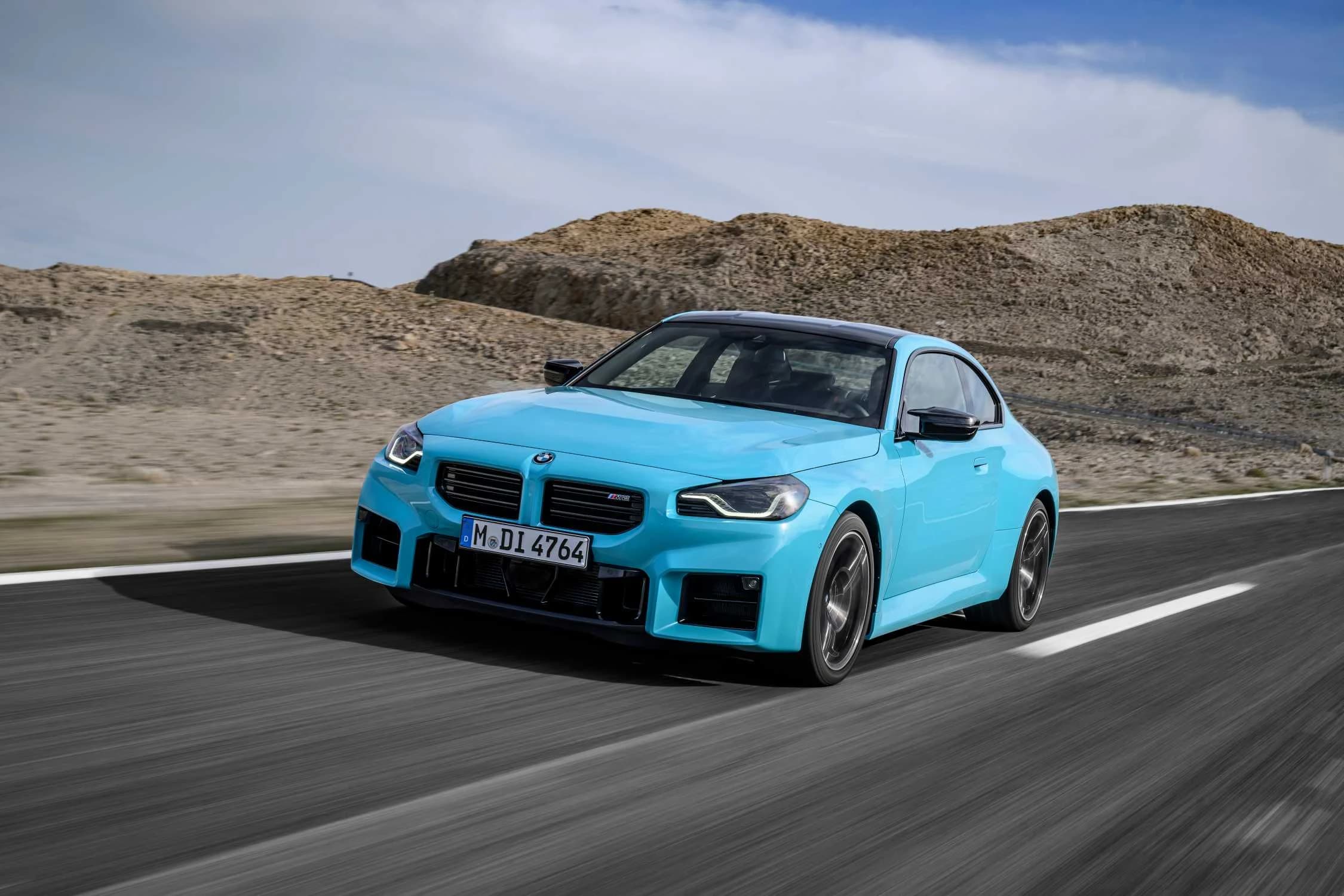
Riverti has chosen the current BMW M2 G87 as its donor. The rear-wheel-drive M2 uses a 3.0-litre twin-turbocharged inline-six, while BMW’s 2026 M2 with M xDrive produces 353 kW, or 480 hp, according to the manufacturer. BMW also offers a six-speed manual gearbox on selected M2 configurations; the all-wheel-drive M2 uses an automatic transmission.
For the Riverti car, it is not confirmed whether the engine remains standard or receives mechanical changes. There is no published information about output, torque, gearbox, drivetrain, brakes, suspension or post-conversion performance. Seeing the prototype run a hillclimb shows that the vehicle is functional, but it does not prove that the final customer car will use the same specification.
That distinction matters because the CSL name has a technical history. At BMW, the L has been associated with reducing weight. A new body does not automatically make a modern M2 lighter. Composite panels can help, but additional structures, larger wheels, cooling components and the hardware needed for road approval can move the final figure in either direction.
The link to the original 3.0 CSL
The BMW 3.0 CSL was developed as a lighter and more aerodynamic version of the E9 coupé. Its flared arches, large spoilers, distinctive front end and weight-saving measures became central to BMW Motorsport’s identity in the 1970s. The car’s shape was not only decorative; it was connected to the requirements of touring-car competition.
Riverti is borrowing that visual identity more than reproducing the old engineering. The M2 is a relatively compact modern BMW and offers a closer starting point than a current M4 for a project inspired by the E9. It is still wider, has a different wheelbase and uses modern crash structures, electronic systems and safety equipment. Changing the outer panels cannot simply recreate the proportions of the original car.
BMW has already produced its own modern 3.0 CSL tribute. The 2022 model was based on the M4 and limited to exactly 50 numbered examples. Riverti’s project is not part of that BMW factory programme and should not be described as an official BMW M2 CSL.
Production and price remain open questions
Riverti has not announced production numbers, pricing, a final reveal date or a delivery schedule. The interior has not been fully shown either, so it is not known whether the changes will extend beyond the exterior. There is also no confirmation that the car will be homologated for every market or offered as a standard conversion rather than as individually commissioned builds.
For a new coachbuilder, the distance between a running prototype and a deliverable series is substantial. The company must address compatibility with the donor car’s electronic systems, pedestrian protection, lighting, visibility, cooling and certification. A body can be displayed quickly, but a complete rebody requires documentation, suppliers, repair procedures and a long-term parts solution.
Until Riverti publishes more information, the project remains a private interpretation of the BMW M2, mixing 3.0 CSL references with cues associated with the BMW 2002 Turbo. The Tutto Bene Hillclimb appearance shows that it has moved beyond a purely digital sketch, but it does not answer questions about final design or sales. Claims about power, weight, price or production volume would currently be speculation.


