
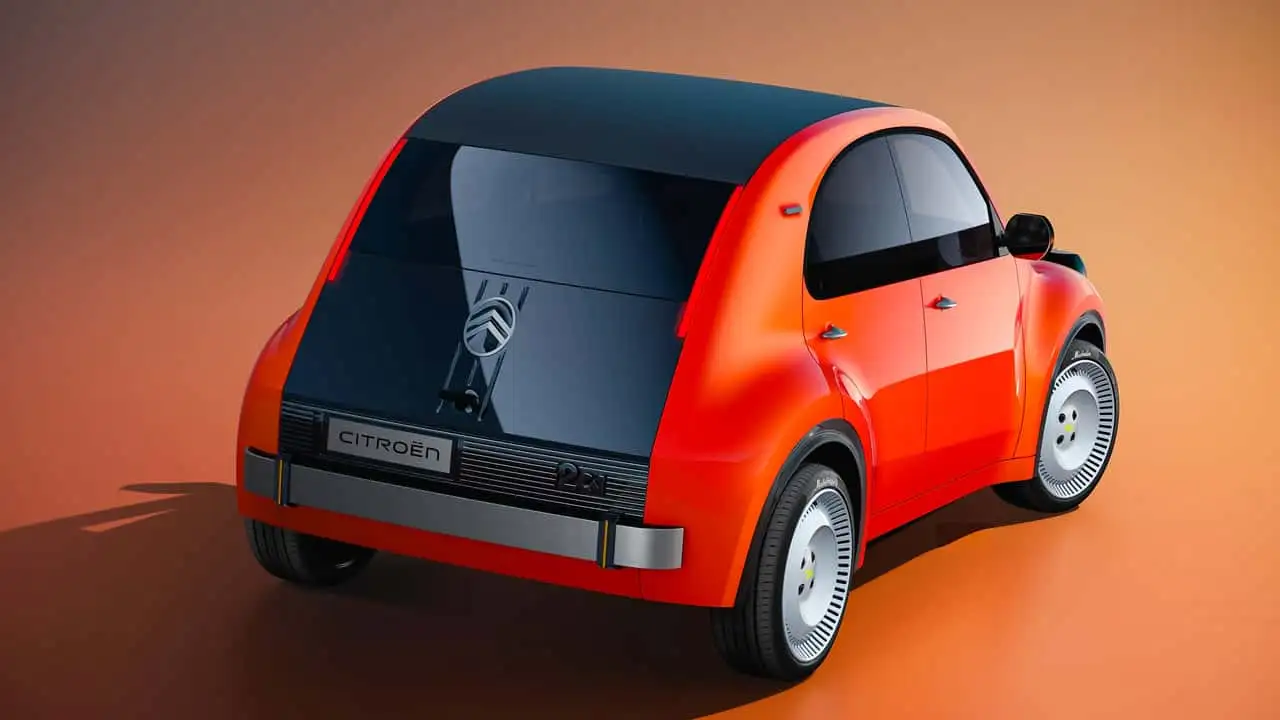
The Citroën 2 CV name has returned at the 2026 Paris Motor Show, attached to a compact electric concept that looks back to the original car without attempting to reproduce it literally. Citroën describes the 2 CV Concept as a possible production model positioned between the Ami quadricycle and the C3. The company is targeting a starting price close to €15,000 and a launch by 2028, but neither the final price nor the production specification has been confirmed.
A small footprint and a deliberate weight target
The concept measures 3.76 metres long. That places it firmly in the city-car conversation and keeps it close to the roughly 3.8-metre length of the original 2 CV. Citroën has not released production figures for power, battery capacity or driving range. It has, however, stated that it is aiming for a weight of about one tonne. For a battery-electric car, that target matters: lower mass can allow a smaller battery, lower energy consumption and reduced manufacturing cost.
The intended use is therefore easy to read. This is not being presented as a long-distance grand tourer. Its compact dimensions should help with parking and manoeuvring, while the promised simplicity is meant to keep the everyday ownership proposition understandable. Citroën wants an electric car that is easier to access financially, rather than another large vehicle carrying a large battery to compensate for its size.
The exterior uses broad, relatively flat surfaces and simple air openings below the windscreen. The front and rear bumpers are separated from the main body so that they can be replaced individually after minor urban damage. That is a practical interpretation of the original 2 CV’s straightforward construction, and it could matter for repair bills if it survives into the production car.
Retro references with modern lighting
The steep windscreen, rounded roof, pronounced wings and simple body surfacing establish the family link immediately. Round headlights stand away from the body and receive a modern LED signature. The bonnet echoes the original car’s pressed-metal shape, while exposed wipers and door handles derived from the historic model provide smaller visual references.
Citroën’s official material specifies 18-inch steel wheels. Their design is intentionally functional rather than luxurious, reinforcing the concept’s low-complexity message. The show car is finished in Infra Red, with dark exterior elements and a cabin that uses tartan upholstery and warm beige details.
One of the more unusual technical features is a Michelin “universal digital tyre twin”. The system is intended to monitor tyre health and help adapt vehicle behaviour to the information available from the tyres. Citroën has not yet explained how much of that technology would be offered on a road car, so it should be considered a concept feature rather than a confirmed equipment list.
At the rear, a curved roof flows into a black tailgate and bumper area. Horizontal LED elements provide the lighting signature, while the number plate displayed by the concept carries references to the 2 CV’s different international nicknames. It is a design gesture, not a promised production detail.
An interior built around simple objects
The cabin is bright and deliberately open. Advanced Comfort seats use tartan fabric, and the passenger seat can slide outwards to make entry easier. Storage is treated as part of the design: the concept uses removable baskets, woven surfaces, wood, textile inserts and a 3D-printed basket made from bio-based plastic. Door handles are soft straps, and the door pockets are shaped with enough room for small everyday items, including eggs in Citroën’s own illustration.
Other details translate the old car’s controls into a digital era. The single-spoke steering wheel, cylindrical control area and selector inspired by an umbrella handle all refer to the original 2 CV. The accelerator and brake carry tortoise and hare symbols. The concept also proposes horn and electric-motor sounds that echo the character of the historic car, while the numbers 48, 90 and 26 on the windscreen refer to the model’s identity and history.
The dashboard combines Citroën Smart Vision with a square 8-inch phygital touchscreen. The graphics are described as comic-book inspired, giving the display a less conventional character than a generic tablet-style interface. A removable Radioën unit can work as a standalone radio or speaker. A folding fabric roof completes the emphasis on ventilation and open-air travel without turning the car into a conventional convertible.
A target, not yet a confirmed price list
Citroën says the future model will be built in Europe and that a production version is expected to be unveiled within the next two years, pointing to a 2028 timeframe. The project is linked to future European E-Car rules and to the company’s broader attempt to make electric mobility more accessible.
The €15,000 ambition should be read carefully. Citroën has not confirmed a final MSRP, battery size, range, performance figures, safety equipment or market-by-market availability. Keeping the car close to one tonne and using a compact battery will be central to the business case. If those objectives survive development, the 2 CV could occupy a useful space: more practical and protected than a quadricycle, but simpler and smaller than a typical electric hatchback.
For now, the concept is best understood as a design and engineering direction. It combines a recognisable French icon with a restrained electric format, and it makes accessibility part of the brief rather than an afterthought.
Image: Citroën, published by Motor1.com. The source page does not state a commercial reuse licence; the image is used at the user’s request with the original attribution retained.
Image: Citroën, published by Motor1.com. The source page does not state a commercial reuse licence; the image is used at the user’s request with the original attribution retained.
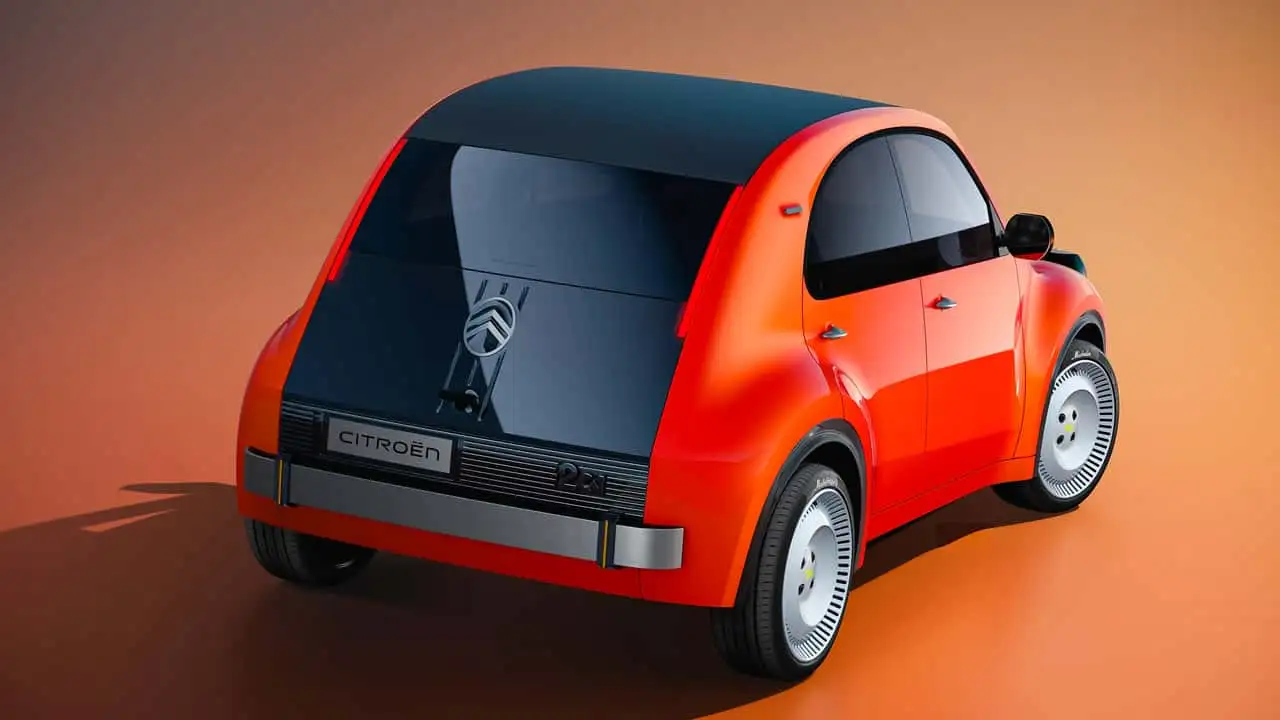
A second frame of the concept, published by Motor1.com and credited to the manufacturer.
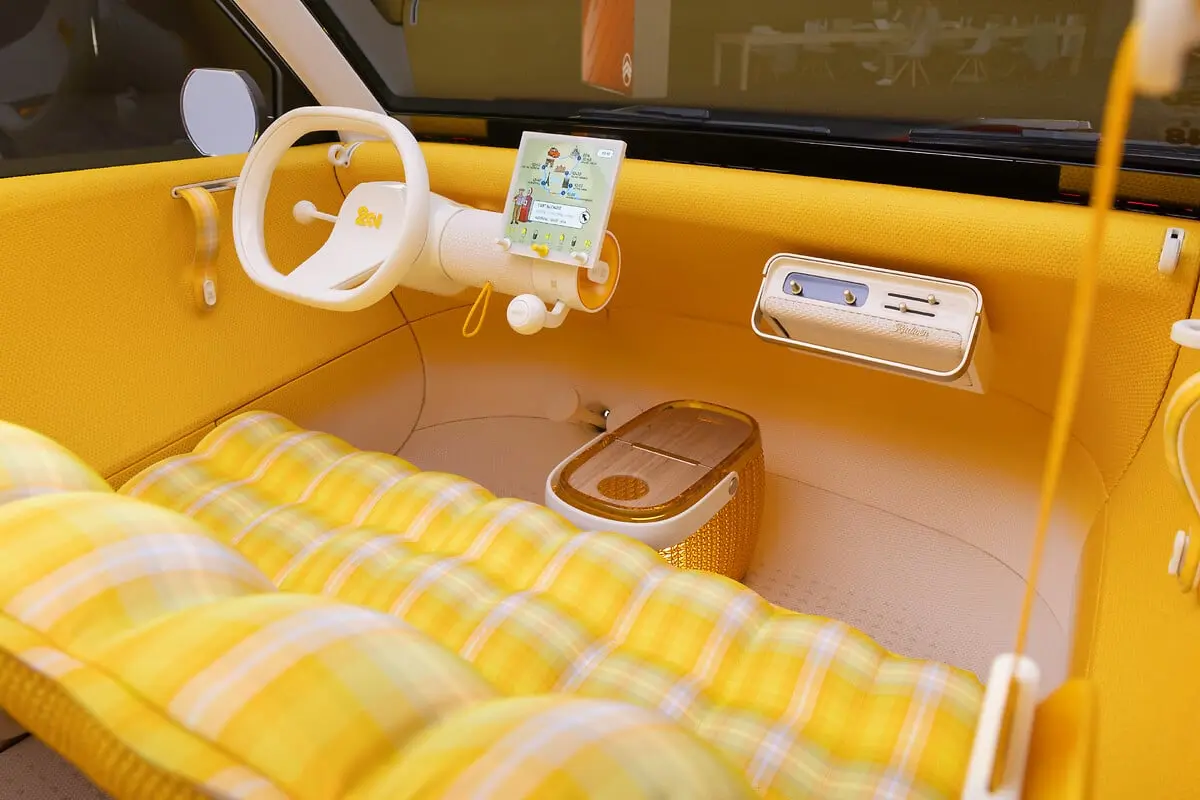
Official interior image published by Citroën through Stellantis Media.


