Tangier is preparing for the next Sandero
Renault Group is preparing the industrialisation of the fourth-generation Dacia Sandero at its Tangier plant in Morocco. Mohamed Bachiri, chief executive of Renault Group Morocco, said the internal DB4 programme is expected to enter production between the end of 2027 and the beginning of 2028. The programme is described as multi-energy, with hybrid and electric versions planned alongside conventional powertrains.
That statement confirms an industrial direction, not a full product launch. Dacia has not yet published the final design, battery capacity, electric range, pricing or market-by-market equipment list for the next Sandero. It is therefore useful to distinguish what has been confirmed from what remains a forecast or an open engineering decision.
What Renault Group Morocco has confirmed
Speaking during an international media meeting in Tangier, Mohamed Bachiri said the Moroccan teams were working on the industrialisation of the fourth generation of Dacia models, referred to internally as DB4. The comments covered Sandero, Logan and Jogger as part of the future model family. The production window given was the end of 2027 to the beginning of 2028.
The powertrain plan is deliberately broader than a battery-electric replacement. Bachiri referred to hybrid and electric versions, while also explaining that the plant’s flexibility allows the group to work with different types of engines. This matters for a value-oriented brand because customers and regulations do not move at the same speed in every market.
The battery supply chain is not settled publicly. Bachiri said the group had not yet decided where the battery packs for the electric Sandero would be assembled. That means there is no verified basis for assigning a specific battery chemistry, range, charging speed or local-content percentage to the future car.
Why Tangier is a logical production site
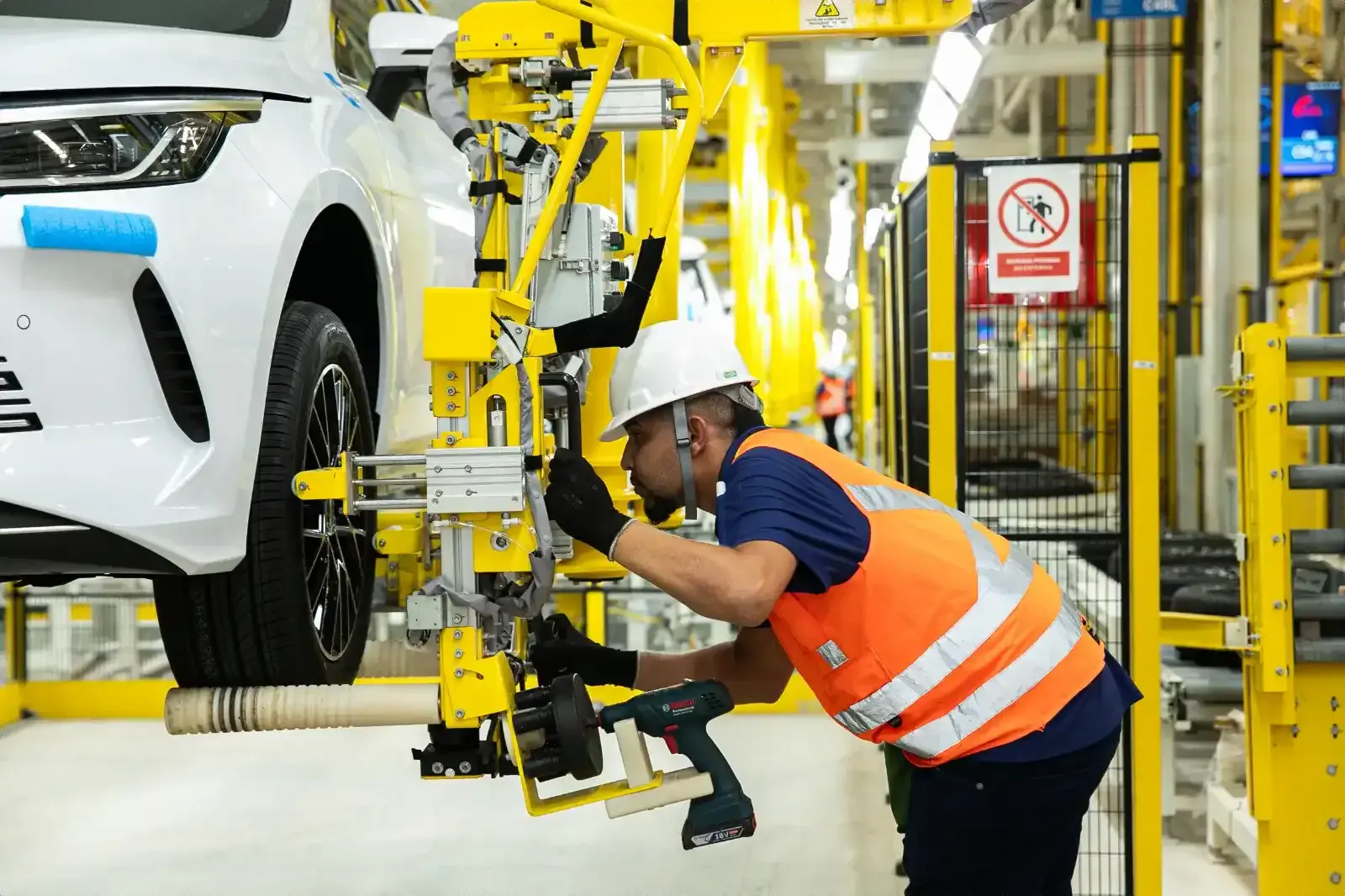
Renault Group’s Tangier plant started production in 2012. It currently builds Dacia Sandero, Sandero Stepway, Dacia Jogger and Renault Express. The company lists body and assembly operations, logistics, chassis work and sub-assembly among the site’s activities. The plant covers 300 hectares, including 37.7 hectares of covered buildings, and Renault Group lists 6,230 employees as of June 2026.
The official production figures show the importance of Sandero to the site. In 2025, Tangier built 222,257 units of Sandero 3, 53,647 Joggers and 20,401 Renault Express vehicles. The same list also includes small volumes of the Duo and Bento electric models. Tangier therefore combines high-volume Sandero experience with an existing background in electrified production.
Sandero production began at Tangier in 2013, while the third generation started there in 2020. In 2024, the plant also added the Dacia Jogger Hybrid 140, described by Renault Group as the first hybrid vehicle assembled in Tangier. The transition to the next Sandero can consequently build on an existing workforce and processes rather than starting with a completely new site.
The logistics behind the Moroccan operation
Tangier’s importance extends beyond the factory gates. Renault Group describes the area around Tangier Med as an integrated industrial and logistics hub, where suppliers, production and vehicle shipping are concentrated close together. The group says vehicles made in Tangier and Casablanca are exported to 63 destinations, while 82% of Moroccan production was exported according to the company’s 2026 overview.
The ecosystem includes 87 tier-one suppliers around the two Moroccan plants. Tangier Med’s vehicle terminal is listed with a capacity of one million vehicles per year and direct connections to 24 countries. Rail lines enter the factory site and transport finished vehicles to the port. Renault Group estimates that rail transport can cut the carbon footprint of these movements by roughly 90% compared with road transport.
These features are relevant to Sandero because the model serves European and Mediterranean markets. They do not, however, confirm how production of the fourth generation will be split between Tangier, Mioveni and other Renault Group locations. They also do not establish the final configuration or price of a Romanian-market car.
What buyers should not assume yet
The 2027–2028 window is an industrial target communicated by Renault Group Morocco, not a confirmed showroom date for every market. Homologation, production ramp-up, local equipment, order opening and deliveries may follow different schedules. Dacia has not announced a Romanian launch date for the fourth-generation Sandero.
The electric version is confirmed as part of the plan, but its technical specification is not. There is no official range, battery size, motor output, charging time or price to report. The same caution applies to the hybrid version. A future Sandero can be described as planned for electrified powertrains, but not as a car with a known specification.
For buyers in Romania, the most relevant consequence is the possibility of a multi-energy Sandero produced in a major Renault Group export hub near Europe. Whether that translates into a competitive price, a quick launch or a specific battery configuration will only become clear when Dacia publishes the product and market details.
A strategic test for Dacia
Sandero remains one of Dacia’s central volume models. Renault Group has repeatedly highlighted its performance with retail customers in Europe, but the next generation will arrive under different competitive and regulatory conditions. The challenge is to add electrification without losing the straightforward value proposition that made Sandero important in the first place.
Tangier gives Dacia an industrial base already familiar with the model, the CMF-B platform, hybrid assembly and large-scale exports. The future DB4 programme will test how much flexibility can be maintained across combustion, hybrid and electric versions while controlling cost and complexity. Until the company releases the final vehicle information, the factory decision is the clearest confirmed part of the story.