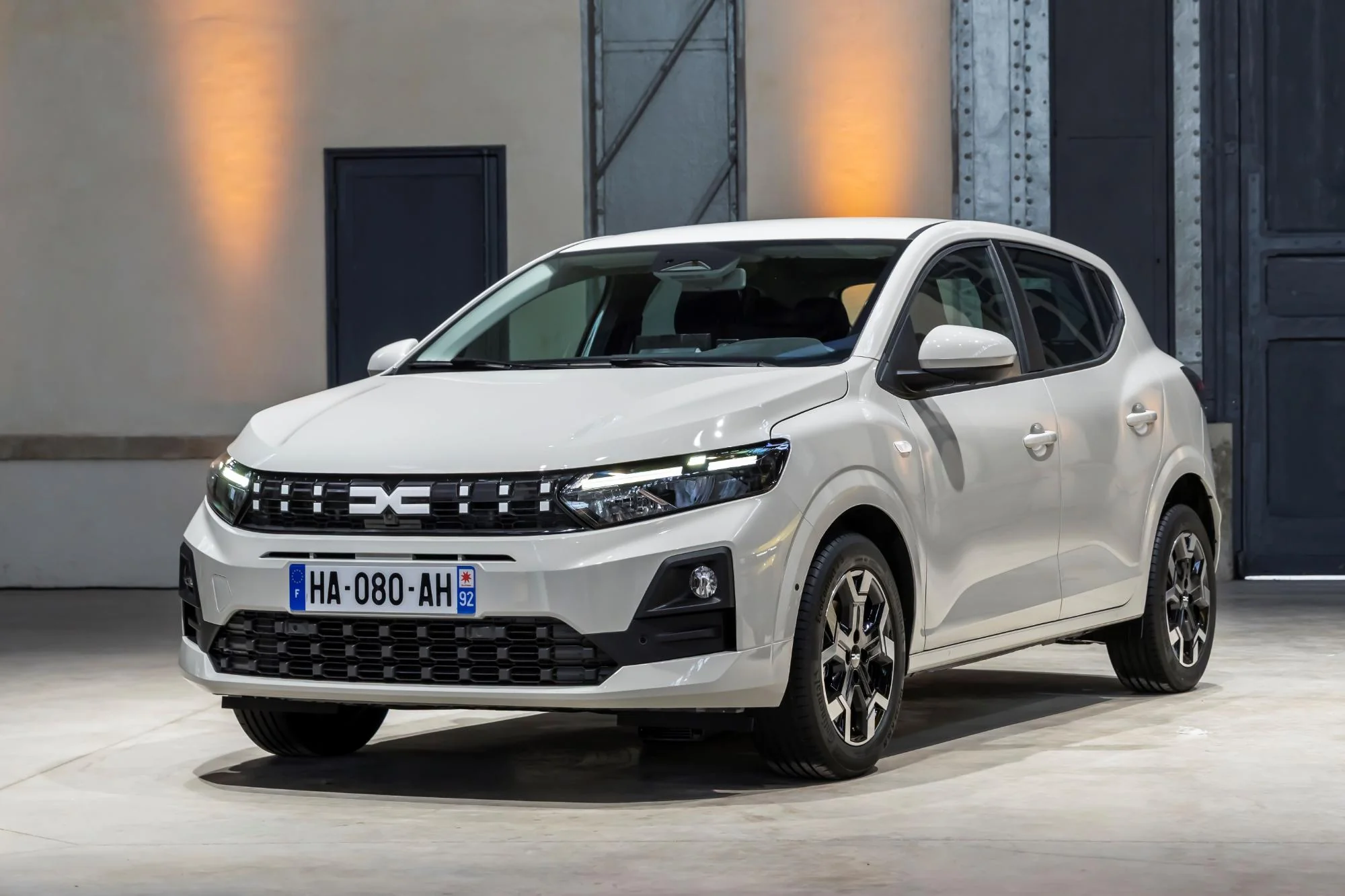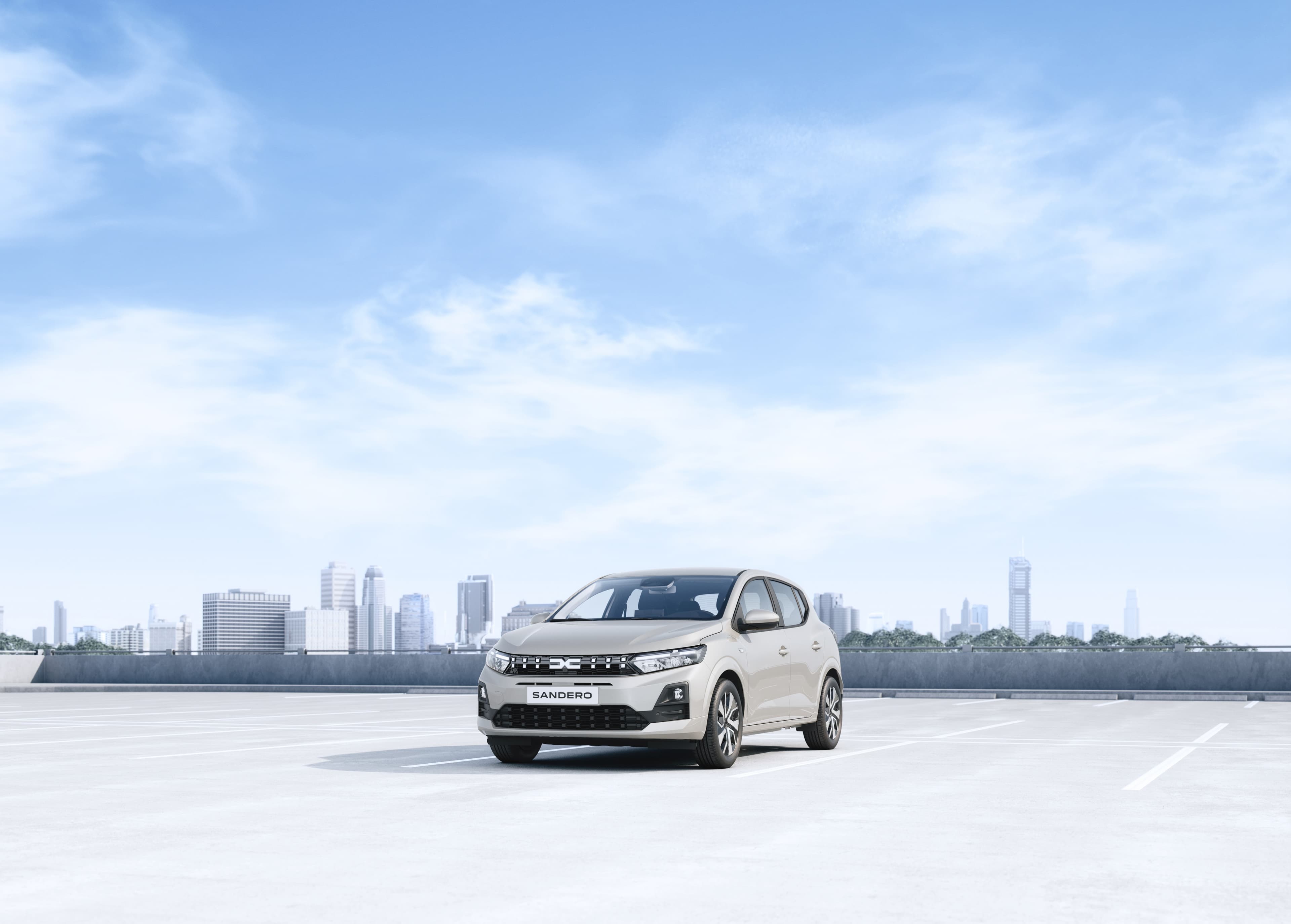
The image shows the current Sandero, updated for 2026. The design of the next generation has not been published by Dacia. Photo source: Dacia
The next Dacia Sandero will also have an electric version, but combustion engines stay in the range
The next-generation Dacia Sandero will be offered both with electric propulsion and with systems that use a combustion engine. The manufacturer has confirmed a "multi-energy" range, through which it wants to introduce an accessible electric car without immediately dropping customers who cannot charge at home or for whom purchase price remains the main criterion.
The new model is expected around 2028, according to information obtained by the British publication Auto Express from Dacia management. Katrin Adt, the brand's chief executive, said the project is still in development and that final technical decisions have not been taken.
Electric and hybrid in the same Sandero family
Dacia has included the future Sandero in its 2030 strategic plan and has officially announced that the next generation will have a fully multi-energy range. The formula does not yet describe concrete engines or batteries, but it confirms that the electric version will not replace all other variants at once.
Denis Le Vot, Dacia's former chief executive, said as early as 2024 that the market was not ready for an exclusive switch to electric cars. He anticipated that the next generation's internal-combustion powertrains would most likely be hybridised.
Current management keeps the same general direction. Frank Marotte, Dacia vice-president for marketing, sales and operations, says the Renault group has both platforms dedicated to electric cars and flexible architectures that can accept several types of propulsion. The company is analysing which solution offers the right balance between cost, range and final price.
The platform has not been chosen officially
The current Sandero uses the CMF-B architecture, shared with several Renault and Dacia models. One of the options examined for the successor is an evolution of this platform, adapted for hybrid and electric systems. Such a choice would allow the use of more components already produced in large volumes and would limit costs.
The alternative is a dedicated electric architecture from the AmpR family, used by the Renault 5 E-Tech and Renault 4 E-Tech. Dacia has not confirmed either solution. Katrin Adt said the team is looking at the possibility of a single platform for several versions, but the project has not reached its final configuration.
For the same reason, information about a battery taken from the Renault Twingo E-Tech or Renault 5, its capacity and the range of the future electric Sandero are for now estimates. Dacia has not published WLTP figures or a price target.
Sandero Stepway will continue
The future family will again include a Sandero hatchback and a Sandero Stepway variant, with greater ground clearance and exterior protection. David Durand, Dacia design director, indicated that the brand wants a clearer differentiation between the two versions.
The electric car may receive a more closed grille and other aerodynamic details, while hybrid variants will have the air intakes needed to cool the engine. These elements have not been shown officially, and speculative images published in the British press do not represent the design approved for production.
The current Sandero is receiving hybrid technology in the meantime
The information about the 2028 generation should not be confused with the update of the model sold now. Dacia has restyled the current Sandero and Sandero Stepway and introduced a new light signature, a 10-inch multimedia screen and revised powertrains.
Sandero Stepway is due to receive in the last quarter of 2026 the Hybrid 155 system already used on Jogger and Bigster. It combines a 1.8-litre petrol engine, two electric motors, a 1.4 kWh battery and a clutchless automatic transmission. Total power is 155 hp, and the combustion engine's torque reaches 170 Nm.
The current range also keeps the TCe 100 engine and the Eco-G 120 system running on petrol and LPG. These updates extend the life of the third generation until the multi-energy successor is ready.
Why Dacia is not yet dropping the combustion engine
For a brand oriented toward accessible prices, battery cost has a large influence on the final price. An electric Sandero must remain cheap enough not to overlap with larger, more sophisticated Renault group models.
At the same time, charging infrastructure and access to a socket differ widely between European markets. The hybrid variant can be used without external charging, and a petrol or LPG powertrain remains relevant for buyers who cover long distances and do not have a parking space with a charger.
Dacia is thus pursuing a staged transition: Spring remains the urban electric model, a new A-segment electric car is being prepared in Europe, and the electric Sandero will enter a more spacious category. In parallel, hybrid versions will keep the cost and freedom of use demanded by a significant share of customers.
What it means for buyers in Romania
Sandero is one of Dacia's key models for the local market as well. An electric version would bring a larger, more practical alternative to the Spring, but the choice will depend on three pieces of information that are missing now: price, WLTP range and charging speed.
Buyers should not postpone a near-term purchase on the basis of assumed specifications for 2028. Dacia has not opened orders, has not presented the car and has not announced the plants in which the different versions will be produced. Until launch, even the calendar and range structure can change.
What is certain is that Sandero will not move directly from petrol to an exclusively electric offer. The new generation will allow Dacia to sell an electric car and at least one hybridised solution in parallel, adapting the mix between them to each market's demand.
Sources consulted
- Dacia — the FutuREady strategic plan and the multi-energy range for the future Sandero
- Dacia — Sandero, Sandero Stepway, Jogger and Logan updates
- Dacia — the product offensive and 2026 powertrains
- Renault Group — electrification strategy and the evolution of the Dacia range
- Auto Express — Dacia management comments on the next-generation Sandero