
Munich-based electric-motor company DeepDrive says it has received a series-production nomination from a global vehicle manufacturer. Production is planned to start in 2028, but DeepDrive has not named the customer, the vehicle, the platform or the expected production volume.
The announcement is a step beyond a technology demonstrator because it concerns a programme intended for high-volume production. It is not, however, the launch of a new car. The public information does not include the contract value, the factories that would build the motor, the number of units or the exact specifications that the unnamed automaker has approved.
The dual-rotor radial-flux architecture
DeepDrive’s core technology is a patented Dual Rotor, Radial Flux motor. A conventional electric motor normally places one rotor inside a stator. In DeepDrive’s layout, an inner rotor and an outer rotor surround a stator positioned between them. The company says this arrangement can combine high torque density with lower weight, lower cost and reduced material use.
An electric motor converts electrical energy into wheel-driving torque through the interaction of magnetic fields in the stator and rotor. The topology affects cooling, losses, active materials, packaging and the way the drive unit can be installed. DeepDrive’s efficiency, weight and cost advantages remain company claims until they are published as vehicle-level, independently comparable results.
The company says its architecture has been validated and can be adapted to three applications: a generator for range-extender systems, a central drive and an in-wheel motor. The shared technical principle could serve different vehicle platforms, but the unnamed production customer and the selected configuration have not been disclosed.
In-wheel motors bring a different trade-off
With a central drive, the motor sits between the axles and sends torque to the wheels through a reduction gear and shafts. An in-wheel motor can remove some of that mechanical path and make individual wheel torque control easier. It also puts components directly at the wheel, where they must cope with impacts, water, dust, temperature changes and road contamination.
DeepDrive and Continental previously worked on a combined in-wheel drive and brake unit. Their 2023 announcement described a compact component intended to support efficient series production. That cooperation should not be treated as proof that Continental is the unnamed customer in the new 2028 nomination. DeepDrive has not publicly identified the automaker.
DeepDrive is also developing a generator for range-extender applications. In that layout, a combustion engine generates electricity for the battery or traction system rather than mechanically driving the wheels. DeepDrive’s published generator material describes continuous torque of 200–300 Nm at 3,000–6,000 rpm. Those figures belong to the generator product and should not be presented as the specifications of the newly nominated vehicle drive.
From validation to manufacturing
Validating a prototype does not by itself solve the manufacturing problems of a large automotive programme. A supplier must maintain tight tolerances, secure motors, electronics and magnetic materials, create repeatable quality checks, track every component and complete durability testing. It must also provide capacity for the complete production life of a vehicle programme.
DeepDrive says it is now expanding its organisation and production capabilities for that transition. Peter Hochholdinger is listed as a strategic adviser. He previously held manufacturing responsibilities at Audi, Tesla and Lucid. That experience is relevant to industrialisation, but an adviser’s involvement does not guarantee that the programme will reach production on schedule.
DeepDrive was founded in 2021 and is headquartered in Munich. The company lists BMW i Ventures, Continental’s corporate venture unit, Leitmotif, UVC Partners and Bayern Kapital among its investors. In earlier releases, it said it was working with eight of the world’s ten largest automakers. That is a company statement, not a public list of confirmed customers.
China expansion
Alongside the series nomination, DeepDrive plans to build a team in Shanghai for sales and project implementation in China. The company describes the approach as “local for local”, meaning that production and project resources should be developed close to customers. It has not yet announced a Chinese factory, local production capacity or a timetable for manufacturing there.
China is a major market for electric vehicles and for suppliers of drive components. Opening a commercial and project team does not mean that a DeepDrive motor will automatically be produced in China or installed in a vehicle sold there. That would require a customer programme, local suppliers, regulatory approval and an engineering specification signed off by the vehicle manufacturer.
What is confirmed and what is not
The confirmed information is that DeepDrive says an unnamed global automaker has nominated its technology for a series programme planned to begin in 2028. The dual-rotor radial-flux architecture, its three intended applications and the Shanghai expansion have also been described publicly. The customer, vehicle, motor output, system voltage, unit weight, contract value and production volume remain unknown.
Drivers will not see a direct consequence until a manufacturer identifies the vehicle using the technology. If the programme reaches production, the motor could influence energy consumption, range, packaging and the cost of an electric drivetrain. For now, the announcement concerns a supplier’s industrial milestone rather than a new production car.
Sources
- DeepDrive – official media archive
- DeepDrive – dual-rotor radial-flux generator
- DeepDrive – Series A and motor technology
- DeepDrive – Continental drive-brake partnership
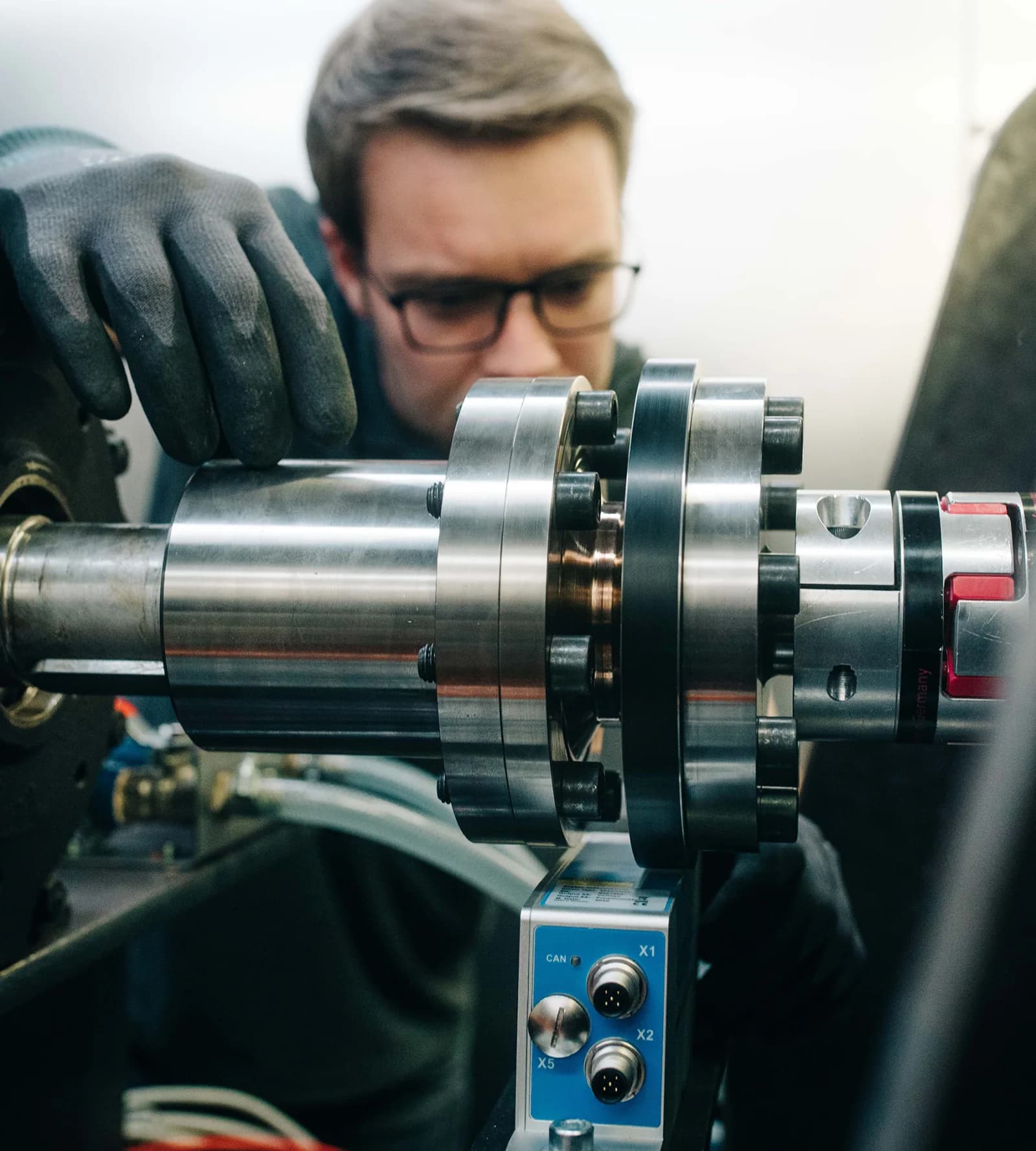
Image: DeepDrive, official press material, editorial use under the company’s media terms.


