
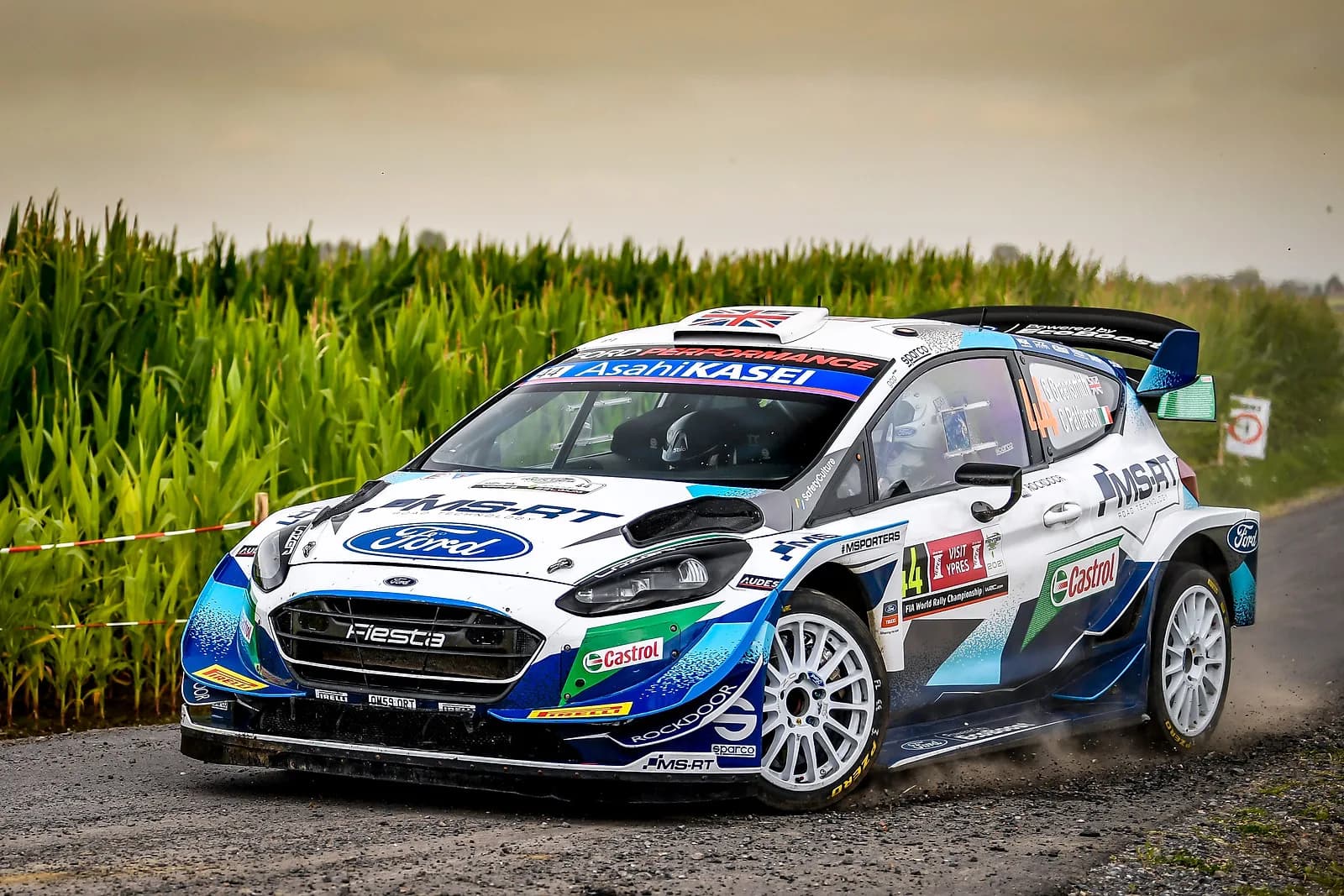
Ford is preparing a return to the top level of the World Rally Championship, with the Fiesta once again connected to the company’s rally identity. The Auto Express report dated 1 October 2026 presents the story as a 2027 return, but the timetable needs a precise distinction. The FIA’s WRC27 regulations begin in 2027, while recent reporting places Ford’s full factory-backed return in 2028. Ford has not yet published a complete technical announcement confirming the final car, driver line-up or event schedule.
Why 2027 is a technical turning point
The FIA approved the WRC27 technical regulations in December 2024. They take effect for the 2027 season and are designed to make the leading class more flexible and less expensive to enter. A common safety cell remains at the centre of the car, but the bodywork rules allow a broader range of shapes. A manufacturer could use a scaled version of a production hatchback, saloon or SUV, or design a bespoke rally body around the permitted structure.
The FIA has announced a €345,000 cost cap for the car itself. That figure is more than 50 per cent below the reference cost of the outgoing Rally1 machinery. It is important not to read the cap as the budget for a complete championship campaign. Testing, spares, transport, engineering staff, service operations, tyres and software development are separate expenses. The rule change lowers the barrier around the competition car, but it does not make a global motorsport programme inexpensive.
WRC27 also allows different powertrain directions. Teams can use an internal-combustion engine with sustainable fuel, a hybrid system or an electric solution. The FIA is therefore leaving room for manufacturers with different road-car strategies. This matters to Ford because its motorsport activity now covers several technologies and because the company is rebuilding parts of its European model range around electrification.
Fiesta has a real WRC record
The Fiesta is not simply a marketing name borrowed for a future project. Ford and M-Sport have used the model in several generations of rally cars, and the 2017 Fiesta WRC won the manufacturers’ and drivers’ titles. Ford’s own media centre described that car as a M-Sport-developed, four-wheel-drive machine with a 1.6-litre EcoBoost turbo engine producing roughly 380 horsepower. Those figures belong to the 2017 car and should not be presented as specifications for a future WRC27 Fiesta.
The historical link is still useful. Fiesta is one of the Ford models that rally fans immediately associate with the modern WRC era, while M-Sport has the engineering and event-operation experience needed to turn that identity into a competition programme. A future car could use Fiesta-inspired bodywork, or Ford could select another European model and retain the Fiesta connection through the team’s history. The WRC27 rules do not require a direct production-car replica.
M-Sport’s likely role
M-Sport is the natural technical partner in the Ford story. The British company developed and ran the Fiesta WRC that delivered Ford’s 2017 success, and it continued to support Ford-based customer and rally programmes after Ford’s previous factory involvement changed. Recent reports again connect M-Sport with Ford’s planned return, but the final structure of the programme has not been disclosed in full.
That distinction matters because rally projects can have several stages. A team may test a safety cell, build a development car, enter a support class or run selected events before becoming a factory team in the premier category. A Fiesta Rally2 entry would not be the same as a WRC27 car. Likewise, a one-off test in 2027 would not prove that Ford is contesting every round as a factory operation.
The FIA describes 2026 as the final season under the current Rally1 regulations. The 2027 season will introduce the new technical framework. Manufacturers therefore have a natural development window before the reported factory return in 2028. The work will include selecting the body concept, deciding on the powertrain, validating the safety structure and preparing the car for asphalt, gravel and snow.
What Ford could gain
A WRC programme would connect Ford’s performance image to compact European cars and to real road surfaces, rather than only to circuit racing. The Fiesta name is also expected to return to Ford’s European passenger-car range in some form around 2028, according to recent automotive reporting. That future road car has not been fully specified, so a rally programme should not be treated as proof of its battery size, price, range or production date.
For M-Sport, the WRC27 cost structure could make a top-class car easier to develop and sell to customers. The team would still need to manage the less visible parts of a season: reliability, data, logistics and the rapid repair of damage between stages. A cheaper car does not remove the performance gap created by preparation and execution.
The confirmed picture is therefore narrower than the headline suggests. WRC27 starts in 2027, Ford has a strong Fiesta rally record, and current reporting points to a factory-backed Ford return in 2028 with M-Sport involved. The final car, entry date and competition schedule still require an official Ford or M-Sport announcement.


