
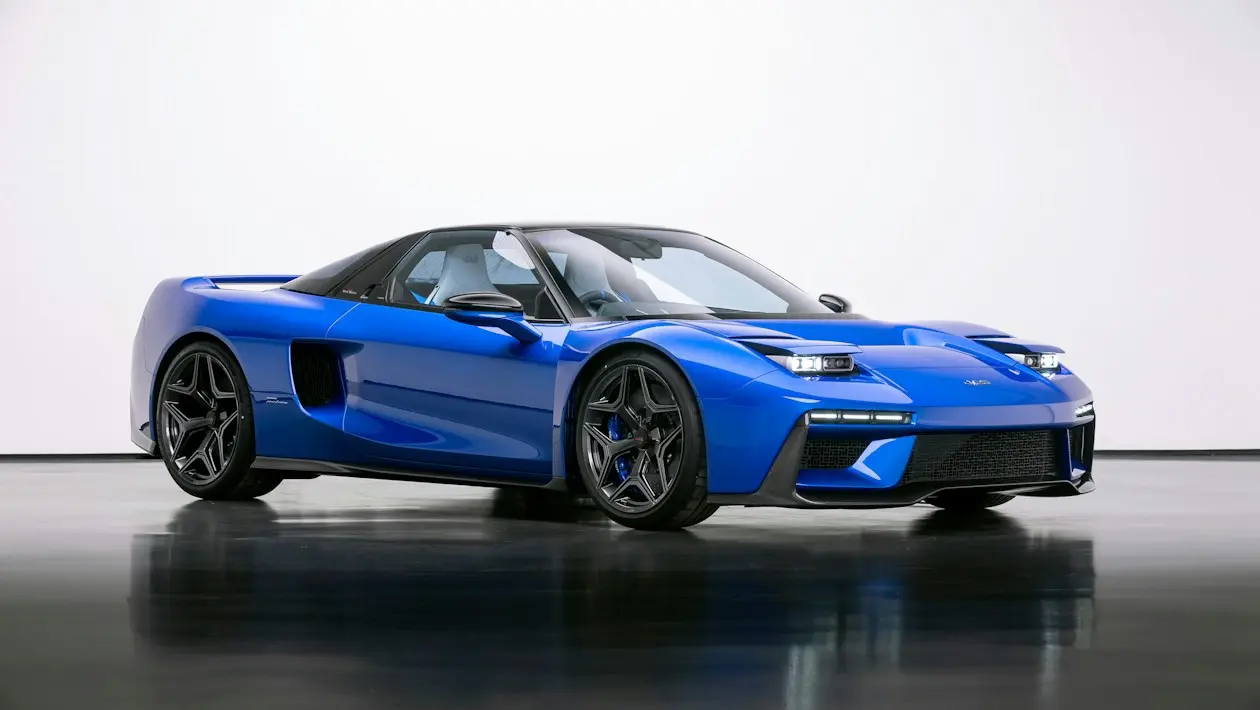
JAS Motorsport and Pininfarina have reworked the first-generation Honda NSX into a project called JAS Tensei. The car keeps the architecture and visual connection of the 1990s sports car, while adding carbon-fibre exterior panels, a 3.5-litre naturally aspirated V6 and a revised chassis, braking system and interior.
Tensei means “rebirth” or “reincarnation” in Japanese. This is not a new Honda production model and it does not represent a Honda announcement about returning the NSX to its range. It is a high-end reinterpretation by JAS Motorsport, a Honda motorsport partner, with exterior and interior design developed with Pininfarina.
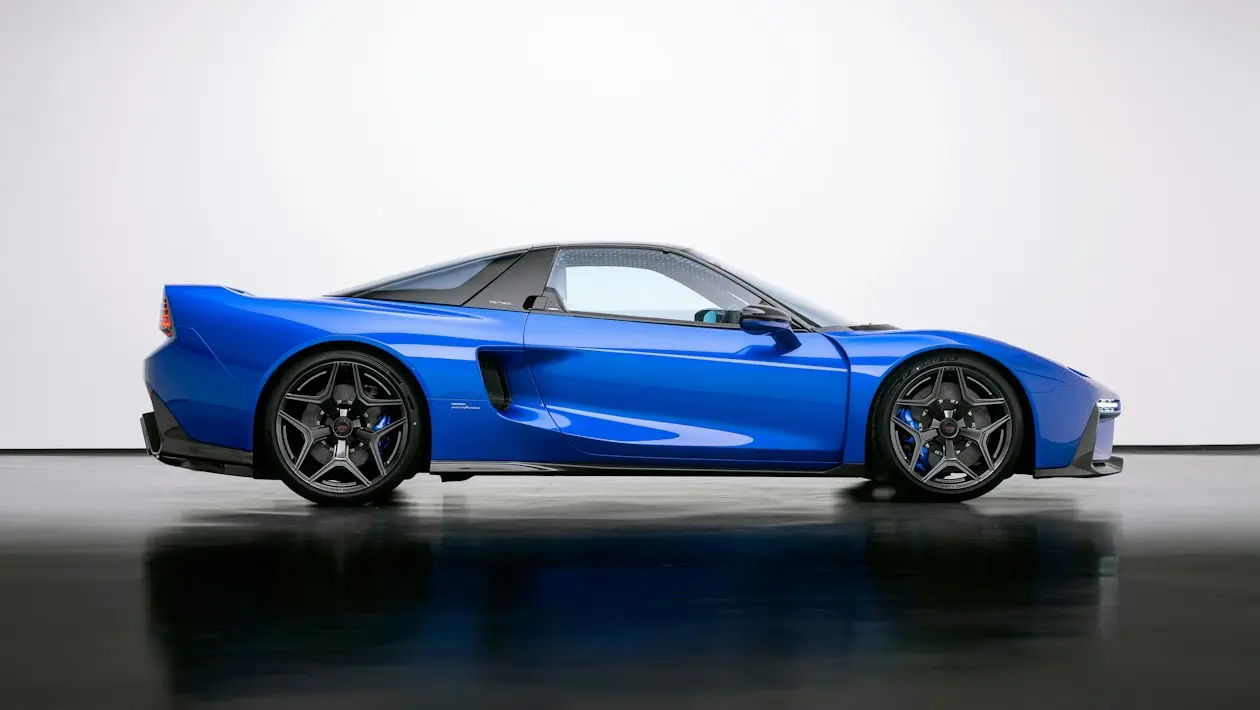
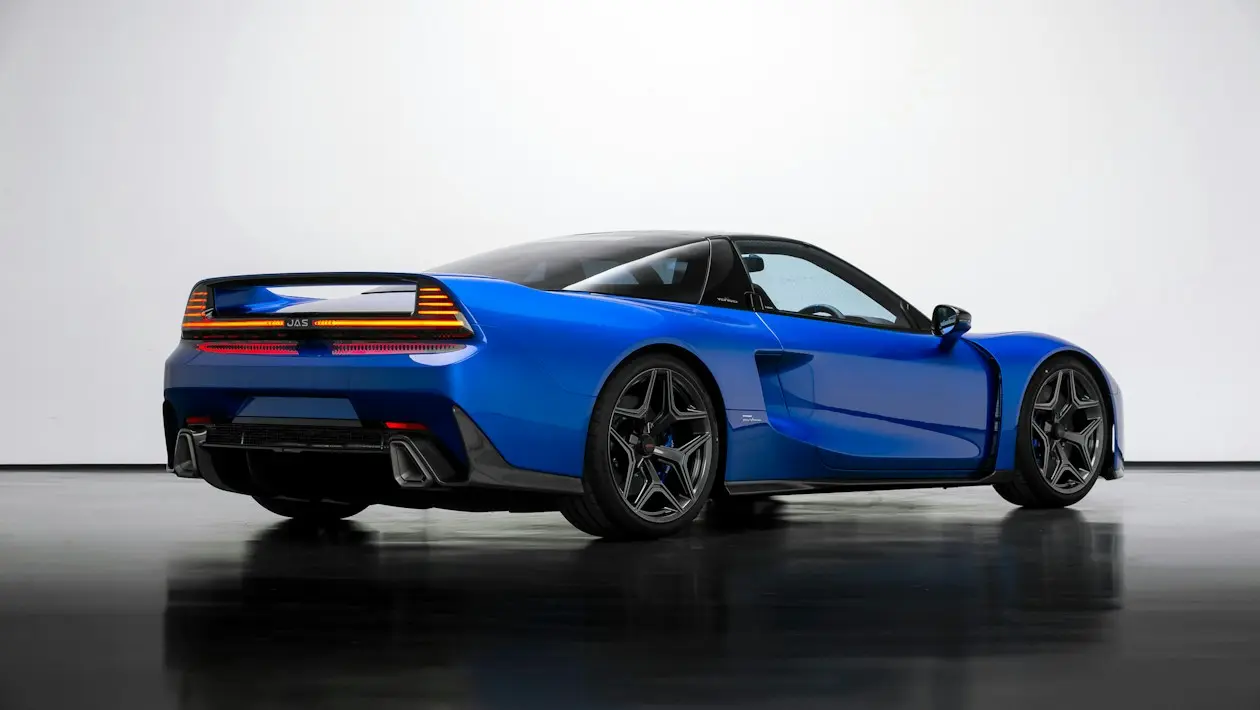
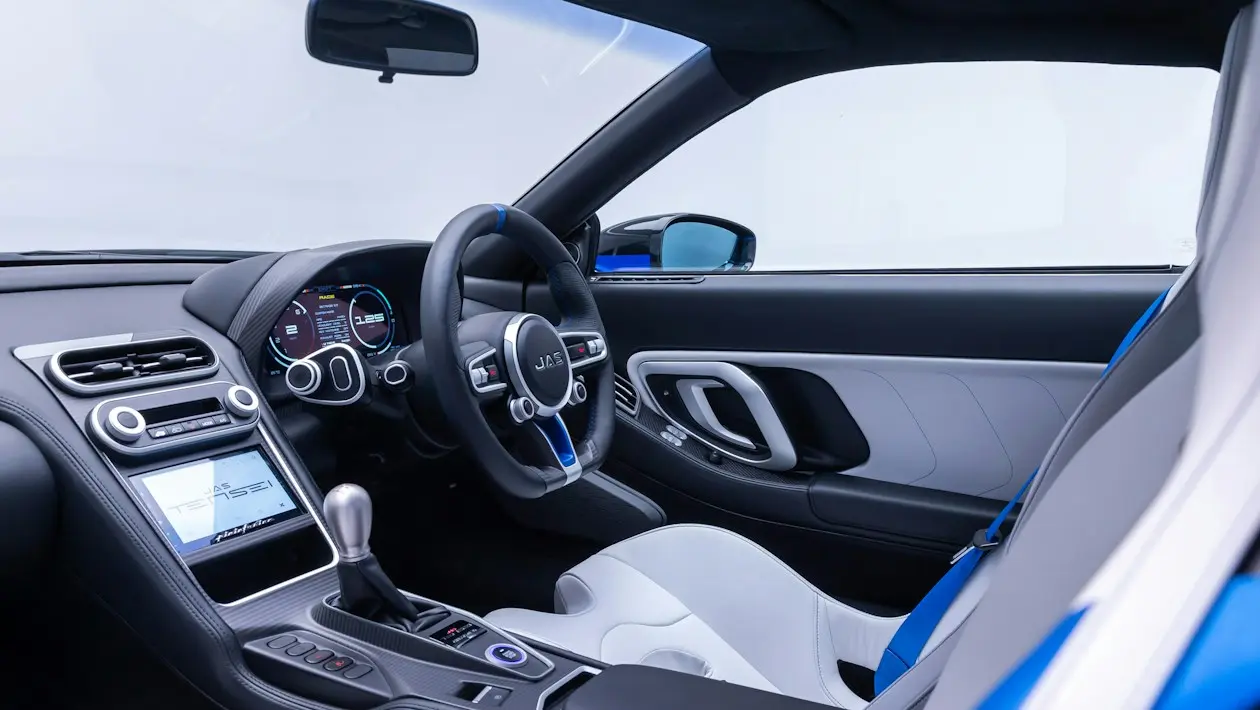
The four main images used in this article are the front, profile, rear and interior views requested from the Auto Express gallery. They are stored locally in WebP format. The image credit remains with the original gallery publisher.
A historical connection to Pininfarina
The Tensei project builds on an earlier relationship. In 1984, Honda showed the HP-X concept, a mid-engined, rear-wheel-drive sports car styled by Pininfarina. The concept preceded the development of the first-generation NSX and helped establish the idea of a Japanese sports car with supercar proportions and a mid-mounted engine.
Honda launched the NSX in 1990 after development began in the second half of the 1980s. The company wanted a sports car that could be driven accurately without becoming difficult to use every day. Its mid-engine layout, lightweight construction and good outward visibility became central to the identity of the model.
JAS and Pininfarina use that history as a starting point rather than attempting a simple restoration. Pininfarina describes the Tensei as a contemporary interpretation of the NSX spirit, with wider proportions, a lower stance and redesigned surfaces.
A 3.5-litre naturally aspirated V6
The original 3.0-litre engine has been replaced by a 3.5-litre unit from JUDD Power. It remains a naturally aspirated V6, but the rev limit rises to 8,500 rpm and output increases to 425 bhp according to the published project information. JUDD has modified the engine for road use rather than simply increasing displacement.
The lubrication system uses a dry sump, which helps maintain oil supply during hard cornering and allows the engine to sit lower in the chassis. The exhaust is new and individual throttle bodies have been added. JAS has not published an official acceleration time or top speed in the available material, so the power figure should not be turned into an invented performance claim.
The gearbox is exclusively a six-speed manual. It uses a twin-plate carbon clutch and a mechanical limited-slip differential. That choice retains one of the original NSX’s defining qualities: a direct connection between the driver, the engine and the rear wheels.
Lower mass and wider tracks
The external body panels are made entirely from carbon fibre. The declared mass is 1,250 kg, around 120 kg less than the figure associated with the original NSX in the project material. Carbon is therefore used as an engineering measure to reduce mass, not just as a visual finish.
The wheelbase grows by 55 mm and the tracks are up to 190 mm wider. Those changes alter the car’s stance and create room for wider tyres. The suspension is revised with new front double-wishbone arms, a reworked rear multi-link arrangement and adjustable KW coilovers.
To reduce the risk of scraping the new bodywork, the Tensei receives a nose-lift system. Braking is upgraded with carbon-ceramic discs, six-piston front calipers and four-piston rear calipers. The staggered wheels measure 19 inches at the front and 20 inches at the rear, with Pirelli tyres selected for track-focused use.
Familiar shape, modern details
The front keeps the idea of the first NSX’s pop-up headlights while adding modern LED elements. The side air ducts have been reshaped to improve engine cooling, and the rear wing and diffuser are bespoke to the Tensei.
From the side, the car remains recognisable as an NSX, with a low bonnet, a set-back cabin and a mid-engine coupé profile. The wider tracks and carbon panels nevertheless give it a more assertive stance. Pininfarina has not erased the original form; it has stretched and sharpened it around the updated mechanical package.
The interior retains a driver-focused architecture, but uses updated finishes and materials. The manual shifter remains central to the cabin. The changes are intended to preserve the relationship with the original car rather than replace it with a fully digital interpretation.
Price and production remain open
JAS Motorsport and Pininfarina have not announced a final price, production volume or complete delivery schedule. It is also unclear whether every customer car will use exactly the same specification as the project vehicle shown in the gallery. The published technical details describe the announced configuration, but final builds can still change.
The JAS Tensei should therefore be understood as an exclusive reinterpretation of the first-generation Honda NSX. It is not a new Honda production NSX, and Honda has not announced a return of the name through this project. Tensei does, however, combine a high-revving naturally aspirated V6, a manual gearbox, a lighter carbon body and Pininfarina design around one of Japan’s best-known sports cars.


