Photo: Porsche AG / Porsche Newsroom. The image is available for editorial use.
Porsche patents a dual-clutch gearbox with a simulated manual mode
Porsche has filed a patent for a dual-clutch automatic transmission that can be used in three ways: fully automatic, sequential and simulated manual. The filing describes a third pedal that acts like a clutch and a selector with a manual-style gate. It is a patent application, not a production announcement, and Porsche has not announced a road car that will use the system.
What the patent covers
Patent application WO2026189903A1, assigned to Dr. Ing. h.c.F. Porsche AG and published on 17 September 2026, starts with an automatic dual-clutch transmission. The document says that drivers of sporty cars can regard an automatic gearbox as less engaging than a manual one, even when the automatic offers sequential operation.
The proposed answer is not a conventional manual gearbox hidden inside a new housing. It is an automatic transmission with additional controls and software. Depending on the selected mode, the same hardware can shift by itself, respond to paddles or reproduce the driver inputs associated with a manual transmission.
Mode one: automatic operation
In the first mode, the selector works like a conventional automatic control. It can choose forward drive, reverse or neutral, while the driver uses the accelerator and brake. The control unit determines the gear changes. The additional pedal can open or close the drivetrain according to the mode logic described in the filing, but the driver does not have to select each ratio.
This would preserve the convenience associated with Porsche’s PDK. Porsche already explains that its dual-clutch transmission can be operated automatically or manually with steering-wheel paddles and a central selector. The new filing is different because it proposes a more physical manual-style interface, including a pedal that the driver can operate.
Mode two: sequential shifting
The second mode lets the driver select the next or previous gear with steering-wheel paddles or the selector. This is familiar from modern dual-clutch transmissions. The clutch control and protective functions remain automated, even though the driver chooses the shift direction.
The filing also describes a temporary transition from automatic to sequential operation after a paddle input, followed by a possible return to automatic mode. This is a description of possible control logic, not a confirmed calibration for a Porsche production car.
In sequential mode, the third pedal does not yet behave exactly like a conventional clutch pedal. It can control whether the drivetrain is open or closed while the transmission continues to manage its internal clutch operation. That separates this mode from the simulated manual mode.
Mode three: a simulated manual gearbox
The most unusual part of the patent is the third mode. The selector becomes a manual-style gear lever, and the extra pedal takes the role of a clutch pedal. Patent illustrations and descriptions referenced in coverage show a gate with reverse and forward gears in an H-pattern layout.
When the driver presses the pedal, the control unit can open the dual-clutch transmission. Moving the lever identifies the requested ratio, and the transmission actuators execute the change. The driver therefore receives the familiar actions of a manual car without the complete mechanical architecture of a conventional manual gearbox.
The accurate description is “simulated manual”, not a traditional manual transmission. The patent does not show a direct mechanical connection from the lever to synchronisers and selector forks. The inputs are interpreted electronically and sent to an automatic transmission.
Why Porsche might explore it
Porsche uses PDK transmissions across much of its range because they combine rapid shifts with everyday convenience. At the same time, the brand continues to offer manual gearboxes on selected sports cars. Porsche says that PDK can already be controlled manually with paddles, but some customers want the physical rhythm of a clutch pedal and a gated lever.
A three-mode system could allow one drivetrain to cover different situations. In traffic, the driver could use automatic mode. On a fast road, the paddles could provide sequential control. On a circuit or for a more traditional experience, the driver could select the H-pattern gate and pedal.
There are costs and engineering risks. A third pedal, a more complex selector, sensors, actuators and software calibration add components. The system must prevent an unsuitable gear request, control clutch wear and manage launches without unexpected behaviour. The patent describes possible solutions; it does not provide production durability data, safety test results or a launch date.
The difference from Porsche E-Shift
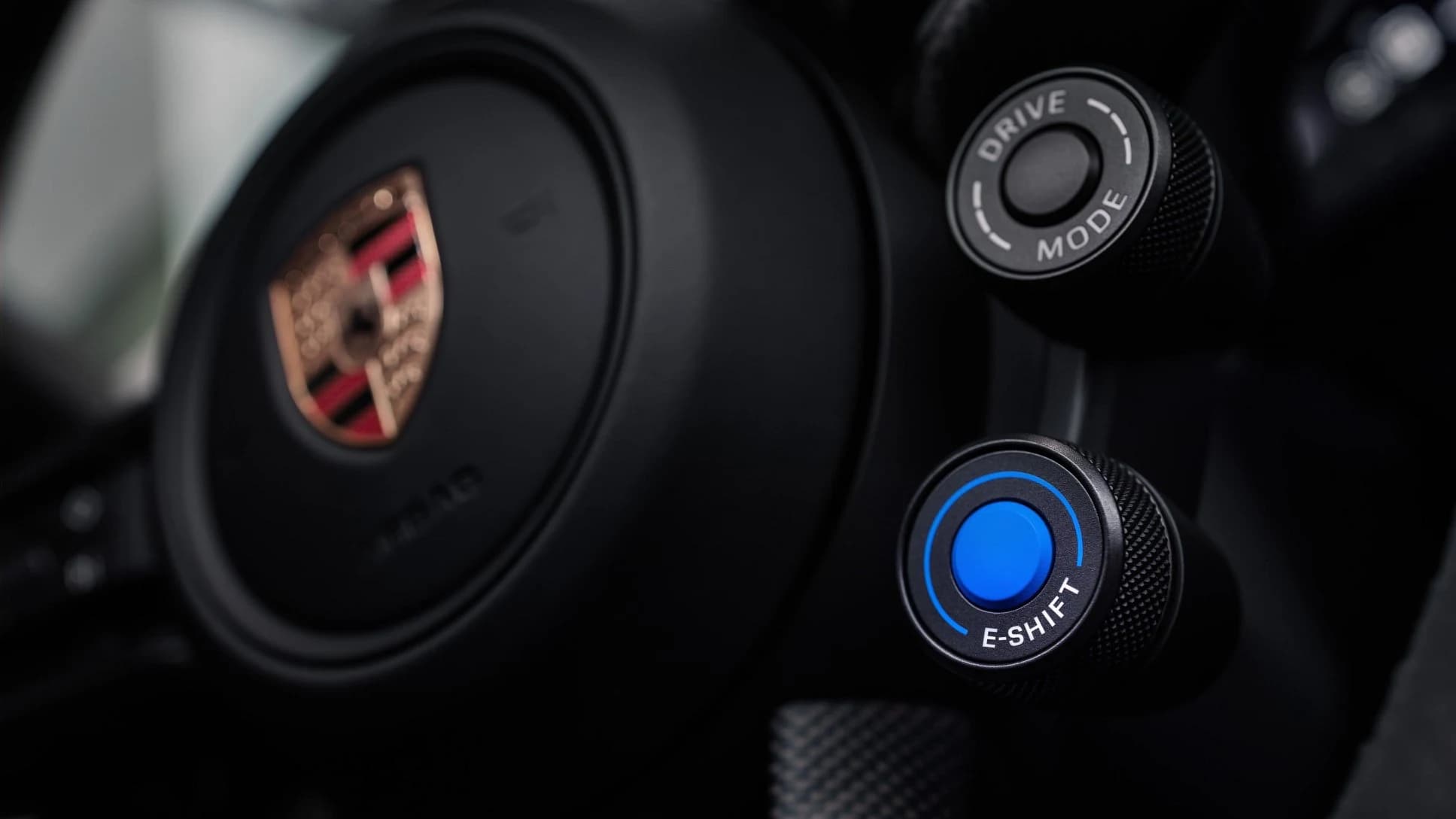
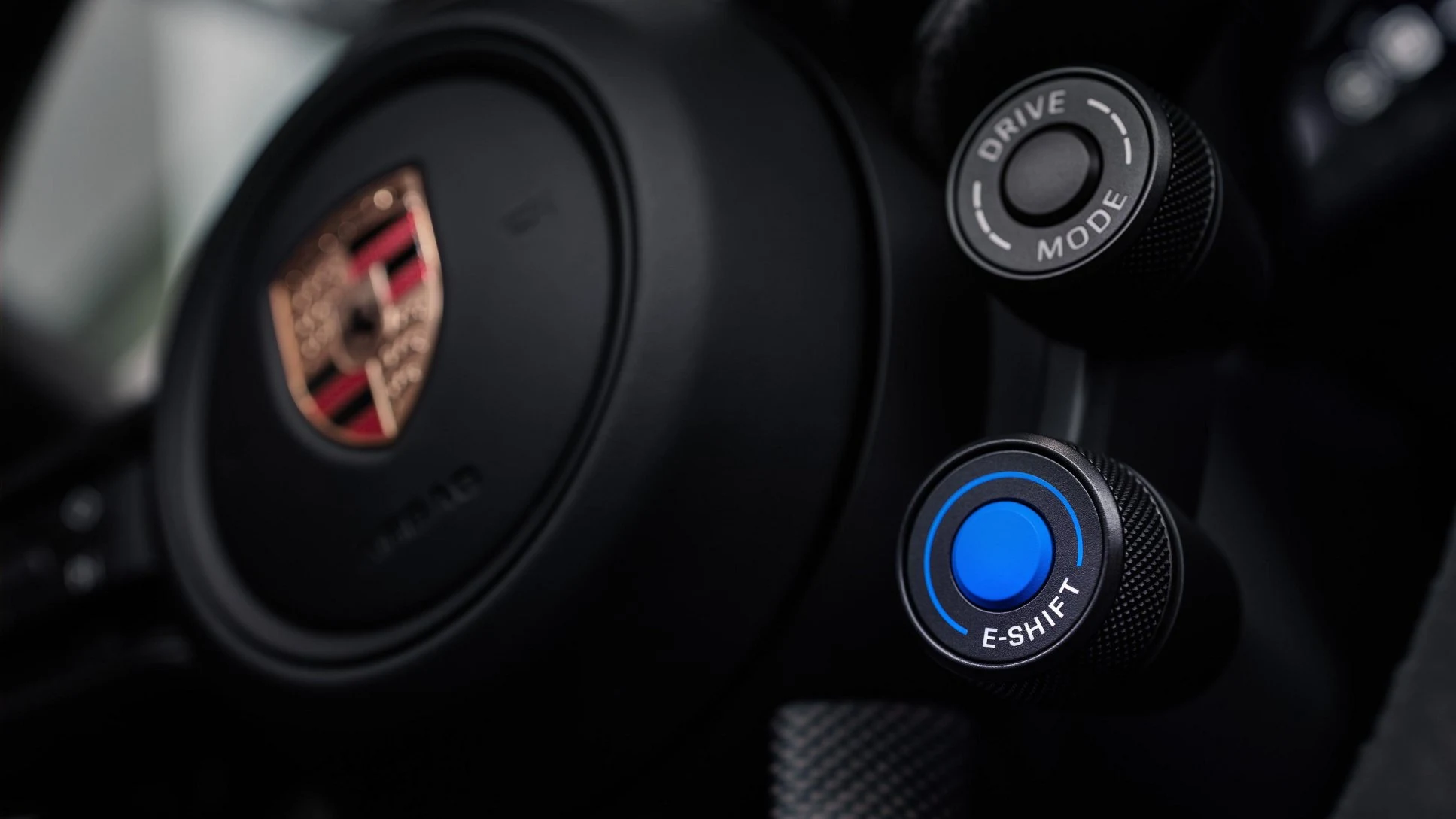
The patent should not be confused with E-Shift, the feature Porsche introduced for the Taycan in 2026. E-Shift is software that simulates an eight-speed PDK in an electric car. Porsche says it adds virtual gear changes, brief interruptions in acceleration, sound and tactile feedback without changing the car’s overall performance.
The two ideas address a similar question but use different hardware. E-Shift works with the Taycan’s electric drivetrain and existing rear-axle two-speed transmission. WO2026189903A1 describes a combustion-engine vehicle with a dual-clutch automatic, a configurable selector and a third pedal. The patent also says the concept could be used in hybrid vehicles.
Porsche has a long history of combining automation with driver control. The brand’s Tiptronic system introduced manual intervention in an automatic transmission, while PDK added rapid dual-clutch shifts and paddle control. The new filing extends that direction by trying to reproduce the physical inputs of a manual gearbox rather than only its shift commands.
A patent is not a product plan
A patent protects a technical idea and gives a manufacturer room to develop it. It does not confirm a supplier contract, an approval, a price, a vehicle programme or a production date. Porsche may implement only part of the concept, change the design or never use it in a customer car.
The filing is still useful because it shows how Porsche is thinking about driver involvement while automatic transmissions and electrification continue to spread. For buyers, the conclusion is limited but clear: Porsche has described and protected a three-mode transmission concept, but there is no announced production model with this gearbox.