Porsche has named Mercedes-Benz executive Jörg Bartels as its next head of research and development, with the handover scheduled for May 2027. He will succeed Michael Steiner, who has led the Executive Board division since 2016 and served as deputy chairman since 2025. Porsche announced the succession on 30 October 2026, rather than an immediate change in responsibility.
Bartels, 52 at the time of the announcement, currently oversees global development of all powertrain systems at Mercedes-Benz. Steiner, 62, will finish his tenure almost 25 years after joining Porsche. The incoming executive will inherit an R&D organisation whose responsibilities have already expanded to include Car-IT, alongside a strategy calling for fewer model variants and lower development costs.
A broader brief than powertrains alone
Porsche describes Bartels as having more than 26 years of automotive industry experience. His work has ranged from individual components and complex vehicle systems to complete platforms and product lines. He has also led development organisations in Europe and Asia, covering the path from technical conception to industrialisation.
His previous posts include president and CEO of Beijing Benz Automotive Co., or BBAC, in China. That experience is relevant to the international scope of the job, but the appointment announcement does not identify a specific future Porsche that will be assigned to him. Nor does moving from Mercedes-Benz imply that engines or other technology will move with him.
Porsche CEO Michael Leiters says he and Steiner prepared the transition together and will coordinate the handover with the successor. Leiters expects Bartels to continue the realignment of research and development already under way. That sets out management's intention for the role; it is not evidence of changes Bartels has already delivered at Porsche.
Steiner's route from Panamera to the Executive Board
After studying mechanical engineering at the Technical University of Munich and completing a doctorate, Steiner began his automotive career at Mercedes-Benz in 1995. He joined Porsche in 2002 as head of Innovations, Concepts & CAE, while also holding a chief representative role at Porsche Engineering Group.
In 2005 he took charge of the Panamera model line. Responsibility for Complete Vehicle Development and Quality followed in 2011, before his appointment to the Executive Board for Research and Development in 2016. The division is based at Porsche's Weissach Development Center. From 2022 to 2025, he also headed Volkswagen Group research and development, dealing with technology and architecture topics across the group.
Porsche associates Steiner's work with both the 991 and 992 generations of the 911. His contribution therefore needs to be understood across his longer engineering career at the company, rather than treating every project mentioned as something that began after his 2016 board appointment. His deputy chairmanship was added in 2025, not at the start of that R&D tenure.
Electric, hybrid and chassis projects
Among the programmes Porsche highlights is the launch of the Taycan as its first all-electric production car, using an 800-volt architecture. The manufacturer also identifies Porsche Active Ride in the Panamera and the T-Hybrid powertrain introduced in the 911 Carrera GTS and 911 Turbo S as work developed under Steiner's leadership.
This is a portfolio spanning battery-electric vehicles, hybrid sports cars and chassis systems. It does not support a claim that the leadership change itself ends Porsche's electric development or commits it exclusively to combustion engines. The announcement contains no replacement technical specification for a future 911 and no change to current customer order terms.
Motorsport also appears in Porsche's account of the outgoing executive's tenure. In 2017 the company secured the LMP1 triple for a third consecutive year: victory at the 24 Hours of Le Mans, the manufacturers' world championship and the drivers' title in the FIA World Endurance Championship. Porsche also points to its Formula E entry and subsequent championship titles. Those are company and team achievements, not results attributable to one executive alone.
Software responsibilities are already inside R&D
A separate restructuring announced on 7 May 2026 reduced Porsche's Executive Board divisions from eight to seven. Car-IT was to be integrated into Research and Development with effect from 1 July 2026, with Steiner leading the enlarged division. Bartels will therefore take over a remit that includes vehicle software responsibilities as well as conventional engineering.
Porsche said Sajjad Khan would subsequently contribute through a software partnership model. Its explanation of that restructuring discussed connectivity, infotainment and digital interfaces, including the Porsche Digital Interaction design language introduced with the electric Cayenne. The organisational change helps explain why the incoming development chief's job cannot be assessed solely through his current powertrain title.
The targets Bartels will work towards
Porsche presented Sportwagenschmiede ’35 at its Capital Markets Day in Weissach on 7 October 2026. The strategy targets roughly 20 per cent fewer model variants, development costs for future model lines reduced by up to 20 per cent, and a break-even point below 200,000 vehicles. These are ambitions, not savings or operational results already achieved.
The same plan retains investment in combustion and plug-in hybrid powertrains alongside next-generation battery technology. Porsche also intends to deepen collaboration with Audi through PPE and PPC platforms while preserving brand-specific technology and characteristics. Bartels is tasked with implementing the strategy within R&D; the appointment does not provide a separate model-by-model programme or a new product timetable under his own name.
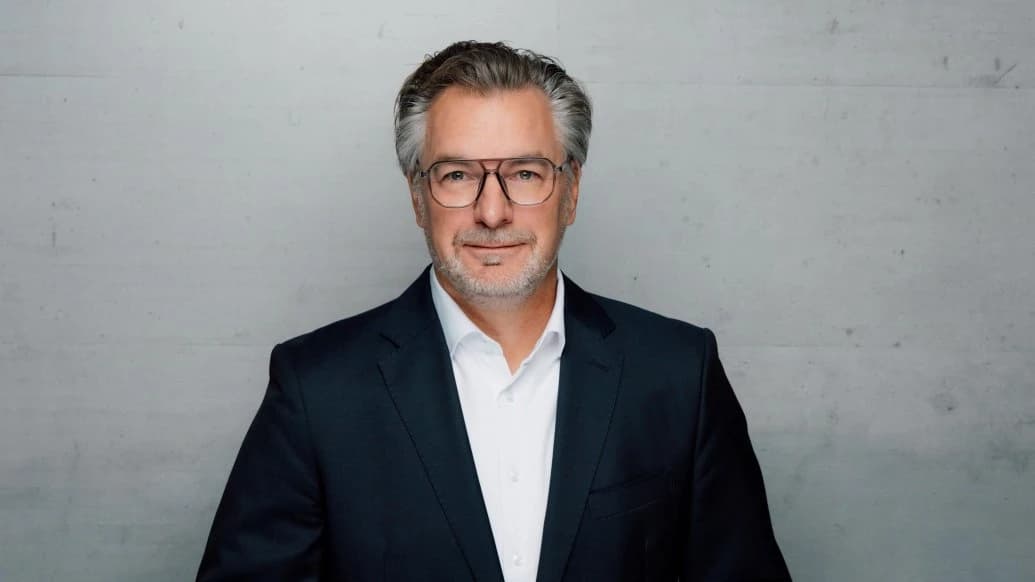
Jörg Bartels will become Porsche’s head of research and development in May 2027. Official portrait, 2026. © Porsche AG · Porsche Newsroom.