Renault Group CEO François Provost has challenged the idea that Romania’s Rabla car-scrappage support should treat a vehicle built at Dacia’s Mioveni plant in the same way as a car imported from outside Europe. His comments, reported by Libertatea, were made in the context of stronger Chinese competition and lower production volumes at the Romanian factory.
Provost did not call for a general ban on Chinese brands. He said he was ready to compete with them, but questioned whether public money should provide an identical incentive when one purchase supports a Romanian industrial base and the other brings a finished vehicle into the country. That is a political and commercial argument from Renault’s chief executive, not a change to Rabla eligibility.
What the Romanian scheme currently does
Rabla is administered by Romania’s Environmental Fund Administration, or AFM. A private buyer hands an old vehicle to an authorised collector, completes the scrapping and deregistration steps, and applies an eco-voucher to a new eligible vehicle through a validated manufacturer or dealer. The programme therefore reduces the buyer’s purchase price; it is not a direct payment to a factory for making a car in Romania.
For the 2026 edition, AFM published a total allocation of 300 million lei. The announced voucher values were 18,500 lei for a battery-electric or hydrogen fuel-cell car, 15,000 lei for a plug-in hybrid, 12,000 lei for a conventional hybrid and 10,000 lei for an eligible combustion car, including LPG or CNG. The programme also included price and emissions limits. Diesel cars were not funded in that edition.
Those rules mainly describe the vehicle’s powertrain, emissions and the applicant’s scrappage obligations. They do not automatically favour a Romanian-built vehicle. Provost’s intervention asks whether future schemes should add a location or economic-contribution test alongside environmental criteria.
Why Mioveni matters to the argument
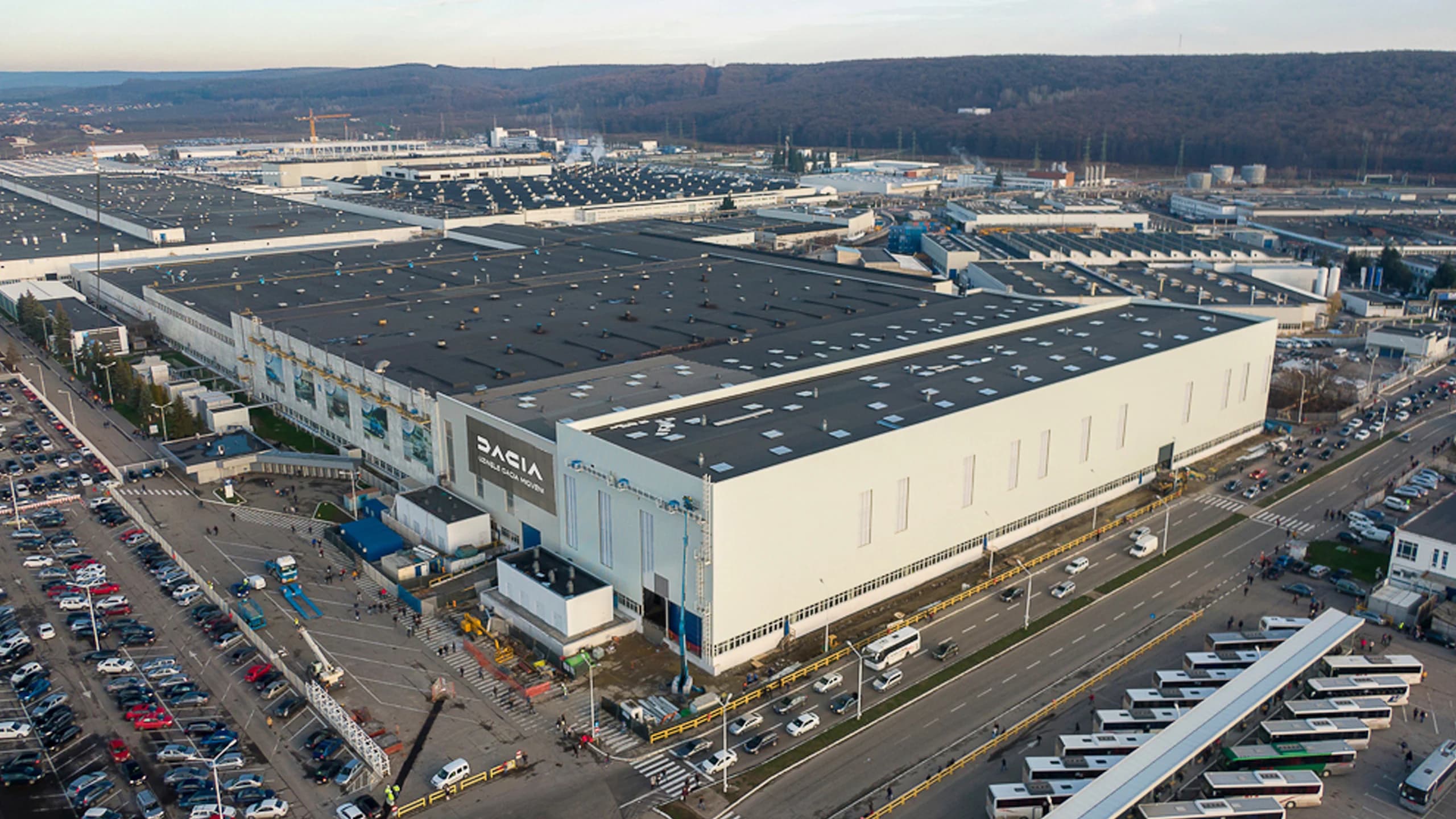
Renault Group says the Mioveni plant was inaugurated in 1968 and integrated into the group in 1999. The site contains stamping, body, chassis, paint, assembly and logistics operations. The group lists 6,096 employees as of 31 December 2025 and says more than 88% of the vehicles made at Mioveni are exported.
The official plant page says Mioveni reached a cumulative total of eight million Dacia vehicles in 2025. It also identifies Duster and Bigster as the current vehicle products and reports 175,318 Duster units and 100,375 Bigster units produced during 2025. Those are manufacturer production figures, not independent measurements or Romanian registration totals.
The site’s role is different from the period when Logan, Sandero and Jogger were more closely associated with Romanian assembly. Dacia models are now distributed across several plants. The source report says Sandero, Logan and Jogger are made in Morocco, while other programmes are linked to Turkey, Slovenia and China. The Spring is a useful example of why origin needs to be checked version by version: older production was associated with China, while the new generation is linked to Slovenia.
For Romania, the industrial question is not limited to cars leaving the final assembly line. A vehicle plant depends on suppliers, transport companies, maintenance contractors, logistics providers and export flows. Provost referred to around 10,000 people at Dacia, plus suppliers and investment. That is his formulation in the interview, not a new independent employment study.
Chinese competition is not one single category
Provost said Chinese brands represent about 10% of the market and put particular pressure on production connected with Dacia in Romania. That figure should be attributed to him. The European market contains different Chinese groups, products and manufacturing arrangements, including BYD, Chery and SAIC. Their prices, service coverage and powertrain strategies are not identical.
The European Union already applies trade measures to some vehicles made in China. After its anti-subsidy investigation, the European Commission imposed definitive countervailing duties on battery-electric vehicles imported from China in October 2024. The rates range from 7.8% to 35.3%, depending on the producer and its status in the investigation. The measure is not a blanket ban and does not automatically apply to every Chinese car or every hybrid vehicle.
That distinction matters for a Rabla rule. A European brand can build a car in China. A Chinese brand can assemble a vehicle in Europe. Components can cross several borders before final assembly. A definition based on company nationality would produce a different result from one based on final assembly, value added or component origin. The source report also mentions concerns from producers connected with Turkey, Japan, South Korea and the United Kingdom.
Energy costs and industrial competitiveness
Provost also criticised the cost of electricity in Romania and asked the government to look for ways to support industry. The interview does not provide a comparable methodology for industrial electricity prices in every European country, so the claim should be treated as the Renault CEO’s assessment.
Energy is relevant to vehicle manufacturing because stamping, welding and paint shops use large amounts of electricity and heat. It is only one part of competitiveness. Labour cost, productivity, automation, logistics, supplier quality, exchange rates, financing and order volumes also affect a plant’s economics. A factory can remain strategically important while adjusting its shifts or output to match dealer orders and export demand.
Renault Group’s official description keeps Mioveni inside its industrial network. That does not guarantee fixed annual volumes or mean every future Dacia model will be built in Romania. Product platforms, capacity, cost and the allocation of programmes between plants remain management decisions.
What a “Made in EU” test could change
A future origin test could make some vehicles eligible and others ineligible even when they use similar technology. That may affect cars assembled in China, Morocco, Turkey, the United Kingdom or the EU differently. It could also create difficult questions for European manufacturers with global supply chains and for countries that have trade agreements with the EU.
For the buyer, origin would be only one part of the decision. The exact version, price after the voucher, delivery time, warranty, repair network, parts supply and running costs would still matter. An eco-voucher is a conditional discount, not a guarantee of reliability, residual value or technical superiority.
Provost also said Renault can compete technologically with Chinese manufacturers, referring to connectivity, driver assistance and in-car artificial-intelligence services using Gemini. Those are statements from the company. They are not Carboratory test results. A fair comparison would need to examine individual vehicles, prices, software support, charging, efficiency, warranty terms and service availability.
His comments therefore do not remove any brand from Rabla. They move the debate from the amount of the voucher to the purpose of the programme. Romania could focus on fleet renewal and emissions, industrial employment, European value creation, or a combination of those goals. Any change would need a published rule that defines origin and eligibility precisely; a statement from a manufacturer executive cannot do that by itself.