RJ Scaringe leads Rivian and co-directs, with Volkswagen, the RV Tech joint venture. Photo source: Rivian
Rivian and VW: the RV Tech architecture and the future of Audi and Porsche EVs
Volkswagen Group and Rivian are working, through the Rivian and Volkswagen Group Technologies (RV Tech) joint venture, on a zonal electrical architecture and software for software-defined vehicles (SDVs). The investment announced in 2024 can reach $5.8 billion (about €5 billion). The aim: fewer computers and cables, better OTA updates, lower costs — on the future SSP platform and, earlier, on the first series-production model with RV Tech SDV: the Volkswagen ID.EVERY1 (2027).
On 21 August 2026, RJ Scaringe (Rivian founder and CEO) set out, in an interview with the British title Auto Express, how he sees the partnership: the emphasis is on product, not only on the financial transaction. Technical facts and the timetable come from Volkswagen Group releases; the interview quotes below are editorial paraphrase, not new statements from the German group.
What RV Tech does
The joint venture (founded in November 2024, 50–50 ownership) starts from Rivian’s electrical and software stack. RV Tech is developing:
- zonal architecture — functions grouped by vehicle zones, controlled by a few modular central computers, instead of dozens or hundreds of specialised ECUs;
- SDV software — infotainment, driver assistance, functions that can be updated over the air, without a workshop visit for every improvement.
Volkswagen says the target is the western hemisphere (Europe, North America and so on). Rivian is taking the same direction on R2 (USA, 2026), then R3 / R3X and the updated R1 generations.
The team exceeds 1,500 engineers, with centres in the USA (Palo Alto, Irvine), Canada, Sweden, Serbia and Berlin — the last of those for the link with the European brands.
Winter testing: what was validated
On 27 March 2026, Volkswagen announced the completion of the winter test programme for the “production-intent” SDV architecture (close to series):
| Stage | Where | What was tested |
|---|---|---|
| Software preparation | Phoenix, Arizona | key functions, preparation of reference vehicles |
| Cold resistance | Arjeplog, Sweden | snow, ice, dynamics |
| Final validation | Germany, Sweden | approval runs with the brands’ development leadership |
Reference vehicles: Volkswagen ID.EVERY1, an Audi model and a Scout model (the group’s North American brand). Checks included, among other things, all-wheel drive, traction control, dynamic behaviour and OTA — “hundreds” of test cycles, according to Volkswagen.
Oliver Blume (Volkswagen Group CEO): the tests show the “speed and precision” of collaboration between the JV, the brands and the group.
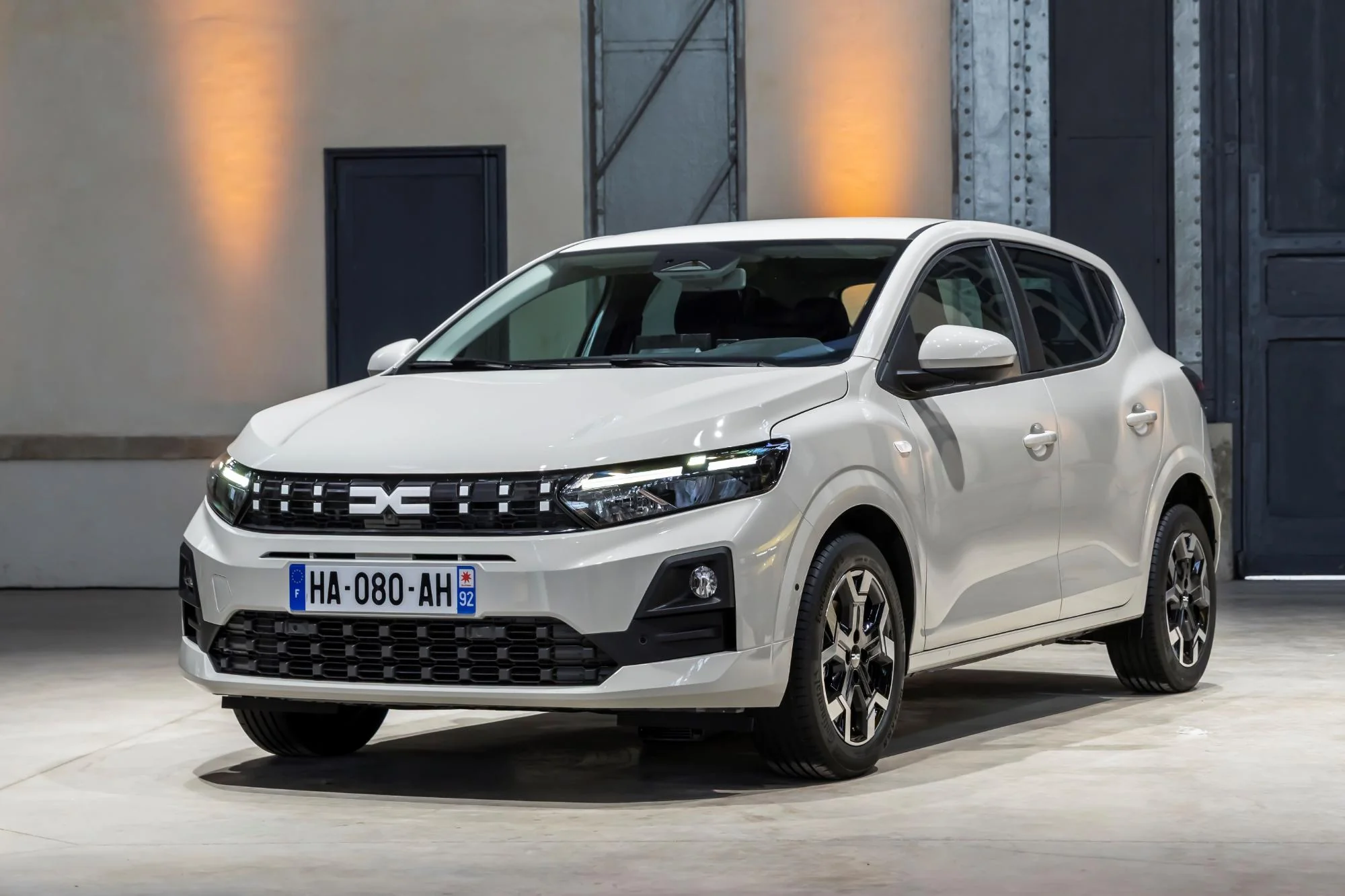
Auto Express wrongly named the future entry-level car “ID. Lupo”. Volkswagen’s official name remains ID.EVERY1 — a small hatch, announced for 2027, with a previously communicated starting price of around €20,000 (European urban segment). The bodywork in the winter tests is not the final series appearance.
SSP: where Audi, Porsche, Skoda and Cupra come in
Over the longer term, the RV Tech SDV architecture is due to equip EVs on the SSP (Scalable Systems Platform). Volkswagen speaks of a potential volume of up to 30 million units at group level — a platform-capacity figure, not an annual sales forecast.
Brands mentioned in an SSP / SDV context: Volkswagen, Škoda, Cupra, Audi, Porsche, plus Scout in the USA. ID.2all (about €25,000, 2026) stays on the E3 1.1 / Cariad architecture, not the Rivian stack — an important distinction: not all EVs close in price will share the same software.
Porsche and Audi are preparing qualification programmes (planned from May 2026): engineers sent to RV Tech, then internal “multipliers” in Wolfsburg or Ingolstadt — a sign that Rivian SDV will also reach sport premium, not only the volume segment.
Why Rivian, after years of Cariad delays
The German group invested heavily in Cariad for its own software; projects ran late and costs affected launches (ID. series, Audi, Porsche). The Rivian partnership brings a stack already operating on R1 gen. 2 and on the way to R2 — plus capital: $1bn convertible at the start, about $1.3bn at JV close for IP licences and 50% equity, up to $3.5bn more tied to milestones (according to the 2024 release).
Scaringe, in the 21 August interview: the collaboration is not seen “just as a business”, but as a way to put “excellent products” on the road. He says Oliver Blume is a “product person” and a car enthusiast — alignment that helped the negotiation.
A biographical detail from the same interview (no technical impact): Scaringe’s first car was reportedly a VW Corrado; he also keeps a Porsche 993 Carrera 4S in the garage. Porsche is said to have inspired him to found Rivian at 26, after MIT — personal context for the relationship with the German brands, not a launch calendar.
What this means for Romania
There is no local calendar for Rivian SDV. For the Romanian market the relevance is indirect:
- VW, Škoda, Cupra, Audi, Porsche sell here; future SSP/SDV EVs will arrive, if EU-homologated, through the existing network.
- ID.EVERY1 targets European entry level — a low price, OTA software; it is not explicitly confirmed for Romania at launch.
- OTA updates could bring new functions (ADAS, infotainment) without a physical recall — if legislation and the service network support them.
- Rivian R2 in Europe remains a separate subject (Scaringe, 17–19 August 2026) — it is not the same thing as the software in ID.EVERY1.
Frequently asked questions
Will all VW EVs use Rivian software?
Not immediately and not all of them. The first confirmed with RV Tech architecture in series is ID.EVERY1 (2027). ID.2all (2026) stays on another architecture. SSP + SDV is the medium-term direction for several brands.
How much has Volkswagen invested?
Up to $5.8 billion through 2027, in tranches tied to milestones (2024 release). Not all of the sum is received by Rivian; part finances the JV.
Do the winter tests guarantee there will be no bugs at launch?
No. They are an engineering milestone under extreme conditions, not a final series certification. Subsequent development phases continue.
Will Porsche have the same interface as a cheap Volkswagen?
Unknown. The zonal architecture is shared; functions and UI remain brand-specific — Volkswagen promises “brand-specific” integration through the qualification programmes.
Sources
- Volkswagen Group — RV Tech SDV winter tests (27 March 2026)
- Volkswagen Group — JV progress after one year (November 2025)
- Volkswagen Group — joint-venture launch, up to $5.8bn (2024)
- Rivian — SEC Form 8-K, JV agreement (12 November 2024)
RJ Scaringe’s remarks on partnership culture and Porsche come from the interview published by Auto Express on 21 August 2026; they are not official Rivian/VW releases.