The next Audi A3 generation should receive a simpler interior, materials that feel better to the touch and more controls with mechanical response. The direction was described by Rouven Mohr, Audi's technical director, in an interview with Auto Express.
Audi has not yet presented the car, nor announced a launch date. The comments show, however, that the manufacturer wants to restore one of the qualities that differentiated the first A3 generations: the feeling that the compact used the same attention to finishes and ergonomics as the brand's more expensive cars.
Audi wants ordinary models to take ideas from the concepts
Mohr explained that the Audi Concept C and Nuvolari models set the brand's new direction, and elements of them will also reach volume cars. His list includes a cabin with fewer visual elements, controls with mechanical reaction, a round steering wheel and better material quality.
In the case of the future A3, these ideas are harder to apply than on a model built in small series. The compact must remain competitive on price and shares components with other Volkswagen Group cars. Any more expensive material or mechanism is multiplied across a large production volume.
Even so, the technical director used the first-generation A3 itself as a benchmark. According to Mohr, the model launched in the 1990s offered a perception of quality close to that of the A8 saloon of the same period, including in the way the switches worked.
Buttons are not disappearing, and neither are screens
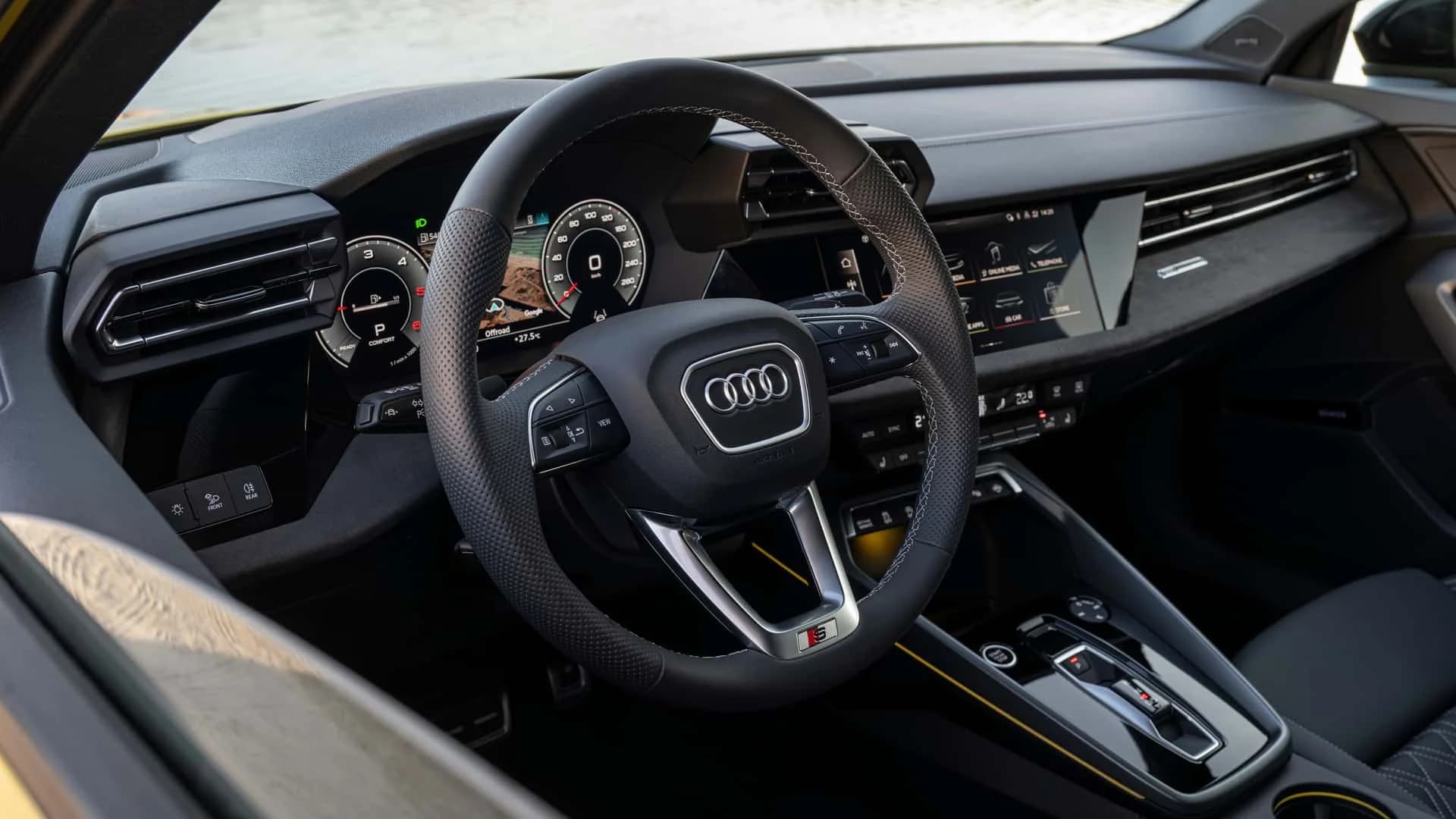
Audi's comments do not indicate a return to a fully analogue dashboard. The future A3 will keep digital instruments and a multimedia system with a touchscreen. The change sought is a more balanced ratio between digital functions and controls that can be operated without the driver navigating through menus.
Concept C offers a few clues to this approach: separate buttons, less cluttered surfaces and controls that produce a clear tactile response. The exact form of the future A3's dashboard is not confirmed, however. Digital images published so far by the motoring press are interpretations, not official photographs of the production model.
The change of direction is all the more interesting because the current A3 has just received an update that moves climate controls onto the screen. The version presented in June 2026 uses 11.9-inch digital instruments and a 12.8-inch multimedia screen. The steering wheel has mechanical rollers, but also retains touch surfaces.
Why a control's mechanical response matters
A physical button is not automatically better than a digital command. Its position, the force needed to press it and the function assigned matter more than mere presence. The advantage appears when the driver can identify and operate a frequent function without looking at the screen for long.
Audi talks about “mechanical feedback”: that resistance followed by a click that confirms actuation. It is a practical characteristic, but also one that influences the perception of quality. Two cabins can use the same type of plastic, yet the precision of a rotary control or the absence of play in a switch can make them seem very different.
For the A3, the challenge is to combine these details with functions such as navigation, phone pairing, software updates and assistance systems. Some of these are easier to administer on a screen, while temperature, demisting, volume and drive modes can benefit from permanent shortcuts.
The next A3 is expected to keep combustion engines
According to information published by Auto Express and picked up by Motor1, the next A3 will continue on a heavily revised version of the MQB platform. This is the transverse-engine architecture also used by the Volkswagen Golf, Škoda Octavia and Cupra Leon.
That solution would allow combustion powertrains and electrified versions to be retained. Audi has not yet communicated the engine range, and the disappearance of diesel from the future offer is, for now, a press hypothesis, not an official decision. Nor has the launch of a fully electric A3 version within the same family been confirmed.
Continuing the combustion model makes sense in Audi's new strategy. The company no longer sets a single year after which it will sell exclusively electric cars and is adapting its range according to demand and regulations in each market.
When the new Audi A3 could appear
The timetable remains unclear. British sources place the model toward the end of the decade, after the debut of the future electric A4, expected in 2028. Audi has not confirmed either of these dates for the A3, so a presentation or start of production can change during development.
Until then, the current generation remains on offer in Sportback, Sedan and allstreet versions, alongside the S3 and RS 3. The 2026 update extends the model's life through the new dashboard and revised assistance systems, but the greater dependence on a screen shows how different the next generation's philosophy could be.
For buyers in Romania, the promise of a better interior does not yet change a purchase decision: there are no prices, equipment lists or a delivery date. The confirmed details are, for the moment, the design priorities expressed by Audi's technical leadership.