
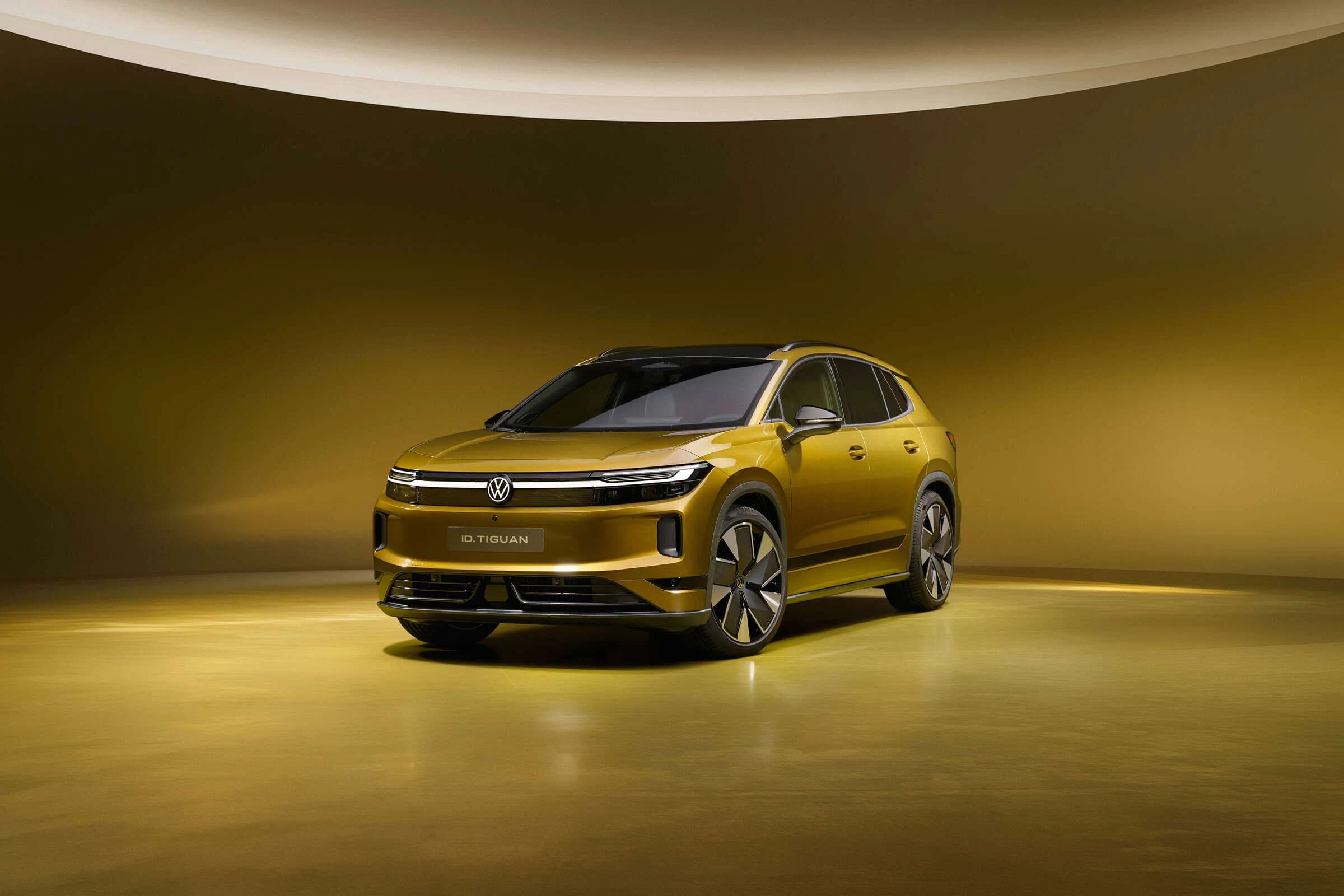
Volkswagen has revealed the new ID. Tiguan, an electric mid-size SUV that will take over the role currently held by the ID.4 and ID.5. The new model is scheduled to reach European markets at the beginning of 2027, while the combustion and hybrid Tiguan will remain on sale alongside it. Pre-sales in Germany and several other European countries are due to start on 13 October 2026, with prices from €42,695.
The name is a significant part of the announcement. Volkswagen is moving away from the ID.4 and ID.5 names for this particular electric SUV and is using the established Tiguan badge instead. The company says the electric model will be built at its Emden plant, while the petrol, diesel and hybrid Tiguan will continue to be produced in Wolfsburg. Buyers will therefore see two cars carrying the Tiguan name but using different platforms, factories and powertrain families.
Three powertrains, two battery sizes
Volkswagen has announced three versions. The entry-level ID. Tiguan uses a rear-mounted electric motor with 140 kW, or 190 PS, and a 58 kWh battery. The next rear-wheel-drive version develops 210 kW, equal to 286 PS, and uses a 77 kWh battery. The range-topping model produces 220 kW, or 299 PS, from a dual-motor 4MOTION all-wheel-drive system and also uses the 77 kWh battery.
The maximum claimed range is 600 km on the WLTP cycle. Volkswagen presents this as a range ceiling for the line-up rather than a figure that applies to every version. The company quotes combined energy consumption of 15.7 to 17.2 kWh/100 km for the 220 kW car, depending on specification and equipment. The figures are official type-approval information, not an independent road test.
Towing capacity is 1,800 kg for the 58 kWh version and up to 2,000 kg for models with the larger battery. That is a useful distinction for customers choosing an electric family SUV for a trailer or caravan. The car also has a 32-litre frunk, while rear luggage capacity reaches 534 litres. Volkswagen has not yet published every exterior dimension in the launch material, so length, wheelbase and ground clearance should not be assumed from the photographs.
A more conventional SUV design
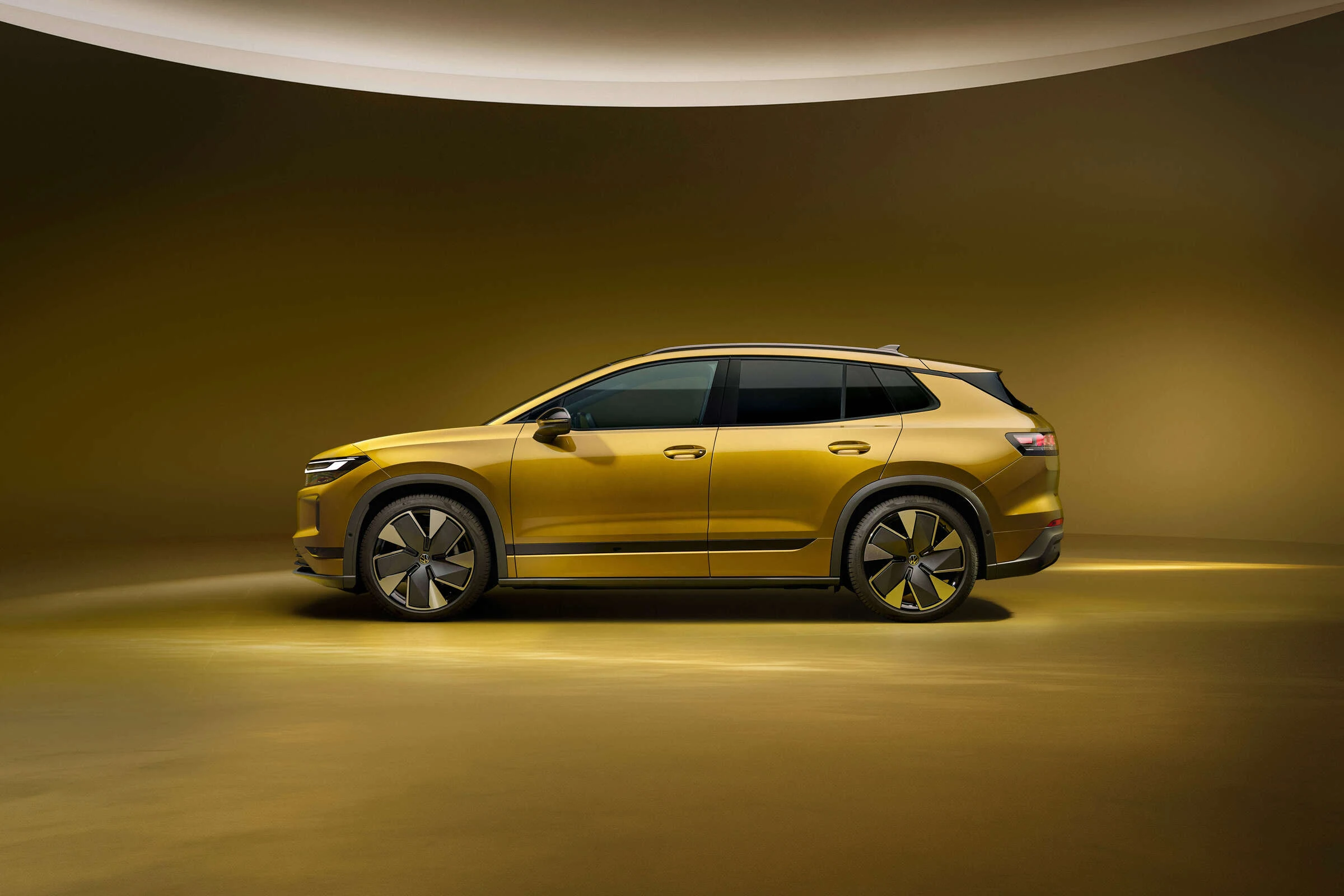
The ID. Tiguan moves away from the softer crossover appearance associated with the earliest ID models. Volkswagen calls the design language “Pure Positive” and describes a body with precise lines, tightly controlled surfaces and the visual presence of a vehicle from the class above. Classic pull-style door handles return, replacing the fully flush solutions used on some electric cars.
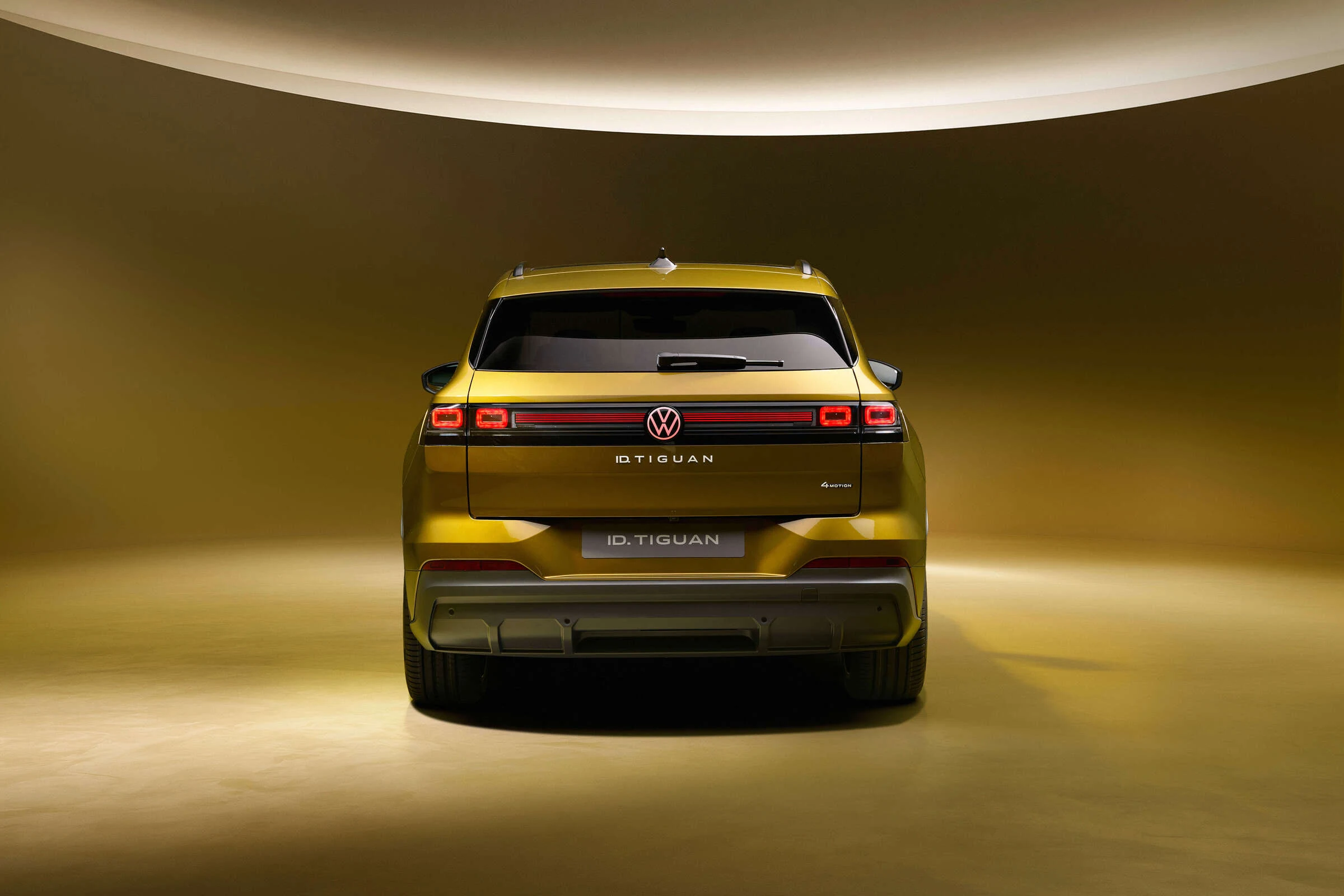
The official images show a wide front end with a continuous light signature and a narrow illuminated strip between the headlamps. The side view has a straightforward window line and a clean shoulder. At the rear, a full-width light element links the lamps and the tailgate keeps a relatively upright shape intended to preserve everyday usability. These are design observations from the official images; Volkswagen has not described them as performance claims.
A new display landscape inside
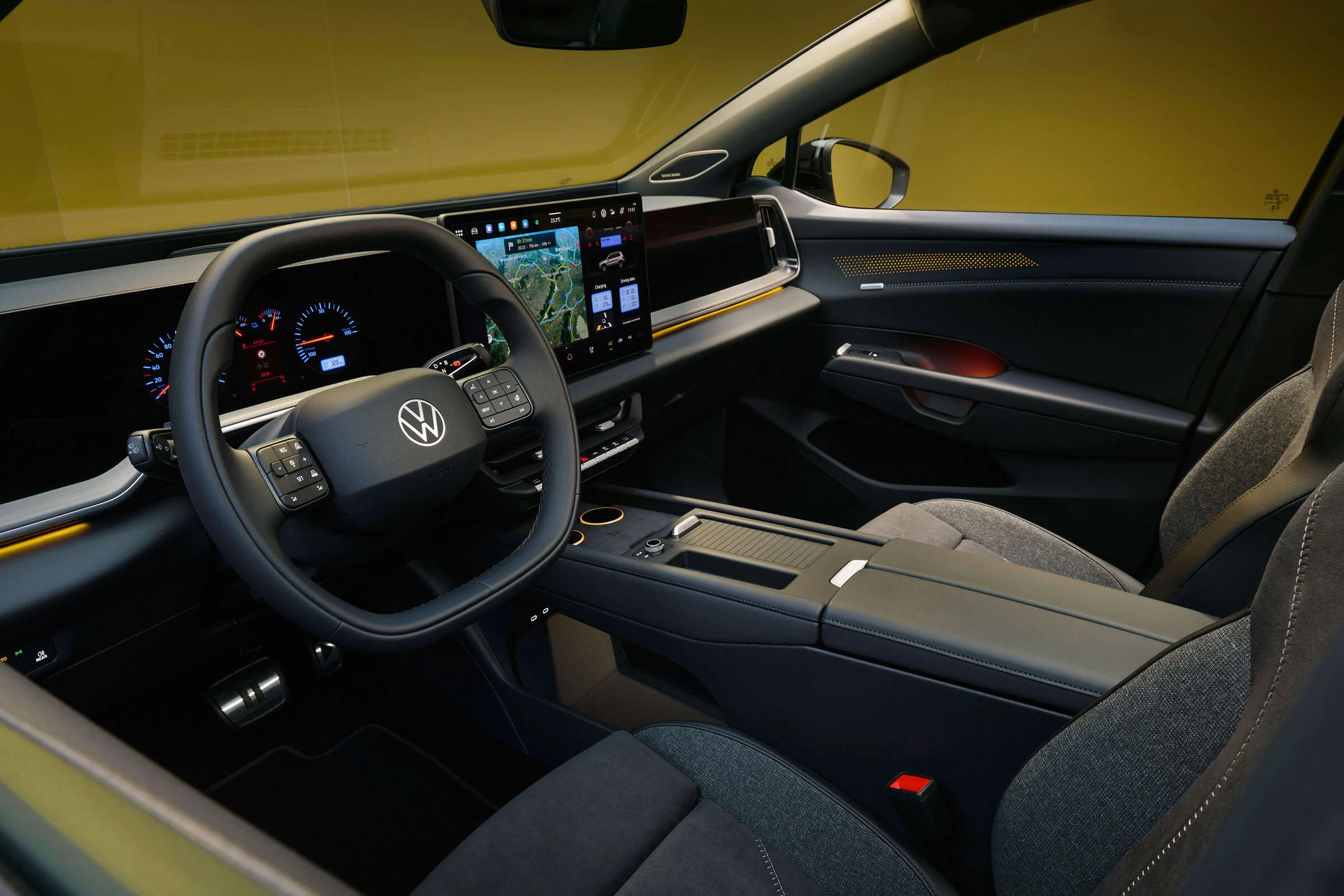
The cabin is organised around several screens. The driver receives a 10-inch Digital Cockpit, while the central infotainment display measures 15 inches. For the first time in a European Volkswagen, the ID. Tiguan can also be ordered with a 12-inch co-driver display. A privacy mode keeps that screen out of the driver’s view, allowing the front passenger to use it for information, entertainment or gaming. The passenger can listen through paired Bluetooth headphones.
Volkswagen has also brought back physical controls for selected functions. Basic climate settings are handled by a button bar in the centre console, and the multifunction steering wheel uses physical buttons instead of touch surfaces. Two inductive charging points support the Qi2 standard and use magnetic rings to help position compatible smartphones.
The “Retro” display is a software feature designed to connect the new car with Volkswagen’s history. When selected from the steering wheel, the Digital Cockpit can show blue and red graphics inspired by the Golf IV. The central screen can display a virtual garage with six models, including the Golf I, Golf II Country, Golf IV, first-generation Tiguan, Race Touareg and Beetle. The graphics change the presentation of the information but do not turn the electric drivetrain into a conventional engine.
Driver assistance and long-distance equipment
One-pedal driving is standard according to Volkswagen. The system increases deceleration when the driver lifts off the accelerator. The new Connected Travel Assist can support lane keeping and assisted lane changes on motorways. Volkswagen also says the system can recognise traffic lights and bring the car to a stop at red lights when the relevant conditions are met. These are driver-assistance functions, not autonomous driving; the driver remains responsible for the vehicle and must monitor the road.
Optional equipment includes electrically adjustable front seats with memory, massage and ventilation, a Harman Kardon sound system rated at 480 watts and a panoramic sunroof. Digital Key allows a compatible smartphone to lock, unlock and start the car. The key can be shared with family members, friends or colleagues through the Volkswagen app. A PowerSocket adapter also enables Vehicle-to-Load use, allowing the battery to supply power to equipment such as an electric grill or an e-bike charger.
Four trim levels and a 2027 arrival
The range will be split into Trend, Life, Style and R-Line trims. Volkswagen has not yet published complete equipment lists for every market, nor has it confirmed a Romanian price. The €42,695 figure applies to Germany and other European markets named in the launch announcement; local taxes, equipment and incentives can change the final amount.
The early-2027 launch gives Volkswagen a clearer electric SUV structure. The ID. Tiguan is not simply a renamed ID.4 in the company’s presentation. It combines a familiar high-volume name with the MEB+ electric architecture, more passenger-focused screens, a frunk and towing capacity of up to two tonnes. At the same time, the conventional Tiguan continues to serve customers who prefer petrol, diesel or hybrid power.
For buyers, the practical question will be which version fits their use. The 58 kWh rear-wheel-drive car offers the lowest entry point and still tows 1,800 kg. The 77 kWh rear-wheel-drive model should be the efficiency and range choice, while the 4MOTION version adds all-weather traction and 299 PS. Volkswagen has not supplied independent charging-time or real-world-range results, so those points remain open until detailed market specifications and tests become available.


