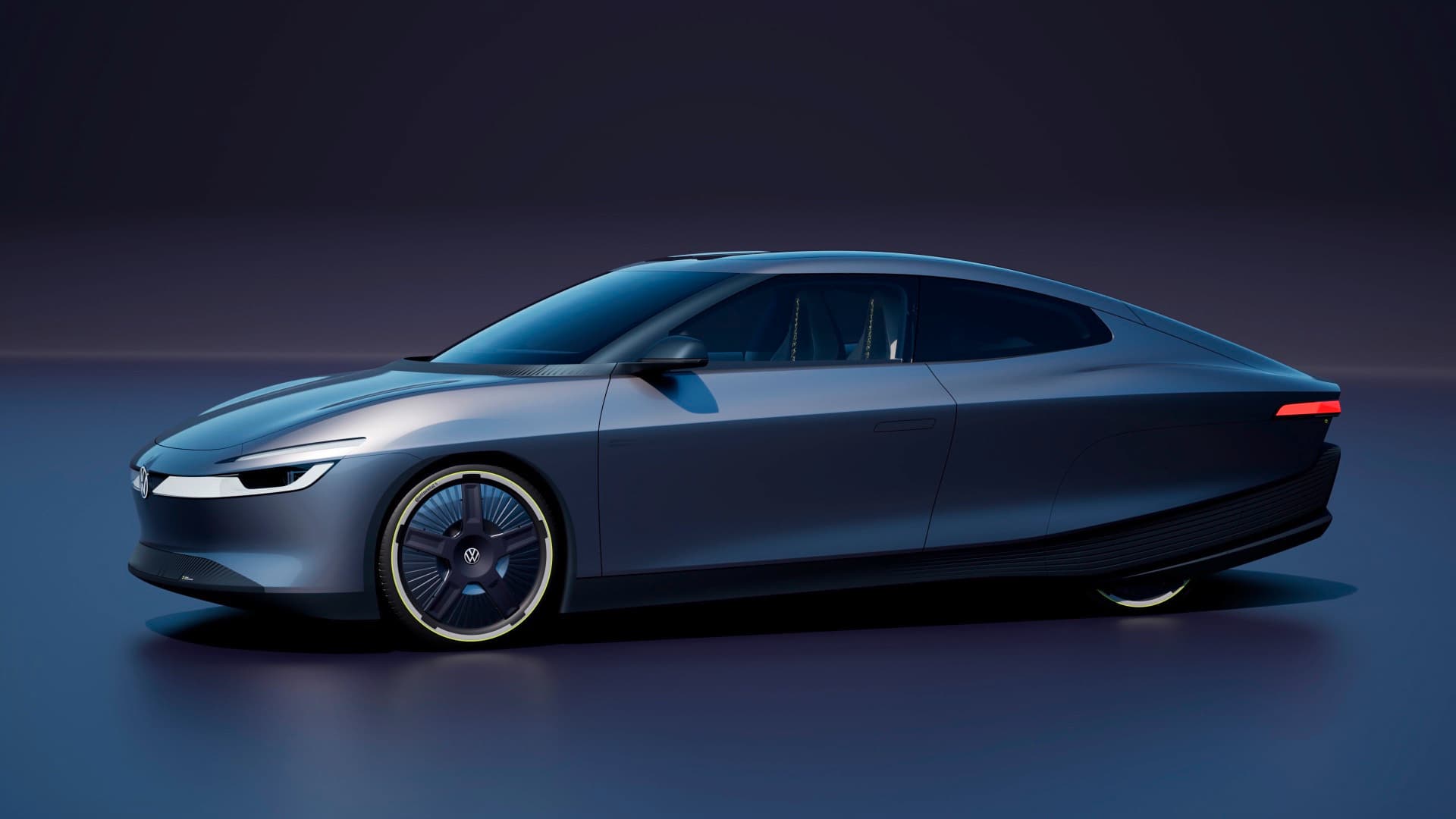
Volkswagen has presented Mission Efficiency, an electric concept derived from the forthcoming ID. Polo, used to show how far energy consumption can be reduced without a huge battery. The project is not announced for series production, but it uses components that are due to enter the brand’s volume models.
The concept has a front electric motor of 99 kW (135 hp) and a battery with a usable capacity of 54.9 kWh. The platform is MEB+, with front-wheel drive, the same technical architecture announced for the ID. Polo and ID. Cross.
663 km equivalent on one charge, in a real-world test
Volkswagen ran Mission Efficiency between Wolfsburg and Vienna, on a 1,278 km route that crossed Poland and the Czech Republic. The car was charged once on the way, and the recorded consumption was 8.27 miles/kWh, equivalent to about 13.3 km/kWh. On arrival, the concept still indicated about 160 km of range. Separately, Carscoops reports that the project obtained the equivalent of 663 km on a full charge.
In an efficiency test held in controlled conditions, at a constant speed of 68 km/h, without climate control and on flat ground, consumption fell to 9.59 miles/kWh, or about 15.4 km/kWh. Volkswagen indicates an average consumption of 9.02 miles/kWh for its theoretical range calculation of almost 800 km, but the result is not comparable with a WLTP range or with normal motorway use.
A body optimised for air, not a larger battery
The key to the result is the teardrop-shaped body, inspired by the Volkswagen XL1. Mission Efficiency is longer and lower than the ID. Polo, has an almost fully faired floor, covered rear wheels and air intakes with shutters. The declared drag coefficient is 0.158, a very low figure for a four-seat car.
To reduce mass, the concept uses an aluminium structure, and the doors, bonnet and tailgate are made of carbon-fibre-reinforced plastic. Volkswagen has also eliminated the hydraulic lines from the rear brakes, using an electromechanical system there. A 370 W photovoltaic panel integrated into the glass roof could add up to 30 km of range per day in favourable conditions, according to the company’s calculations.
Volkswagen has not confirmed turning the model into a production car. The stake of the project is transferring efficiency solutions to the group’s forthcoming affordable electric cars, not launching a new limited-run coupe.
Image source: Top Gear / Volkswagen. The image is taken from the source publication.