Volkswagen Group has cut its 2026 operating-return forecast to up to 1%, from the previous 4–5.5% range. The revision follows a further deterioration in China, a faster shift in demand towards battery-electric vehicles and approximately €10 billion in special effects expected during the year. Group revenue is still expected to be around €315 billion, so the most visible change is in profitability rather than sales.
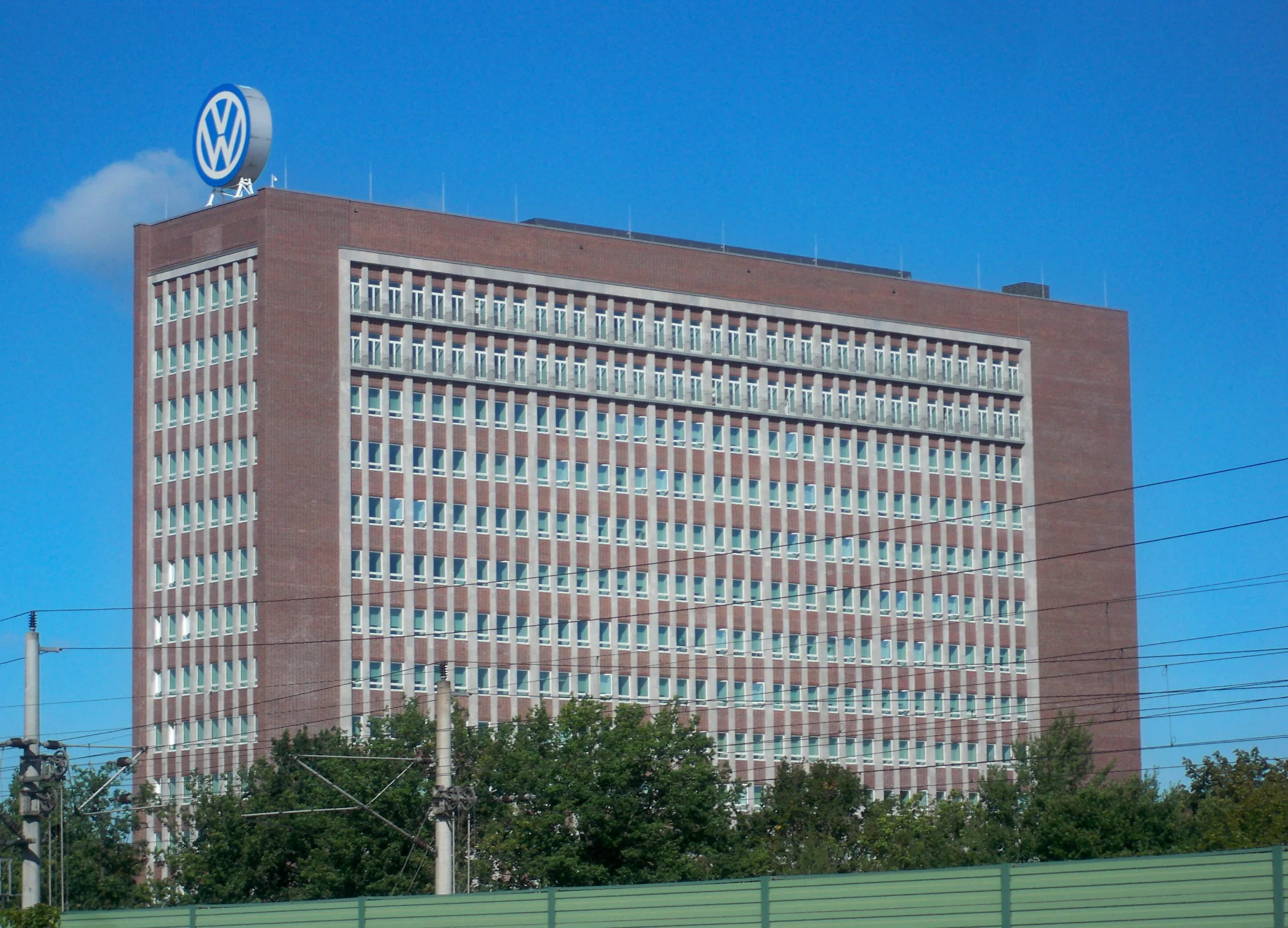
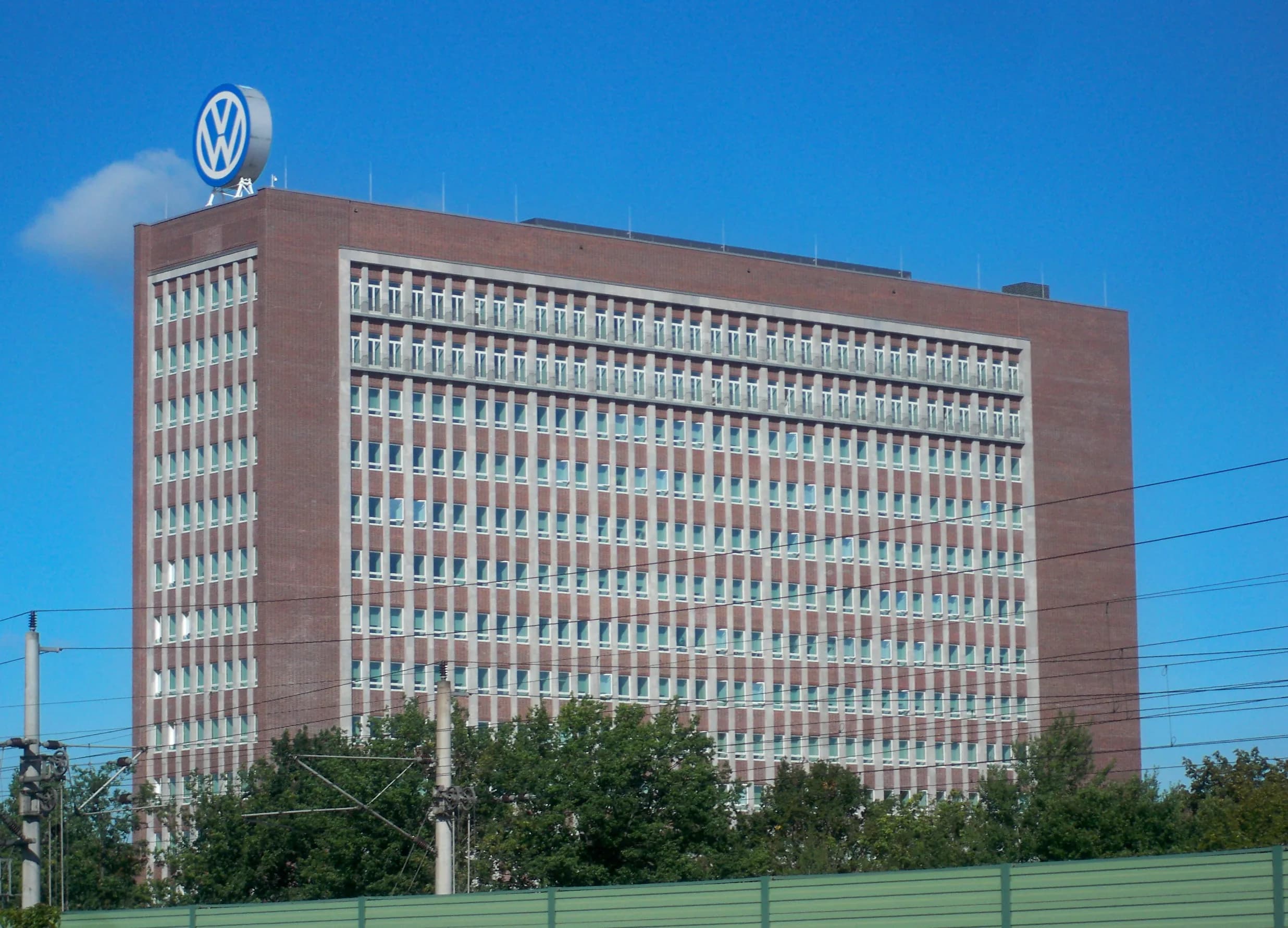
Volkswagen headquarters in Wolfsburg. Photo: Vanellus/Wikimedia Commons, CC BY-SA 4.0.
A large change in the headline margin
Volkswagen’s ad hoc announcement, published on 18 September, places 2026 revenue close to the middle of its earlier range of –3% to 0% compared with 2025. The group reported €321.9 billion in revenue for 2025. The revenue guidance therefore does not describe a collapse in turnover. It describes a business expected to sell at roughly the previously indicated level while earning much less on that activity.
The operating return on sales was 2.8% in 2025. After the first-half update, Volkswagen was still guiding to 4–5.5% for 2026. It now expects no more than 1%. The company says the new number includes special effects of roughly €10 billion, around €0.9 billion of which had already been recorded in the first half.
One of the largest items is an expected impairment of around €6 billion on goodwill allocated to the Porsche business segment. This is an accounting charge following updated assumptions about Porsche’s medium- and long-term enterprise value. It reduces reported operating profit, but it is not the same as a cash payment of €6 billion leaving the company on the day of the announcement.
Volkswagen’s adjusted explanation is therefore important. Excluding the one-off effects, the group estimates a 2026 operating return on sales of about 4%. That would be close to the lower end of the previous guidance. The adjusted figure does not make the commercial pressure disappear; it shows that the reported margin is being affected by both trading conditions and exceptional charges.
China is the most direct market headwind
Arno Antlitz, Volkswagen Group’s chief financial and operating officer, said the Chinese market had declined by 20% and that there were no clear signs of recovery. Volkswagen’s first-half communication had already described a 31.6% decline in the relevant Chinese market. Group deliveries in China fell by 25.9% in the first half of 2026.
The group’s accounting structure makes the numbers less straightforward than a single market-share chart. Several Chinese joint ventures are equity-accounted, meaning their activity is not included in consolidated revenue in the same way as fully consolidated operations. Deliveries, revenue and operating profit consequently refer to different parts of the business. The delivery decline remains significant, but it should not be converted mechanically into a revenue percentage.
Volkswagen says competition in China has intensified, especially in battery-electric vehicles. Local manufacturers are competing on purchase price, digital features and the speed of product updates. European brands are also facing Chinese exports in Europe, where the market is already dealing with slower demand and high spending requirements for electrification.
The group’s response is the “In China for China” strategy. At Auto China 2026, Volkswagen announced more than 20 electrified vehicles for the Chinese market during 2026 and a target of 50 models by 2030. The programme is a product plan, not a sales guarantee. Antlitz said the local strategy would not deliver its full financial effect until later years.
The electric mix changes the economics
Volkswagen also points to an accelerated shift in demand towards battery-electric vehicles. The company attributes part of the change to geopolitical conditions and higher petrol prices. At the same time, it says current earnings per battery-electric vehicle are significantly below earnings from combustion-engine cars.
That statement should not be confused with a retreat from electric vehicles. Volkswagen reported that its European order backlog for fully electric cars increased by more than 50% in the first half of 2026. The Electric Urban Car Family, made up of products from Volkswagen, Škoda and CUPRA, had attracted more than 54,000 orders by early July, although only three of the four models were then available.
The issue is the timing of the transition. An electric car has a different cost structure, including the battery, power electronics, software and charging systems. A manufacturer can see its margin fall when it lowers prices to defend volume before purchasing savings and production scale have caught up. This is a business-level explanation, not evidence that every Volkswagen EV is loss-making.
The forecast specifically says the operating development of Audi and Volkswagen Passenger Cars is falling short of original expectations. It does not identify every affected model, plant or country. It also does not provide a product-by-product profit comparison.
Simplifying the group is the chosen response
Volkswagen links the revised outlook to its “Group Target Picture 2030” plan. The public description focuses on reducing complexity, creating a clearer product portfolio, simplifying processes and making structures leaner. In a group with several brands, platforms and market-specific versions, complexity can increase development work, purchasing variants and production planning costs.
The company says performance programmes have already reduced overhead and capital expenditure while product investment continues. In April, Volkswagen said overhead costs had fallen by nearly €1 billion in the first quarter. It also warned that existing savings were not sufficient for the structural changes it now considers necessary.
The financial targets show the tension. Volkswagen continues to expect automotive net cash flow of €3–6 billion and automotive net liquidity of €32–34 billion for 2026. Those figures provide investment capacity, but they do not remove the need to choose which products, software programmes and plants deserve capital.
This is why the company describes the situation as urgent. The group must fund an electric and software-heavy product cycle while responding to lower prices and weaker demand in a major market. The stated solution is quicker implementation of the 2030 plan, not a single cost-cutting measure.
What has not been announced
The forecast does not announce the immediate withdrawal of a named model, a specific factory closure or a new retail price list for Europe. It also does not give a final country-by-country job figure. Volkswagen has identified Audi and Volkswagen Passenger Cars as areas with weaker-than-expected development, but the ad hoc release does not provide a complete operational map.
For buyers in Europe, including Romania, the direct effects are therefore not yet visible in a particular showroom. Availability, delivery times and prices depend on European production allocation and local importer decisions. A group-level margin forecast can influence future investment priorities, but it is not itself a retail announcement.
The next factual checkpoints will be the third-quarter results, the accounting treatment of the Porsche impairment and the concrete measures attached to the 2030 plan. For now, Volkswagen has confirmed a much lower reported margin, approximately €10 billion in special effects, severe China pressure and a faster change in the electric-vehicle mix.