Volvo is reportedly preparing a new electric SUV called the EX50, but the company has not confirmed the name, design or specifications. Reports describe a vehicle that would be taller and longer than the EX40, sit below the EX60, and use technology from Volvo’s new SPA3 electric architecture. A US launch is reported for 2027, with the model potentially becoming a lower-cost entry point to Volvo’s next-generation EV range.
The important distinction: report, not product announcement
The EX50 is not currently a confirmed Volvo model. Volvo has not published a press release, technical sheet, official image or order information for it. When asked about future products, the company has declined to comment. The available story therefore combines a report attributed to sources familiar with Volvo’s plans with confirmed information about the EX60 and the Kosice factory.
Car and Driver, citing Automotive News, reports that the EX50 could replace the EX40 in the United States. The reported vehicle would be longer and taller than the current electric compact SUV and could be similar in overall footprint to cars such as the Tesla Model Y, Hyundai Ioniq 5 and Ford Mustang Mach-E. Volvo has not confirmed those comparisons, and no official dimensions are available.
The positioning would leave the EX50 below the EX60. Volvo’s official EX60 material describes that vehicle as a five-seat, mid-size electric SUV for model year 2027. A smaller EX50 could provide more interior space than the EX40 while avoiding the EX60’s larger size and price. That is the reported product logic, not a published Volvo specification.
What SPA3 can tell us
Volvo has officially introduced SPA3 with the EX60. The architecture was developed as an electric-only technology base and includes an 800-volt electrical system, cell-to-body battery construction, in-house electric motors, a new battery-cell design and megacasting. Volvo says the combination is intended to improve efficiency, reduce weight and make manufacturing more scalable.
Those technologies are relevant to the EX50 story because the reports say the smaller model will share the EX60’s platform. Sharing a platform does not mean that two vehicles have the same battery, motors, software features or charging performance. A manufacturer can use one architecture for different wheelbases, battery sizes, power outputs and equipment levels.
The EX60 provides context rather than a specification sheet for the EX50. Volvo’s UK media information lists three powertrains: the rear-wheel-drive P6, and all-wheel-drive P10 and P12 versions. The P6 uses an 83 kWh battery, while the P10 and P12 use 95 kWh and 117 kWh packs in the published specification. The power and range figures belong to the EX60 and should not be transferred to an unconfirmed EX50.
The possible charging advantage
An 800-volt system could give the EX50 faster DC charging than the older EX40 architecture, if the reported platform sharing happens. Volvo states that the EX60 P10 can charge from 10 to 80 percent in 16 minutes at a 400 kW DC charger. The company also publishes different charging times and maximum rates for the P6, P10 and P12.
Charging results depend on battery temperature, outdoor temperature, the charger, battery condition and the vehicle’s exact specification. Even if EX50 uses SPA3, its battery capacity, thermal system and charge curve could be different. There is no official EX50 charging time yet.
The same caution applies to range. Some reports and previews have placed the potential EX50 between the EX40 and EX60, but Volvo has not published an EX50 battery or WLTP result. Any figure presented today would be an estimate rather than a certified measurement. The EX60’s official range figures are also tied to specific powertrains, wheels and test conditions.
Why a lower price is part of the story
The reports place the EX50’s potential US starting price in the high-$40,000 range. That would be below the EX40’s reported US price and below the EX60. It is not a European price, and Volvo has not announced an MSRP. There is no confirmed euro price or Romanian availability to report.
A shared platform could help control cost. Volvo describes SPA3 as scalable and says technologies such as megacasting, cell-to-body construction and common electric components can improve manufacturing efficiency. The company’s 2026 strategy material also discusses commonality and cost reduction across its future electric products. Those statements support the industrial rationale for a more affordable model, but they do not prove a particular EX50 price.
Lower positioning could also mean fewer variants or optional features than the EX60. It is not known whether the EX50 would use the same infotainment hardware, sound systems, battery sizes or driver-assistance equipment. The official EX60 includes HuginCore, Google Gemini integration and regular over-the-air updates; no EX50 equipment list exists.
The Kosice connection
Volvo announced its electric-only Kosice factory in 2022. The company described an investment of about €1.2 billion and planned capacity of up to 250,000 electric cars per year. Volvo said the plant would form its third European manufacturing site and use climate-neutral energy in production.
In 2025, Volvo Cars and Polestar announced that the Polestar 7 was planned as the second model at Kosice, after an unnamed next-generation Volvo model. The official release confirmed shared technology with the EX60 but did not name the first Volvo model. Reports linking the EX50 to Kosice are therefore plausible within the published industrial plan, but they remain unconfirmed.
The location would also give Volvo a European production base for smaller and medium electric models. The company has described the site as part of a manufacturing triangle with Torslanda in Sweden and Ghent in Belgium. That background explains why the plant appears in EX50 reports, but it does not establish the final product allocation.
What happens to the EX40 and EX30?
In the US-focused reports, the EX50 is described as an EX40 replacement and a new entry point after the EX30. That may not apply to every market. Volvo’s product range varies by region, and the company has not announced a global replacement timetable for the EX40 or EX30. European availability, pricing and launch timing remain open questions.
For now, the defensible summary is narrow. Volvo has confirmed SPA3 through EX60, confirmed the Kosice factory and confirmed that the facility is intended to build next-generation electric models. Industry reports say an EX50 could use that base, cost less than the EX60 and arrive in 2027. Until Volvo makes a product announcement, the model name, design, battery, range, output and market schedule should all be labelled as unconfirmed.
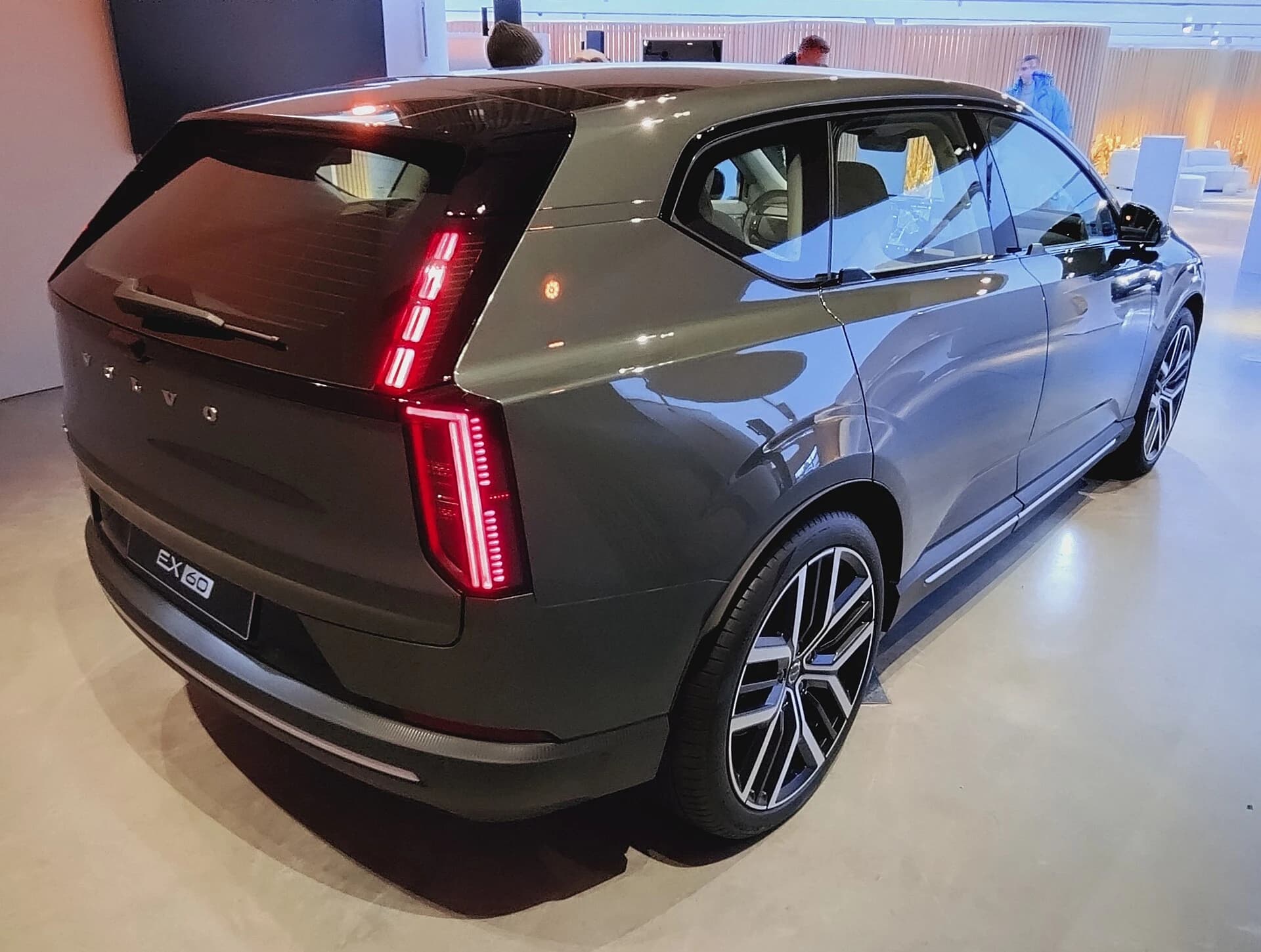
The image is a photograph of the officially presented Volvo EX60, taken by Herranderssvensson and published on Wikimedia Commons under CC BY-SA 4.0. It is not an image of the unconfirmed EX50. The file was converted to WebP for this article.