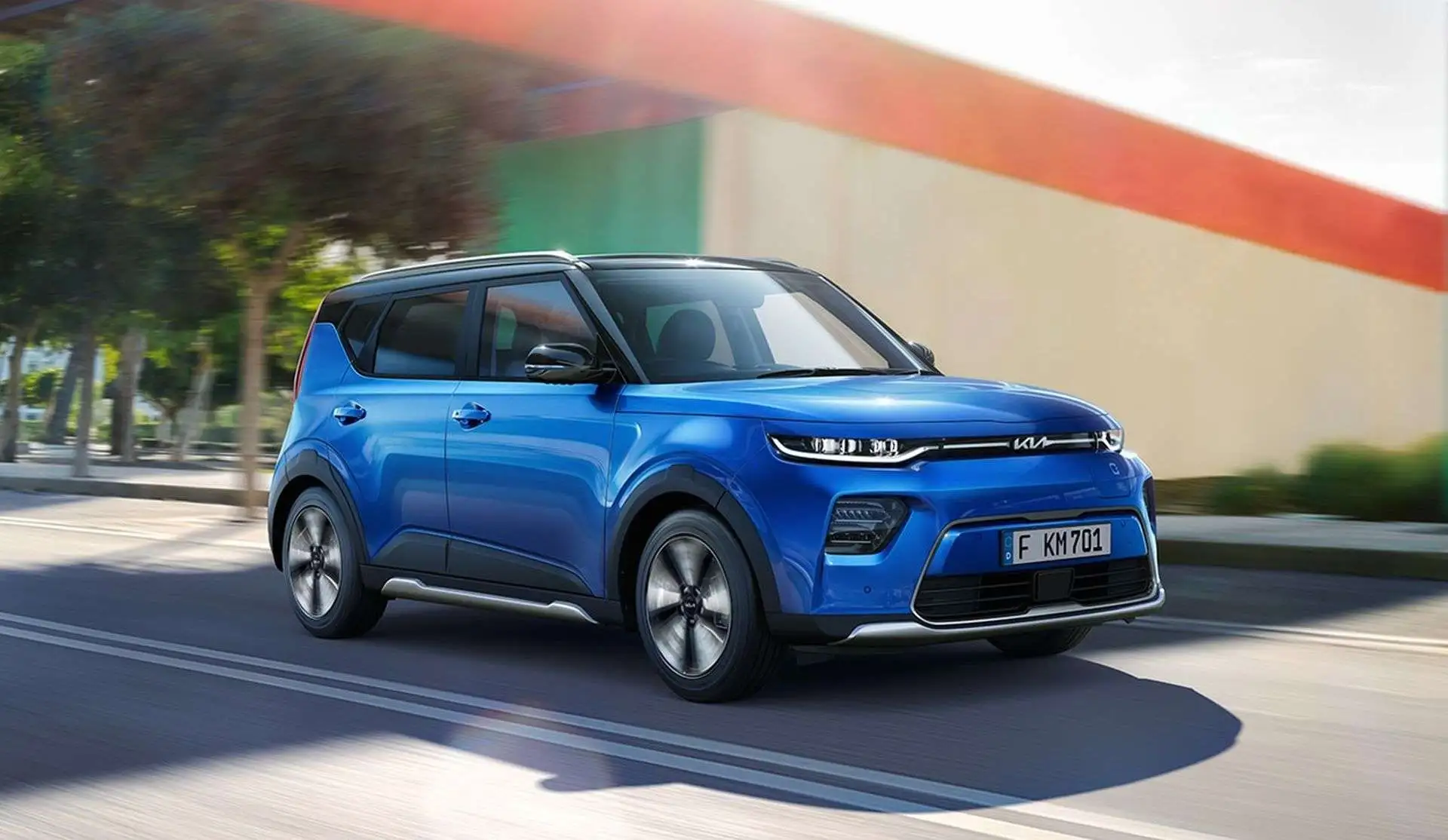
If you want to switch to a battery electric car with minimal fuss, the Kia Soul EV is one of the easier options.
Life is harder for the Soul EV this time around. In its first generation it was one of few EVs on sale. It still has bold styling and a respectable WLTP range of around 450 km on the combined cycle, but it now faces a full fleet of small electric cars — Hyundai Kona Electric, Peugeot e-2008, Nissan Leaf, Volkswagen ID.3 and more arriving all the time.
The Soul EV shares much of its electric powertrain with the first-generation Kia e-Niro. That car has been superseded, but it remains a strong EV.
You would not guess the link from outside — the Soul EV looks completely different. The tall bonnet line, LED headlights and sloping roof make the e-Niro seem plain by comparison. The Soul will turn more heads.
Inside, the differences are subtler. Quirky door details, multi-colour ambient lighting and a round drive selector set it apart from other Kias, but the sea of dark plastic is slightly monotonous. Fit and finish are good.
If you need a big boot, the roomier e-Niro is the better pick. The Soul has plenty of front space and two adults fit comfortably in the rear, but the boot is smaller and oddly shaped versus the e-Niro.
A 64 kWh battery charges from empty to full in about 10.5 hours on a 7 kW home wallbox. On a 50 kW DC charger, 10–80% takes a little over an hour.
On range, the Soul’s combined WLTP figure of around 450 km beats most rivals on paper. Real-world distance drops if you use the strong acceleration in town. On country roads the instant shove helps overtakes, though light steering does not encourage a fast pace — better to stay relaxed, enjoy the comfort and preserve range. The same applies on the motorway, where the Soul is a calm place to spend time at speed.
If you can live without a huge boot and like the look, the Soul EV makes the switch easy. It is smooth, quiet and simple to drive, yet quick when you want it — though sustained motorway speed will drain the battery faster.
Front seats offer generous leg, head and shoulder room, even for very tall drivers. The seats adjust widely and sit fairly high, so most people can slide in without climbing or stooping.
Storage is practical: big door bins, space under the centre armrest, two cupholders, a phone tray ahead of the gear selector and a decent glovebox.
The interior is not as bold as the exterior. Circular shapes add interest, but apart from a few silver accents the colour scheme is very dark. At least the glass area brings in light. Buttons and most surfaces feel high quality; some cheaper scratchy plastic remains lower down.
A 10.3-inch touchscreen runs infotainment. Kia’s system is capable, with connected navigation (live traffic, parking availability, accident black spots), DAB and Bluetooth. The screen is responsive and menus are easy to follow, or you can use Apple CarPlay or Android Auto.
Standard equipment is generous: climate control, heated leather seats and steering wheel, Harman/Kardon audio, adaptive cruise control, rear parking sensors and a reversing camera. There are almost no options beyond styling stickers.