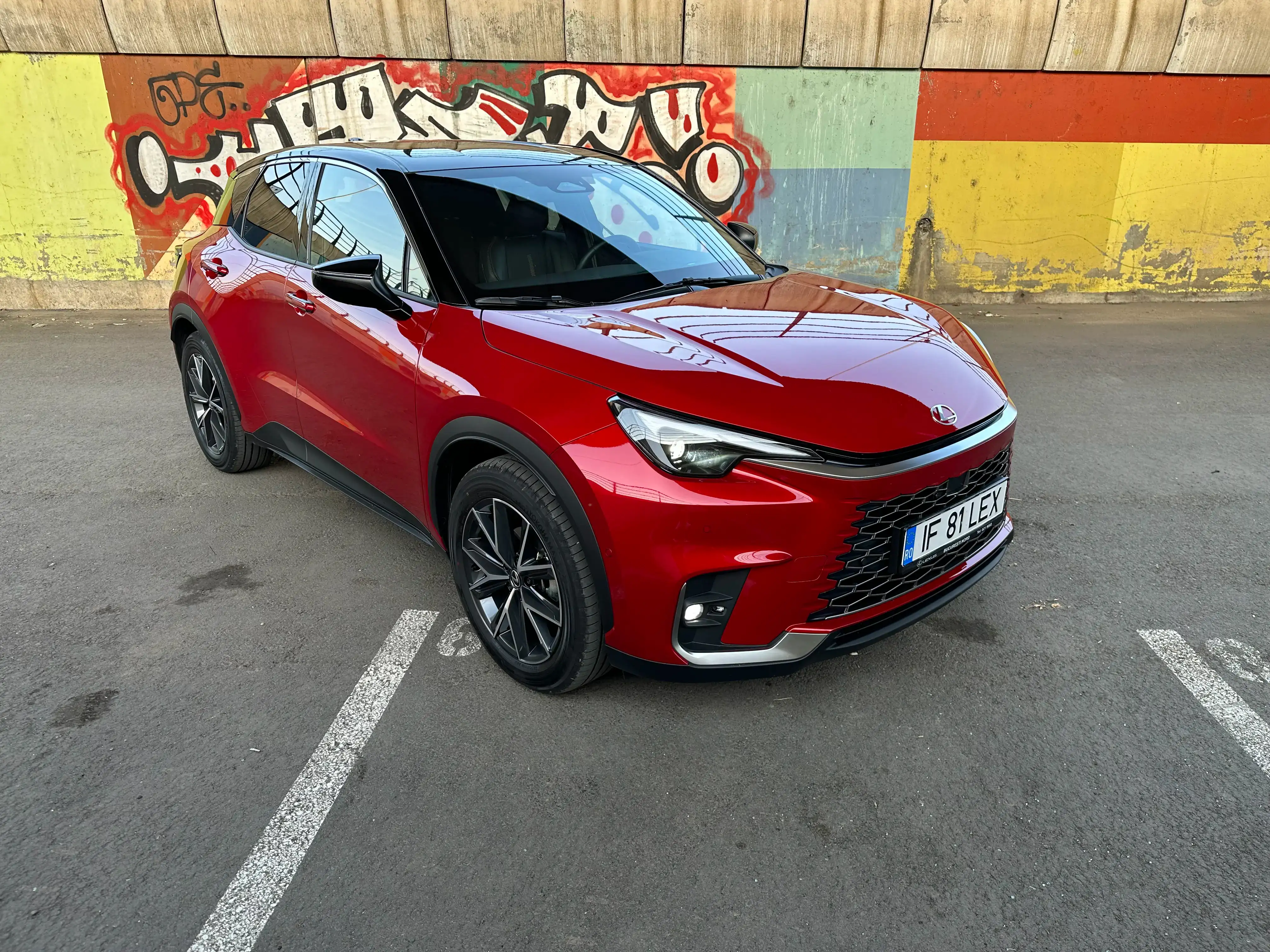
Lexus is broadening its line-up beyond large SUVs and saloons. After the LC coupé and the LM people carrier, the brand is entering the compact segment with the LBX, a small premium crossover.
LBX stands for “Lexus Breakthrough Crossover”. It is only the second three-letter name in Lexus history after the LFA supercar. The pitch is breakthrough in miniature: the smallest Lexus ever, but still meant to feel like a Lexus inside and on the road.
At 4,190 mm long, the LBX is just 10 mm longer than a Toyota Yaris Cross, yet 1,825 mm wide—60 mm wider than Toyota’s subcompact SUV. Wheelbase is 20 mm longer too, which helps cabin space. Externally it remains a compact car; historically it is still the smallest vehicle Lexus has sold.
Despite the tight footprint, the cabin aims at genuine luxury. Soft-touch synthetic leather and careful finishing give a refined atmosphere closer to larger Lexus models than to a typical supermini crossover.
The centre console is logically laid out, with useful storage and a reasonable set of physical switches for temperature, drive modes and the electronic parking brake. Some climate adjustments run through the touchscreen, but key readouts stay visible for quick use.
Front seats are generous; the rear bench is another story. Like the Jeep Avenger or Volvo EX30, the back row suits short trips more than regular three-adult use, and the middle seat is largely symbolic.
Boot volume is 332 litres on front-wheel-drive versions and 240 litres on AWD—not weak for the class, but not class-leading either. With the rear seats folded, capacity rises to 994 litres, with extra underfloor storage. From Elegant upward (Emotion, Cool, Relax, Premium Plus and above), an electric tailgate is standard.
Equipment includes a 9.8-inch touchscreen with navigation, voice control and a four-year connected-services subscription. Over-the-air updates are supported, and wireless Apple CarPlay and Android Auto mirror phone apps.
Every grade adds a 12.3-inch digital instrument cluster and a head-up display. Touch-sensitive steering-wheel keys for the HUD can be fiddly; accidental presses sometimes trigger functions you did not intend.
The main screen can pin favourite shortcuts. The car remembers them and brings them back with one tap—useful for items you reach for often.
On the road, Lexus has tuned the LBX for more refinement than the related Yaris and Yaris Cross. The hybrid runs quietly, and extra sound insulation keeps the 1.5-litre three-cylinder petrol engine near the background in normal driving.
Suspension is retuned as well. Ride quality is smoother than in the Yaris Cross; dampers absorb most bumps, with only the worst potholes sending a clear message into the cabin. Comfort is closer to larger Lexus SUVs than to a budget Toyota crossover.
It is not a sharp handler, but steering is accurate and understeer is well controlled. Body roll is present without feeling sloppy—a compromise between comfort and agility.
Under the bonnet sits the same hybrid hardware as Yaris and Yaris Cross: 1.5-litre three-cylinder petrol, electric motor and battery, total output 136 hp—6 hp more than the strongest Yaris. Front-wheel drive and AWD are both offered.
In town, where the electric motor does most of the work, fuel use can be impressively low. Under hard acceleration the petrol unit becomes audible, with a noticeable three-cylinder buzz.
Prices run from €38,227 to €45,537, putting the LBX near compact EVs such as the Jeep Avenger or Volvo EX30. While Lexus pushes battery models like the larger RZ, the LBX stays a conventional hybrid.
Existing Lexus customers stepping down a size may not flinch at those numbers. Against other premium badges, though, similar money buys more space—an Audi Q3 or the latest MINI Countryman can match the cabin quality and offer noticeably more room.
Overall, the 2024 Lexus LBX occupies a narrow niche: Yaris Cross dimensions with Lexus presentation. Rear space and boot capacity are the main compromises; strengths are the refined interior, smooth manners and urban hybrid efficiency.
It suits loyal Lexus buyers who want a smaller second car or anyone drawn to a distinctive premium subcompact. Anyone who regularly fills the back seats or needs maximum luggage volume should cross-shop roomier or fully electric alternatives in the same budget band.