Introduction – what the new Mercedes-Benz CLA Electric represents
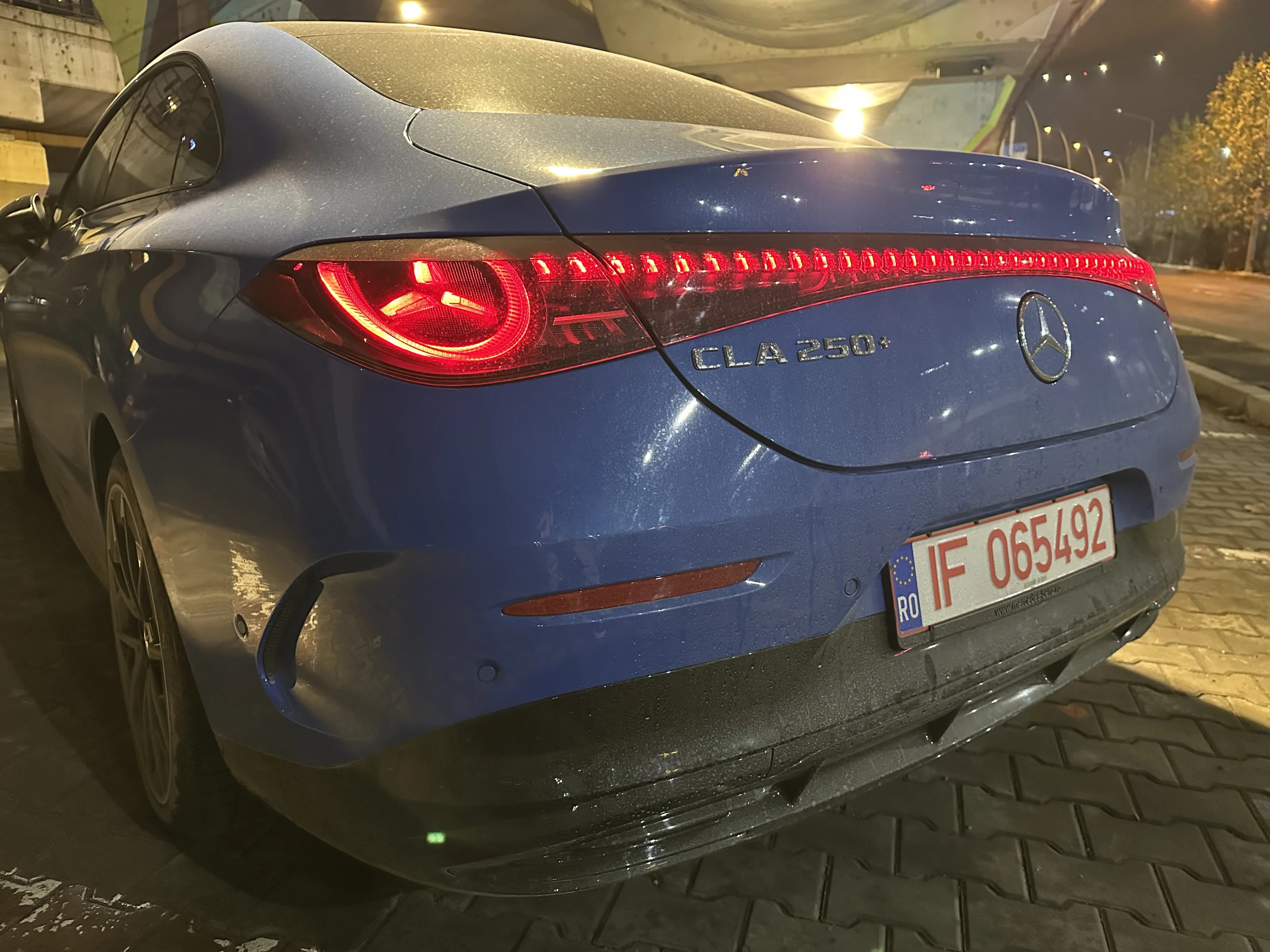
The new Mercedes-Benz CLA Electric marks a major strategic shift for the German brand in the compact premium segment. For the first time, the CLA is not merely an electrified version of a combustion model but a car conceived from the outset around electric propulsion. The result is a four-door saloon with coupé silhouette and a clear focus on efficiency, range and real-world daily use.
In Romania, CLA Electric is initially available in two main versions: CLA 250+ Electric, oriented toward maximum range and efficiency, and CLA 350 4MATIC Electric, a more powerful dual-motor all-wheel-drive variant. Both share the same basic philosophy but target different customers.
This article examines in detail all available powertrain variants, the driving experience, behaviour in and out of town, interior space, boot capacity, technology, running costs and why CLA Electric can be a very good choice as a premium city car and as a long-distance vehicle.
Mercedes-Benz CLA Electric powertrain range
CLA 250+ Electric – the range-focused version
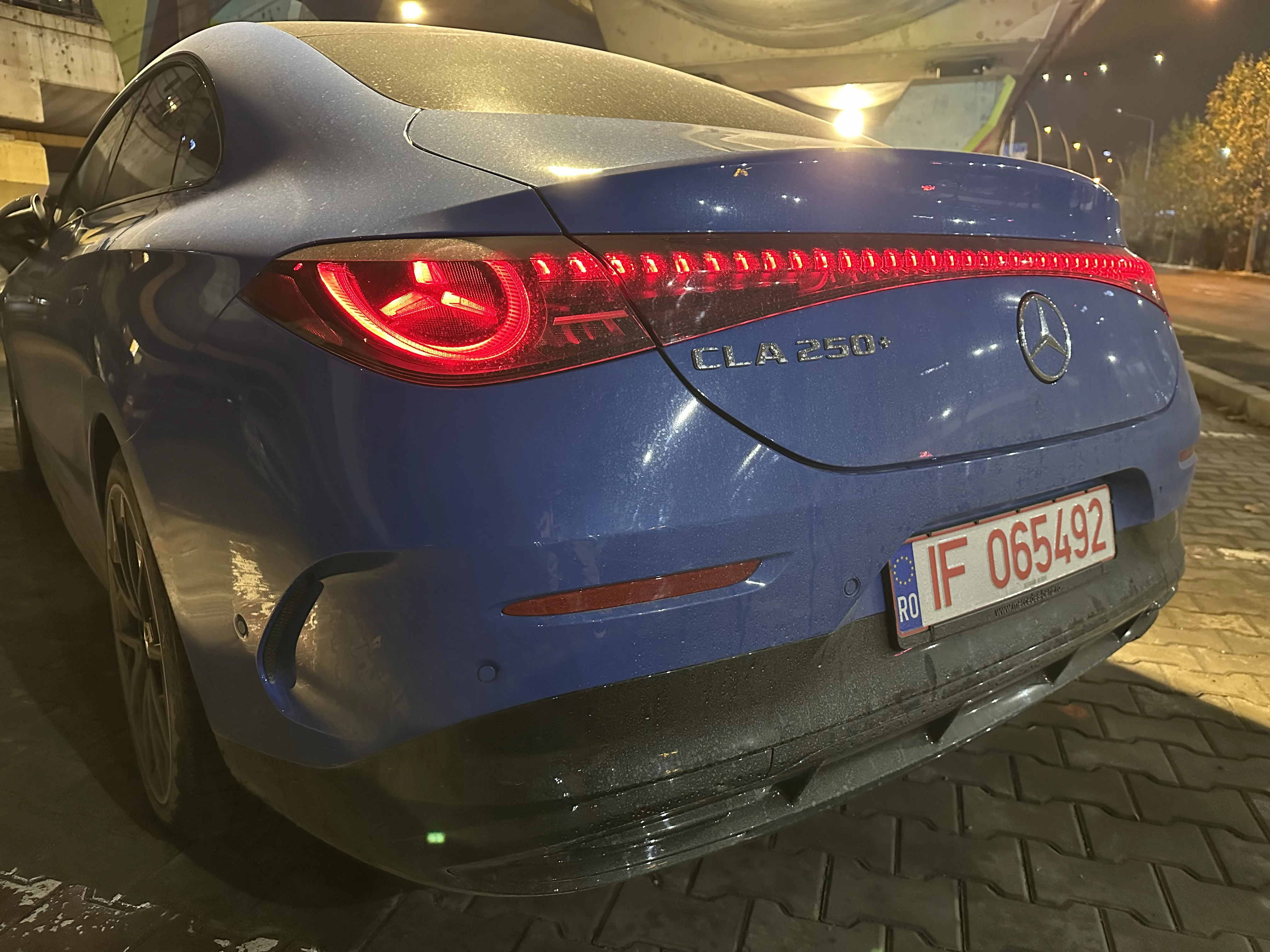
Mercedes-Benz CLA 250+ Electric is the entry point of the electric line, but “entry” only in positioning terms. It uses a single electric motor on the rear axle, giving rear-wheel drive—a layout appreciated by drivers who want a more natural steering feel and balanced road behaviour.
Rated output is 200 kW (272 hp), with torque delivery typical of an EV: instant, linear and easy to modulate. Mercedes chose not to turn the CLA 250+ into an aggressive sports saloon but into a refined model focused on efficiency and comfort.
This version offers the longest range in the line-up and is, for everyday use, the most suitable for most customers in Romania.
CLA 350 4MATIC Electric – performance and all-wheel drive
For those who want more power and extra confidence in difficult conditions, Mercedes offers CLA 350 4MATIC Electric. It has two electric motors, one on each axle, enabling permanent all-wheel drive.
Total output is higher than on the CLA 250+, and acceleration is quicker, at the cost of slightly reduced range due to extra mass and higher consumption.
CLA 350 4MATIC is aimed at:
- drivers who value performance
- areas with reduced grip (rain, winter, mountain roads)
- users who prefer the extra security feel of all-wheel drive
Electric platform and technical architecture
CLA Electric is built on a dedicated EV platform, optimised for:
- efficient mass distribution
- advanced aerodynamics
- full integration of the battery into the body structure
The battery sits in the floor, lowering the centre of gravity and contributing to overall stability—a clear advantage over platforms adapted from combustion cars.
Battery, range and consumption – what matters in practice
Battery capacity
Mercedes-Benz states a lithium-ion battery with net capacity around 85 kWh for CLA Electric, with slight variation by version, equipment and final homologation for each market.
Mercedes emphasises not raw capacity alone but whole-system efficiency: aerodynamics, software, thermal management and energy recovery.
Declared WLTP range
For CLA 250+ Electric, maximum declared WLTP range reaches approximately 750–790 km, depending on configuration. Those figures place CLA Electric among the most efficient compact premium electric saloons.
For CLA 350 4MATIC, range is lower but remains competitive for a dual-motor model.
It is essential to note that WLTP is a standardised cycle, and real-world range depends on:
- driving style
- outside temperature
- average speed
- climate use
Real-world range – what to expect
In mixed urban and extra-urban use, a CLA 250+ can deliver very strong range for an electric saloon, helped by a low drag coefficient. At motorway speeds, consumption rises but remains predictable and stable.
In urban use, range is generally better than on fast roads, thanks to:
- regenerative braking
- lower speeds
- stop-and-go traffic
Charging – AC and DC
AC charging
CLA Electric supports AC charging, suitable for:
- home charging
- slow public stations
- office car parks
This is the ideal method for daily overnight use.
DC fast charging
For long trips, CLA Electric is compatible with DC fast charging. Maximum charging power depends on version, temperature and infrastructure, and real charging times can vary.
Mercedes emphasises a stable charging curve, not just a power peak, which makes stops more predictable.
Driving experience – how CLA Electric feels on the road
Steering and manoeuvrability
Steering is precise and lightly assisted, ideal for the city. Turning circle is good for a saloon of this size, and visibility is adequate, helped by cameras and available sensors.
In corners, CLA Electric feels stable and balanced, without excessive roll. Battery weight contributes to a sense of grip on the road.
Suspension and comfort
Suspension is tuned for comfort, not extreme sport. Urban bumps, tram tracks and rough asphalt are filtered effectively without a harsh ride.
On long journeys, CLA Electric is quiet and relaxing, and the absence of combustion-engine vibration significantly improves overall comfort.
Regenerative braking
Regenerative braking is well calibrated and adjustable to preference. In town, driving is possible almost entirely on the accelerator pedal, reducing fatigue in traffic.
Why Mercedes-Benz CLA Electric works well as a city car
Size and manoeuvrability
Although it is a saloon, CLA Electric is not difficult to manoeuvre in town. Dimensions are well balanced, and parking assistance systems make daily use easier.
Comfort in traffic
- no engine noise
- instant throttle response
- smooth progress at low speeds
Together, these make CLA Electric very pleasant for daily commuting.
Lower urban running costs
Compared with a premium petrol or diesel saloon:
- “refuelling” costs are lower
- maintenance is simpler
- there is no clutch, conventional gearbox or engine oil
Interior and space
Front seats
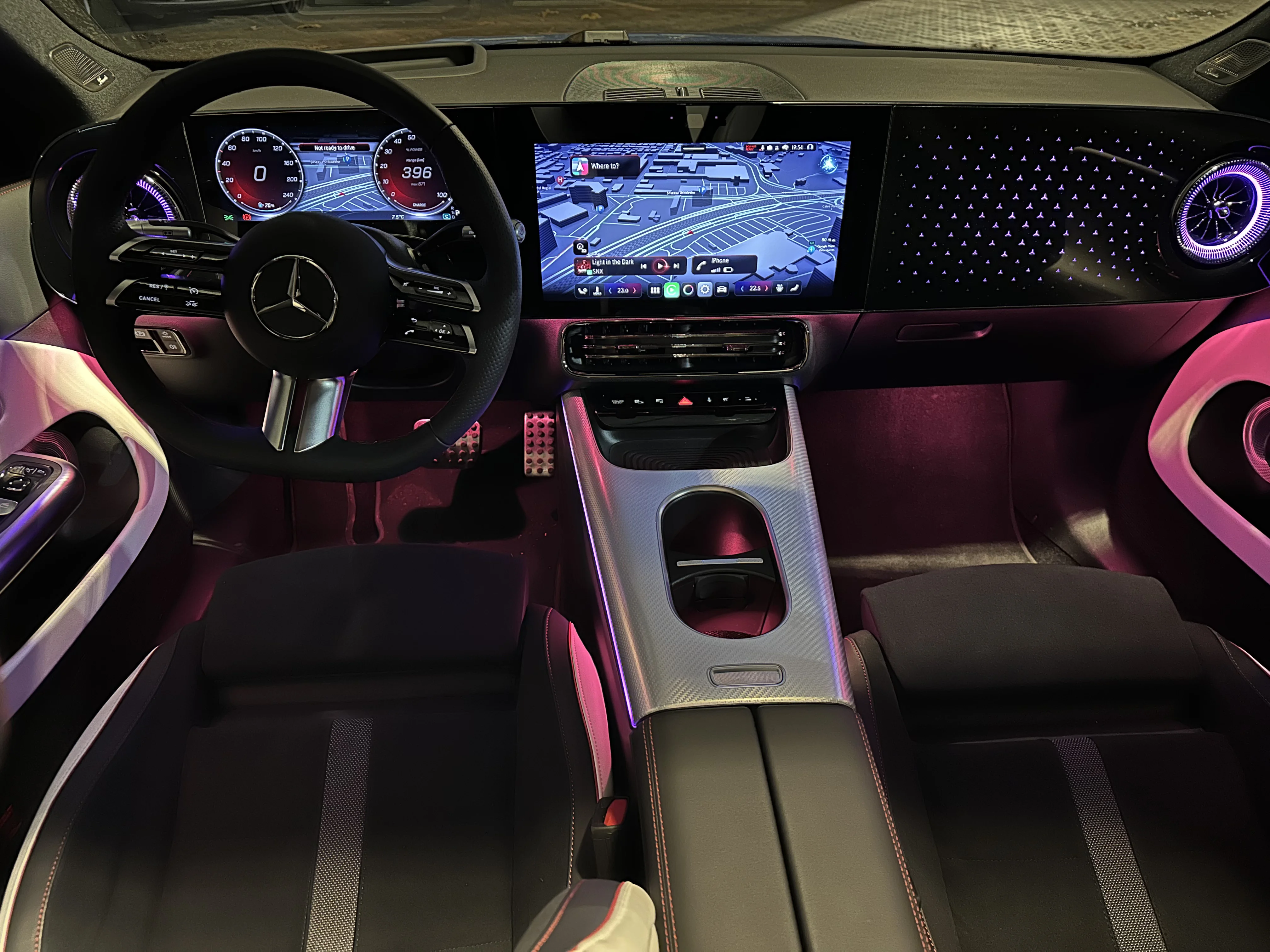
The driving position is low and sporty, with ample adjustment. Seats are comfortable for daily use and long trips.
Rear bench
Legroom is good for the segment, though the sloping roofline slightly limits headroom for very tall passengers. For two adults, comfort is good.
Boot – how practical is CLA Electric?
Mercedes-Benz does not position CLA Electric as a large family car but as a compact premium saloon. Boot volume is comparable with other saloons in the segment, enough for:
- weekly shopping
- weekend luggage
- daily use
The shape is regular and access is practical for a saloon.
Technology and assistance systems
CLA Electric gets a full package of modern systems:
- adaptive cruise control
- lane keeping assistance
- automatic emergency braking
- blind-spot monitoring
- cameras and parking sensors
The systems work smoothly and discreetly, without aggressive intervention.
Prices in Romania
For the Romanian market:
- CLA 250+ Electric starts at approximately €51,000–52,000 including VAT
- CLA 350 4MATIC Electric costs more, depending on equipment
Final price depends significantly on options.
Direct rivals
Tesla Model 3
More focused on technology and efficiency, with a different interior approach.
BMW i4
Sportier and larger, but also more expensive.
Final verdict
Mercedes-Benz CLA Electric is a mature, refined electric saloon well suited to daily use. The CLA 250+ is the rational choice for most customers, while CLA 350 4MATIC targets those who want performance and all-wheel drive.
For city driving, extra-urban trips and premium daily use, CLA Electric is one of the most balanced electric options currently available on the Romanian market.