Skoda Kodiaq has long been a well-regarded mid-size SUV, balancing space, comfort and technology. For 2025 Skoda launched the second generation with significant design and tech upgrades. This review covers the new Kodiaq 2025 from styling and engines to pricing and key rivals.
Exterior design
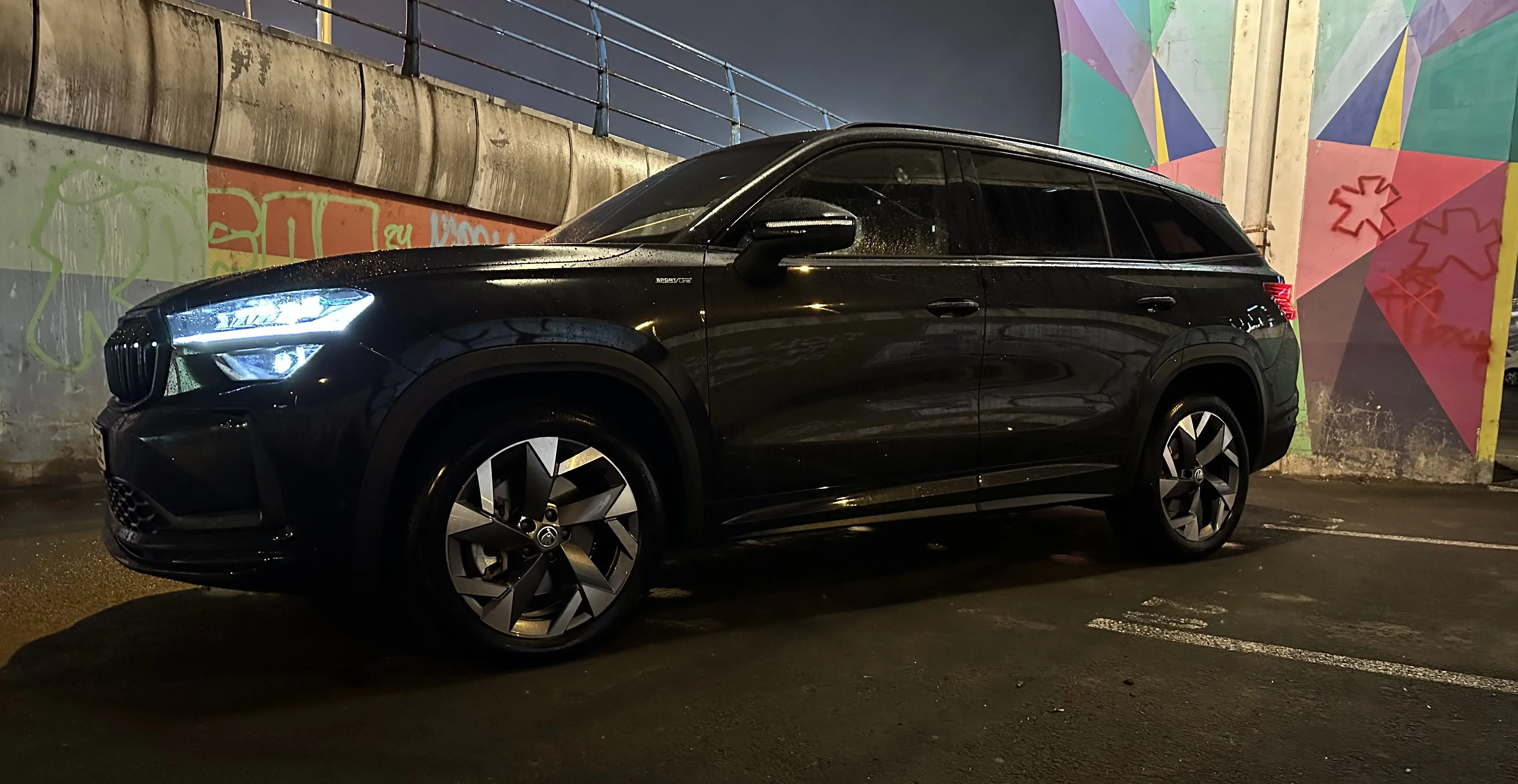
The new Kodiaq keeps the robust lines of its predecessor but adds modern detail for a more refined look. The front is dominated by a larger grille with redesigned slats, flanked by twin-headlamp units with Matrix LED technology and a distinct light signature. A sculpted bonnet and functional air intakes on the bumper underline the dynamic character.
The side profile is smoother and more elegant, with less aggressive creases than before. The D-pillar, available in dark chrome, adds refinement. Nineteen-inch wheels fit the generous proportions.
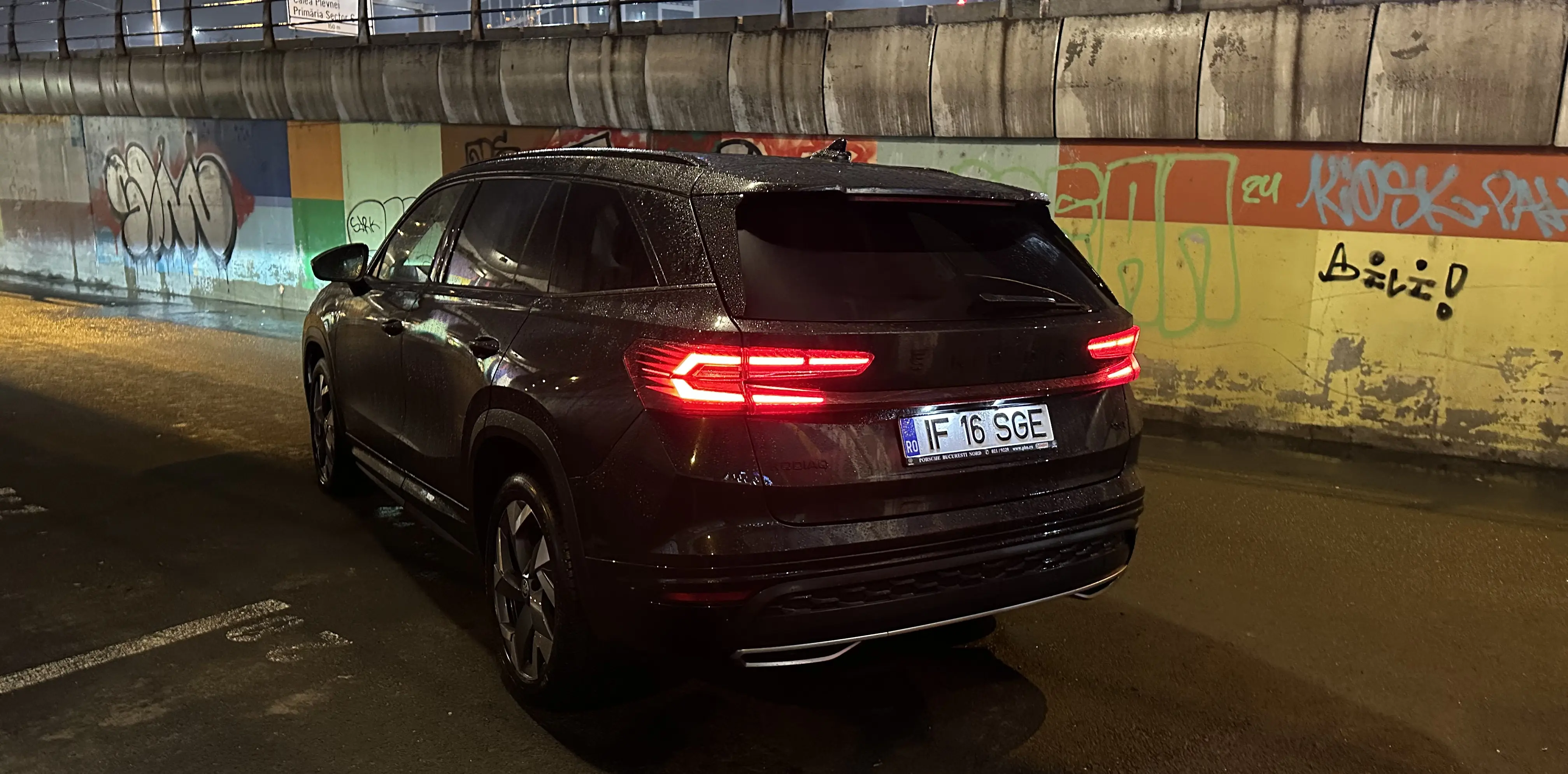
The rear has been revised too, with LED lamps, updated inner graphics and a red band linking them. Separate “Skoda” lettering on the tailgate reinforces the more premium positioning.
Interior design and comfort
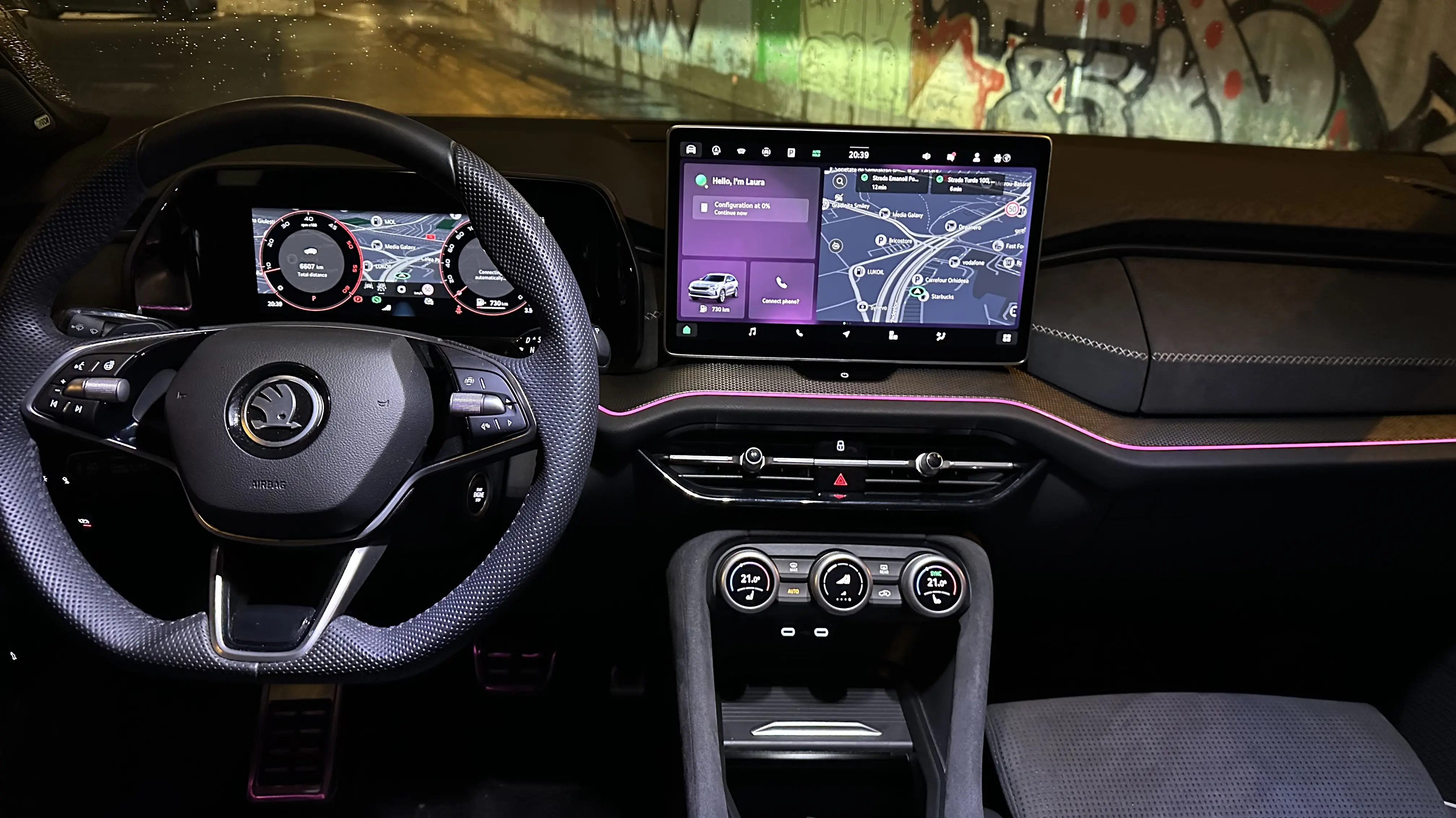
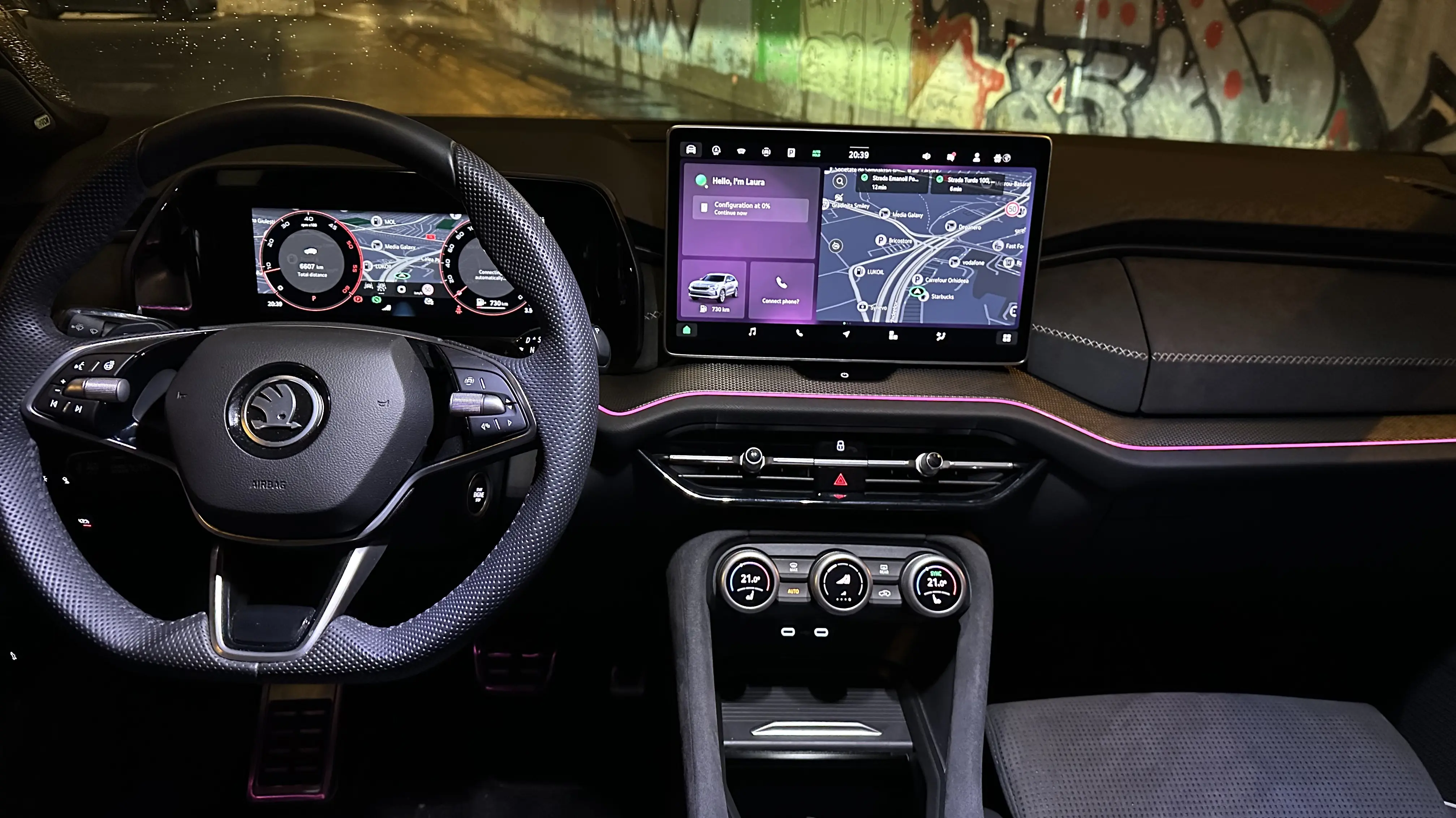
Inside, the 2025 Kodiaq impresses with modern design and higher-grade materials. The dashboard is centred on a 13-inch touchscreen integrated cleanly into the layout, running the updated infotainment system. A 10.25-inch digital instrument cluster lets you customise what you see.
Interior space is a Kodiaq strength. With five- or seven-seat layouts, it suits larger families or anyone who needs flexible luggage room. Front seats and the second row are comfortable, with decent lateral support and plenty of adjustment. The third row suits children or short trips.
Cabin materials include leather inserts and chrome accents. Storage is plentiful and well thought out, and boot volume is generous and adapts with the seat configuration.
Engines and performance
Skoda Kodiaq 2025 offers a broad engine range:
1.5 TSI e-TEC 150 hp: Mild-hybrid petrol balancing performance and efficiency. Official 0–100 km/h is around 9.5 seconds; combined consumption is competitive for the class.
2.0 TDI 150 hp: The 2.0-litre diesel is available with front-wheel drive or all-wheel drive. Strong torque suits long distances and towing.
2.0 TDI 193 hp: The more powerful diesel adds pace without giving up too much on efficiency.
1.5 TSI iV PHEV 204 hp: Plug-in hybrid pairing the 1.5-litre petrol with an electric motor. Up to 76 km of electric range (manufacturer claim) targets urban use and lower emissions.
All engines use a DSG automatic for smooth shifts. All-wheel drive is available on more powerful versions for difficult conditions.
Behind the wheel
The Kodiaq 2025 with the 2.0-litre diesel and all-wheel drive is one of the better-balanced drives in the mid-size SUV class. With 193 hp and generous low-down torque, it feels responsive in town, on motorways and on rougher tracks. The diesel delivers power smoothly, and the seven-speed DSG shifts cleanly.
On long journeys the 2.0 TDI 4x4 stands out for comfort and stability. Optional adaptive damping absorbs bumps well; a firmer setting reduces the body roll typical of large SUVs in corners. Intelligent all-wheel drive adds security when surfaces are slippery. The result is a versatile SUV for long trips, light off-road use or daily urban traffic, combining performance, efficiency and comfort.
Technology and safety
The 2025 Kodiaq raises the tech bar for mid-size SUVs, with emphasis on digital services, connectivity and safety. A 13-inch multimedia screen offers an intuitive interface, wireless Android Auto and Apple CarPlay, and over-the-air updates.
Safety kit includes adaptive cruise control, lane keeping assist, emergency braking with pedestrian and cyclist detection, and Travel Assist for semi-autonomous motorway driving. Matrix LED headlights adapt the beam to avoid dazzling other road users. Together, these systems support relaxed driving in varied conditions.
Comparison with main rivals
Skoda Kodiaq 2025 vs Volkswagen Tiguan Allspace
Kodiaq and Tiguan Allspace are close technically and in size. Kodiaq 2025 often wins on value: in Romania list pricing starts around €36,000 against roughly €39,500 for the Tiguan Allspace. Both offer seven-seat layouts and quality cabins, but Kodiaq tends to feel roomier inside with more “Simply Clever” storage. Its 13-inch screen is larger than the Tiguan’s 10-inch unit and, in use, the Skoda system feels simpler day to day.
Skoda Kodiaq 2025 vs Kia Sorento
The Sorento targets a more premium position and costs more—around €42,000 entry in Romania versus about €36,000 for the Kodiaq. Sorento offers a wide range of refined hybrids, but the Kodiaq’s 1.5 TSI iV plug-in (204 hp, up to 76 km electric range on paper) keeps it competitive. Sorento may edge ahead on interior plushness; Kodiaq counters with ergonomics, straightforward infotainment and clever storage—so the choice comes down to priorities.
Skoda Kodiaq 2025 vs Peugeot 5008
The 5008 is a direct rival with similar size and pricing—Peugeot’s entry is around €35,000 in Romania, slightly under the Kodiaq. Kodiaq pays back with more versatile interior space, especially in the third row, for large families or heavy luggage. The 5008’s i-Cockpit looks futuristic but can feel less intuitive than Skoda’s setup. Kodiaq’s plug-in option with 76 km electric range also looks stronger than Peugeot’s current mix for many buyers.
Conclusion
Skoda Kodiaq 2025 keeps the successful formula of the first generation while improving interior comfort, material quality, technology and powertrain efficiency. With strong value (from about €36,000 in Romania), generous space, modern tech and seven-seat flexibility, it remains one of the most compelling mid-size SUVs. Against Tiguan Allspace, Sorento and 5008, it leads on economy, ergonomics and usable space for many buyers—a solid choice for families who want a modern, spacious, comfortable SUV.