As electric mobility gains ground, Toyota makes its first serious move with the bZ4X. The model opens a new chapter for the brand, which plans six new zero-emission models by 2026. The bZ4X sits in the mid-size SUV segment, rivalling the Audi Q4 e-tron, VW ID.4, Ford Mustang Mach-E and Skoda Enyaq, among others.
The bZ4X is the first in a global bZ product line. Its name refers to size—4 for the D-SUV segment—and body style, with X denoting a crossover SUV.
The Toyota bZ4X is Toyota’s step into dedicated EV hardware. Toyota positions it as a premium driving experience, with up to 513 km WLTP range on the 150 kW front-wheel-drive version and the ability to charge the battery to 80% in roughly 30 minutes on rapid charging (manufacturer figures).
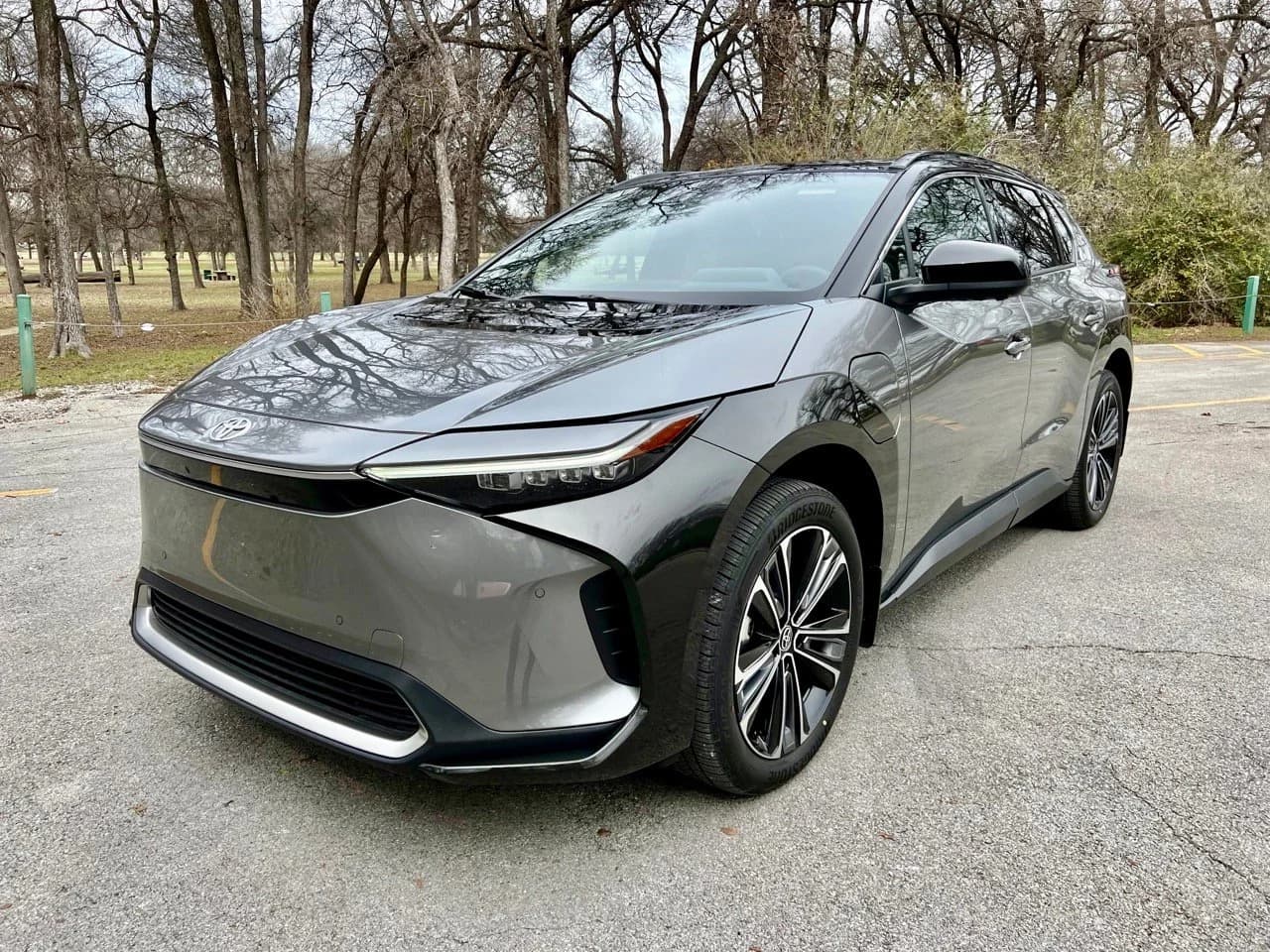
The exterior mixes bold lines with familiar Toyota cues. Narrow headlights and black plastic-clad front wings give a tougher, more off-road look. At the rear, two light bars stand out, the lower one extending almost to the rear wheel arch. Front-facing sensors are hidden in the plastic “moustache” at the nose for a clean front end.
Inside, Toyota blends familiar controls with EV-specific ideas. Large physical buttons remain easy to use, while an unconventional dashboard places a display high and away from the driver, above a small-diameter steering wheel—a futuristic, airy feel. Much of the dash is wrapped in fabric for visual warmth. Passenger space and luggage capacity are generous, with a 2.85 m wheelbase and a 452-litre boot.
The cabin feels distinct and forward-looking thanks to fabric and synthetic leather, yet closer inspection reveals hard plastics and mixed textures. It is acceptable, but next to a Skoda Enyaq iV or Nissan Ariya the bZ4X interior does not stand out.
Our test car—a Toyota bZ4X 150 kW FWD Luxury Style— wore pearl white paint, 20-inch alloy wheels and 235/50 R20 tyres. List price: €59,515.47 including VAT, before scrappage incentives.
The driving position is shaped around drive-by-wire steering. Whatever your seat height, you must set the column very low so the top of the wheel does not block the instruments—uncomfortable and less intuitive to drive.
Depending on trim, the bZ4X gets an 8- or 12.3-inch touchscreen running the same Toyota software as the rest of the range. The infotainment does not impress in a car priced near €60,000. We also had issues with wireless Apple CarPlay (on first connection it stayed stuck).
Despite a somewhat conservative approach, the bZ4X is an important step for Toyota in EVs: competent, well built and attractive. It may not excel in every area, but it reinforces confidence in Toyota’s ability to deliver a reliable, durable car.
In summary, the Toyota bZ4X is a promising electric SUV worth considering. With competitive pricing and a solid feature set, it could suit many buyers entering the segment.