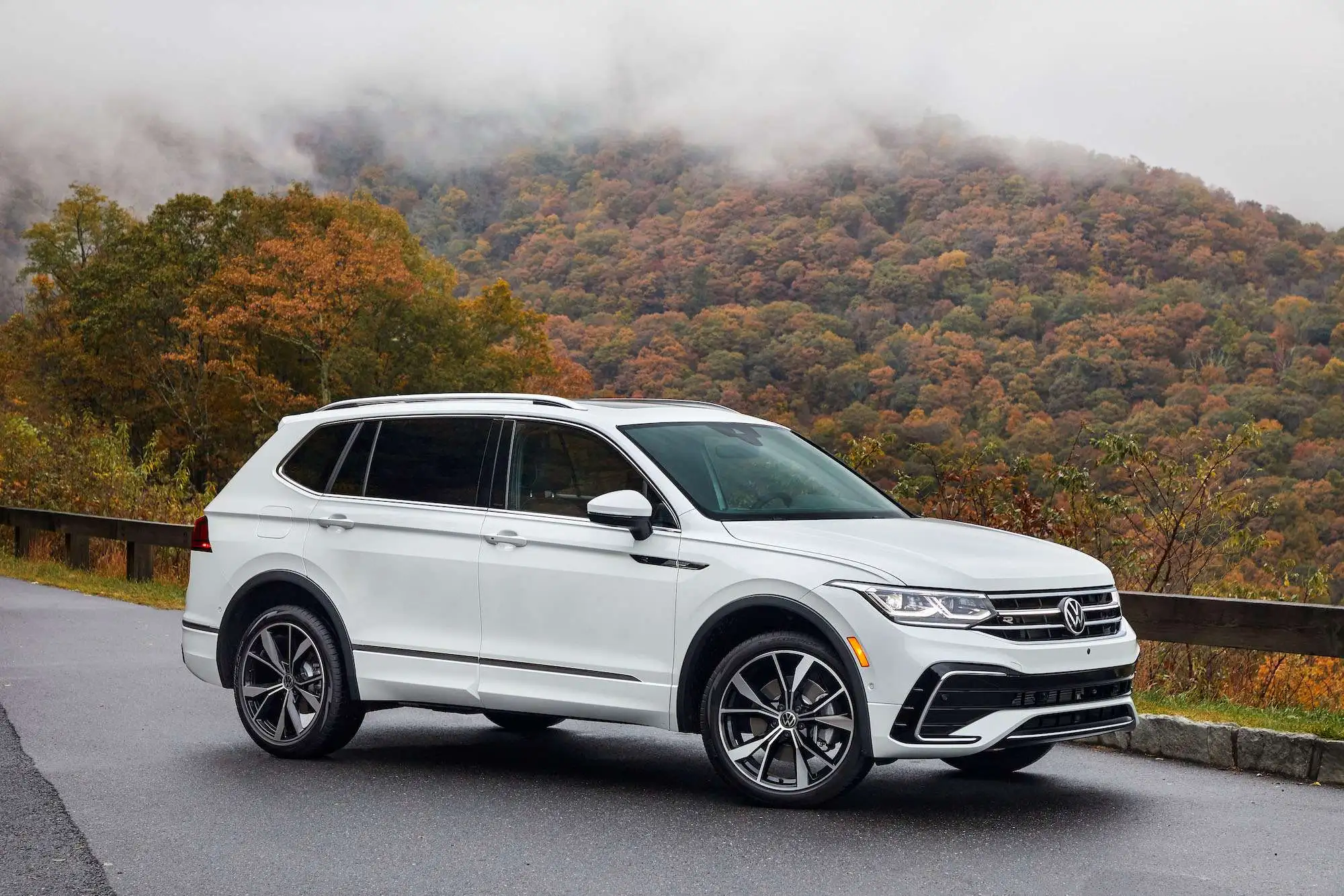
The Volkswagen Tiguan is one of the most straightforward SUVs on sale—big and spacious, with the high driving position buyers want and a desirable badge on the nose. You can have it with petrol or diesel power, or as a plug-in hybrid with lower emissions.
Alternatives include the SEAT Ateca and Skoda Karoq, which share engines and much of the hardware. Under the skin they are related, but characters differ. Picture three schoolmates: SEAT is sporty; Skoda is clever and practical; the VW Tiguan is smartly dressed and tech-focused.
Tiguan appeal is broad thanks to a more upmarket image. Well specified, it can rival compact premium SUVs such as the Volvo XC40, Mercedes GLA, Audi Q3 and BMW X1. In lower trims it can face a well-equipped Nissan Qashqai or Renault Kadjar.
Inside, Tiguan is similarly split. High-spec cars look smart with plush seats; cheaper versions show hard plastics and obvious scratch marks that feel out of place in a supposedly premium VW. Trim choice matters if you want the best of this SUV.
The infotainment screen is feature-rich, with Apple CarPlay and Android Auto, plus options for digital dials and a large central display. It is awkward to use because physical buttons are scarce—touch panels are not ideal on the move.
The Tiguan is very practical. Rear space is generous and the boot swallows weekly shopping or a family camping trip. Need seven seats? Look at the Tiguan Allspace—similar but with two extra rear chairs.
It is not exciting to drive, but it is comfortable, quiet and stable at speed. Advanced safety—including standard city emergency braking—adds reassurance. Comfort clearly beats cornering fun; drivers who want the latter should try a SEAT Ateca.
Engines span a 1.5-litre petrol with 130 hp or 150 hp up to the 320 hp Tiguan R 2.0-litre. Eco-minded buyers get a 245 hp plug-in hybrid with lower emissions and about 45 km of electric range (manufacturer figure, equivalent to the 28-mile claim in the source review). Diesels use a 2.0-litre 150 hp unit. Automatic and 4×4 options are available.
All-wheel drive helps on dirt roads and snow, but most buyers are better off without it for lower fuel use.
If this practical, polished family SUV appeals, compare new Tiguan offers or recent used stock. If you are selling your current car, dealers and classifieds remain the usual routes.
The interior may feel familiar to previous Tiguan owners, with several updates.
A new steering wheel uses touch buttons with a slight haptic “click”—almost like real switches, which makes you wonder why VW did not use conventional buttons. Swipe gestures for extra functions are frustrating and unintuitive.
Climate control is also touch-sensitive—harder than ideal compared with a simple rotary knob. At least the panel looks smarter, as does the revised gear selector.
Standard equipment includes an 8.0-inch infotainment system that works reasonably well; a 9.0-inch version is better. Layout is logical, with useful shortcuts and gesture control (waving a hand in front of the screen). Wireless Android Auto and Apple CarPlay are available, and many drivers will use those more than VW’s own software.
Life-spec models keep fashionable physical dials; the rest of the range gets a 10.25-inch digital instrument cluster with configurable layouts and plenty of information.
Overall interior design has not changed radically—still simple—but the dashboard looks slightly wider and more polished. Is it a bit monotone? In a way, yes. For more flair, consider the Volvo XC40.
Build quality is decent and seats are comfortable; optional electric adjustment and leather are available. Driving position is good, with plenty of adjustment for very tall or short drivers.