Renault Group delivered 497,799 passenger cars and light commercial vehicles in the third quarter of 2026, a 6% decline from the same period last year. The group’s revenue nevertheless increased 1.5% to €11.596 billion. The figures show a business trying to protect revenue quality while volumes are being affected by competition, product transitions and difficult conditions in several international markets.
Revenue held up despite lower registrations
Automotive revenue reached €9.835 billion in the quarter, broadly stable year on year. At constant exchange rates, automotive revenue declined 0.2%. Mobilize Financial Services performed better, with revenue up 11% to roughly €1.8 billion.
Renault Group attributed the automotive result to a negative volume effect of 5.9 points, mainly linked to the 6% fall in registrations. A positive 4.9-point partner-sales effect partly offset that pressure. The company highlighted the Geely partnership in Brazil, where vehicle distribution was ramping up and local production started in September.
Total new-vehicle inventory stood at 532,000 units on September 30. Independent dealers held 312,000 vehicles and the group held 220,000. Renault Group expects total inventory to move towards the lower end of its 525,000-to-550,000-unit range by the end of 2026.
The result is therefore not a simple volume story. Fewer vehicles were sold, but revenue did not fall with the same intensity. Renault is prioritising retail sales, model mix and selected partnerships while reducing exposure to channels that generate less value for the manufacturer.
Renault and Dacia moved in opposite directions
Renault delivered 349,901 vehicles in the third quarter, down 2.9%. Over the first nine months, the brand sold 1,178,946 vehicles, up 1.1% year on year. The brand’s passenger-car sales rose 0.9% in the nine-month period, while light commercial vehicle sales increased 1.6%.
Dacia delivered 144,175 vehicles in the third quarter, down 12.8%. Its nine-month total was 471,007 units, a decline of 9.7%. Renault Group linked the result to a product-cycle and powertrain transition, as the market moves towards a wider mix of electrified vehicles.
Alpine was the group’s fastest-growing brand in percentage terms. Its third-quarter deliveries rose 58.4% to 3,723 cars, while the nine-month total rose 65.6% to 12,269 units. Alpine’s growth is much smaller in absolute volume than Dacia’s decline, but it contributes to the group’s product and revenue mix.
Europe and the Romanian market
In Europe, Renault Group focused on the composition of sales as well as the number of vehicles delivered. Retail sales increased 5% in the third quarter. The retail mix rose by 4.6 percentage points to 64.8%. At the same time, short-term rental and demonstration-vehicle sales fell 18%.
Renault Group listed Romania among its 15 largest markets at the end of September. The group reported 27,175 passenger cars and light commercial vehicles in Romania, corresponding to a 24.9% market share in its strategic-market table. The figure covers the first nine months and refers to the group’s brands rather than Renault alone.
The Renault brand grew 3.1% in Europe during the first nine months and ranked second among brands according to the company. Northern European passenger-car sales increased 6%, with Germany up 8.6%, the United Kingdom up 3.8% and Denmark up 24.2%.
Electric sales rose sharply
Electric vehicles were one of the clearest areas of growth. Renault Group’s EV sales increased 84.7% compared with the third quarter of 2025 and represented 25.8% of the group’s passenger-car sales. The higher electric share did not prevent the group’s total deliveries from falling, but it changed the product mix significantly.
Over the first nine months, electric vehicles represented 20.9% of the group’s passenger-car sales. Renault’s European passenger-car mix was more electrified: 68% of the brand’s sales were electrified at the end of September, while Renault EV sales increased 75.2%.
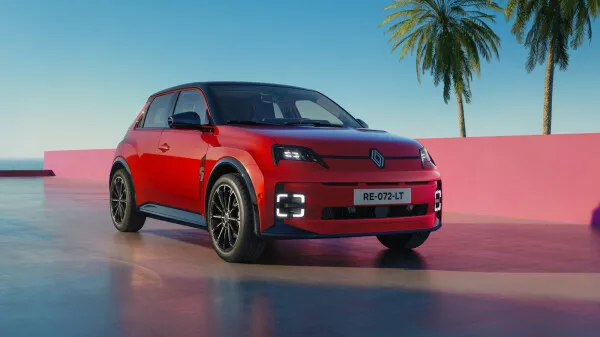
The group is relying on several product lines to continue that shift. Renault is expanding its electric range with models such as the Renault 5 E-Tech electric, while Dacia introduced the full-hybrid 155 powertrain on Sandero. Renault Group also points to the new Spring, Dacia Striker, Sandero Hybrid, the new Megane E-Tech electric and the Trafic Van E-Tech electric as part of its second-half product activity.
International markets remain uneven
In Türkiye, group deliveries fell 18% in the third quarter, although Renault said it outperformed a local market that declined 23.3%. Latin America was also difficult, with strong competition and additional pressure in Argentina, where the market fell 19.2%.
For the first nine months, Renault Group sold 1,662,222 vehicles, down 2.2%. Renault grew 1.1%, Dacia fell 9.7% and Alpine grew 65.6%. Outside Europe, the group reported nine-month growth in India, Türkiye, Morocco and Brazil, even though the third quarter was weaker in several markets.
The 2026 outlook is unchanged
Renault Group confirmed its 2026 financial guidance. The company expects a group operating margin of around 5.5% of revenue and automotive free cash flow of about €1.0 billion.
Management also said that the usual seasonal improvement in the second half may be less pronounced because of higher raw-material costs and inflation. For Renault Group, the quarter combines lower volume with stable automotive revenue, stronger retail discipline and rapid EV growth. The next results will show whether the product launches and the new powertrains can turn that combination into higher deliveries without weakening the group’s pricing discipline.