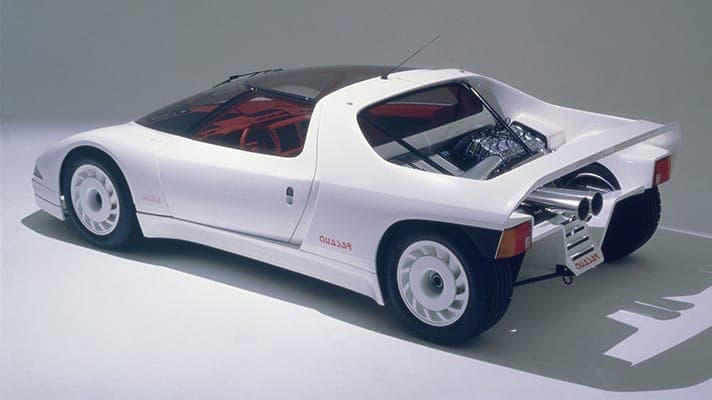
Peugeot Quasar. Manufacturer archive photograph, published in the Top Gear gallery.
25 mid-engined concept cars that never reached production
The mid-engined layout, with the engine between the cabin and the rear axle, is associated with some of the highest-performing cars ever built. On a production car, the solution can improve mass distribution and cornering response, but it reduces available space and complicates development, cooling and access for maintenance.
Manufacturers have also used this configuration for projects without the obligations of mass production. Some tested technologies that later appeared on other models, and others were abandoned because of costs, a recession or a change of company leadership. The selection below comprises 25 concepts that remained prototypes, even if some were functional enough to be driven.
1. Peugeot Quasar – 1984
The Quasar started from the mechanicals of the Peugeot 205 T16 rally car: mid-engine and all-wheel drive. The 1.8-litre four-cylinder received two turbochargers and developed, according to figures given at the presentation, about 600 hp. The body used carbon fibre and Kevlar, and the dashboard included a CRT monitor for navigation, an unusual solution in 1984.
2. Peugeot Oxia – 1988
The Oxia was presented at the Paris Motor Show four years after the Quasar. The 2.8-litre V6, derived from the one used by the WM P87 prototype at Le Mans, was twin-turbocharged and delivered about 680 hp in the concept’s configuration. Peugeot built only two examples.
3. Peugeot Onyx – 2012
The Onyx combined a 3.7-litre V8 diesel from Peugeot’s Le Mans programme with a hybrid system. Total claimed power was about 690 hp. The unpainted copper exterior panels were intended to oxidise naturally, so that the car’s surface would change over time.
4. Volkswagen W12 – 1997
The first Volkswagen W12 appeared under the name Syncro Coupé at the 1997 Tokyo Motor Show. Giorgetto Giugiaro designed the body, and behind the cabin sat a 5.6-litre naturally aspirated W12. Later variants evolved as far as the W12 Nardò, used including for speed and endurance records.
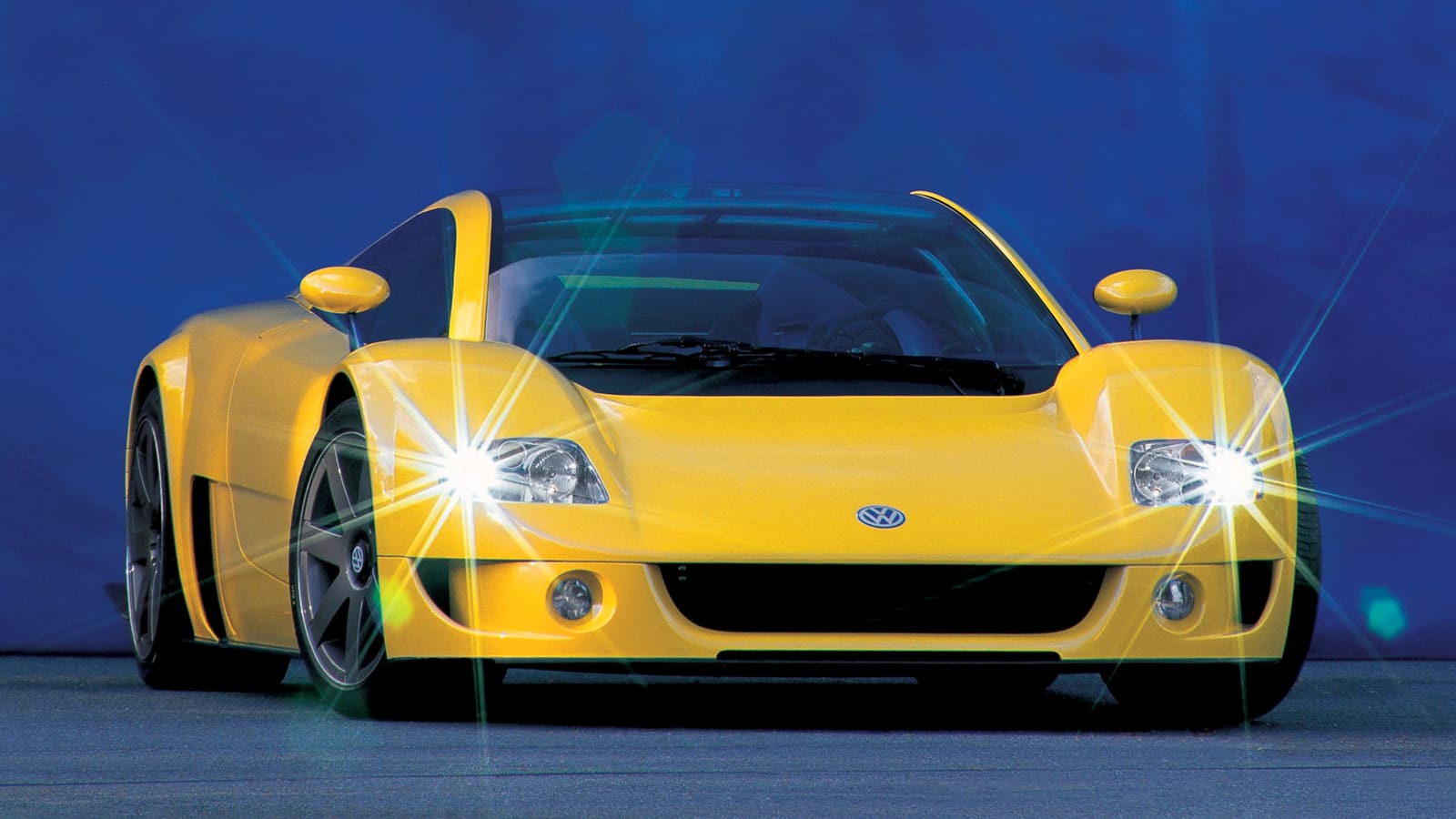
Volkswagen W12 Coupé. Photo: Volkswagen, via Top Gear.
5. Cadillac Cien – 2002
Cadillac marked the brand’s centenary with the Cien, presented in Detroit in 2002. The concept had a carbon-fibre chassis, a design the company said was inspired by the F-22 Raptor aircraft, and a 7.5-litre V12 mounted amidships. Claimed power was about 760 hp, sent to the rear wheels.
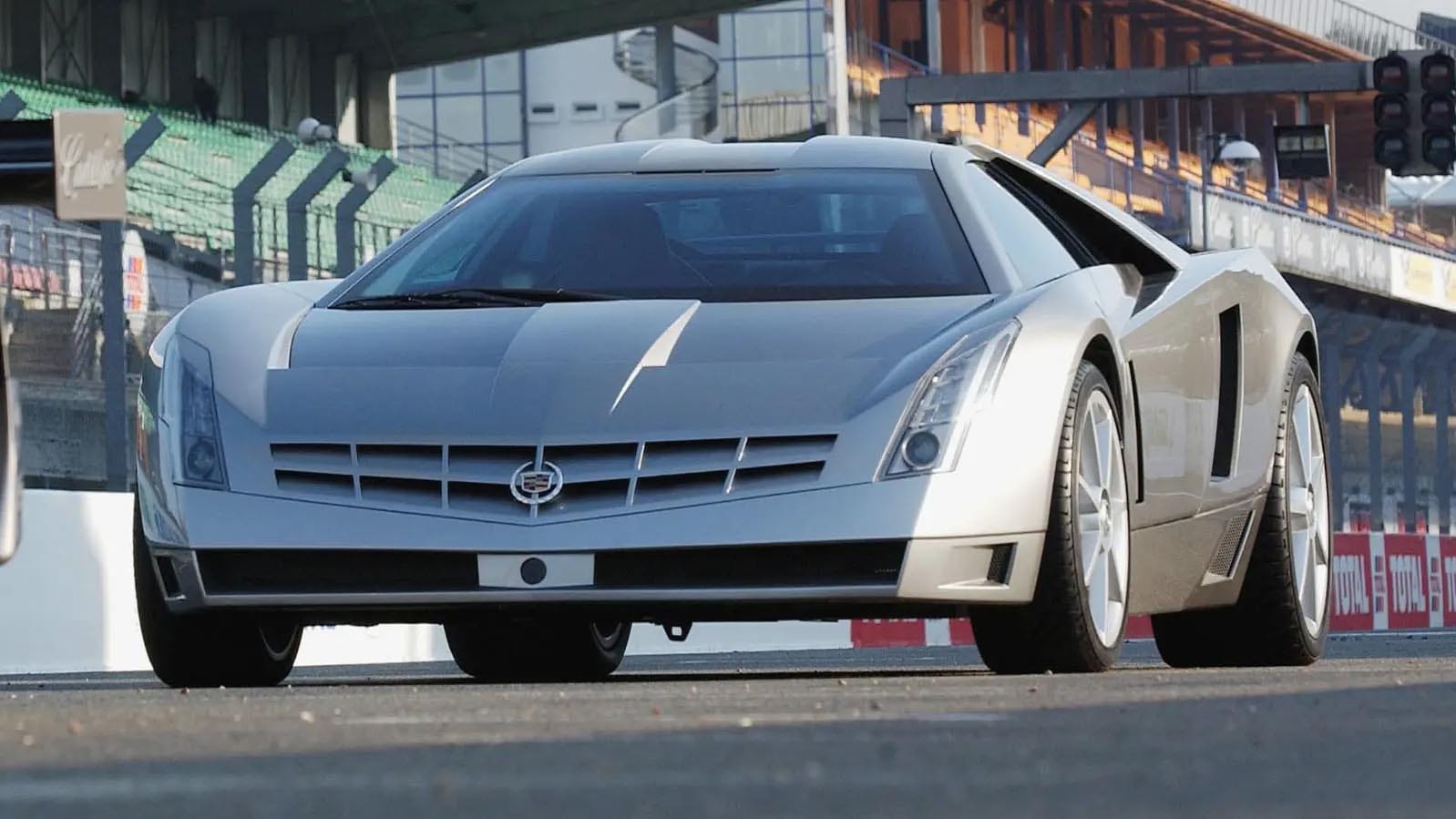
Cadillac Cien. Photo: Cadillac, via Top Gear.
6. Bentley Hunaudières – 1999
The name came from the Hunaudières straight at the Le Mans circuit. The Bentley concept used an 8.0-litre naturally aspirated W16 and a five-speed manual gearbox. It did not enter production, but the idea of a Volkswagen Group car with a W16 engine was later developed through the Bugatti Veyron.
7. Chrysler ME Four-Twelve – 2004
The name described the technical layout: mid-engine, four turbochargers and 12 cylinders. The 6.0-litre V12 came from Mercedes-Benz and was rated at about 862 hp and 1,152 Nm. Chrysler estimated acceleration from 0 to 100 km/h in less than three seconds, but development costs stopped the project.
8. Chevrolet Aerovette – 1973
The Aerovette was one of Chevrolet’s many attempts to move the Corvette’s engine behind the cabin. The initial prototype had two two-rotor Wankel engines, with a claimed equivalent displacement of 9.5 litres and more than 400 hp. A V8 version was later tested, without the project receiving approval for production.
9. Chevrolet CERV III – 1990
Developed from the Corvette Indy, the CERV III combined all-wheel drive, four-wheel steering and active suspension. The 5.7-litre V8, twin-turbocharged, produced about 660 hp. The technology was too expensive for an early-1990s production Corvette.
10. Ford GT90 – 1995
The GT90 was presented in Detroit in 1995 and anticipated the “New Edge” design language later used by Ford. The chassis came from the Jaguar XJ220 project, and the engine was a 6.0-litre V12 with four turbochargers. Ford claimed about 730 hp and a theoretical top speed of more than 370 km/h.
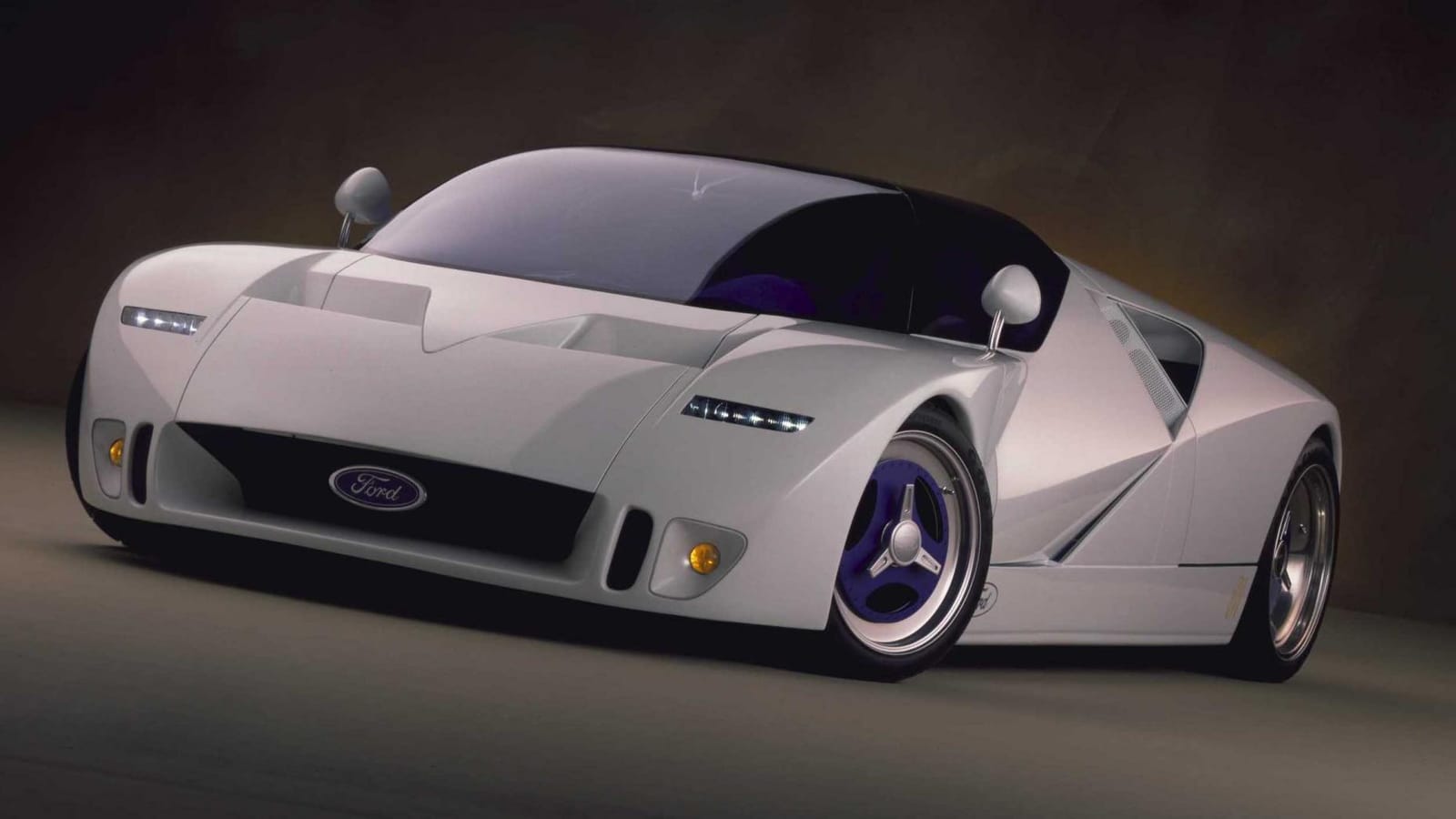
Ford GT90. Photo: Ford, via Top Gear.
11. Ford Mustang I – 1962
The first car to carry the Mustang name was not the coupé launched in 1964. The Mustang I was a compact two-seat roadster, with a 1.5-litre V4 mounted amidships and retractable headlights. Ford used it to gauge public interest, but the production model adopted a much more conventional architecture.
12. BMW Nazca C2 – 1991
The Nazca C2 followed the Nazca M12 concept and was designed by Fabrizio Giugiaro for Italdesign. The light carbon-fibre structure and BMW V12 engine suggested an indirect successor to the BMW M1. There were several prototypes, including a Spider, but BMW did not open a production programme.
13. Alfa Romeo Scighera – 1997
Fabrizio Giugiaro also designed the Scighera for Italdesign. The concept used Alfa Romeo’s twin-turbocharged “Busso” V6 and all-wheel drive. The doors combined a conventional section with one that lifted, a solution close to that used on the Nazca.
14. Lancia Stratos Zero – 1970
Marcello Gandini designed for Bertone one of the most radical wedge-shaped bodies. The Stratos Zero was only about 84 cm high, and access was through the tilting windscreen. The 1.6-litre V4 came from the Lancia Fulvia and was mounted amidships.
15. Saleen S5S Raptor – 2008
Saleen presented the S5S Raptor at the 2008 New York Motor Show as a more affordable alternative to the S7. The supercharged 5.0-litre V8 developed about 660 hp. Financial problems and changes of company ownership closed the path to production.
16. Ferrari Modulo – 1970
The Pininfarina Modulo used the chassis and 5.0-litre V12 of a Ferrari 512 S. The body had partially covered wheels and a sliding canopy for access. The unique example was later restored to become functional, but it was never a Ferrari series project.
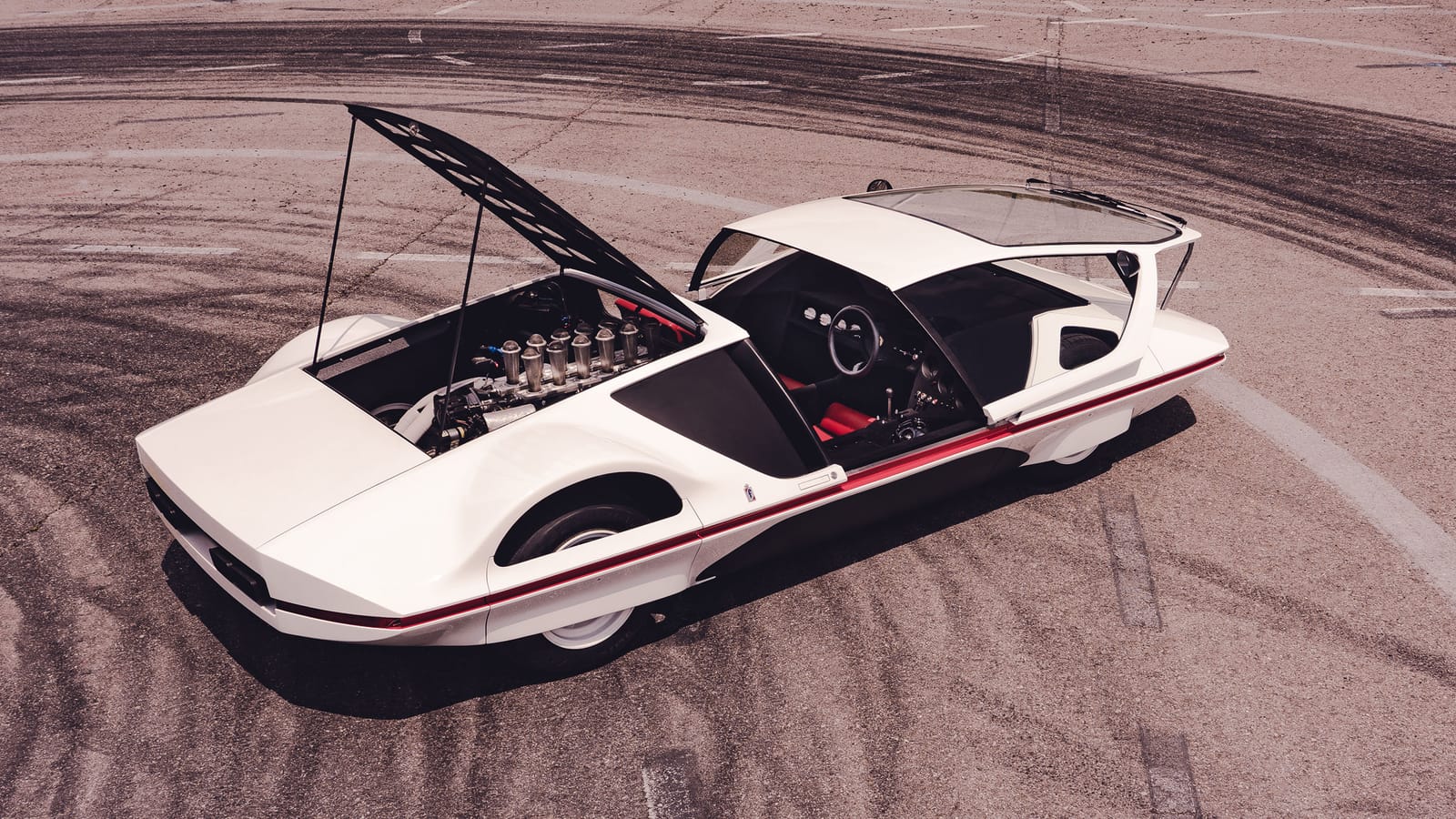
Ferrari Modulo. Photo: Pininfarina/Ferrari, via Top Gear.
17. Aston Martin Bulldog – 1980
Aston Martin initially intended to build a very small series of Bulldog examples. The prototype had a twin-turbo 5.3-litre V8 and a theoretical top speed of 381 km/h, but costs led to the programme’s cancellation. The restored car exceeded 322 km/h in 2023, more than four decades after its presentation.
18. Porsche 919 Street – 2017
The Porsche 919 Street was conceived as a road-going version of the 919 Hybrid prototype that won at Le Mans. It would have retained the 2.0-litre V4 and the hybrid system, with total power of more than 900 hp. Technical complexity and the maintenance required made type approval of a customer series impossible.
19. Isuzu 4200R – 1989
Before concentrating on SUVs and commercial vehicles, Isuzu presented a mid-engined supercar. The 4200R was designed by a team that included Julian Thomson and Shiro Nakamura, had a 4.2-litre V8 and all-wheel drive. At that time, both Isuzu and Lotus were under General Motors control.
20. Volkswagen XL Sport – 2014
Volkswagen replaced the efficient XL1’s diesel-hybrid system with the 1,199 cc V2 from the Ducati 1199 Superleggera motorcycle. The result had 200 hp, revved beyond 11,000 rpm and weighed about 890 kg. The XL Sport remained a technical demonstration, with no series-production plan.
21. Yamaha OX99-11 – 1992
The OX99-11 used an adapted version of the 3.5-litre V12 Yamaha supplied in Formula 1. The monocoque chassis was made of carbon fibre, and the passenger sat in tandem, behind the driver. The projected price and the Japanese recession of the early 1990s limited the project to three prototypes.
22. Lamborghini Athon – 1980
Bertone built the Athon on the technical base of the Lamborghini Silhouette, in a financially difficult period for the manufacturer. The two-seat barchetta was fully functional and used a 3.0-litre V8 mounted transversely behind the cabin. The car remained a unique example.
23. Buick Wildcat Concept – 1985
The Wildcat had a large transparent canopy that rose together with part of the body to allow access. The 3.8-litre V6 had been prepared by McLaren Engines and developed about 233 hp, a modest figure by current standards, but relevant for an American prototype from 1985.
24. Mini ACV30 – 1997
BMW presented the ACV30 at the 1997 Monte Carlo Rally, as it prepared the Mini brand’s return. Under the body inspired by the Mini Cooper sat the mechanicals of the MG F, with a 1.8-litre engine mounted amidships and rear-wheel drive. The modern production Mini later chose a front engine and front-wheel drive.
25. Volkswagen Golf W12 650 – 2007
For the 2007 GTI gathering at Wörthersee, Volkswagen installed a 6.0-litre twin-turbo W12 in a Golf V. The engine sent about 650 hp and 750 Nm to the rear wheels. The car could be driven, but cooling, dynamic behaviour and the structural changes made it unsuitable for series production.
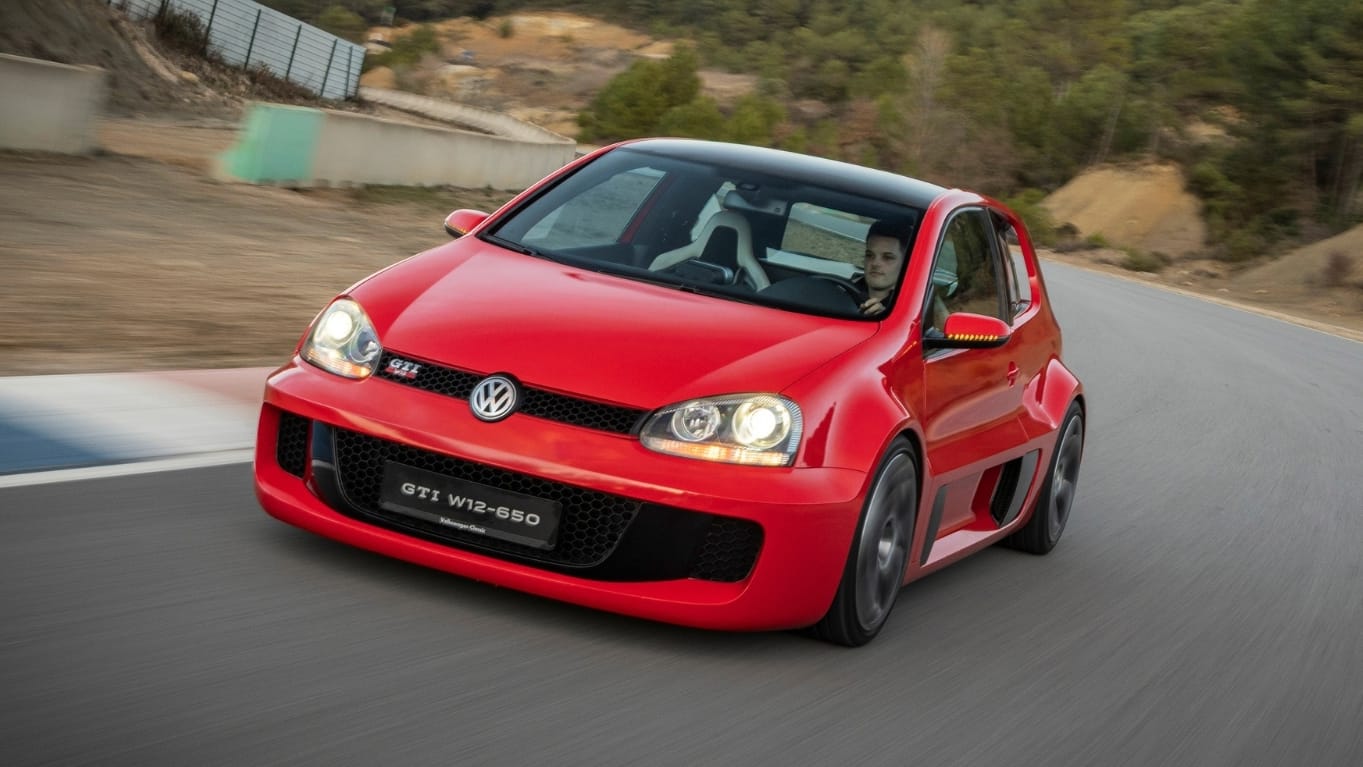
Volkswagen Golf W12 650. Photo: Volkswagen, via Top Gear.
What these prototypes left behind
Some projects directly influenced cars that appeared later. The Bentley Hunaudières and Volkswagen W12 demonstrated the possibilities of an architecture that would reach, in a different form, the Bugatti Veyron. Chevrolet’s series of prototypes preceded by decades the Corvette C8, the first production Corvette with a mid-mounted engine.
Others remained objects without industrial continuation, but they fixed a particular era: the Stratos Zero and Modulo for the wedge design of the 1970s, the Quasar for the technological optimism of the 1980s, and the GT90 for digitally drawn supercars in the 1990s.
The list also shows why the distance between concept and showroom is so large. A prototype has to work well enough for a presentation or a series of tests. A production car has to pass type approval, withstand daily use, be repairable and have a cost the market will accept. The 25 models solved the first part; for most of them, the second had no financial justification.
Frequently asked questions
What does mid-engine mean?
The engine is placed between the front and rear axles. In the sense used here, it sits behind the cabin and ahead of the rear axle, for a more balanced distribution of mass.
Were all 25 concepts functional?
Not to the same extent. Some could be driven and were tested at high speeds, and others were built mainly for presentation. A functional concept is not automatically type-approvable for public roads.
Which of them came closest to production?
The Chrysler ME Four-Twelve, Aston Martin Bulldog, Yamaha OX99-11 and Porsche 919 Street were studied for limited series. Each was abandoned before a commercial launch, for reasons that included costs, complexity or the company’s financial situation.
Did any of the ideas reach a production car?
Yes, but not in the exact form of the concept. Volkswagen’s experiments with W engines preceded the Bugatti Veyron, and Chevrolet’s mid-engined prototypes anticipated the Corvette C8 architecture.
Sources and photo credits
- Top Gear – gallery of the 25 mid-engined concepts
- Press archives of Peugeot, Volkswagen, Cadillac, Ford, Ferrari and Pininfarina, via the gallery cited above