
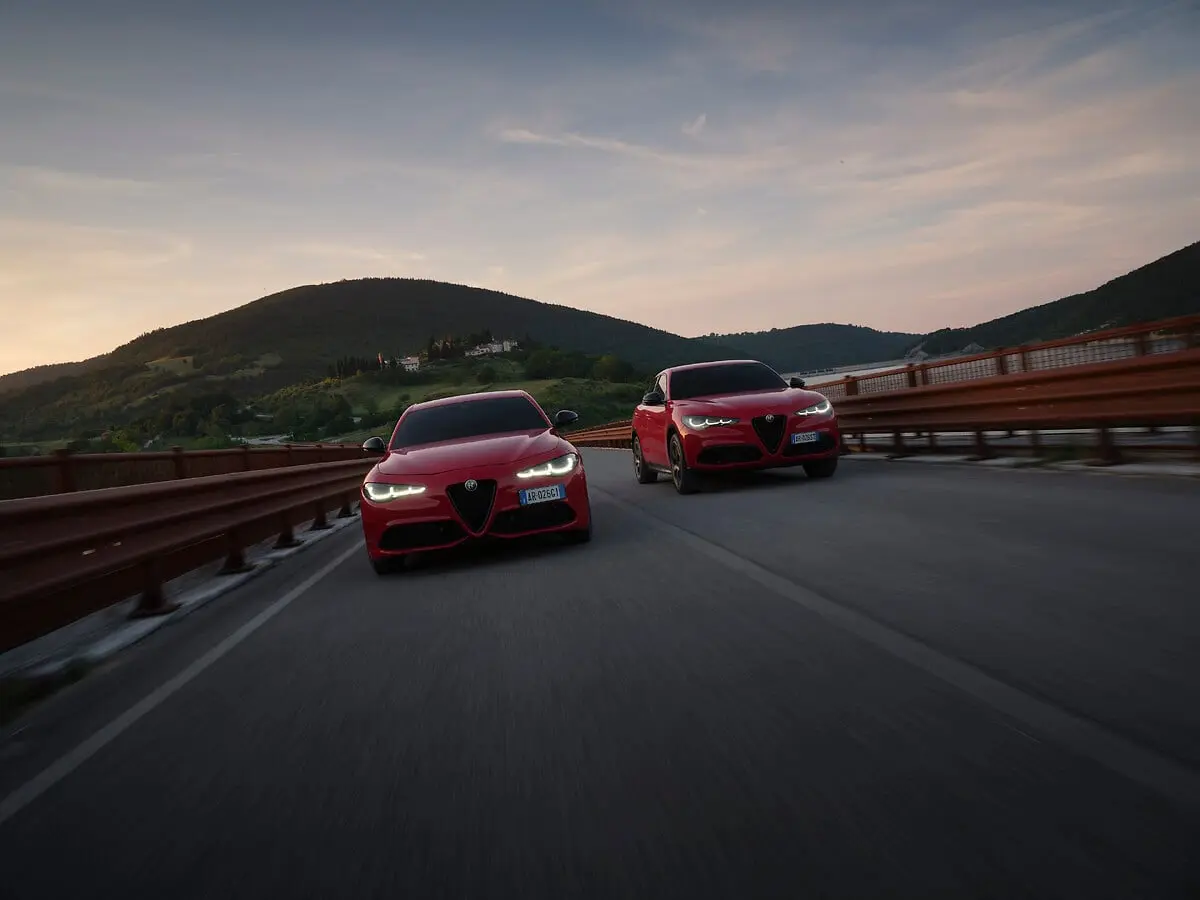
Alfa Romeo is keeping the current Giulia and Stelvio in production through 2027 and has given both models a final round of equipment and styling updates. The range gains an A-pillar driver-monitoring camera, revised software, black-and-white Alfa Romeo badges and the Edizione Luna Rossa version. Quadrifoglio remains available, while the Stelvio Quadrifoglio moves to standard 21-inch wheels.
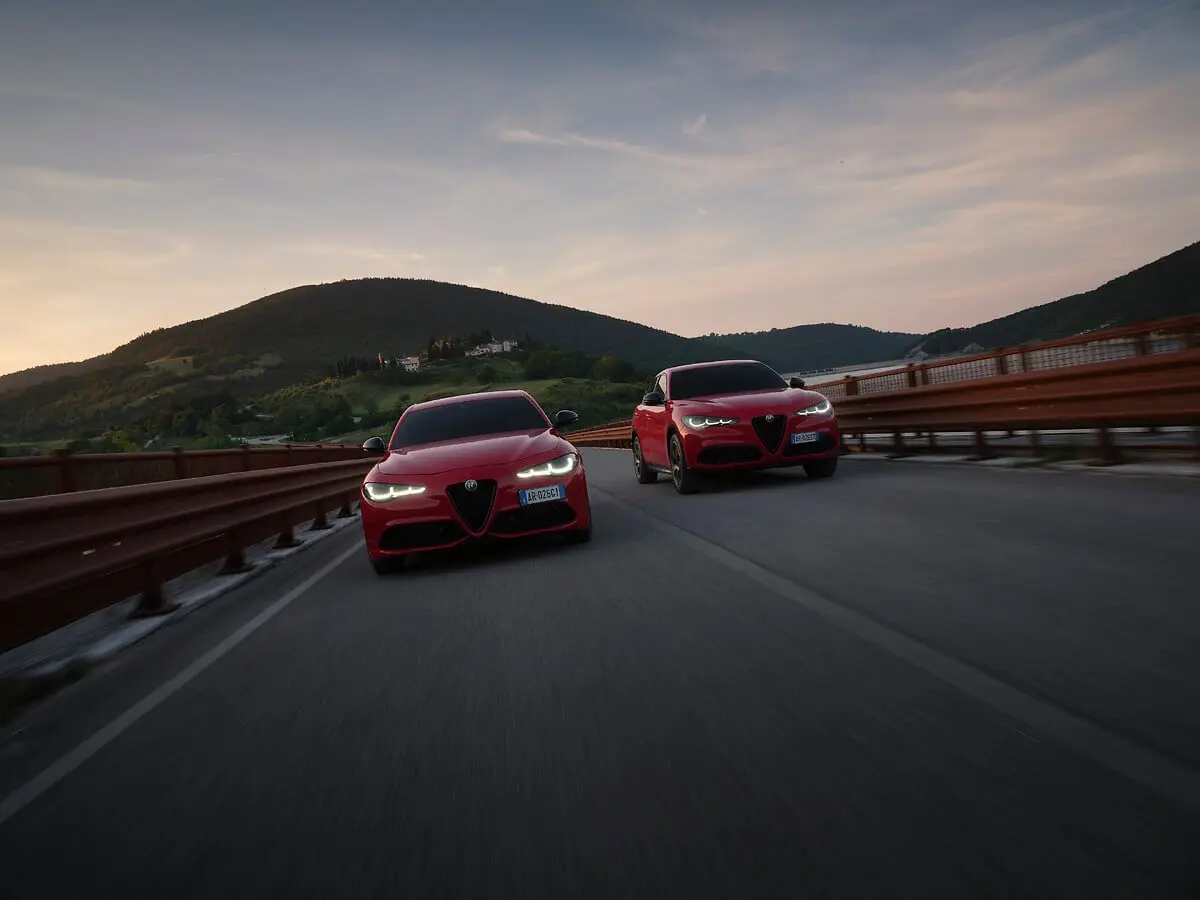
Official Alfa Romeo/Stellantis Media image from the Giulia and Stelvio press-image library.
Why the current cars remain
The Giulia entered production in 2015 and the Stelvio followed in 2016. Both have therefore moved into a long second phase of their model lives, but Alfa Romeo is not replacing them immediately. Stellantis said in May 2026 that the Giulia and Stelvio, including Quadrifoglio versions, would remain in production until 2027.
The company has not announced a complete replacement or a launch date for the next generation. Its official statement about the D segment says Alfa Romeo is studying new interpretations of the current Giulia and Stelvio range. The brand also says it will use flexible platforms to introduce multi-energy powertrains, including hybrid and electric systems, progressively. That wording confirms a direction under study, not a specific model, platform or timetable.
For European buyers, the immediate result is a continued choice of the existing sedan and SUV while Alfa Romeo reshapes its wider product plan. The 2027 update is not a new generation. It adds equipment, adjusts the trim structure and keeps the existing powertrain strategy in place for the final production period announced so far.
Driver monitoring camera
The most visible technical change is a camera integrated into the A-pillar. It monitors the driver and can issue warnings if the system detects signs that attention is drifting from the road. Alfa Romeo links the feature to recent European safety requirements covering driver attention and distraction monitoring.
The camera is a monitoring and warning system, not an autonomous driving feature. Alfa Romeo has not published the exact warning thresholds, how long any data is stored or whether the system can be configured in every market. Its purpose is to support the driver by identifying a potential loss of attention, while the driver remains responsible for the car.
The current equipment package also includes a 12.3-inch digital instrument display, an 8.8-inch Alfa Connect navigation screen, Apple CarPlay and Android Auto, adaptive cruise control, a reversing camera and wireless phone charging. Exact standard and optional equipment can vary by country and trim.
The 2027 range structure
The revised range is organised around Sprint, Veloce, Edizione Luna Rossa and Quadrifoglio. Sprint is the entry point, Veloce focuses on the sportier equipment, Edizione Luna Rossa is a special version with its own materials and details, and Quadrifoglio remains the performance flagship.
In Europe, the range continues with the 2.2-litre diesel producing 160 hp, an eight-speed automatic transmission and rear-wheel drive. A Q4 all-wheel-drive version from the same engine family remains available, with the published model information listing 210 hp for that configuration. In the United Kingdom and some other markets, the 2.0-litre petrol engine with 280 hp also remains available.
The Quadrifoglio versions retain the 2.9-litre twin-turbo V6 with 520 hp. The Giulia Quadrifoglio sends its power to the rear wheels, while the Stelvio Quadrifoglio uses Q4 all-wheel drive. The two cars continue with performance hardware such as an active suspension system, Alfa’s chassis-control system and a mechanical limited-slip differential.
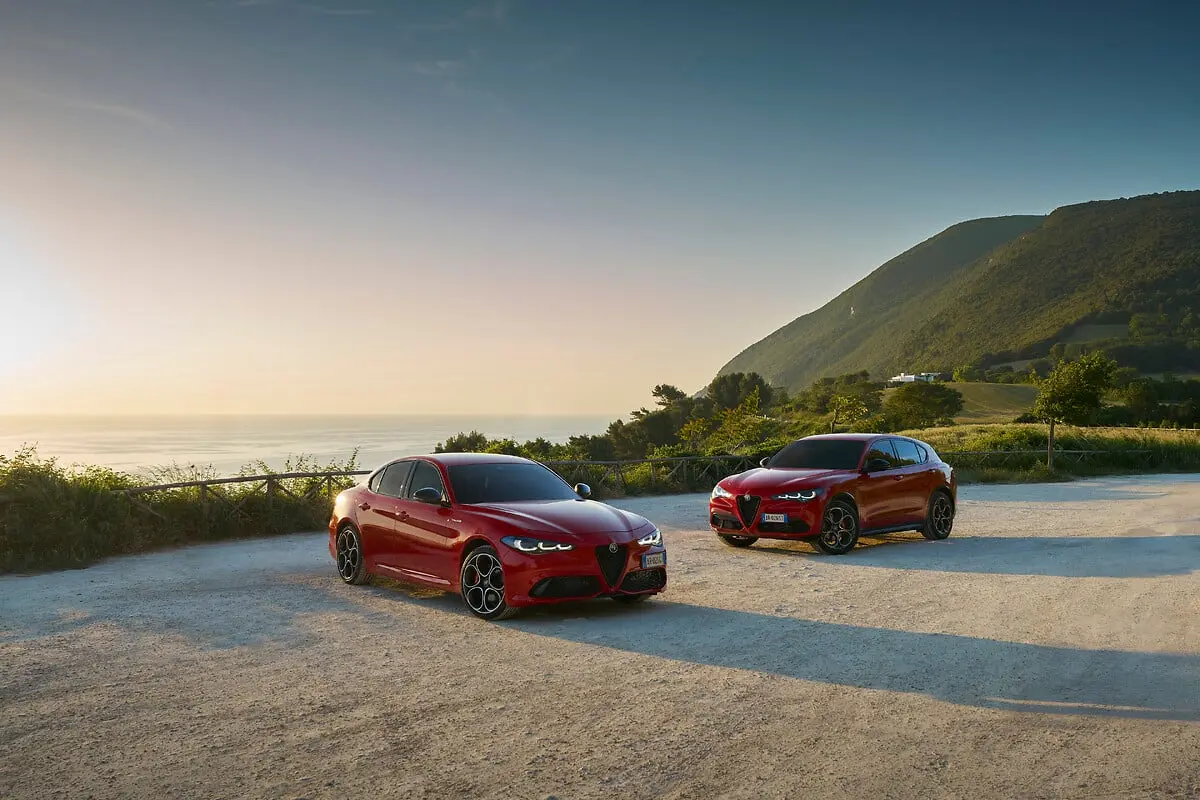
Second official Alfa Romeo/Stellantis Media image used in the article.
Edizione Luna Rossa and Quadrifoglio details
Edizione Luna Rossa uses dedicated badges, carbon-fibre elements and ECONYL textile made from regenerated nylon. Alfa Romeo also lists a Harman Kardon audio system and electronically controlled suspension for the special version. Equipment and availability should be checked by market because the specification is not necessarily identical across Europe.
The Quadrifoglio cars receive new black-and-white Alfa Romeo emblems on the bonnet and rear hatch. Anodized Blue joins the exterior colour choices. The Stelvio Quadrifoglio gets 21-inch forged wheels as standard, replacing the 20-inch setup previously mentioned for the model.
Customers ordering a Giulia or Stelvio Quadrifoglio receive a voucher for a one-day course at the Alfa Romeo Driving Academy. Other Alfa Romeo customers can also buy a course through the configurator or dealer network. The official announcement does not give a separate price or schedule for the option.
What Alfa Romeo has not confirmed
Stellantis says Alfa Romeo is studying ways to continue competing in the D segment with new interpretations of the Giulia and Stelvio. Flexible platforms and hybrid or electric powertrains are part of the stated direction. The company says more details will follow at a later stage.
That means there is no confirmed launch date for a replacement Giulia or Stelvio, no confirmed production platform and no statement that the next models will be electric-only. The firm fact is the extension of the current cars through 2027 and the equipment update described for the 2027 range.
The update gives the two existing models another production cycle with a driver-monitoring system, revised visual details and a clearer trim structure. It also leaves the larger strategic question open: how Alfa Romeo will combine the Giulia and Stelvio names with the multi-energy D-segment products it says it is studying.


