Photo source: Analogue Automotive, via Auto Express
A Lotus Elise S1 with a single central seat and 600 kg costs more than €400,000
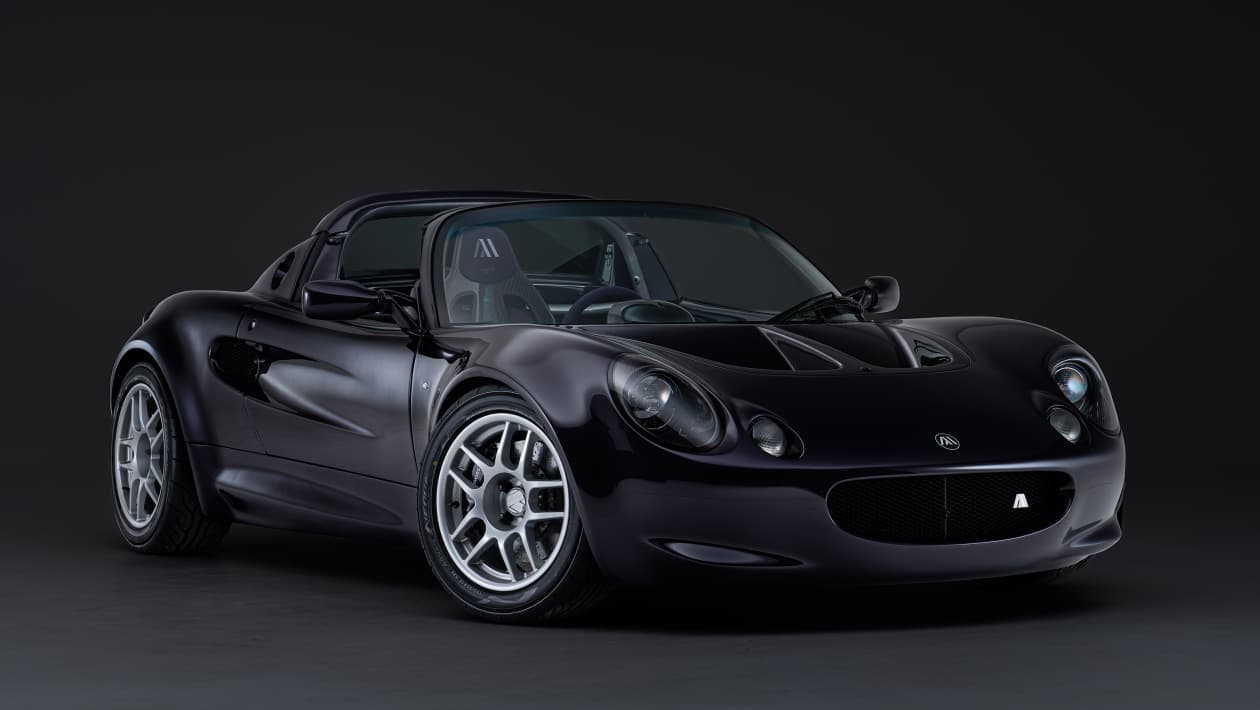
British company Analogue Automotive has completed the first customer VHPK. The car starts from a first-generation Lotus Elise, but receives a carbon-fibre body, a modified Rover K-Series engine and a single seat, fitted in the centre of the cabin.
The VHPK weighs about 600 kg with operating fluids and develops more than 250 hp. The power-to-weight ratio thus reaches around 400 hp/tonne. Only 35 numbered cars will be built, and the price starts from the equivalent of about €407,600, before taxes.
The conversion uses the European Central Bank reference rate published on 2 September 2026. The original tariff is £350,000 and includes the purchase of the Lotus Elise S1 used as the base.
Why the driver sits in the middle
The central position immediately recalls the McLaren F1, but Analogue Automotive points to another source of inspiration: the single-seater cars that competed in the Autobytel Lotus Championship in the early 2000s.
For this layout the workshop redesigned the dashboard, steering column and controls. The manual shifter is placed to the driver’s left, and the classic handbrake has been replaced with an electric one. The VHPK has no passenger seats.
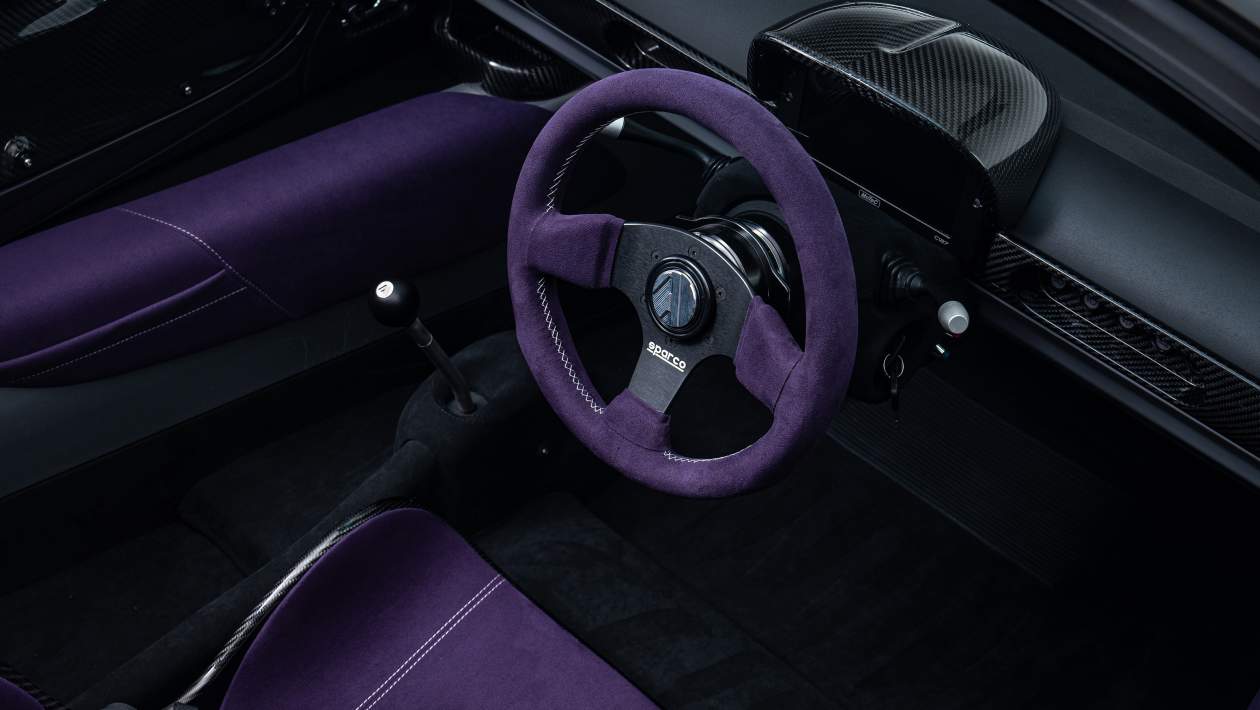
Photo source: Analogue Automotive, via Auto Express
1.9-litre K-Series engine, without forced induction
The original Elise S1 engine has not been replaced. Analogue Automotive increased the capacity of the Rover K-Series unit to 1.9 litres and used forged internals machined from billet. The naturally aspirated engine is paired with a five-speed manual gearbox with short ratios and a limited-slip differential.
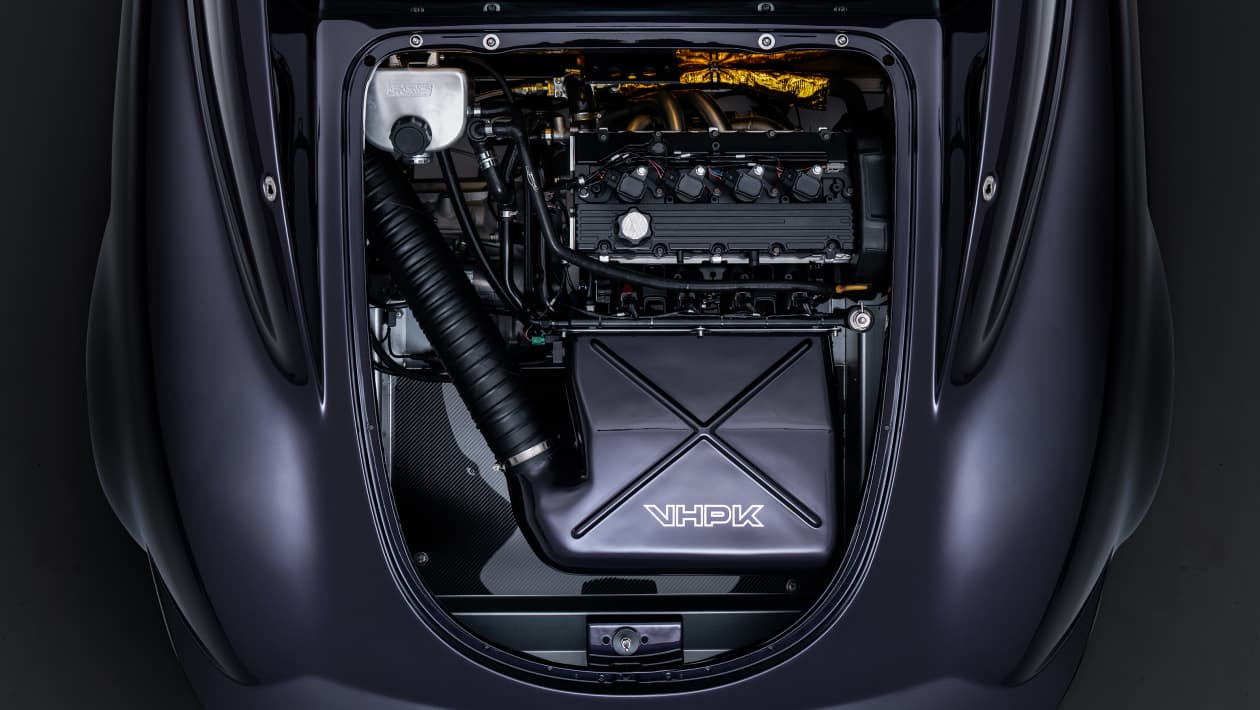
Photo source: Analogue Automotive, via Auto Express
The workshop chose to keep the K-Series engine and naturally aspirated induction so that the response and character of the car remain close to those of the 1990s model. The exhaust is made of stainless steel.
Carbon fibre including the body, and ceramic brakes
The mass reduction is not limited to removing the passenger seat. The body panels are made of carbon fibre, and the VHPK has carbon-ceramic brake discs, lightweight hubs and forged wheels. Optionally, customers can order carbon wheels, which cut total mass by a further 12 kg.
The fuel tank and electrical installation have been rebuilt to remove unnecessary weight. The declared mass is more than 100 kg lower than that of a standard Elise S1, a large difference for a car that was already designed around the principle of light construction.
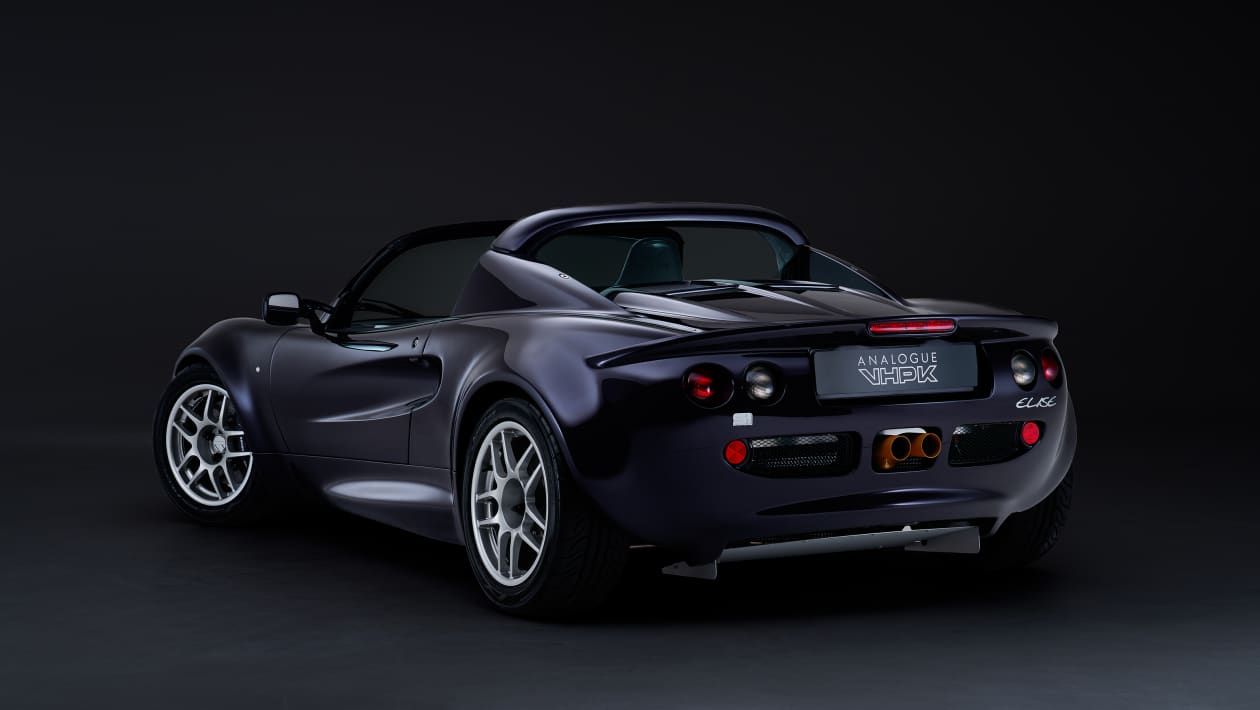
Photo source: Analogue Automotive, via Auto Express
The first car is painted PK Purple
The car in the pictures is the first VHPK built for a customer. It has a custom shade called PK Purple, purple Alcantara in the cabin and gold exhaust tips.
Orders are open directly with Analogue Automotive. The price of more than €400,000 does not include taxes, transport, registration or any costs needed to bring such a car to Romania. Homologation and the possibility of registration must be checked individually before purchase, because the VHPK is an extensive modification of an existing car.