
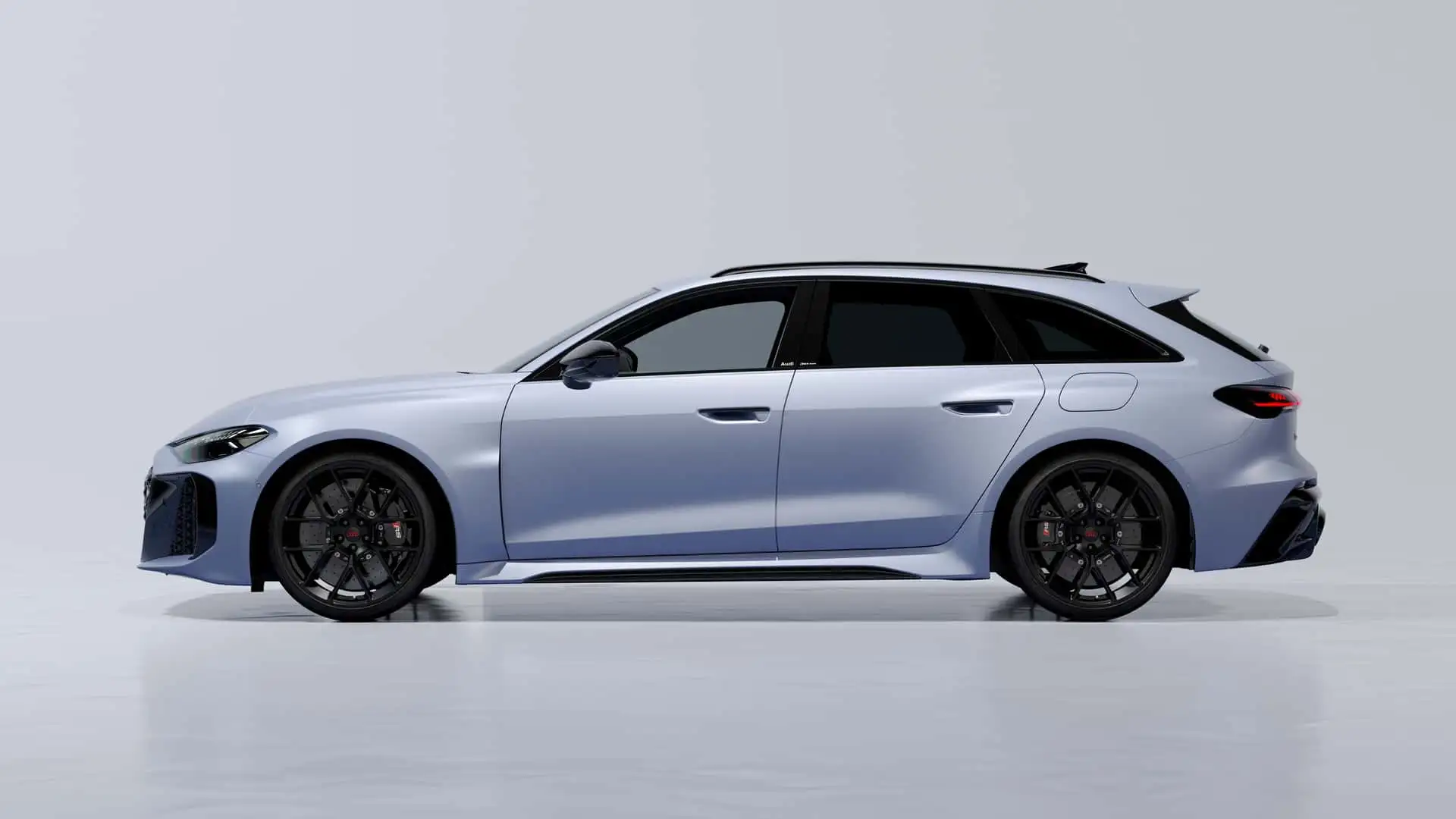
The new Audi RS 5 has made its first Asian appearance in Singapore, where the high-performance plug-in hybrid is being displayed alongside Audi’s R26 Formula 1 car during the 2026 Grand Prix weekend. Both vehicles use a Singapore-inspired silver and black design, with a geometric pattern linked to Peranakan decoration. The display runs during the race weekend from October 9 to 11.
A first Asian appearance for the new RS 5
Audi says the Singapore presentation is the Asian premiere of the new RS 5. The sedan and Avant are being shown in the same city as the R26 Formula 1 car, which will be driven by Nico Hülkenberg and Gabriel Bortoleto. The setting connects a new road-going performance model with Audi’s first Formula 1 campaign, but the RS 5 remains a production car rather than a racing derivative.
The shared appearance is deliberately specific to Singapore. Audi developed a Titanium Silver Grey treatment for the R26 and adapted the idea for the RS 5. The race car carries a traditional Peranakan-inspired pattern on its sidepods and rear wing. On the RS 5, the pattern and black contrasts are used more selectively, so the Avant keeps its road-car proportions and body surfaces while still matching the surrounding installation.
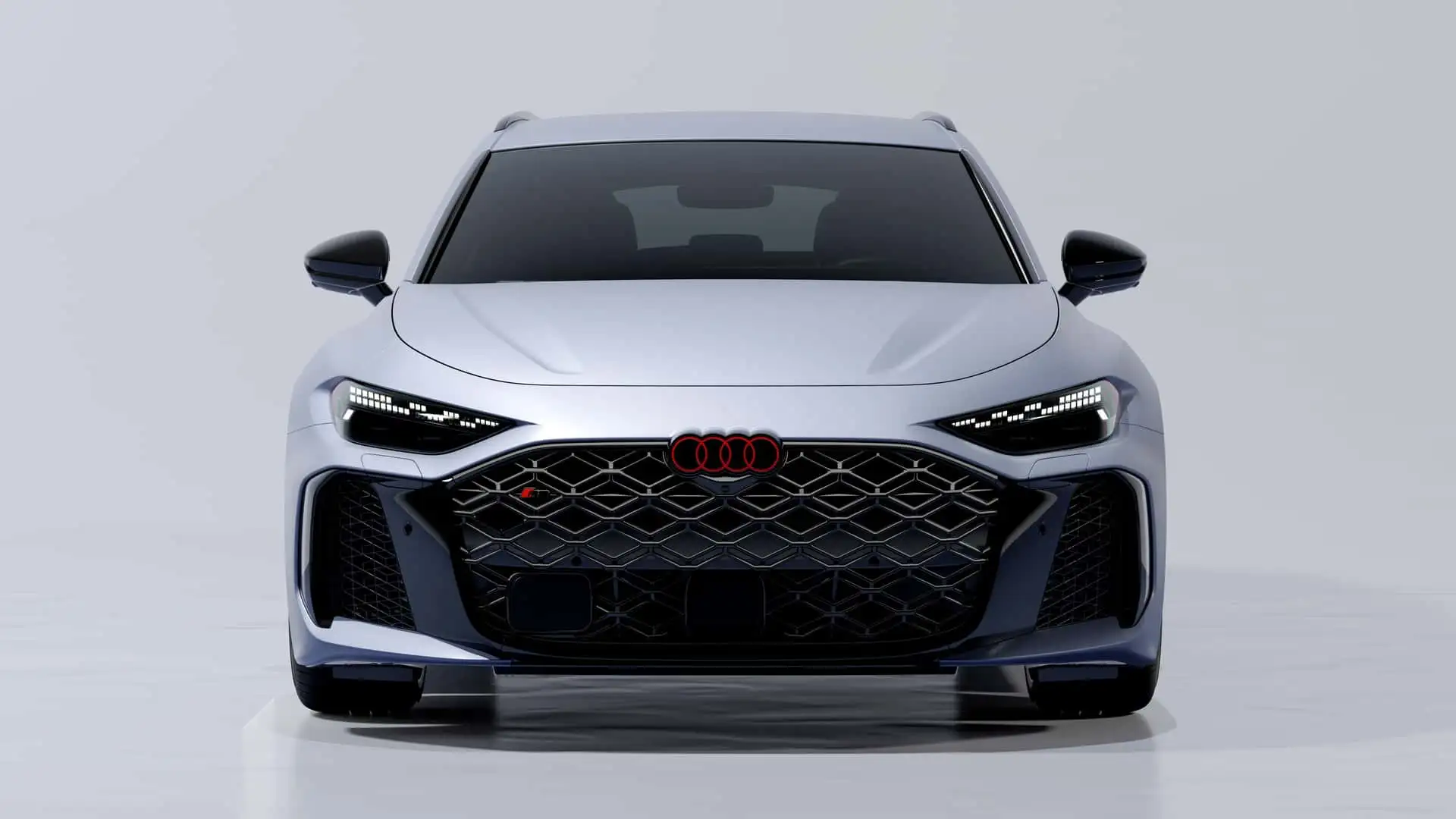
The vehicles are part of an Audi and adidas installation at Funan Mall. Audi has said that the display will be available throughout the Grand Prix weekend. The presentation is also a public introduction to the RS 5 in a market where Audi has not yet published complete pricing and delivery information for every Asia-Pacific country.
Audi’s first high-performance RS plug-in hybrid
The RS 5 shown in Singapore is Audi Sport’s first high-performance plug-in hybrid. Its powertrain combines a revised 2.9-litre twin-turbocharged V6 with an electric motor positioned in the transmission system. The combustion engine produces 375 kW, or 510 PS, and 600 Nm. The electric motor can provide up to 130 kW, equivalent to 177 PS, and 460 Nm.
Audi quotes a maximum system output of 470 kW, or 639 PS, with system torque reaching 825 Nm. The separate engine and motor figures should not simply be added together: system output depends on how the control software combines both sources of power. An eight-speed Tiptronic automatic transmission sends drive through the quattro all-wheel-drive system.
The battery has a gross capacity of 25.9 kWh and a net capacity of 22 kWh. Audi says the RS 5 can cover more than 80 kilometres on electric power alone in everyday city driving. The exact result depends on the body style, equipment, temperature, traffic and test conditions. The company has not published one universal electric-range figure for every Asia-Pacific market in the Singapore launch communication.
That distinction matters because the RS 5 is not presented as a battery-electric replacement for an RS model. Its plug-in system can cover shorter daily trips without using the V6, while the combustion engine remains available for longer journeys and sustained high-speed driving. The concept therefore combines an electric operating mode with the packaging and refuelling flexibility of a petrol-powered performance car.
Torque control and RS-specific hardware
The new RS 5 uses quattro with Dynamic Torque Control. Audi describes the system as an electromechanical torque-vectoring arrangement for the rear axle, intended to improve traction, agility and controllability. A water-cooled permanent-magnet electric motor in the rear transaxle provides 8 kW and 40 Nm for this function. It is separate from the main hybrid motor that contributes to the system’s headline output.
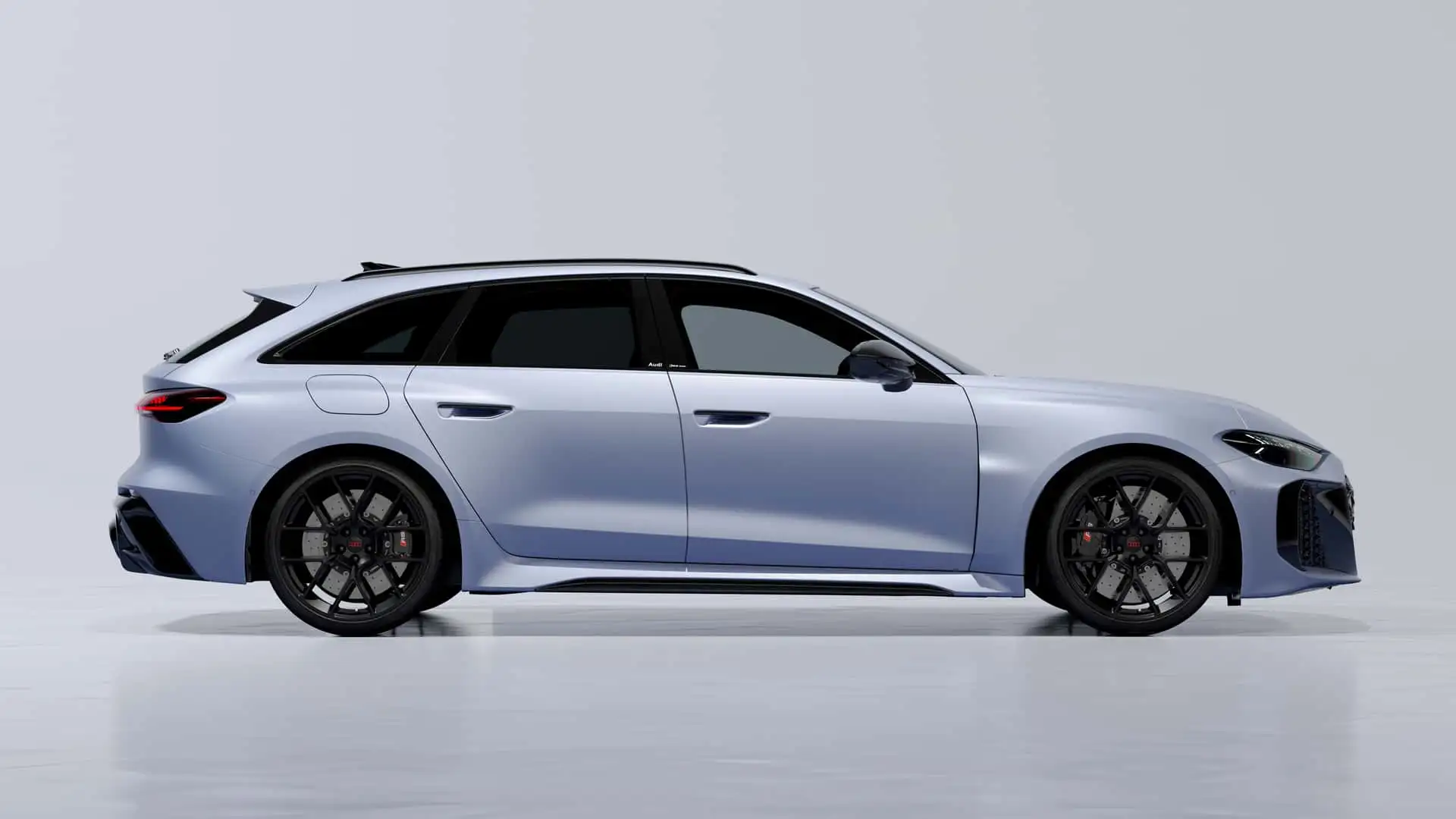
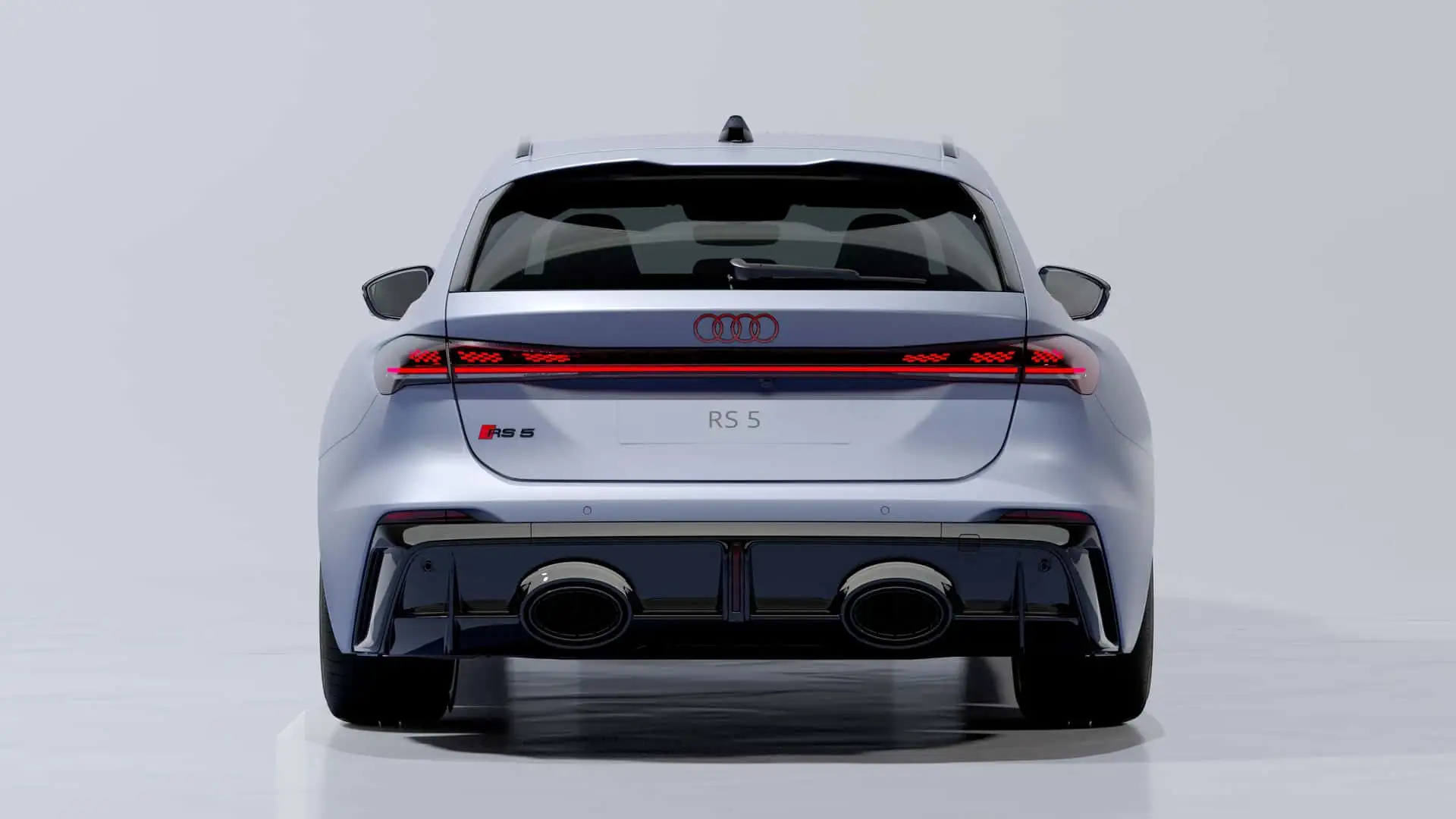
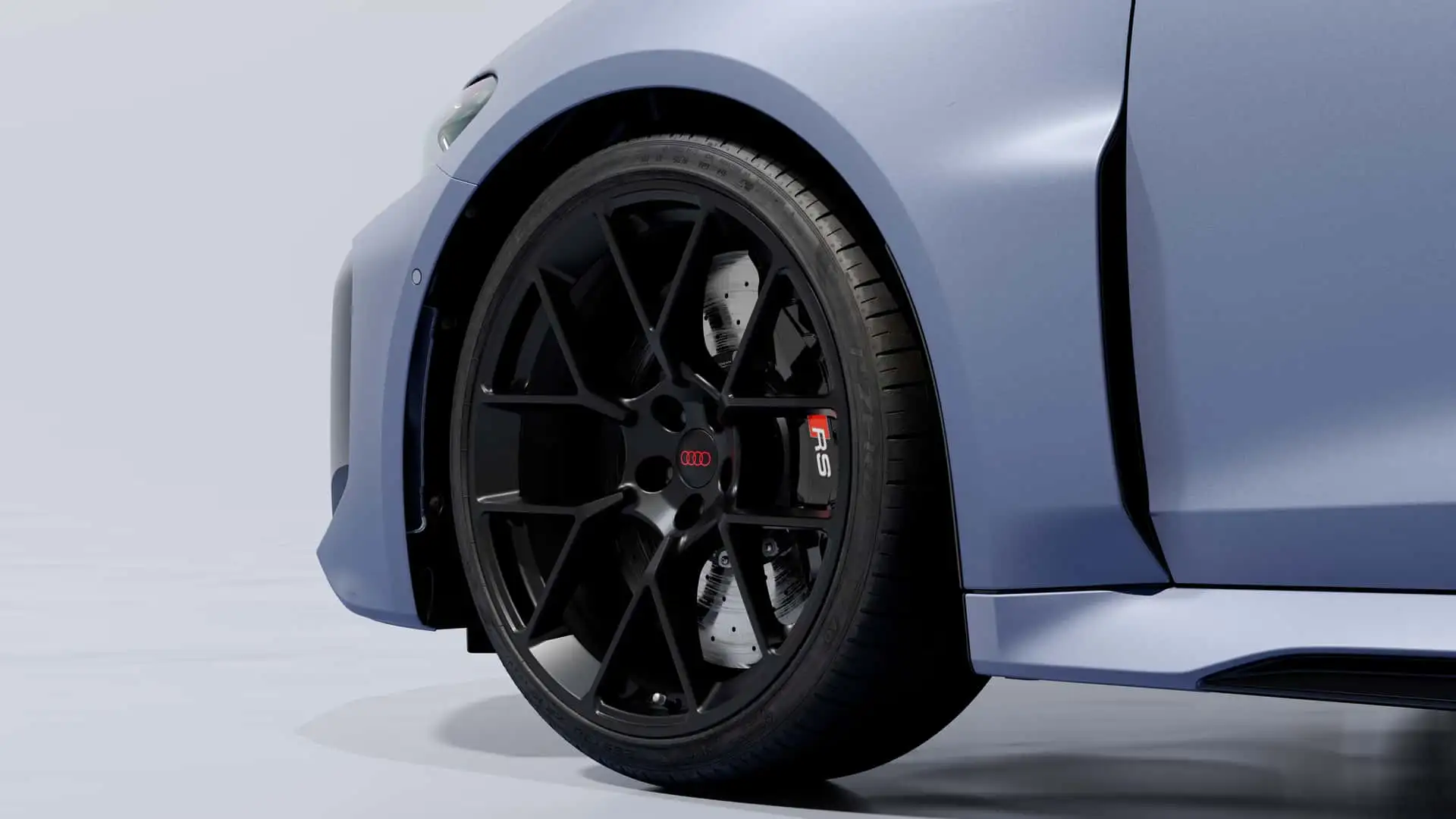
An optional Audi Sport package adds dedicated front and rear bumper details, two-tone 21-inch wheels and an RS sport exhaust. It can also raise the top speed to 285 km/h. That figure belongs to the optional package and should not be treated as the standard top-speed specification for every version or market.
Audi has also developed an Audi drive experience function that can display route data on the 14.5-inch MMI screen. At a circuit, the system can record sector times. The RS torque rear mode provides a rear-biased setting for drivers who want a different balance, although equipment and software availability can vary between markets.
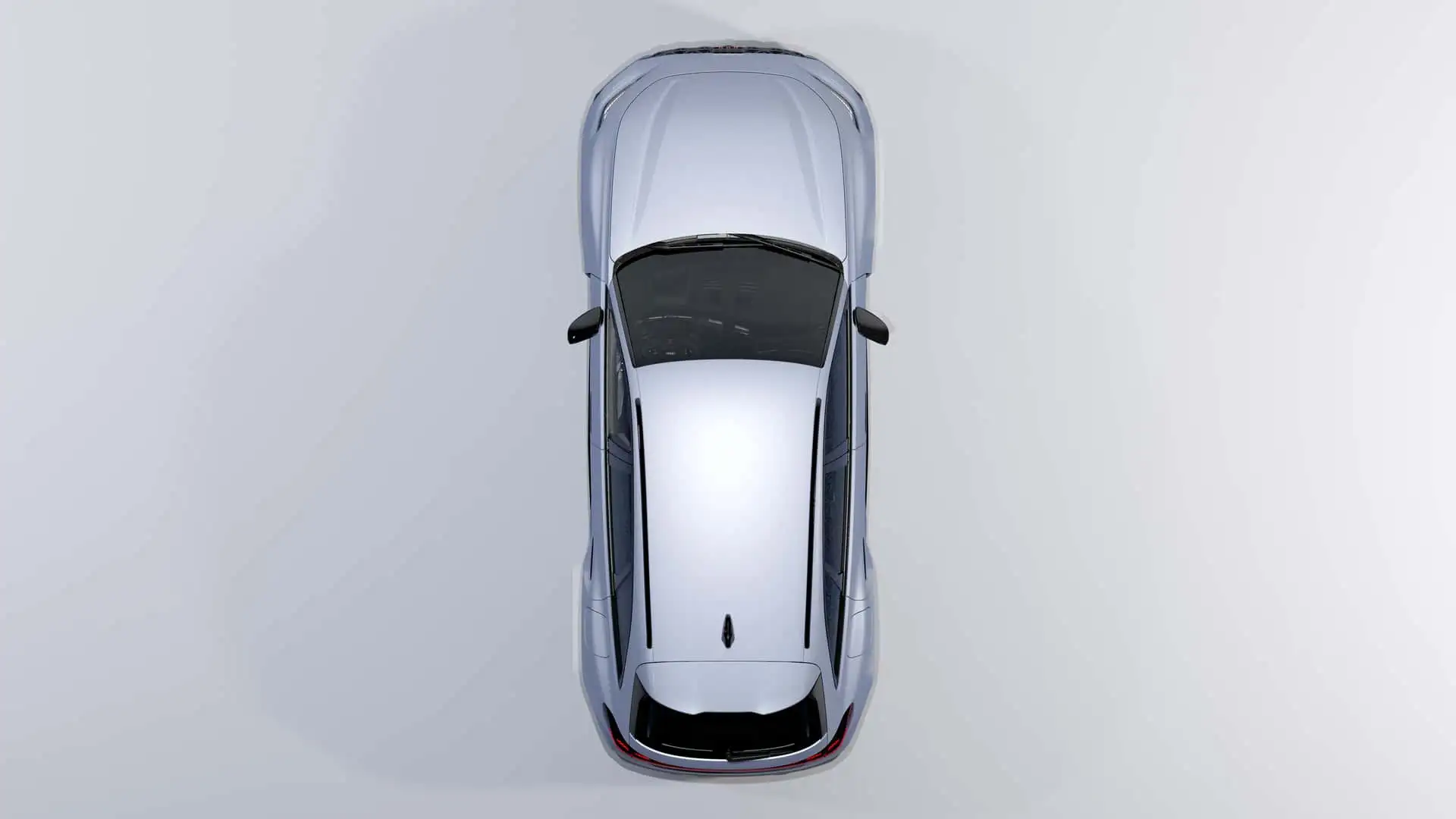
The RS 5 is built at Audi’s Neckarsulm plant in Germany. European versions include both the sedan and Avant, giving buyers a choice between a lower three-box body and a wagon-shaped body with more practical access to the luggage area. The Singapore display focuses on the Avant in the special livery, while the technical specification applies to the RS 5 range subject to body-style differences.
Singapore launch details remain market-specific
Audi’s Formula 1 weekend presentation confirms the car’s public Asian debut, but it does not automatically confirm local prices or delivery dates for every country in the region. Those details have to be announced by Audi’s national organisations. A display at Funan Mall is therefore evidence of the model’s regional presentation, not proof that the same specification is already orderable throughout Asia-Pacific.
The Singapore appearance brings together two separate Audi projects. The R26 represents the company’s first Formula 1 race programme, while the RS 5 introduces plug-in hybrid technology to Audi Sport’s high-performance range. Their coordinated design is a short-term event treatment, but the RS 5’s 470-kW powertrain, 25.9-kWh battery and Dynamic Torque Control are production-car technologies that will define the model beyond the Grand Prix weekend.


