
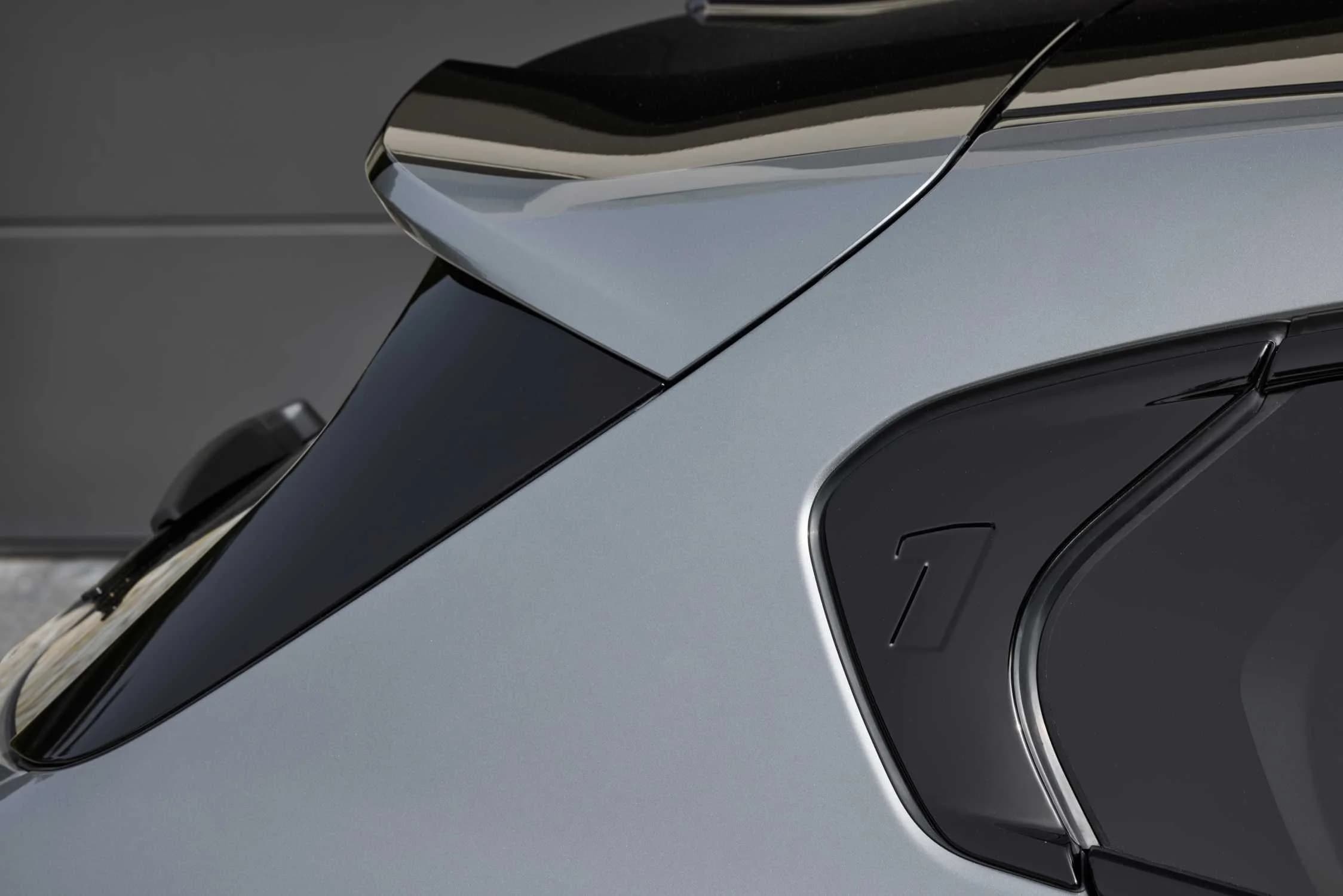
A rear-wheel-drive 1 Series is being discussed for 2028
BMW is preparing a new entry-level electric model tailored to Europe for 2028. According to the supplied Auto Express report, the car could become the basis for the next-generation 1 Series and return BMW’s compact hatchback to rear-wheel drive. BMW has not officially confirmed the production name, the exact launch date or the claim that every future 1 Series variant will use rear-wheel drive.
The report places the project inside BMW’s Neue Klasse programme. That family of technologies starts with the electric iX3 and i3 and is scheduled to spread across much of the BMW range. A compact European model would help BMW keep a presence in a segment that remains important in countries such as Spain, Italy and Greece, while introducing the brand’s new electric and digital systems at the lower end of its portfolio.
Why rear-wheel drive would matter
The first BMW 1 Series, launched in 2004, used a longitudinal engine and rear-wheel drive. That layout gave the hatchback a distinct technical identity in the compact class, although it also reduced packaging efficiency and increased manufacturing complexity. The second generation retained the basic approach. The third generation, launched in 2019, moved to a front-wheel-drive-based architecture with a transversely mounted engine.
The current car can be ordered with xDrive on selected versions, but all-wheel drive is not the same as a rear-wheel-drive foundation. An all-wheel-drive system can send torque to both axles, while the platform and engine layout still determine the basic character of the vehicle. A genuine return to rear-wheel drive would therefore be a meaningful change for BMW enthusiasts, even if it arrived through an electric powertrain.
Auto Express links the possible change to BMW’s sixth-generation eDrive motors. The report says the relevant electric motor uses an integrated gearbox for the rear axle and is not suited to a front-wheel-drive installation in the same way. That is a reported technical explanation, not an official specification sheet for the next 1 Series. BMW has not released the final architecture or drivetrain details for the 2028 compact model.
Electric and combustion versions may coexist
The next 1 Series is not necessarily an electric-only story. The report says petrol-powered versions are expected to continue on an evolution of the outgoing car’s platform, while the electric derivative would use Neue Klasse technology. This would allow BMW to offer different powertrains in the compact segment without forcing every customer into the same drivetrain immediately.
BMW has used a similar approach on other recent products, giving combustion and electric models related styling while keeping their underlying architectures different. Hybrid technology is also expected to become more prominent in the next range, although BMW has not published a list of engines, battery capacities, outputs, charging figures or prices.
The electric car could be called the BMW i1. The name would fit BMW’s current naming system, but it remains an expectation rather than a confirmed product designation. BMW has not announced that name officially, and no production specifications have been released.
What Neue Klasse brings to a compact BMW
Neue Klasse is broader than a single battery platform. BMW describes it as a new approach to electric drive systems, vehicle software, production, interior design and sustainability. The first series-production model is the electric iX3, with the i3 following as another Neue Klasse model. BMW says the technology will reach around 40 new models and updates by 2027.
The programme includes BMW Panoramic iDrive, sixth-generation batteries and the “Heart of Joy” control unit for drivetrain and vehicle dynamics. A small hatchback would not necessarily receive every feature in exactly the same form. Cost, packaging, cooling and customer expectations would require a compact-specific application of the technology.
A Neue Klasse-based electric 1 Series could benefit from higher efficiency, faster charging and a more consistent digital interface than the current generation. Those are potential advantages of the technology family, not promised figures for the future hatchback. BMW has not confirmed its range, charging time or motor output.
Why BMW needs to protect the compact segment
The 1 Series has been an entry point into BMW ownership for two decades. In an interview cited by Auto Express, Bernd Koerber argued that small cars remain highly relevant in several European markets. He pointed to Greece, Spain and Italy and said removing the 1 Series would remove a substantial part of the business in some countries. He also described the hatchback as a way to bring younger customers into the brand.
BMW’s current fourth-generation 1 Series entered production at Plant Leipzig in 2024. In its production announcement, BMW said more than 1.3 million 1 Series cars had been built at Leipzig since production began there. The plant can build several models and different drive types on shared production lines, giving BMW a degree of flexibility as the next generation is developed.
For buyers in Europe, a small electric BMW based on Neue Klasse could become the most accessible way into the new technology. The price and equipment have not been announced. It is also not clear whether the electric and petrol cars will share exactly the same body, or how long both versions will be sold alongside one another.
Design and interior expectations
Auto Express expects the next 1 Series to take design cues from the next 3 Series and other Neue Klasse models. A smoother front, a wider interpretation of the kidney grilles, flush door handles and M-inspired details are among the reported expectations. These are design projections, not official images of the production vehicle.
The car is expected to remain a hatchback because the X1 and iX1 already cover BMW’s compact SUV role. A longer wheelbase could improve rear-seat legroom. Auto Express estimates luggage capacity at around 400 litres, but BMW has not confirmed that figure.
Inside, the car could receive a scaled version of BMW Panoramic iDrive, smartphone integration, wireless charging and over-the-air software updates. Sportier versions may retain supportive seats and darker trim, but none of those details is final. The current BMW 1 Series already offers BMW Curved Display, BMW Operating System 9 and a wide range of assistance systems, so the future car would be expected to move the digital experience forward rather than start from scratch.
Confirmed facts and open questions
BMW has confirmed the Neue Klasse programme, its expansion into a broad model range and the importance of retaining small cars in Europe. The company has also announced a European entry-level electric model for 2028 in the context of its product strategy. The direct link to the 1 Series, a rear-wheel-drive layout, the i1 name, range, price and exact launch date remain reported expectations rather than confirmed BMW specifications.
If the project reaches production as described, the next 1 Series would combine a compact hatchback body with BMW’s new electric and digital technology while revisiting the rear-wheel-drive identity of the earliest generations. For now, BMW has confirmed the direction of its technology and the importance of the segment; the final car will need to wait for an official reveal.
Sources
- BMW Group PressClub — BMW 1 Series production launch at Plant Leipzig
- BMW Group PressClub — The all-new BMW 1 Series
- BMW Group — The Neue Klasse
- BMW Group PressClub — Forward momentum through technology openness and Neue Klasse
Image: BMW Group PressClub, official BMW 1 Series photograph. Local WebP asset: /resources/blog/bmw-1-series-rwd-2028.webp. The image is not taken from the Auto Express article.


