
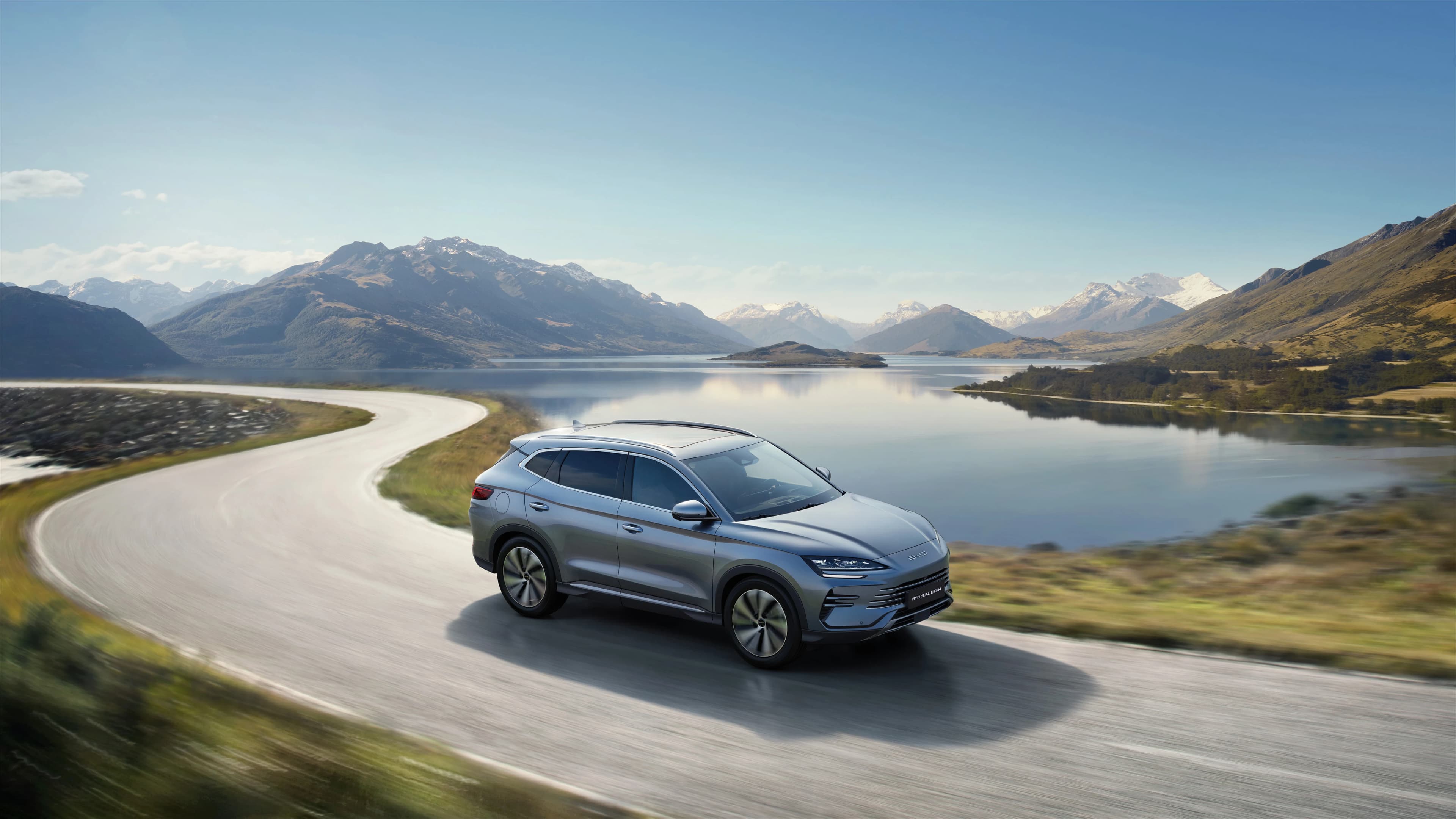
BYD registered 708 new passenger cars in Romania in September 2026, placing fourth in the monthly brand table published by the Association of Automobile Manufacturers and Importers (APIA). The figure was 532% higher than BYD’s September 2025 result. APIA says its detailed monthly analysis is built from official registration data supplied by Romania’s Directorate for Driving Licences and Vehicle Registration (DGPCI). The number therefore describes registrations, rather than orders, deliveries announced by the company or retail contracts.
A strong month inside a shrinking market
Romania recorded 10,952 new passenger-car registrations in September, 11.5% below the same month of 2025. Dacia led the APIA table with 2,705 cars, followed by Toyota with 1,435 and Skoda with 795. BYD’s 708 cars put it ahead of Volkswagen, which recorded 640. AGERPRES, using the APIA data, reported 639 registrations for Renault. That comparison is useful because it places BYD above two established brands in the same monthly dataset, but it should not be read as a comparison of the manufacturers’ global sales.
The percentage increase also needs context. BYD was growing from a relatively small base in the Romanian market. A 532% annual rise produces 708 registrations, while the market leader exceeded 2,700 units in the same month. The result is significant for BYD’s local ranking, but it does not make the company Romania’s volume leader. It shows that the brand’s registrations grew faster than those of most of the established brands included in the September table.
APIA president Dan Vardie said the September market was declining while electrified vehicles and new competitors were changing the ranking of brands. The official report gives no single reason for BYD’s monthly result. Registration data do not identify whether cars went to private buyers, fleets, leasing companies or other channels, and they do not reveal when the relevant orders were placed.
Electrified vehicles account for most of the market
APIA calculated that electrified passenger cars represented 64% of September’s market and grew 16% year on year. Plug-in hybrids increased 131% and reached a 17% share. Full hybrids represented 20.8%, mild hybrids 18.2%, and battery-electric vehicles 8%.
These are market-wide figures, not a breakdown of the 708 BYD registrations. For the first nine months of 2026, APIA lists 4,173 BYD passenger cars. Its powertrain tables show 1,603 battery-electric cars and 2,570 plug-in hybrids for the brand. Together, the two categories account for the reported BYD total.
That split matters when assessing the brand’s position in Romania. BYD is not represented only through battery-electric cars. Plug-in hybrids can be charged externally but also use a combustion engine, which makes their use case different for drivers who do not have reliable access to charging. At the same time, the registrations do not show how often the cars are charged, how they are used or which buyer groups selected them. Those questions require information that is not part of the public registration tables.
Seal U DM-i leads BYD’s plug-in-hybrid tally
In APIA’s cumulative table of the most registered plug-in-hybrid models during the first nine months, the BYD Seal U DM-i appears with 1,230 cars. Toyota’s RAV4 has 969, while the Chery TIGGO9 has 655. This is a January-to-September ranking, not a September-only ranking.
The distinction is important because APIA’s September model table has Dacia Logan, Dacia Duster, Toyota Corolla Cross, Dacia Sandero and Toyota Yaris Cross in its first five positions. No BYD model appears in that monthly top five. The available data confirm the brand’s total and the Seal U DM-i’s cumulative plug-in-hybrid volume, but they do not support assigning all 708 September BYD registrations to one model.
The brand and model tables answer different questions. A manufacturer can spread registrations across several models, while a single model can represent most of a smaller manufacturer’s volume. The two tables should therefore be read together rather than treated as interchangeable rankings.
The year-to-date picture is different
From January through September, Romania recorded 96,261 new passenger cars in the APIA series. Dacia reached 19,819 registrations, Toyota 9,923, Skoda 7,916, Volkswagen 7,071 and BYD 4,173. BYD’s fourth-place monthly result did not make it the fourth-largest brand for the full year-to-date period; Volkswagen’s cumulative total remained higher in the same table.
This is one reason a single month should be treated as a market signal rather than a complete forecast. BYD’s 708 registrations improved its position, but the annual ranking depends on every preceding month and on the mix of powertrains delivered during the rest of the year. Future APIA releases will show whether September was a one-month peak or part of a sustained increase.
The available evidence supports a measured conclusion. BYD expanded sharply in September, reached fourth place in the monthly Romanian brand ranking and combined battery-electric and plug-in-hybrid registrations in its year-to-date total. The data do not establish the commercial reason for the increase, the profitability of those registrations or how the brand will rank in October.
The photograph used here shows a BYD Seal U DM-i and comes from BYD’s official media library. It was converted locally to WebP for publication. Image rights remain with BYD.


