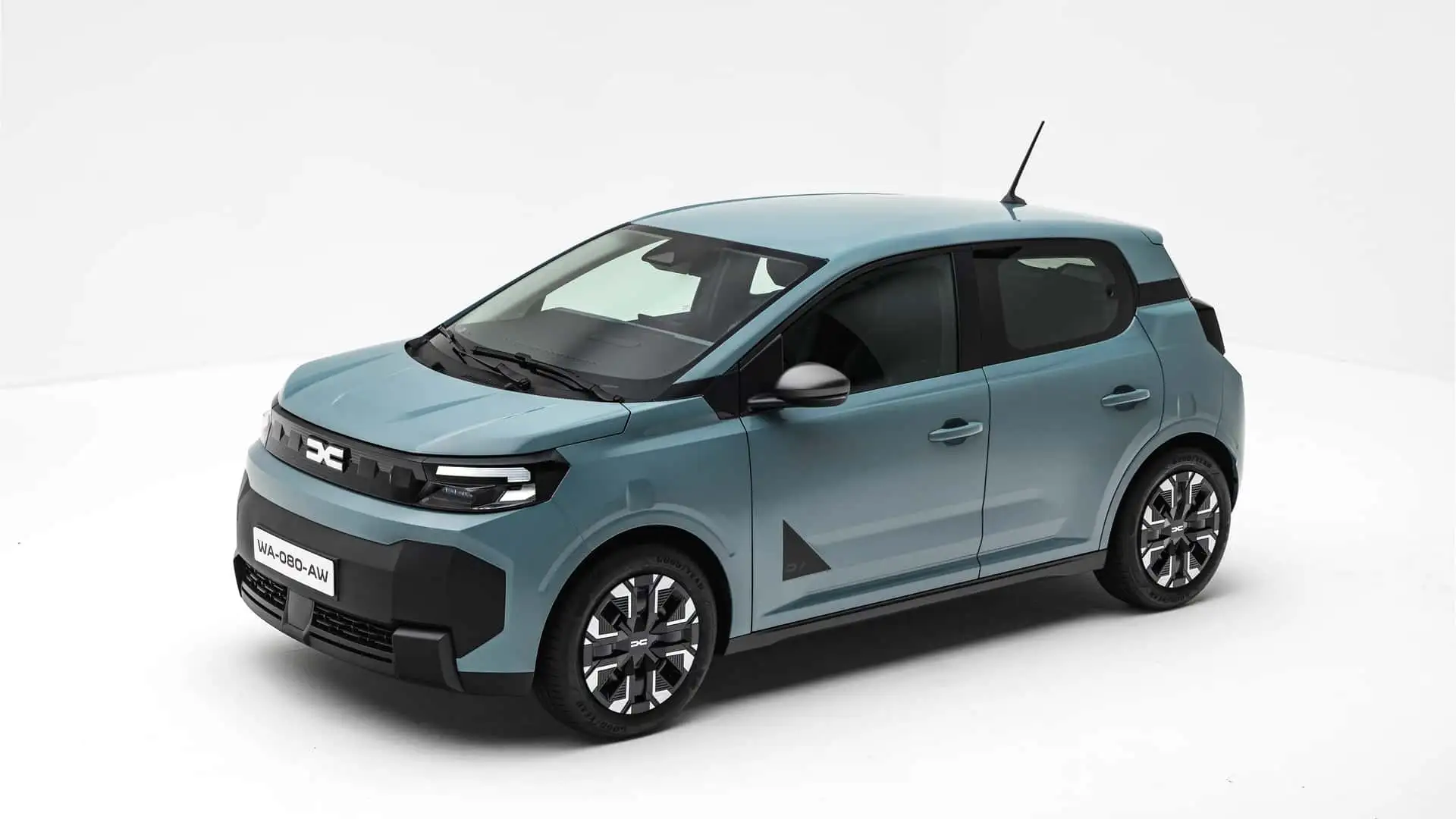
The second-generation Dacia Spring is built on the RGEV Small electric platform and will be produced in Novo Mesto, Slovenia. Photo: Dacia.
The new Dacia Spring starts at €17,990 in France. It has 250 km of range and is built in Europe
Dacia has presented the second-generation Spring, an electric model developed from scratch for the European market. The new car keeps the name and the accessible positioning of its predecessor, but it moves to a different platform, gets an LFP battery and will be built in Europe.
The price announced for France starts at €17,990, before any local incentives. This is not a Romanian price: Dacia has not yet published the local equipment and tariff list for the new generation. The French figure does show that the brand wants to keep Spring among the most affordable new electric cars in Europe.
A completely new generation, developed in less than two years
The new Spring uses the Renault Group RGEV Small architecture. Dacia says the project was developed in less than two years, and production will take place at the plant in Novo Mesto, Slovenia. That is a significant change from the first generation, which was built in China and later adapted for Europe.
The body remains compact and has four seats, but width has increased by 18 cm. The change should provide more lateral space in the cabin and a more settled presence on the road. The design follows the brand’s current language, with simple surfaces, robust cladding and a lighting signature close to that seen on Duster and Bigster.
Customers will be able to choose among four colours: Agave, Schiste grey, Star black and Glacier white. Dacia has not yet detailed every equipment combination available in each country.
27.5 kWh LFP battery and 250 km of WLTP range
The powertrain has an electric motor of 60 kW, equivalent to 80 hp, and develops a maximum torque of 175 Nm. Acceleration from 0 to 100 km/h takes 12.1 seconds, and top speed is limited to 130 km/h.
The battery has a usable capacity of 27.5 kWh and uses lithium-iron-phosphate chemistry, known as LFP. Dacia announces a range of up to 250 km in the combined WLTP cycle. The relatively small capacity helps limit mass and cost, but it confirms the car’s main role: daily commuting and urban trips, not frequent long motorway journeys.
| Specification | Dacia Spring, second generation |
|---|---|
| Power | 60 kW / 80 hp |
| Torque | 175 Nm |
| Usable battery | 27.5 kWh LFP |
| Combined WLTP range | up to 250 km |
| 0–100 km/h | 12.1 seconds |
| Top speed | 130 km/h |
| Turning circle | 4.95 m |
Dacia says the usage profile of current owners justifies this choice. Data collected from connected cars indicate an average of 34 km driven daily, at an average speed of 34 km/h, and about 75% of charging takes place at home.
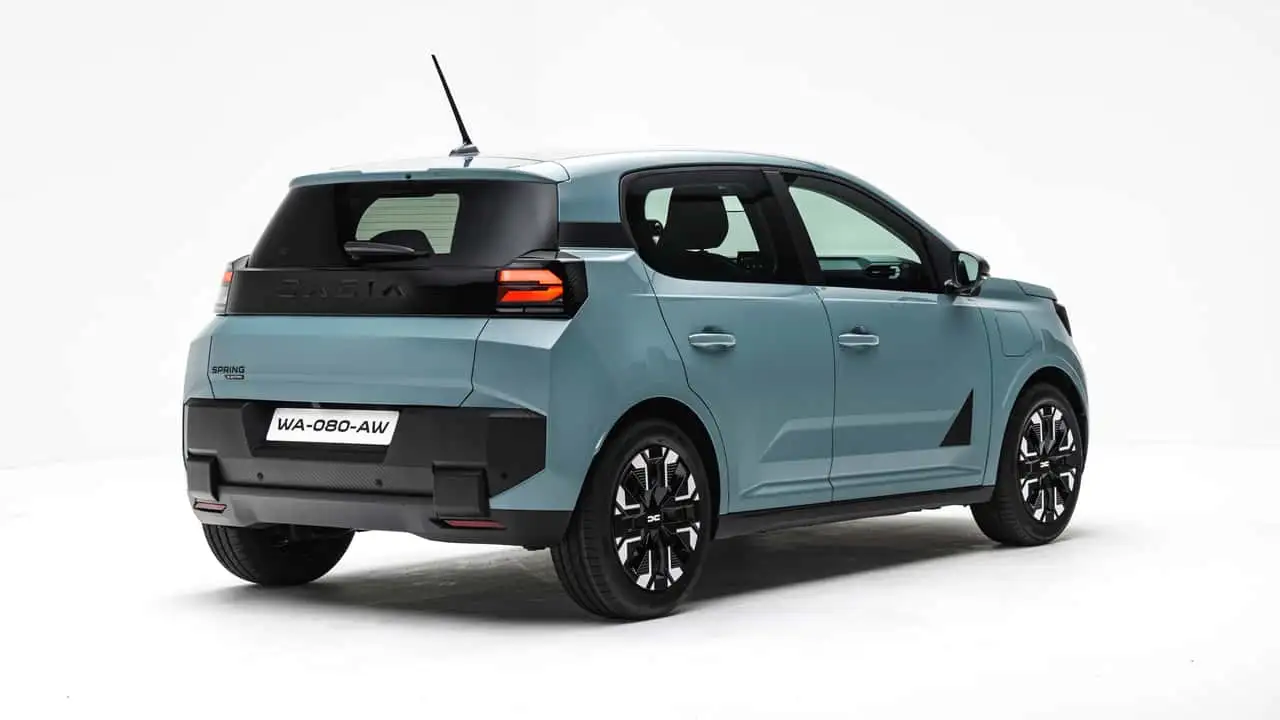
The body remains compact and keeps the four-seat layout. Photo: Dacia.
How long charging takes
In the standard configuration, the onboard charger accepts alternating current at 6.6 kW. Dacia estimates that going from 15% to 80% takes about nine hours from a household socket, 5 hours and 40 minutes from a reinforced socket and 2 hours and 55 minutes from a 7 kW wallbox.
An optional pack raises AC power to 11 kW and adds DC fast charging at 50 kW. In that case, the battery goes from 15% to 80% in about one hour and 55 minutes on alternating current, or in 28 minutes at a DC station.
50 kW is modest compared with larger electric cars, but the Spring battery is much smaller. For the buyer, the time actually spent at a station and the availability of home charging matter more than the peak figure on the spec sheet.
New interior, with a 10.1-inch central screen
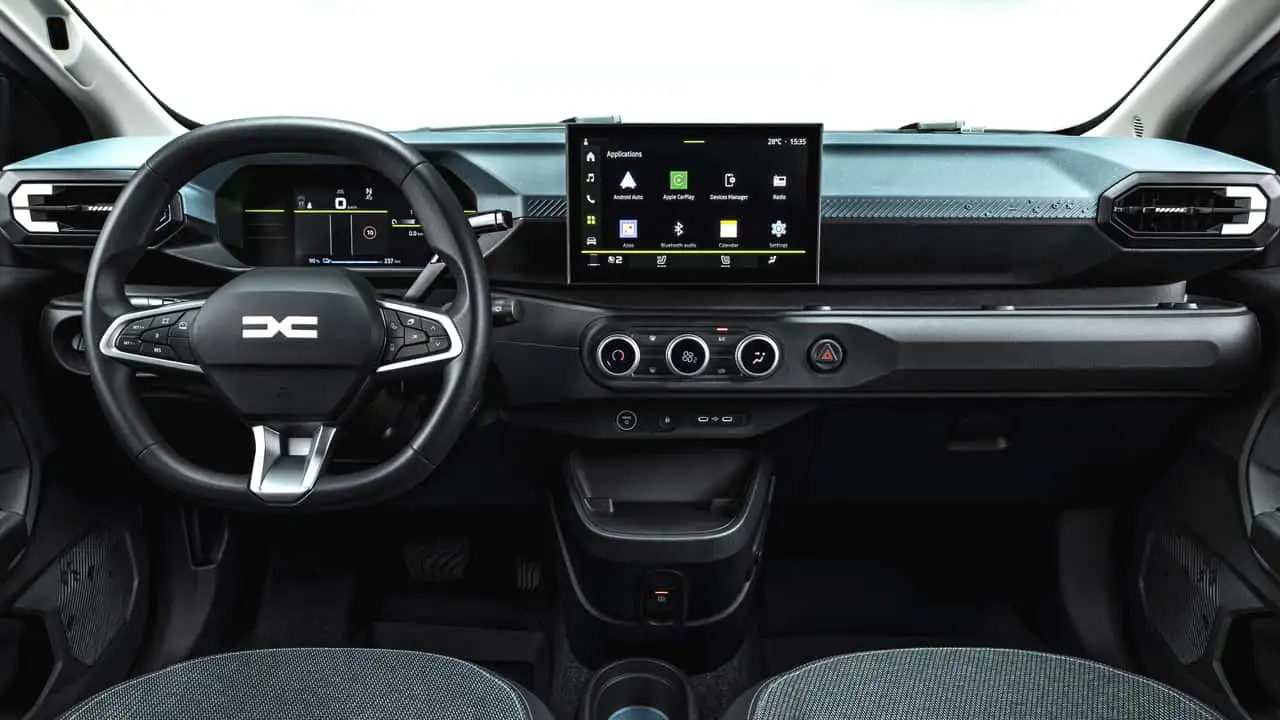
Higher trims get a 10.1-inch touchscreen, and the 7-inch digital instrument cluster is offered across the range. Photo: Dacia.
All versions have a 7-inch digital instrument cluster. The Expression trim uses the Media Control system, through which the driver’s phone becomes the main interface for navigation and multimedia.
The Journey level adds Media Nav Live, with a 10.1-inch central touchscreen, wireless Apple CarPlay and Android Auto. Connected navigation is included for eight years, and the system allows apps to be installed, charging to be scheduled and cabin temperature to be prepared before departure.
The electric parking brake and rear sensors are standard. The reversing camera is included on Journey, and the My Safety button lets the driver quickly access the preferred assistance-system configuration.
The 4.95-metre turning circle remains one of the model’s practical advantages in car parks and on narrow streets. Dacia has not yet published in the launch release all dimensions, mass and boot volume for every version.
What the launch means for buyers in Romania
The new Spring arrives at a moment when the value of incentives for electric cars and the rules of national programmes can change from one session to the next. For that reason, a fair comparison will only be possible after the Romanian price and the rules applicable on the order date are published.
The French price of €17,990 should not be converted automatically into a local offer. VAT, equipment structure, transport and commercial policy differ between markets. Offers for the old-generation Spring also do not describe the price of the new car.
On paper, the second generation addresses several limits of the previous model: it is wider, more powerful, has a new European platform and offers optional fast charging. The 250 km WLTP range remains oriented towards everyday use. For a driver who can charge at home and covers a few dozen kilometres a day, the small battery can reduce purchase cost and the time needed for a full charge. For regular long trips, frequent stops and the maximum charging speed will matter more than the starting price.
The first-generation Spring surpassed 210,000 units sold in more than 40 countries from 2021. The next test for Dacia will be whether the new model can keep its price advantage in a European market with more and more urban electric cars.
Frequently asked questions
How much does the new Dacia Spring cost?
The launch price announced for France is €17,990, before local incentives. The price for Romania has not yet been published.
What range does the 2027 Dacia Spring have?
Dacia states up to 250 km in the combined WLTP cycle, with the 27.5 kWh usable LFP battery.
Where is the new Dacia Spring built?
The second generation will be produced at the Renault Group plant in Novo Mesto, Slovenia.
How long does fast charging take?
With the optional 50 kW DC charging pack, the battery can go from 15% to 80% in about 28 minutes.
Does the new Dacia Spring have four or five seats?
The model was presented with four seats, keeping the urban electric-car formula.