
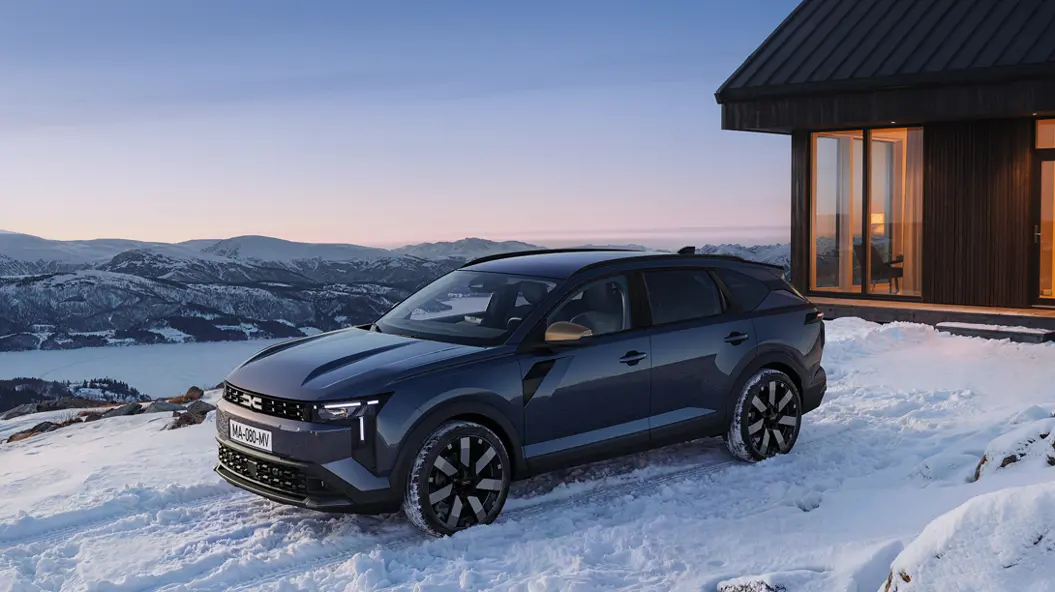
Dacia has opened orders for the Striker in Romania. The starting price shown in the Romanian configurator is €21,900 for the Essential mild hybrid-G 140. The new model is a C-segment crossover designed around three different use cases: the raised driving position and ground clearance associated with an SUV, the loading usefulness of an estate car, and the lower silhouette and efficiency focus of a saloon.
The price needs a qualification. Dacia’s configurator states that the displayed amount includes VAT and a commercial discount, with the offer shown as valid until 31 October 2026 and subject to available stock. Prices, equipment and availability can change. In practical terms, the configurator value is the relevant reference for a Romanian buyer at the time of placing an order, rather than a promise that the same amount will remain unchanged.
Three electrified powertrains
The Romanian range is built around three electrified systems. The entry point is the mild hybrid-G 140. It combines a 1.2-litre three-cylinder turbocharged petrol engine with dual-fuel petrol/LPG operation and a 48-volt mild-hybrid system. The battery is about 0.8 kWh and is recharged through regenerative braking. Dacia says the driver can let the car switch between petrol and LPG automatically or select the fuel manually from a dashboard control.
The LPG tank sits beneath the boot floor, so the manufacturer says it does not reduce the stated luggage-space layout. The system is aimed at buyers who want a lower running-fuel cost without moving to a plug-in charging routine. The actual benefit will depend on local fuel prices, the share of kilometres driven on LPG and the way the car is used. The powertrain can be paired, depending on configuration, with a manual gearbox or a six-speed automatic transmission.
The second option is the Hybrid 155. Its hardware includes a 1.8-litre four-cylinder petrol engine, two electric machines, a 1.4-kWh battery and an electrified automatic gearbox. Dacia quotes CO2 emissions below 100 g/km for this system and says the car starts in electric mode. The company also states that urban driving can be completed in fully electric operation for up to 80% of the time. That is a manufacturer figure, so it will vary with traffic, weather, route and driving style.
The Hybrid 150 4x4 sits at the top of the technical range. At the front is a 1.2-litre 48-volt mild-hybrid engine rated at 140 hp, linked to a six-speed dual-clutch automatic gearbox. The rear axle uses a separate electric motor rated at up to 23 kW. The rear drive can be connected when traction is needed and disconnected in some road situations to reduce energy use. The system offers Auto, Eco, Snow, Mud/Sand and Off-Road modes.
Equipment at the entry price
Essential is the access trim. Dacia’s published equipment list includes 17-inch steel wheels, roof bars, LED daytime running lights, manual air conditioning, front and rear electric windows, rear parking sensors and a reversing camera. The car also gets the Media Display system and a 7-inch LightVisio digital instrument cluster. The rear bench folds in a 40/60 split.
Across the range, the central touchscreen is 10.1 inches. Depending on trim, it works with connected navigation and smartphone mirroring. LightVisio is not a projection onto the windscreen; it uses optical reflection to place key information in the driver’s sightline. The arrangement is part of Dacia’s attempt to keep frequently used controls straightforward while adding more digital equipment than on the smaller models.
Expression adds 17-inch alloy wheels, dual-zone automatic climate control, an electric parking brake with AutoHold, a higher centre console and electrically folding mirrors. Extreme is the outdoor-oriented version. It can include an opening panoramic glass roof, washable MicroCloud upholstery, rubber mats, extra exterior protection and hill-descent control. Journey has a touring brief, with an electrically operated tailgate, an electrically adjustable driver’s seat, heated front seats and steering wheel, connected navigation and wireless smartphone charging.
Size, boot and positioning
Dacia gives the Striker a length of 4.62 metres. Ground clearance is quoted at 190 mm for the 4x2 model and 200 mm for the 4x4. Its height stays below 1.53 metres, which is lower than many conventional C-segment SUVs. The boot can hold up to 600 litres, while higher trims can be fitted with a three-piece load floor. The panels can be arranged to create a hidden compartment, a flat surface with the rear seats folded or the maximum available loading height.
The model is complementary to the Bigster rather than a seven-seat replacement. It has five seats and a lower, more elongated body. That should make the choice less about a simple size hierarchy and more about the customer’s use: Bigster for a traditional family SUV profile, Striker for a crossover with estate-like loading practicality, or the 4x4 version for roads where extra traction matters. Dacia has not presented it as a vehicle with a single universal mission.
Safety and ordering advice
Dacia says the Striker is equipped for the latest European GSR2 requirements. Standard systems include autonomous emergency braking, traffic-sign recognition, lane-departure warning, lane-keeping assistance, driver-attention monitoring and eCall. Adaptive cruise control is also announced as standard. An optional driver-assistance package can add blind-spot monitoring, reverse automatic emergency braking, intersection braking and a multi-view camera.
Opening orders does not create one delivery time for every engine, trim, colour and option combination. Customers should check with the Romanian configurator and dealer whether the chosen car is available from stock or requires a production allocation. The confirmed market facts are the €21,900 entry price, the three electrified drivetrains and the four trim levels: Essential, Expression, Extreme and Journey.
Sources
- Dacia Romania Striker configurator
- Dacia Romania newsroom: Striker enters the C segment
- Dacia Media: the new Striker
Image: Dacia Media Website, official press image. The vehicle shown is real; the image is illustrative and the pictured specification may differ from the ordered car.


