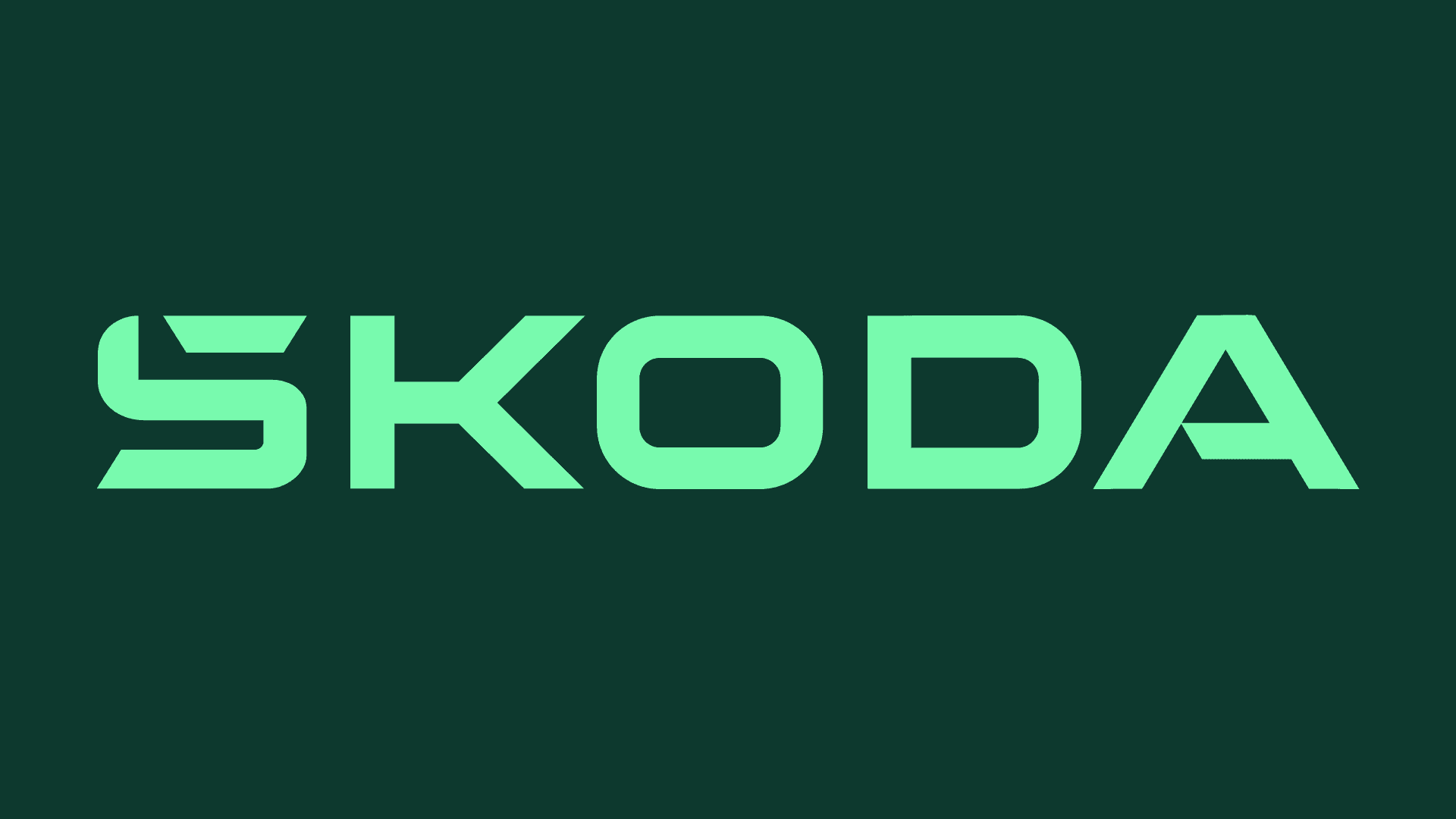
Image: Škoda Auto. The brand name, in the form introduced with the new visual identity in 2022.
On the tailgate of many new cars, the round emblem or manufacturer’s symbol has given way to letters that spell the brand name. Škoda and Dacia are two examples easy to find in Romania. The change helps identify the maker directly and gives designers a graphic element that occupies the body surface differently.
There is, however, no industry-wide decision to drop badges. Some brands keep the emblem on the grille and use the name at the rear; others change identity for a given market. The reasons should be taken separately, not reduced to a single fashion.
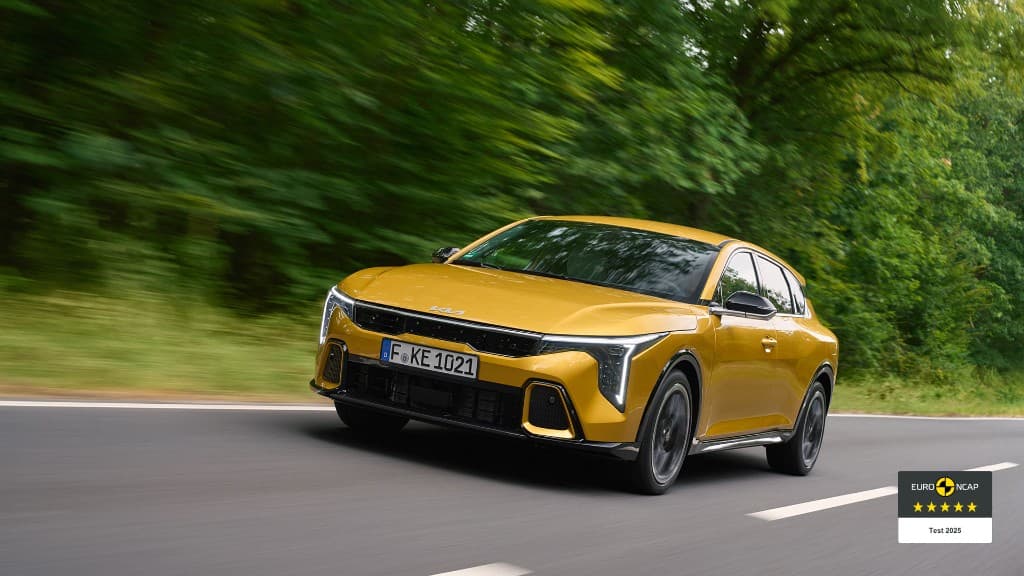
Škoda started with Scala, before the new visual identity
Scala was the first Škoda production model for the European market to receive the manufacturer’s name, written as separate letters on the tailgate, in place of the established badge. Official documentation from 2019 presented the lettering as part of the new design direction. On the version with the extended rear window, the chrome letters contrasted with the dark glass.
In August 2022, the manufacturer expanded the role of the name in its visual identity. The new typography integrates the Czech diacritic directly into the letter S. The winged arrow was also redrawn, in a two-dimensional form, but was not abandoned as a company symbol.
Škoda says research carried out for the new identity indicated better recognition and identification for the written name. The process included the views of 2,200 people in six markets, on logo variants. The result supports Škoda’s choice; it does not prove that any name, in any font, is more effective than any emblem.
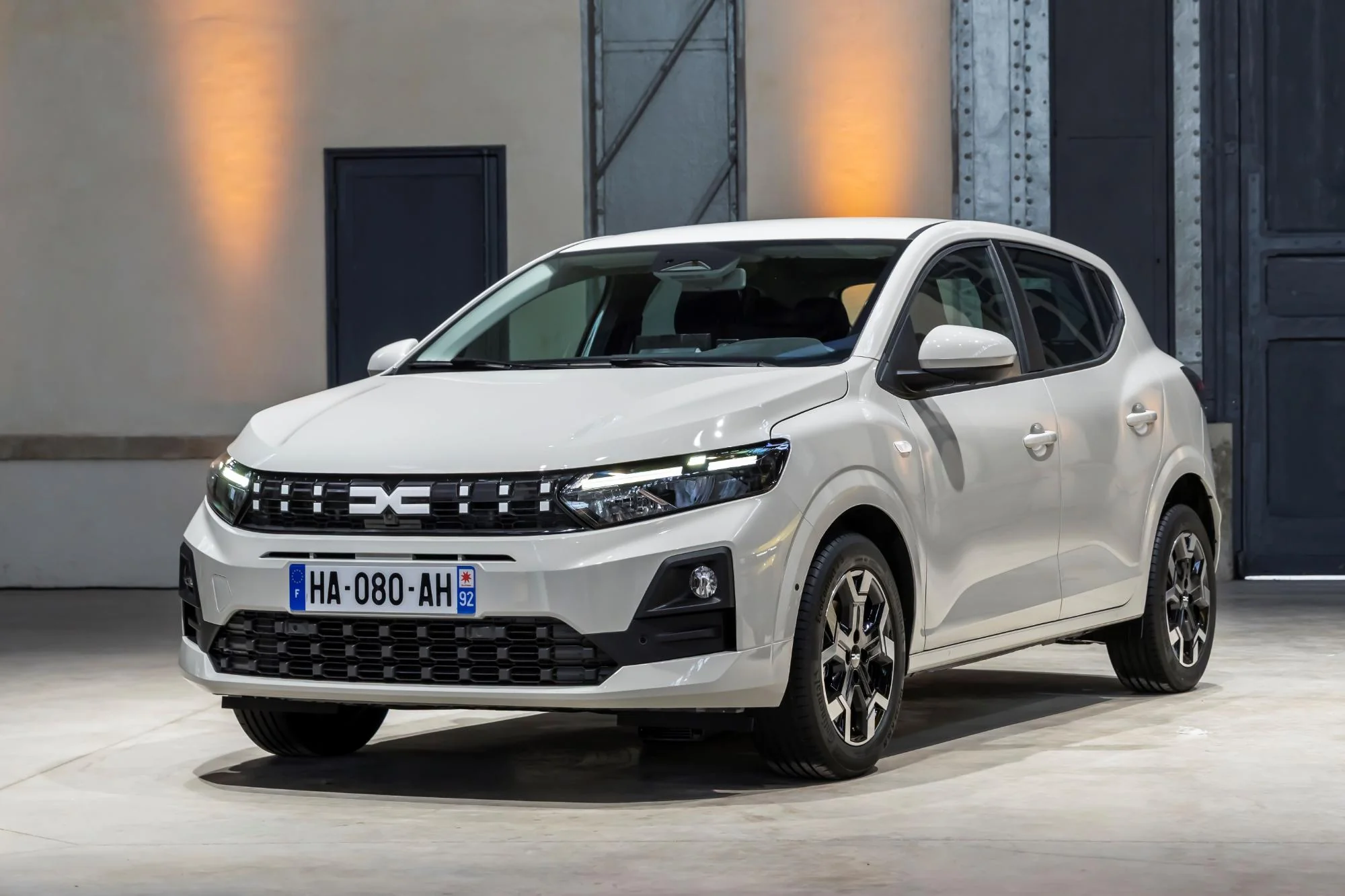
Dacia uses both variants on the same car
Dacia’s 2022 change shows why the phrase “badges are disappearing” is too categorical. The manufacturer introduced the Dacia Link emblem in the centre of the grille, while the name DACIA appeared at the rear and on the steering wheel.
Dacia Link unites stylised forms of the letters D and C. The full name and the emblem have different roles in the same identity: the first is read directly, and the second works as a compact symbol. The new presentation was applied to the entire range, with first deliveries in the last quarter of 2022.
For the Romanian reader, this is the clearest example of the transition: a Duster with DACIA lettering on the tailgate is not a car left without graphic identity. The emblem still exists, but it is placed elsewhere.
In China, AUDI without rings is a distinct case
Audi launched in November 2024 a brand intended for China, named AUDI, written in capitals and without the four rings. The company presented the identity as a link with the traditional brand, and also as a separation from it.
The project, developed with SAIC, targets Chinese customers interested in electric and connected cars. It is not an announcement that every Audi model in Europe will lose the rings. In this case, the written name distinguishes two brand offers, rather than simply replacing a tailgate emblem.
Letters also change how the car is drawn
A compact emblem concentrates the eye on a point. A name stretched across the tailgate emphasises the horizontal and can be aligned with the tail lights or body edges. It is a difference of visual composition, with no effect on the car’s performance.
The name also has an obvious advantage for anyone who does not know the symbol: they no longer have to deduce the manufacturer from an arrow or a geometric shape. Readability still depends on font, contrast and letter spacing. Lettering does not automatically guarantee that the brand is easier to recognise.
When buying a car, this change should not be confused with a new generation or a different powertrain. Dacia changed the identity of the entire existing range in 2022, and Scala used the name on the tailgate before Škoda’s corporate redesign. Model, year of manufacture and equipment are checked in the car’s documentation, not only by the badge at the rear.
Sources: Škoda – Scala design and tailgate lettering, Škoda – new visual identity from 2022, Dacia – applying the new identity to vehicles, Audi – launch of the AUDI brand in China