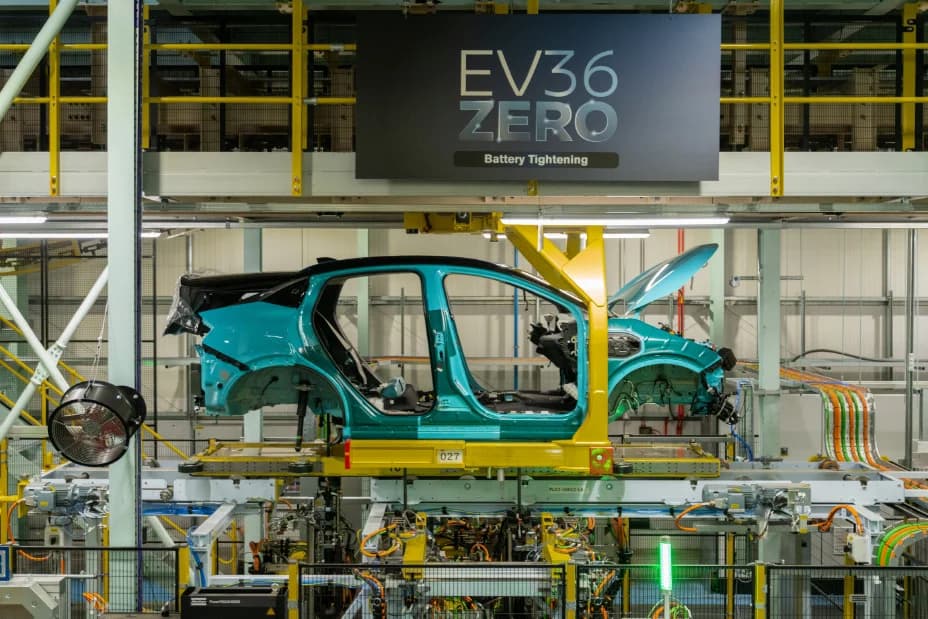
Nissan Leaf on the EV36Zero production line in Sunderland, UK. Official press image; source and credit: Nissan Motor Corporation.
The European Union has reportedly told the British government that higher tariffs on Chinese cars and closer alignment with EU trade policy would help the UK avoid disadvantages under forthcoming “Made in EU” rules. The Financial Times report, published on 25 September and attributed to two people familiar with the discussions, was subsequently carried by Reuters and Automotive News Europe. No UK tariff increase or customs-union agreement has been announced.
According to that account, Brussels considers UK membership of the EU customs union the most comprehensive answer to different tariff regimes and to concerns that Chinese goods could be routed through Britain. Reuters said it could not independently verify the report, while the European Union and the UK Foreign Office had not immediately commented. That qualification matters: this is a report about diplomatic pressure, not a measure already adopted.
The public record confirms a dispute, not an ultimatum
The UK government has confirmed that Prime Minister Andy Burnham raised the Made in Europe agenda with French President Emmanuel Macron on 3 September. Downing Street's account says Burnham described “significant challenges” for British industry and that the two leaders agreed to work towards a way forward protecting shared interests.
There is no public document confirming that the EU issued a formal ultimatum, that London accepted higher duties on cars made in China, or that negotiations to rejoin the customs union have opened. Until either side publishes terms and a timetable, the reported demand must remain attributed. Nor does the article identify a legal process or date for a British trade-remedy decision.
For manufacturers, the distinction is immediate. A political conversation does not change the customs treatment of a vehicle crossing the border. Britain would need its own legal measure to introduce countervailing duties comparable with those imposed by the EU after its anti-subsidy investigation.
Made in EU is still a legislative proposal
The European Commission proposed the Industrial Accelerator Act on 4 March 2026. It would introduce European-origin and low-carbon preferences in selected public procurement and public-support schemes. Cars are among the strategic sectors named by the Commission. The proposal is not a general ban on British-built products, and it does not by itself alter the import duty attached to every car.
The European Parliament and Council must negotiate the regulation before it can be adopted. The Commission's proposal says content from partners covered by a free-trade area, customs union or relevant Government Procurement Agreement obligations may be treated as Union origin where those obligations apply. For other public interventions, partners with a free-trade agreement or customs union may be brought within scope under the final rules.
Britain has a Trade and Cooperation Agreement with the EU but is outside both the single market and customs union. London wants its closely integrated factories and suppliers to receive trusted-partner treatment. Some EU governments, meanwhile, want benefits financed by public funds to carry a tighter connection to production inside the Union. The final regulation will determine where the boundary sits; present headlines cannot do so.
The EU's China duties are manufacturer-specific
Since October 2024, the EU has applied definitive countervailing duties to new battery-electric passenger cars made in China. They are additional to the normal customs duty and vary according to the producer and the investigation findings. The consolidated regulation lists 17 per cent for BYD, 18.8 per cent for Geely, 35.3 per cent for SAIC and 7.8 per cent for Tesla Shanghai. Other cooperating producers have a 20.7 per cent rate, while the residual rate is generally 35.3 per cent.
The measure follows production origin rather than the nationality suggested by a badge. A European-brand car made in China can fall within scope; a Chinese-owned vehicle manufactured in Europe occupies a different customs position. In January 2026, the Commission also issued guidance for minimum-price undertakings, which could provide a WTO-compatible alternative where an offer meets the legal criteria. Each proposal is assessed separately.
The UK did not inherit the EU's 2024 countervailing measures after Brexit. That regulatory difference explains the reported European concern about trade diversion. It does not establish that vehicles can simply enter Britain, receive a new label and cross into the EU duty-free. Preferential access depends on documented origin and the detailed product rules in the UK–EU agreement.
The 2027 rules-of-origin change is a separate tariff risk
Electric vehicles traded between Britain and the EU already face another deadline. Both sides extended transitional rules of origin until 31 December 2026. The Council of the EU said the extension avoided a 10 per cent tariff on vehicles that would not have met the tighter requirements originally due from 2024.
The permanent local-content regime is scheduled to apply from 1 January 2027. It decides whether an EV and its battery qualify as UK or EU origin for tariff-free bilateral trade. This is separate from the anti-subsidy duty on Chinese BEVs and from the proposed Made in EU preferences attached to public money.
Nissan's Sunderland operation shows why the distinctions matter. The latest Leaf is assembled there with batteries from the neighbouring AESC gigafactory. Nissan says the plant supports 6,000 Sunderland jobs and about 30,000 jobs in its wider UK supply chain. From 2027, the origin of cells, packs and other high-value components will directly affect whether exported cars satisfy the bilateral threshold.
The same arithmetic applies to EU plants sourcing British components. A policy intended to restrict subsidised Chinese imports could also change incentives for investment and sourcing across the Channel if UK content receives less favourable treatment in support schemes.
What could change for European buyers
A British decision to raise Chinese-car tariffs would not directly change the duties applied in EU member states. The EU's common commercial policy and Regulation 2024/2754 already govern imports into the Union. Indirect effects are possible: manufacturers could redirect volumes, alter specifications by market, or accelerate European assembly if access to public support depends on regional content.
The Made in EU proposal does not mean British cars will disappear from EU showrooms. Its stated tools concern selected procurement and support programmes. The impact on national EV incentives will depend on the adopted wording, the type of scheme and the EU's obligations towards trade partners.
There are therefore three separate files: the EU's existing countervailing duties on Chinese-built BEVs, the stricter UK–EU origin rules due in 2027, and the proposed Made in EU preferences. The reported request to London connects them politically, but it has not merged them into one law. The next material evidence would be an official UK–EU statement, a British trade-remedy procedure, or an adopted Industrial Accelerator Act.
Sources
- European Commission — Industrial Accelerator Act proposal and Made in EU criteria
- UK government — Andy Burnham–Emmanuel Macron meeting, 3 September 2026
- EUR-Lex — consolidated Implementing Regulation (EU) 2024/2754
- European Commission — guidance for price-undertaking offers on Chinese BEVs
- Council of the EU — rules of origin for electric vehicles in EU–UK trade
- Nissan — next-generation Leaf production at Sunderland