
Europe could introduce battery localisation rules before the region has enough cells and upstream materials to meet them. A Mobility Global study commissioned by the European Automobile Manufacturers’ Association projects that European battery-cell output could reach 306 GWh in 2032. Even at that level, the study says supply would not catch up with demand created by the proposed Industrial Accelerator Act, or IAA.
What the Industrial Accelerator Act would do
The IAA is a proposed European industrial policy instrument for strategic technologies. Its approach would connect access to some public tenders, purchase incentives and tax benefits with the origin of vehicle components. For electric cars, the discussion covers vehicle assembly, non-battery components and the battery itself.
Under the proposal assessed by ACEA, battery requirements would arrive in two stages. Six months after the text entered into force, batteries would need three EU-origin components, including cells. Three years after adoption, the requirement would rise to five components, including cells, the battery management system and cathode active materials. The often-mentioned 2027–2028 and 2030–2031 dates are scenario dates, not the timetable of an adopted law.
Mobility Global tested three demand cases: the full light-duty electric-vehicle market, a public-led market including company cars, rentals, fleets, dealers and procurement, and a public-core case focused on corporate fleets and public purchasing. In all three cases, the analysis found that available European supply would remain below demand.
Millions of cars could miss related incentives
ACEA gives a specific example for a 2028 IAA start. Around three million cars could be unable to qualify for associated “made in the EU” incentives because compliant battery supply would be limited. This is not a forecast of total car sales. It is an estimate of vehicles that could be excluded from schemes linked to the proposed origin requirements.
The problem is larger for trucks and other heavy-duty vehicles. By 2032, the study projects a supply-demand gap of 23 GWh, with demand around four times higher than available European supply. Heavy vehicles use larger packs, operate on different duty cycles and have longer development and procurement timelines than passenger cars.
ACEA has also published a Ricardo study focused on trucks. It says that, if the proposed rules applied today, about half of the medium- and heavy-duty trucks built in Europe would not meet the battery-cell requirements for European public procurement and subsidy programmes. Fewer than 5% of the cells used in EU-built trucks are expected to contain EU or UK cathode active material in 2027, according to the study.
Announced factories are not operating capacity
The number of announced gigafactories does not show how many cells are actually available. ACEA says a battery project can take close to a decade from announcement to full production. Sites must be selected, permits secured, financing arranged, factories built, workers trained, equipment tested and output ramped up.
The upstream supply chain adds another limitation. Mobility Global identifies persistent shortages of cathode and anode active materials. It suggests that the CAM and AAM deficit may not close until 2038–2040 even in a lower-demand scenario. A cell made in Europe therefore does not automatically contain enough locally sourced value to satisfy every proposed condition.
Chemistry is another complication. Most planned European gigafactories are geared towards NMC cells, while demand is increasingly shifting to lower-cost LFP batteries. LFP production is currently dominated by China. Creating European LFP capacity requires more than converting a final assembly line; it also needs qualified suppliers, process validation and upstream materials.
A possible cost impact for EV buyers
ACEA says European-made cells remain significantly more expensive than imported cells. In a 30 September message, the association cited a Bruegel estimate that using EU-produced cells could add about €2,100 to the cost of a battery-electric car. ACEA presents this as an external estimate, not as its own measurement.
That figure matters because smaller electric cars have limited room for cost increases. A localisation requirement could be reflected in the vehicle price, in the value of a purchase incentive or in the equipment offered as standard. The policy goal is to reduce strategic dependence, but applying the rule before local production reaches scale could make the transition to electric vehicles more expensive.
ACEA supports building a European battery chain but is asking for a longer phase-in. Its proposal is to start the three-component requirement three years after adoption and the five-component requirement five years after adoption. It also wants separate treatment for trucks and buses, tied to demonstrated availability of suitable European batteries.
The legislation is not final
The IAA is still a proposal. The European institutions must negotiate the text, and definitions, thresholds and exemptions may change. The International Energy Agency notes that the proposal would link some compliance credits and support schemes to EU assembly and local component content, while the final meaning of EU origin remains an important legal question.
For carmakers, the issue is not whether Europe should build more batteries. It is whether cell plants, active materials, energy supply and recycling capacity can scale before the legal deadlines. Without those inputs, a local-content rule can be technically clear but difficult to meet with real production.
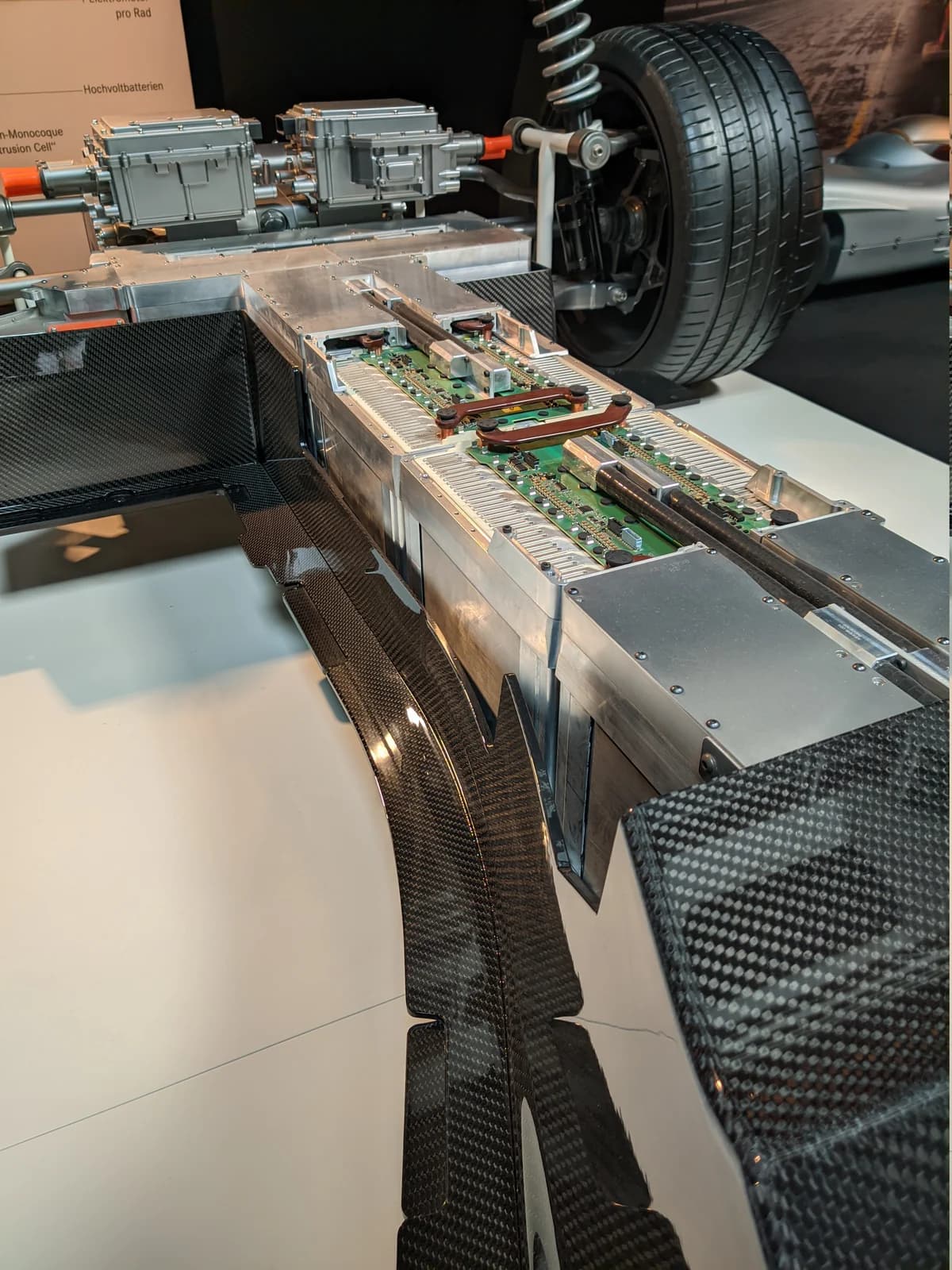
Image: electric vehicle battery pack photographed by Mugel2110, Wikimedia Commons, CC BY-SA 4.0. The photograph illustrates the technology discussed and does not show a specific European project.
Sources
- ACEA: European battery capacity and IAA localisation demand
- ACEA: local content rules and European truck manufacturing
- ACEA: initial views on the Industrial Accelerator Act
- ACEA: why battery plants take time
- IEA: EV manufacturing, trade and EU battery rules
- Wikimedia Commons: Battery pack of an EV, Mugel2110



