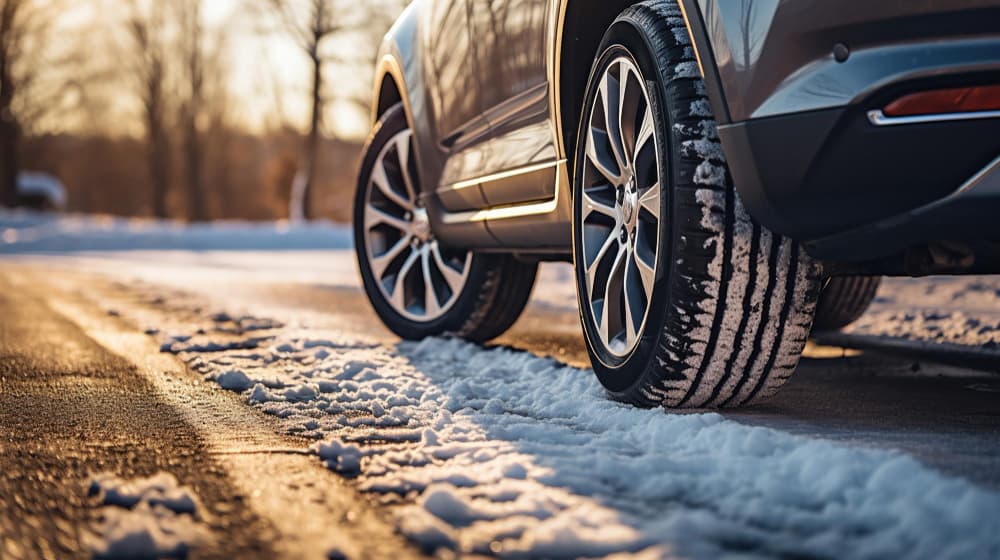
The short hairs on the shoulder of the tread remain after vulcanisation. Photo source: Carboratory archive
Why new tyres have rubber hairs and what you do with them
The short hairs on a tyre freshly out of plastic do not provide grip, do not reduce noise and are not a “running-in” provided by the manufacturer. Steve Burke, technical manager at Toyo Tires Australia, calls them vent spews: rubber that comes out, together with the air, through the mould’s vent holes. After the factory, he says, “Vent spews have no functional purpose post-manufacturing.”
On the sidewall they can remain for months, because they do not touch the tarmac. On the tread they disappear from friction, if they have not already been cut at the plant. Their presence does not prove the tyre is new; their absence does not prove it is old.
How they appear: the green tyre, the mould, vulcanisation
In the factory, the assembled carcass — in jargon, the green tyre — does not yet have the final tread and inscriptions. It goes into a mould. Heat and pressure fill the form: tread, markings, sidewall. Michelin describes vulcanisation as transforming rubber from a plastic to an elastic state, with sulphur as the agent, plus retarders and accelerators that control the reaction to heat.
Air remains between the still-soft rubber and the mould wall. If it does not escape, voids and surface defects appear. Bridgestone, in US patent US 7,290,996 B2, notes the usual practice: fine vent holes. The problem, also there: rubber also comes out through those holes and forms spews, which spoil the appearance. The countermeasures cited by Bridgestone are cutting these hairs and/or even finer holes — so fewer visible hairs does not automatically mean a better tyre, but a different mould or finish.
Burke describes the same mechanism: the air comes out, “ensuring no air bubbles between tyre and mould, and takes with it little bits of the rubber.” On the tread, he says, the spews “are mostly shaved off”; on the shoulders and sidewall they remain.
They do not provide grip and they do not replace the DOT
The contact patch is the designed tread, not these hairs. You do not have to wait for them to disappear before a normal journey. Fitting, balancing and the pressure on the door label, cold, matter; pulling off the whiskers does not.
Age is read from the date of manufacture, not from the whiskers. Continental Romania explains the four-digit stamp, usually after the DOT marking: the first two are the week (01–53), the last two the year. Their example: a string that ends with 4521 means week 45 of 2021. In the USA, 49 CFR § 574.5 uses the same format; the example in the regulation, 0109, is the first calendar week of 2009. The date can be on a single sidewall; if you cannot see it from outside, look on the inner side.
Continental AG writes that an unused tyre, stored correctly, can be sold as new for up to 5 years from manufacture. It recommends replacement, including the spare, after 10 years from the date on the sidewall. The commercial warranty, the same page notes, runs from purchase and is, “according to the law”, 2 years — not from the DOT week.
Why some tyres have more hairs
The number, location and thickness of the holes differ from mould to mould. Some lines shave the tread; others leave everything as it comes out of the form. There are also moulds designed to reduce spews, precisely for appearance — the Bridgestone patent is about that, not about grip.
That is why:
- more hairs do not mean better grip;
- fewer hairs do not mean an old tyre;
- hairs on the sidewall can remain after mileage;
- the DOT, the tread and the condition of the sidewall say more than the whiskers.
Should you pull them off?
Burke: there is no need. If you still want a “clean” sidewall, “avoid scissors and blades and just grab them with your hand and pull them off.” Toyo does not require their removal and does not tie them to safety, consumption or lifespan.
At fitting, what matters is that the tyre is the size in the registration document, with the load and speed indices required by the car, balanced, with the pressure from the label. TPMS, where fitted, must be recognised after a new set.
What you check in Romania, instead of the whiskers
In a shop or on an ad with “new tyres”, look at the DOT on all four wheels, not at the hairs. A set stored two or three years can still show whiskers on the sidewall; one shaved at the factory can look “used” even though it is from a recent week. On a used car, the same test is described in the guide on DOT, wear, wheels and TPMS.
For use on a public road in the EU, the tyre must carry the homologation mark (E in a circle), according to UN Regulation No. 30. The figure next to the E is the country that issued the homologation (for example E4 for the Netherlands), not an indication that the tyre is “Romanian”.
At the periodic inspection, rejection on tyres is not about whiskers. RNTR-1 treats as a deficiency, on passenger cars, main tread depth (the central zone of 3/4 of the tread width) below 1.6 mm, or the wear indicator exposed.
In car ads, “new tyres” is often a sales phrase. Check the DOT, the season (M+S / 3PMSF markings are not read from the hairs) and whether the four tyres match in size.
Frequently asked questions
Do the hairs on a new tyre provide grip?
No. Toyo says that after manufacture they have no role. Grip is the job of the tread, the compound and the correct pressure.
If it no longer has whiskers, is it old?
Not necessarily. Some factories shave the tread. The sidewall can keep the hairs after mileage. Read the last four digits of the DOT.
Can I cut them with a blade?
Toyo asks you to avoid scissors and a blade. If you remove them, pull them by hand. It is not a necessary operation.
How old is a “new” tyre on the shelf?
Continental: unused and stored correctly, it can be sold as new for up to 5 years from manufacture. It recommends replacement after 10 years, including the spare. The 2-year warranty runs from purchase.
What is checked at the periodic inspection on tyres?
Main tread below 1.6 mm (or the wear bar in view), not the whiskers. Size must match the registration document.
Sources
- Toyo Tires Australia — Why do my tyres have hairs? (Steve Burke, vent spews)
- Bridgestone — US 7,290,996 B2, vent holes and spews
- Michelin — The Tire Digest, sulphur and vulcanisation
- Continental Romania — tyre age, DOT, 5 and 10 years
- eCFR — 49 CFR § 574.5, DOT date format
- EUR-Lex — UN Regulation No. 30, tyre homologation
- Legislative portal — RNTR-1 / Order 1319/2016, minimum tread 1.6 mm
- NHTSA — Tires (maintenance, pressure, inspection)