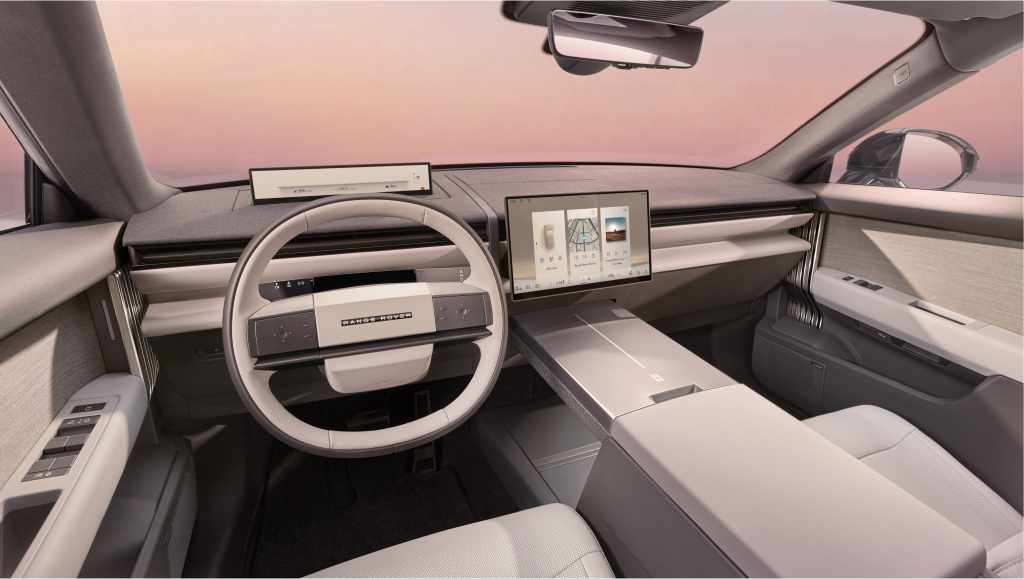
Photo: Range Rover / JLR. Interior of the new Range Rover GT.
Range Rover is preparing a reduction in the number and size of screens in its forthcoming models. The new direction is anticipated by the Range Rover GT, the fifth member of the family, whose interior drops the idea of a digital panel stretching across the full width of the dashboard.
The change does not, however, mean a return to consoles full of buttons and switches. The British brand wants a visually simpler cabin, but it intends to keep digital controls for numerous secondary functions.
What the new Range Rover approach looks like
The Range Rover GT uses a single touchscreen in the central area and a narrow driver display, instead of a bulky classic instrument cluster. There is no third screen dedicated to the front passenger, a solution that has become increasingly common in premium cars.
Ryan Miller, Range Rover’s global director of product and service marketing, explained that the surface occupied by screens is reduced deliberately. According to him, future generations of the known models will evolve in a similar direction, and a separate passenger screen is not a priority.
The manufacturer has not announced the exact sizes of the displays that will be fitted on each model, nor a complete timetable for the change. The decision should therefore be seen as a design philosophy for future generations, not as an immediate modification of every car now on sale.
The Range Rover GT sets the direction
Presented officially in July 2026, the Range Rover GT is the first model to show this approach. JLR describes the technology as an element integrated into the cabin architecture, not as the centrepiece of the design.
Besides the two-display configuration, the dashboard includes a ventilation slot hidden across almost its full width, and the speakers are masked under textile. The stated aim is to reduce visual and acoustic noise, so that the interior retains the calm atmosphere associated with the brand.
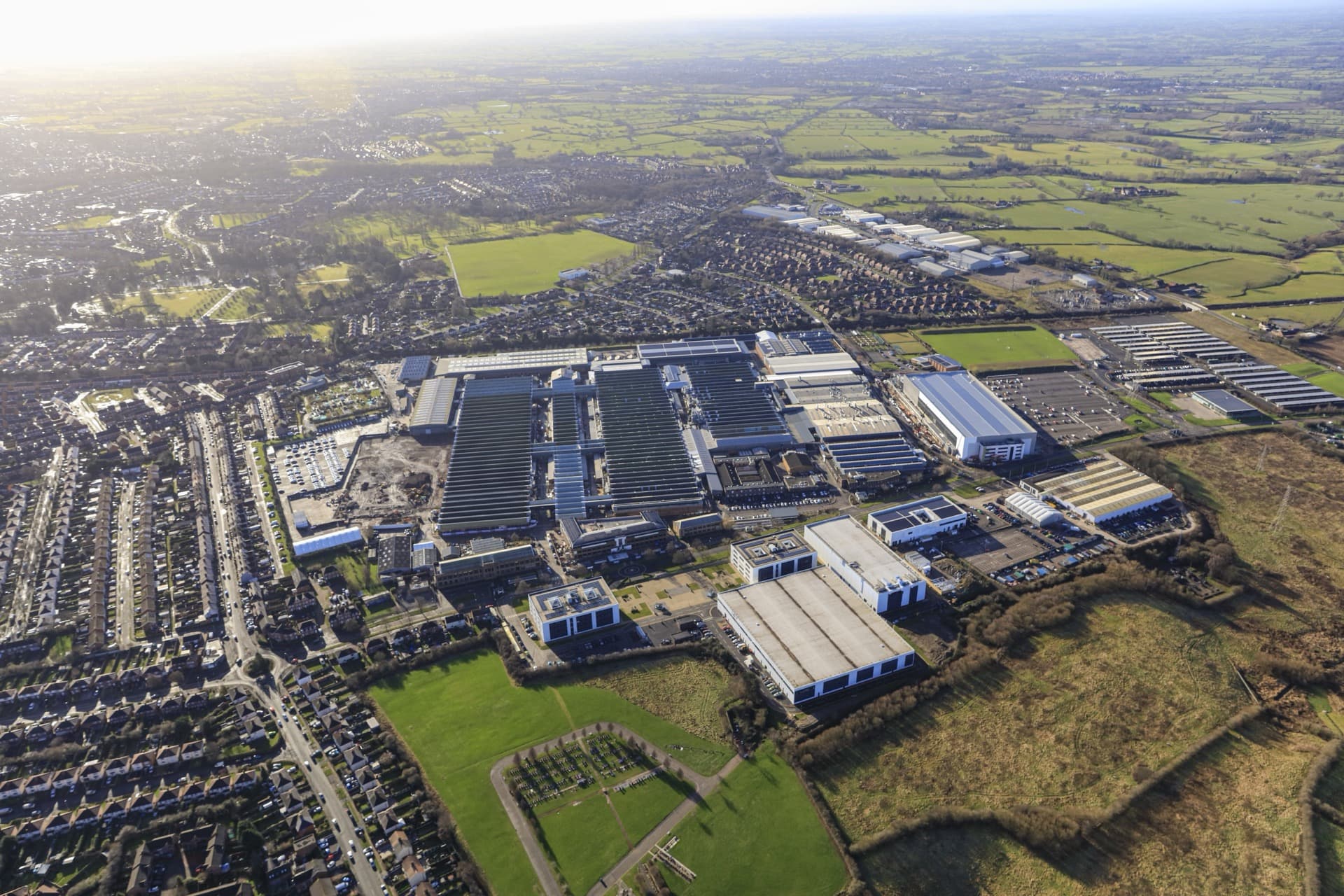
The GT will be the first fully electric Range Rover built on the EMA platform and will be produced at Halewood, in the United Kingdom. The manufacturer has announced that a full-hybrid version is planned later in the model’s life cycle.
Fewer screens does not mean more buttons
Range Rover keeps physical controls on the steering wheel, but it is not preparing a general return to separate buttons for every function. Many secondary settings will continue to be operated through the screen, and the company also talks about conversational access to a larger number of functions.
This is the difference between the new direction and the interiors of older cars: the brand is not rejecting the digital interface, but trying to reduce its visual presence. The result could be a more airy dashboard, but the user experience will depend on menu organisation, system speed and quick access to the controls used while driving.
Martin Limpert, Range Rover’s managing director, explained that the brand wants to distinguish itself from cars that add ever more functions, screens and visual or audible signals. Ryan Miller added that Range Rover does not intend to compete by simply increasing the number of displays.
Which models could adopt the new interior
The company has not yet published an official list. Management statements indicate, however, that the GT philosophy will gradually reach future generations of the Range Rover range.
The Australian press mentions the next-generation Evoque as one of the first possible models, with a presentation expected in 2027. This date has not been confirmed by JLR in an announcement dedicated to the model, so it should not be treated as a definitive launch date.
For current owners in Romania, the change has no immediate effects and does not involve removing screens through software updates. It concerns the architecture of future interiors, and sizes, equipment, prices and on-sale dates will be communicated separately for each model.
Range Rover’s decision marks an interesting correction in the premium segment: the screen remains the main command centre, but it no longer has to dominate the entire dashboard. The success of the solution will depend less on the centimetres of the diagonal and more on how easily important functions can be used without distracting the driver.
Sources: Range Rover / JLR – official presentation of the new Range Rover GT, Motor1 – statements about smaller screens, GoAuto – strategy for future Range Rover interiors