Renault Niagara press kit, 10 September 2026 — republished for Carboratory readers.
Renault Niagara: C-segment SUV comfort and pick-up robustness, designed for Latin America
Niagara opens a new chapter in Renault’s expansion in Latin America. Part of the futuREady strategy, it marks the start of an offensive that involves 14 new models for international markets.
Renault says Niagara combines the refinement, comfort and technology of a C-segment SUV with the robustness and adaptability of a vehicle designed for demanding use. The manufacturer describes the design as mixing an urban emphasis with all-terrain capability.
The interior, according to Renault, emphasises comfort and connected technology, such as Open RLink with Google Gemini, Multi-Sense, customisable cabin lighting and a wide range of everyday functions.
Niagara is offered with a wide range of transmissions and powertrains. Available with a manual or automatic gearbox and two- or four-wheel drive, it is aimed at a full range of uses in Latin America.
Assembled at the Santa Isabel plant in Argentina, Niagara is, Renault says, the only pick-up in its segment built locally.
A pick-up at the centre of Renault’s strategy for international markets
Niagara is a further step in Renault’s push on international markets. Developed for Latin America, the pick-up combines, according to the manufacturer, the comfort and technology of an SUV with the resistance and functional qualities of a pick-up. It is part of the brand’s plans to launch 14 new models on markets outside Europe by 2030.
Renault steps up expansion outside Europe
With Niagara, Renault continues to expand in one of its most strategic markets. The first model launched as part of the FutuREady plan, Niagara marks the start of a new phase in the brand’s international offensive. By 2030, Renault plans to launch 14 new models outside Europe to strengthen its position as the world’s leading French car brand. Drawing on the development potential of international markets, Renault aims to accelerate both growth and electrification. The 2030 objective is to generate half of its sales outside Europe, while raising the share of electric and hybrid powertrains to 50% of the mix on those markets.
Niagara, the first vehicle in the FutuREady production offensive for markets outside Europe
Alongside Kardian and Boreal, Niagara is part of Renault’s new model range outside Europe, particularly in Latin America. The strategy is based on developing vehicles that incorporate the brand’s new DNA and technologies. Based on the RGMP pick-up platform, it is designed specifically to meet the needs of customers in Latin America.
A pick-up designed for new needs
Renault presents Niagara as a response to a broader customer base looking for a vehicle not only for daily use, but also for leisure or business.
The manufacturer says pick-ups in Latin America remain strongly associated with cargo work, but are gradually moving towards more diverse uses. They are now used mainly as personal vehicles, while keeping the practical qualities that have supported their success in recent decades. Reflecting that trend, customers are looking for greater comfort, in-car technology and perceived quality, without compromising load capacity and off-road capability, Renault says.
The Latin American market: a strategic region
Latin America is currently one of the most dynamic markets for pick-ups. In several countries in the region, pick-ups account for a significant share of MPV sales, covering a particularly wide range of uses.
Niagara’s three main markets are Brazil, Argentina and Colombia. They represent most of the potential sales. Besides those three, Niagara will also be imported into other Latin American countries at a later date.
Niagara is the first pillar of the futuREady strategy, implementing our objective of launching 14 new models on international markets by 2030. The RGMP platform will also provide the basis for a hybrid powertrain at a later date. This will also contribute to our ambition to include 50% electrified models in our international range by 2030.
With design, engineering and production carried out entirely in Latin America, Niagara carries the Renault brand DNA: bold and robust design; a comfortable interior with ingenious storage solutions; SUV-worthy technology, including OpenR Link with Google built in.
I would like to thank all Renault teams in Latin America for their collective commitment to this inspirational project.
— Fabrice Cambolive, Chief Growth Officer Renault Group, CEO Renault Brand
Bold design and a robust look
Renault says Niagara redefines pick-up design, combining SUV cues with the practical abilities of a vehicle meant for a wide range of uses. Its personality is expressed in a contemporary, robust and high-tech design. The manufacturer describes it as a vehicle that feels at home in the city and on difficult terrain.
Built for adventure
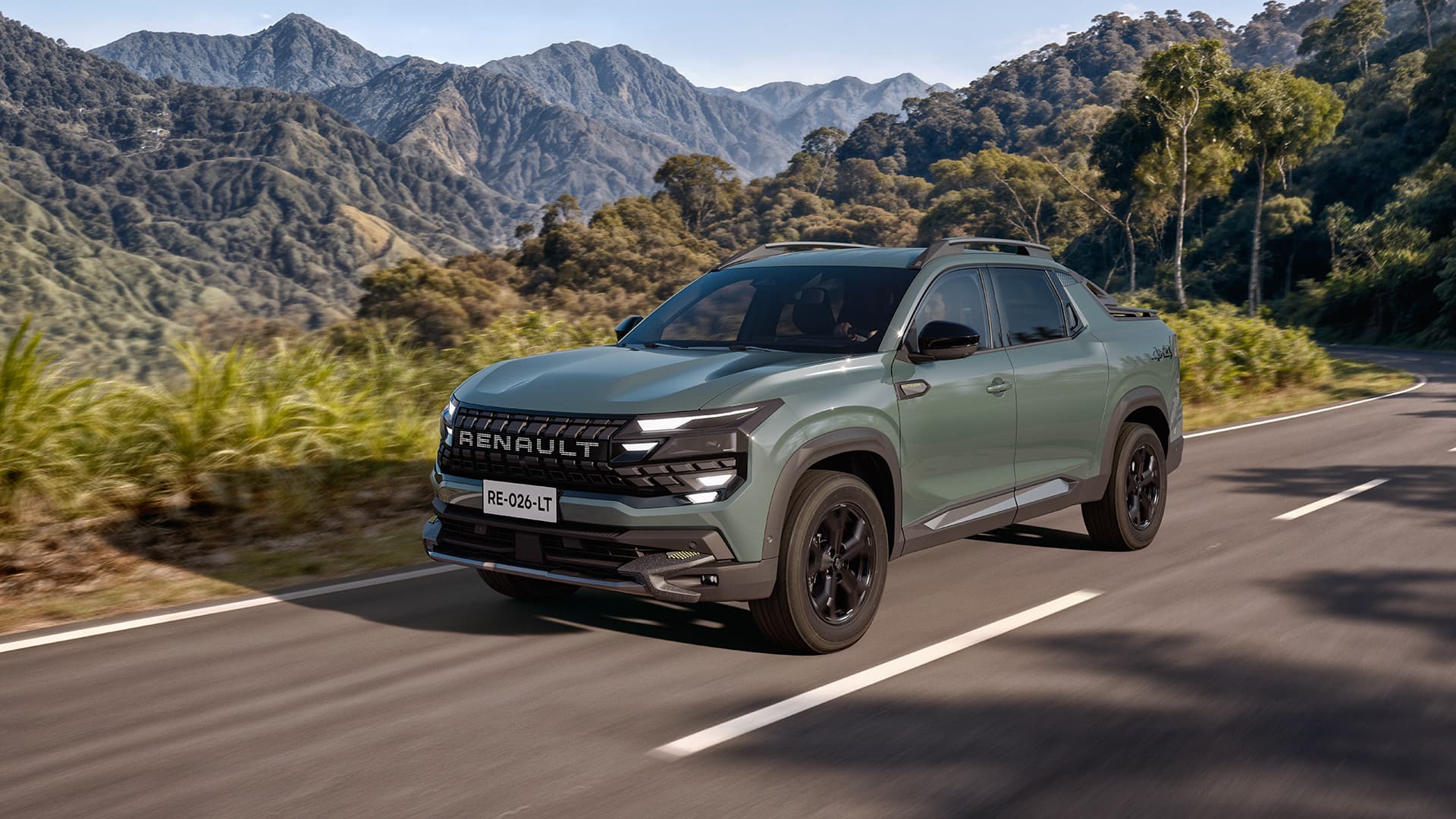
Niagara is intended to convey a strong sense of identity. The front end reflects the design language of large pick-ups, with a vertical grille and a high bonnet with highlighted lines that blend with the front wings, reinforcing the impression of robustness and balanced proportions. In the centre of the large black grille, the word “Renault” appears in large letters, underlining Niagara’s identity as part of the brand’s new international generation. “Renault” has a pixelated chrome finish.
Full-LED headlights, with gloss-black edges, include a welcome sequence, while the daytime running lights have a specific graphic signature.
The lower section of the bumper, with LED fog lights, underlines the robust character of the model. Body protection in Alliance Black combines with a front skid plate inspired by off-road use, highlighting all-terrain capability and protecting the most exposed parts when the vehicle leaves the tarmac.
Proportions that express character
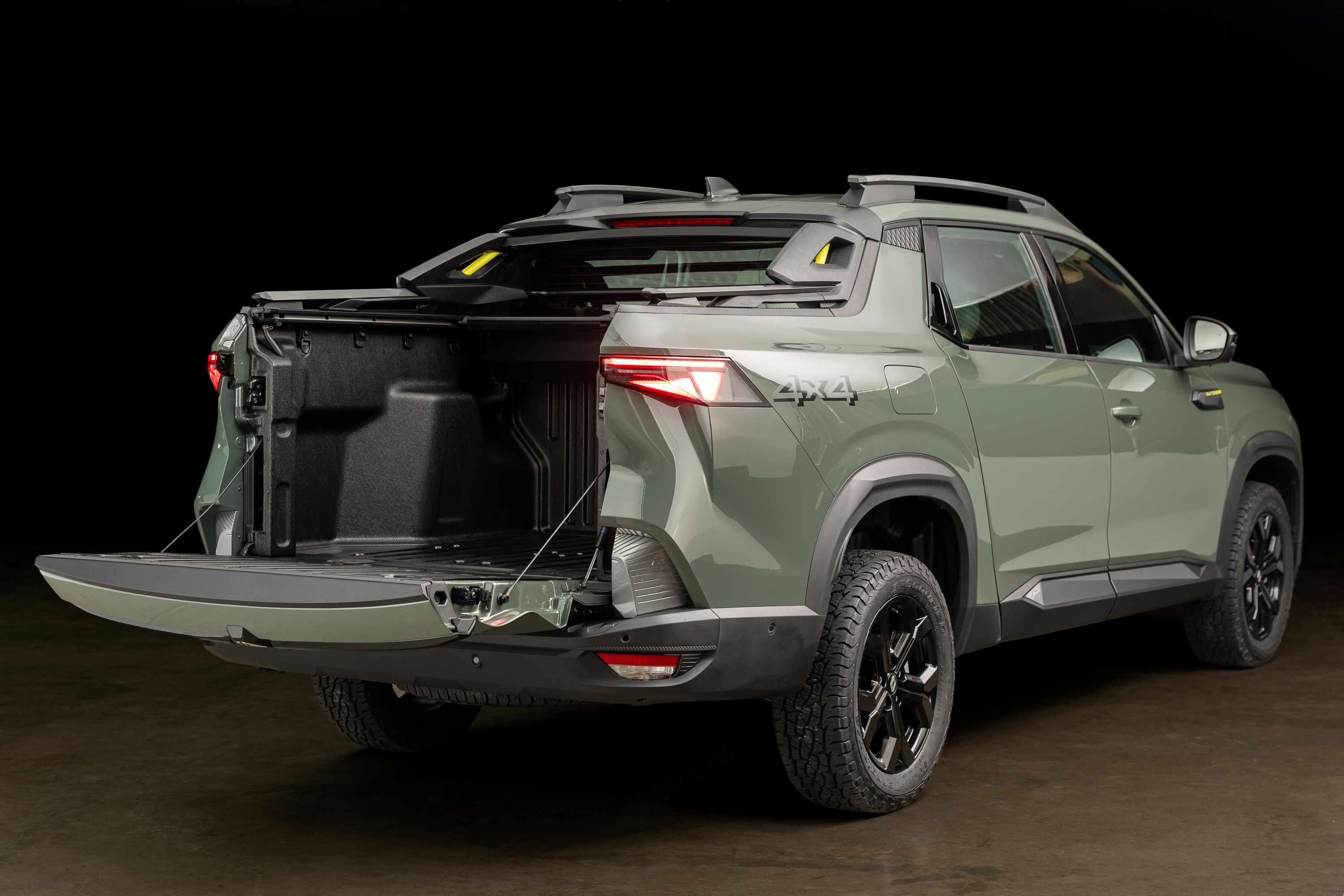
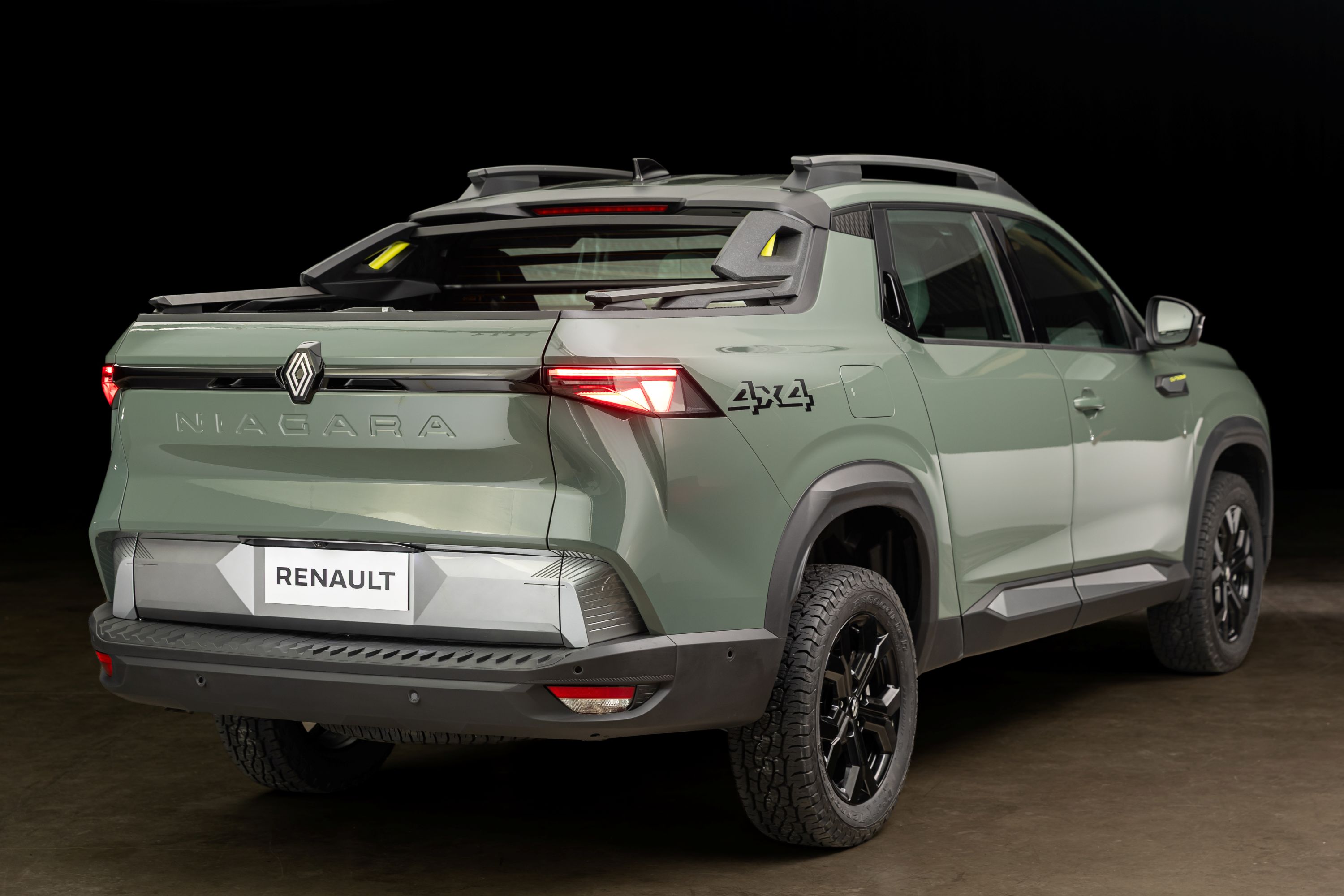
Renault Niagara is 4.94 m long (4.91 m for the 4x2 version) and 1.72 m high, with generous proportions that emphasise its character. In profile, the pronounced structure, sculpted wheel arches, stretched lines and 17- or 18-inch wheels — depending on version — all contribute to the strong body and robust look of a vehicle designed to go anywhere, according to Renault.
Renault placed particular emphasis on integrating the cabin and the bed to create a more harmonious body, with parts connected seamlessly. That sense of continuity is underlined by the rear pillar, a key design feature. The rear door handles are integrated with the pillar, a styling choice that emphasises the flowing lines.
At the rear, the graphics and tailgate design also reflect the emphasis on contemporary style. Together, these features create a consistent visual identity that keeps conventional pick-up styling elements. For example, the name “Niagara” is stamped directly into the tailgate metal, while the black transverse band is extended by lights at both ends, visually widening the vehicle and giving it a stronger stance.
Designed for practical use
At the same time, the roof bars contribute to the vehicle’s functionality and style. They emphasise an outdoor lifestyle while meeting users’ practical needs. Niagara can also be equipped with restyled bumpers. These are not only for aesthetic purposes; they also allow users to position and secure bulky objects.
The Niagara project is about adaptability. It is a vehicle that goes beyond the traditional idea of a pick-up meant for heavier transport. It also aims to be a lifestyle vehicle.
True to the brand DNA, Niagara offers remarkable space in the rear, together with ingenious storage solutions in the centre console and behind the rear seats: every part of the interior has been optimised. The cabin design is particularly well thought through, with the quality and comfort typical of an SUV.
— Laurens van den Acker, Chief Design Officer, Renault Group
The comfort of a C-SUV, the adaptability of a pick-up
Renault presents Niagara as narrowing the gap with C-SUVs. Designed for professional use as well as leisure and family travel, it combines a spacious, comfortable interior with the latest connected technologies, according to the manufacturer. That higher-segment positioning is also reflected in the powertrain range, itself inspired by SUVs, and in a comprehensive suite of driver-assistance systems for greater safety and less stressful daily driving. Niagara thus presents a new approach to the pick-up: robust, adaptable and easy to use, Renault says.
An interior that redefines the pick-up experience
The Niagara interior is intended to meet changing expectations in the segment. Modern, spacious and practical, it combines next-generation technologies with a level of comfort and perceived quality inspired by C-segment SUVs, according to Renault.
A modern, connected cockpit
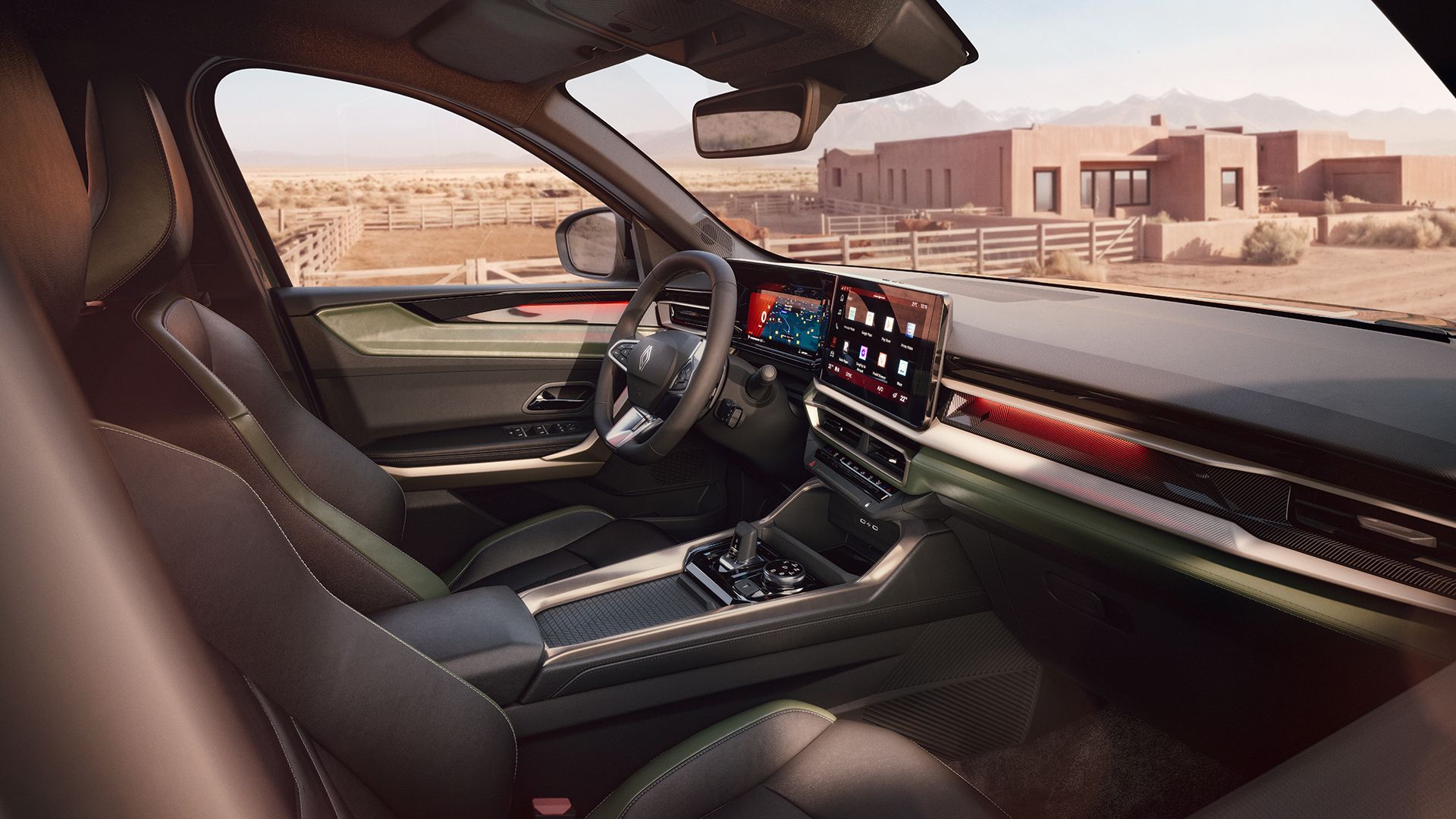
The Niagara cabin has been designed to offer a simple and intuitive driving experience. Organised around the driver, the cockpit groups the main controls and key information in the driver’s field of view. The horizontal dashboard emphasises cabin width and contributes to the sense of space. It integrates the multimedia system and a 10.1-inch screen for easy access to in-car functions, alongside a digital instrument panel with a 10.2-inch screen.
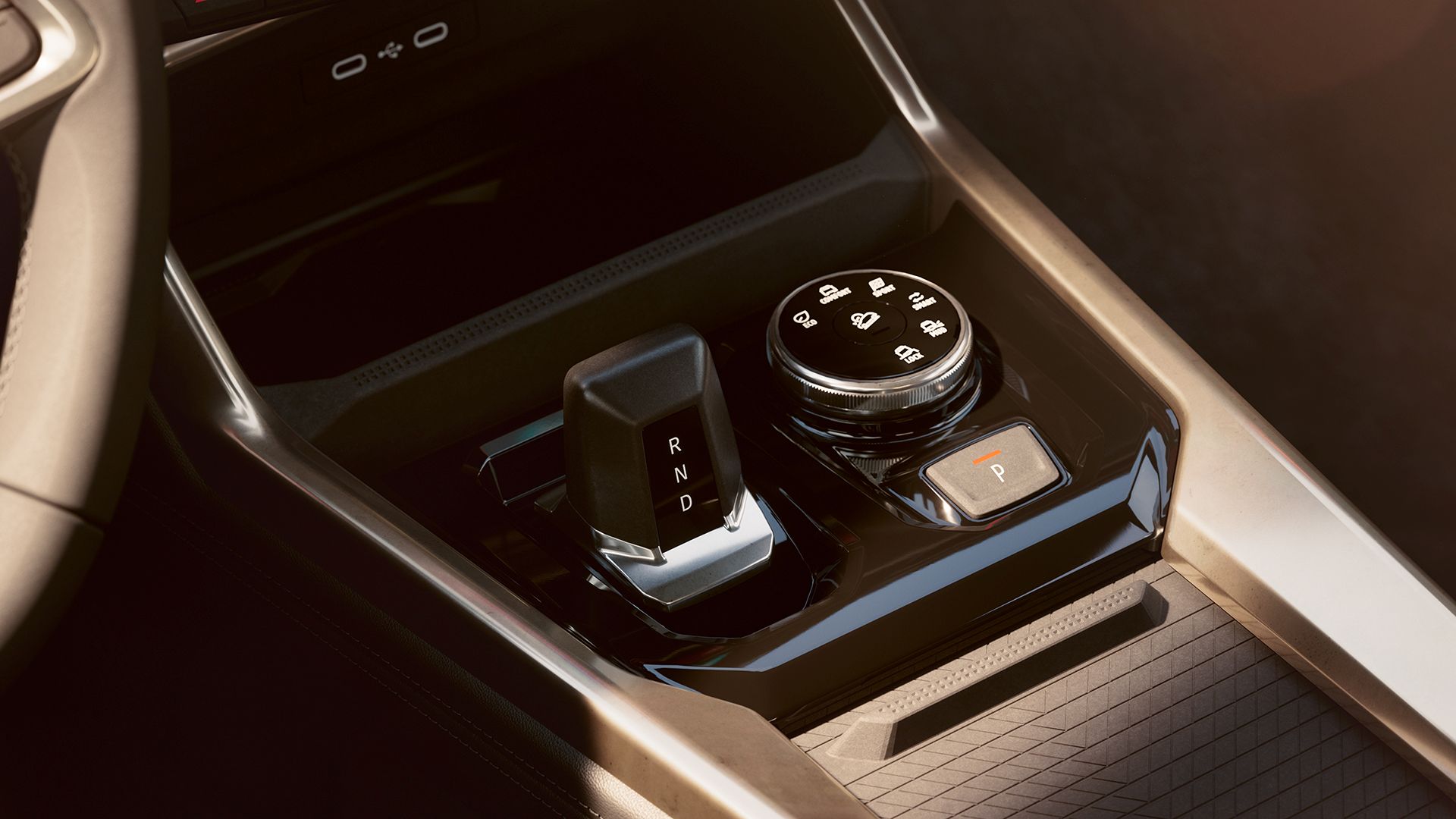
The electronic gear selector (e-shifter) is part of this new layout. It frees space on the centre console while giving the interior a more contemporary look. A wireless smartphone charger is also offered.
Spacious, comfortable and practical interior
Wide rear door openings make it easy to get in and out and contribute to daily use. That focus on interior comfort is also reflected in perceived quality, inspired directly by the C-SUV world. Materials, cabin layout and overall design have been designed to meet the expectations of customers looking for a pick-up with an elegant, pleasant interior.
Depending on equipment, Niagara receives a dashboard trimmed with a black finish on some elements, especially at the air vents and doors. This higher-segment positioning is extended by a customisable in-car experience, with LED ambient lighting in up to 48 colours, allowing each occupant to create the desired atmosphere.
The front seats have electric controls, while the rear bench reclines 25 degrees to improve headroom and comfort on long journeys, a feature Renault says is available for the first time in this segment. The optimised cabin design offers generous leg and head room for passengers. With a length of 200 mm, knee room is described as best in class. Passengers also have access to a centre armrest with integrated cupholders.
Depending on equipment, Niagara comes with cloth upholstery featuring stitching and embroidery, or with TEP upholstery, underlining its SUV character.
Reflecting its adaptability, Niagara offers a wide range of features to make daily life easier. Behind the second row of seats is a 36-litre storage compartment. Accessible from the cabin through the folding bench, it allows users to carry a variety of objects out of sight.
OpenR Link with Google built in — smartphone connectivity and convenience
Niagara is the first pick-up to include the OpenR Link multimedia system with Google built in, Renault says.
With a chip as powerful as that of a premium smartphone, OpenR Link is said to run more fluidly than other systems in the car industry. Simple and intuitive, it is used like a tablet, either by touch or by voice with the built-in voice assistant. It is compatible with Android Auto and Apple CarPlay, both wired and wireless.
From the central screen, drivers can access a wide range of Google services, updated constantly from month to month. These include Google Maps, Google Assistant voice recognition and a wide range of apps through the Google Play Store, covering areas such as music, entertainment, navigation and everyday services.
Niagara will be equipped with Google Gemini. A conversational assistant powered by artificial intelligence, Gemini is more advanced than Google Assistant, Renault says. For example, instead of responding to fixed phrases, it will be able to hold natural conversations and carry out more complex tasks. The driver and passengers will also be able to pause a conversation or change language smoothly at any time.
Connected services for easier maintenance
With connected services, Niagara makes it easier to monitor the car’s maintenance and plan the next service. Based on real-time information, drivers are notified — via the My Renault app, text message or email, as appropriate — of a service deadline or an event that requires a workshop visit. This allows them to make an appointment in the Renault network at the most convenient time.
Safety in daily use
Reflecting Renault’s approach to safety, Niagara comes with next-generation driver-assistance systems. These features support the driver in daily driving situations — long journeys, heavy traffic or manoeuvres — aiming for higher standards of protection and comfort.
Driver-assistance systems for a more relaxed experience on board
Adaptive cruise control with Stop & Go adjusts the vehicle’s speed to keep a safe distance from the vehicle ahead, even when traffic slows significantly, until the car stops. The speed limiter allows the driver to set a maximum speed that will not be exceeded when accelerating. When engine braking is no longer enough — especially on downhill slopes — the system can start automatically to maintain the selected speed.
Active safety is increased through a wide range of technologies designed to support the driver in any situation. Lane Departure Warning (LDW) and Lane Keeping Assist (LKA) help prevent unintentional deviation from the intended path, while Traffic Sign Recognition (TSR) informs the driver of current speed limits. At the same time, a driver drowsiness and attention warning system (DDAW) analyses steering-wheel movements to detect any possible loss of concentration on long journeys.
Niagara is equipped with automatic emergency braking (AEB), using sensors and a camera at the front of the vehicle to analyse the surroundings constantly. When a collision risk is detected, the driver is warned by a sound alert and a message on the dashboard. If no action is taken, the system can apply the brakes automatically to prevent a collision or minimise its impact.
Once the system is complete, Blind Spot Warning (BSW) alerts the driver to the presence of a vehicle in an area not visible in the rear-view mirrors. All these assistance functions can be configured through the multimedia system. As with other Renault models, safety elements deactivated by the driver are reactivated automatically at the next start to maintain a high level of protection on every journey.
Easy manoeuvres in any circumstances
Manoeuvring a pick-up requires particular attention given its size. Niagara is therefore equipped with a wide range of fittings that make parking easier in any situation.
It is equipped with front and rear parking sensors, side parking assistance, a reversing camera and a 360° panoramic camera — a first in this segment, Renault says. The camera provides a view of the vehicle’s immediate surroundings, making manoeuvres in tight spaces easier. Niagara can also be equipped with a hands-free parking system, helping the driver with parallel parking and other parking manoeuvres.
Reversing safety is reinforced by a Rear Cross Traffic Alert (RCTA) system, able to detect approaching vehicles outside the driver’s field of view, as well as by automatic emergency braking in reverse. A safe-exit alert for occupants warns them of any approaching vehicle when a door is opened.
Performance and adaptability
Developed on the RGMP pick-up platform to meet the wide variety of uses common in Latin America, Niagara combines performance, driving comfort and adaptability, Renault says. That approach is reflected in the powertrains and transmission, as well as in a wide range of driver-assistance technologies, for a vehicle that is meant to feel at home on the road and on more challenging terrain.
An efficient and versatile powertrain
Niagara is equipped with a 1.3-litre turbocharged direct-injection (GDi) engine, compatible with petrol and Flex Fuel depending on the market. Developed to meet Latin American needs, it offers 115 kW (156 hp) in the 4x2 version and 120 kW (160 hp) in the 4x4 version, for a maximum torque of 270 Nm.
The powertrain is coupled to a six-speed manual gearbox or a six-speed dual-clutch automatic, which combines rapid gear changes with driving pleasure and fuel efficiency, according to Renault. Equipped with an electronic gear selector (e-shifter), this Efficiency Dual Clutch (EDC) gearbox contributes to a smoother and more intuitive driving experience.
The aim is to offer a ride similar to that of an SUV, without compromising the robustness and traction expected of a pick-up.
A chassis designed for comfort
Developed specifically for Niagara, the specially tuned chassis combines an exclusive rear axle, with adapted springs and dampers and optimised geometry. This configuration reduces the natural frequency of body movements by 30%, improving ride comfort, minimising vibrations felt by passengers and increasing stability on uneven road surfaces, Renault says.
The multi-link rear suspension also contributes to a more precise and quieter ride, closer to that of a passenger vehicle, without compromising the resistance required of a pick-up.
The braking system contributes to these standards with four ventilated disc brakes, dissipating heat more efficiently during intensive use. Braking performance is optimised by dedicated electronic functions, such as hydraulic brake assist. Particularly useful at high altitude or during long descents, these functions ensure efficiency, resistance and safety in all operating conditions, according to Renault.
Designed for cargo as well as leisure
Pick-ups have to adapt to all situations, so Niagara has been designed to combine carrying capacity, traction and easy use. With its functional cargo bed, intelligent transmission and off-road capabilities, it is meant to feel at home on a building site, on the road or off the beaten track.
A cargo bed designed for daily use
Niagara’s cargo bed has been designed to be robust, practical and easy to use every day. It has a capacity of 938 litres and a maximum load of 654 kg. Unique in its class, Renault says, a sliding roll-up cover protects the load from rain and dust while providing rapid access to the load area.
The generous electric tailgate (1,030 mm wide and 615 mm high) also makes access to the load space easier. A special coating protects the bed surface from wear in intensive use, while making loading and unloading easier.
Eight tie-down rings positioned on the sides of the bed secure goods and equipment during transport. An easily accessible 12V socket allows rapid connection of power tools or accessories directly from the cargo bed. A cupholder integrated into the rear tailgate adds a further practical note during leisure activities or work in the field.
Niagara also offers a towing capacity described as class-leading, of 710 kg.
A drivetrain for all types of surface
Niagara is also adaptable thanks to the all-wheel-drive system, developed for Latin America’s highly varied terrain. Available on some versions, this system improves traction when road conditions become more difficult.
Using a dedicated rotary control at the base of the centre console, the driver can adjust driving according to the environment, for a better balance between traction, comfort and safety. This intuitive and ergonomic control system allows the user to choose different driving modes: Eco, Comfort, Sport, Smart, Mud-Sand and Off-road (Eco, Comfort, Sport, Smart, MySense and Terrain).
For each driving mode, traction distribution between the front and rear axles is calculated automatically based on available grip. In normal conditions, power is transmitted exclusively to the front wheels. If the vehicle starts to lose grip or when traction reaches its limits, part of the torque is transferred automatically to the rear axle.
In the most demanding situations, torque is distributed equally between the front and rear axles. This distribution is managed by a rear transmission module combined with an electromagnetic multi-disc clutch.
All-terrain capabilities in line with users’ needs
Designed to meet both daily-use requirements and more challenging terrain, Niagara has ground clearance of 233 mm (223 mm on the two-wheel-drive version). Approach and departure angles of 22.1° (22.3° on the two-wheel-drive version) complete these capabilities and allow it to navigate even the most difficult terrain with ease, Renault says.
Niagara offers the best of two worlds: pick-ups and SUVs.
On the pick-up market, it differentiates itself from other vehicles with strengths including: bold and clear design, an integrated Open RLink system with Google Gemini unique on this market, class-leading rear space and unique innovations such as extra storage space behind the rear seats and a protective coating for the cargo bed.
In addition, Niagara offers all the essentials of a pick-up, with class-leading towing capacity of 710 kg, load capacity of more than 900 litres and 4x4 traction for the most challenging terrain.
With Niagara, we are expanding our vehicle range and strengthening our presence in Latin America, a historically strategic market for Renault.
— Jan Ptacek, Head of Renault LCV
A pick-up designed in Latin America for Latin America
Niagara was born from development closely aligned with the realities of the Latin American market. At every stage of the process, from design to development and production, the project team sought to meet the needs of customers in the region, taking into account their daily requirements in use. As a result, Niagara is closely adapted to its environment, Renault says.
Design, engineering, production and development in Latin America
Niagara is the result of a development process carried out entirely in Latin America. Designed at Renault’s centre in Brazil, developed jointly by the engineering centres in Brazil and Argentina, and assembled in Argentina at the Santa Isabel plant in Córdoba. Niagara was conceived as a close match for local customer needs. The decision to build the vehicle in Argentina demonstrates Renault’s commitment to strengthening its industrial and technological presence in Latin America over the long term.
Large-scale testing
To meet high standards of quality, durability and reliability, Niagara followed an extensive development programme in which it was tested over almost 800,000 km. Prototypes were tested in a wide range of conditions, both on-road and off-road, in Argentina, Brazil and Colombia, as well as at Renault’s European centres.
Each phase of the validation process — from extreme heat to difficult roads, long journeys and demanding conditions — provided an opportunity to test the vehicle in situations representative of the real conditions customers face. This testing programme is intended to ensure that Niagara meets the high standards of performance, safety, comfort, durability and reliability expected on Latin American markets.
The Niagara project is an excellent example of how Renault teams in different countries came together under a common purpose.
Niagara reflects Renault Group’s ambitions and the brand’s ongoing transformation. Developed in response to local customer needs, it was conceived to adapt to the specific characteristics of each market, while offering the best Renault expertise.
To meet customer requirements, Niagara was tested for more than 50,000 hours and 800,000 km in extreme conditions.
We are proud to build Niagara at our Córdoba plant, recognised for its quality standards. It has already manufactured more than 3.5 million Renault Group vehicles over the past seven decades.
— Pablo Sibilla, President & Managing Director, Renault Argentina