Romania's Rabla Auto 2026 incentive programme is no longer accepting new applications from private buyers. The last open pool, covering eligible combustion-engined cars and conventional hybrids, ran out on 23 September 2026 at 19:19:11. The scheduled deadline had been 31 December, but the official terms allowed each category to close as soon as its allocation was fully reserved.
Rabla is Romania's national vehicle-renewal scheme: an owner scraps and deregisters an old vehicle, then uses an eco-voucher toward an eligible new one through an approved dealer. The Environmental Fund Administration, known as AFM, records a final budget of 300 million lei, about €57 million at the European Central Bank reference rate of 5.2647 lei per euro on 21 September.
The final numbers in the AFM platform
The motorcycle and electric pools had already disappeared during the 25 August reopening. Motorcycles lasted only three minutes and 59 seconds, while the category labelled “Motor ELECTRIC” lasted 41 minutes and 58 seconds. The thermal pool remained open for almost another month.
| AFM category | Final allocation | Applications | Closing time |
|---|---|---|---|
| Motor TERMIC | 190.082 million lei (about €36.1m) | 20,629 | 23 September, 19:19:11 |
| Motor ELECTRIC | 94.918 million lei (about €18m) | 7,874 | 25 August, 10:41:58 |
| Motorcycles | 15 million lei (about €2.85m) | 1,550 | 25 August, 10:03:59 |
Together, the platform shows 30,053 submitted files. That figure should not be read as 30,053 delivered vehicles or final grants. It counts applications recorded by the system. Documents and eligibility still have to be checked, and successful applicants must complete the scrapping and purchase process.
What closure means for an existing applicant
Exhaustion prevents a new applicant from reserving money in that pool. It does not, by itself, cancel a file that was already registered. Equally, a registration number is not the same as a final approval or a payment.
In an official 14 August release, AFM said that a person whose status changes to “beneficiary approved for financing” has 60 days to scrap and deregister the old vehicle, upload the supporting documents and enter the deregistration date. Applicants should therefore follow the status and deadlines displayed in their own AFM account.
Money tied to an incomplete, withdrawn or rejected application could later become uncommitted. That does not automatically reopen the scheme. A further round, reallocation or top-up would require a fresh official announcement; none should be assumed merely because some applications may fail.
Voucher values for each powertrain
The highest 2026 voucher was 18,500 lei, approximately €3,514, for a battery-electric car or a hydrogen fuel-cell vehicle. A plug-in hybrid or electric motorcycle qualified for 15,000 lei, about €2,849. A conventional hybrid received 12,000 lei, around €2,279, while an eligible combustion car, including LPG or CNG, or a motorcycle received 10,000 lei, around €1,899.
These euro figures are indicative conversions using the ECB rate above; the programme's legal amounts are denominated in lei. Diesel cars were excluded from this edition. The voucher was not unrestricted cash paid to the applicant. It was applied within the purchase process through a validated manufacturer or dealer after the programme conditions were met.
The allocation changed after launch
AFM's July launch statement initially divided the 300 million lei into 165 million for combustion and hybrid vehicles, 120 million for plug-in hybrids, electric and hydrogen vehicles, and 15 million for motorcycles. The final live table instead shows 190.082 million for “Motor TERMIC”, 94.918 million for “Motor ELECTRIC” and the same 15 million for motorcycles.
The arithmetic indicates that 25.082 million lei moved between the first two pools while the overall envelope remained unchanged. The official pages establish the opening and final figures; they do not provide grounds to promise any additional national budget.
A proposed manufacturing-origin rule was postponed
Romania's Environment Ministry consulted in June on a rule that would have restricted support to vehicles made in the EU, EEA, United Kingdom, Switzerland, Turkey or Morocco. On 7 July, however, the ministry explicitly postponed that geographical condition and said the 2026 round would launch under terms similar to the 2025 programme for individuals.
Consequently, the proposed country list was not an eligibility rule for this 2026 session. The ministry said it intended to pursue the approach for the following year. This distinction matters for buyers and for market analysis, because a consultation draft is not the same as the rules that governed submitted applications.
Practical consequences for buyers
A buyer who secured a file should now check four separate things: the AFM account status, the procedural deadline, the dealer's validated status and the availability of the exact vehicle. The purchase order also deserves separate attention. Deposit, delivery and refund clauses are commercial terms between customer and dealer, while the eco-voucher depends on the public scheme.
A buyer who did not reserve funding should calculate the deal without a Rabla voucher. Dealer advertising may continue to show a “Rabla price”, but that can describe a price conditional on an unavailable state voucher, a dealer-funded discount, or a combination of the two. The written offer should identify each component.
Scrapping an old car or paying a non-refundable deposit in anticipation of an unannounced reopening would leave the customer carrying the risk. Until AFM publishes a new decision, the verified position is simple: all three private-buyer pools are exhausted, and the existing files continue through the administrative process.
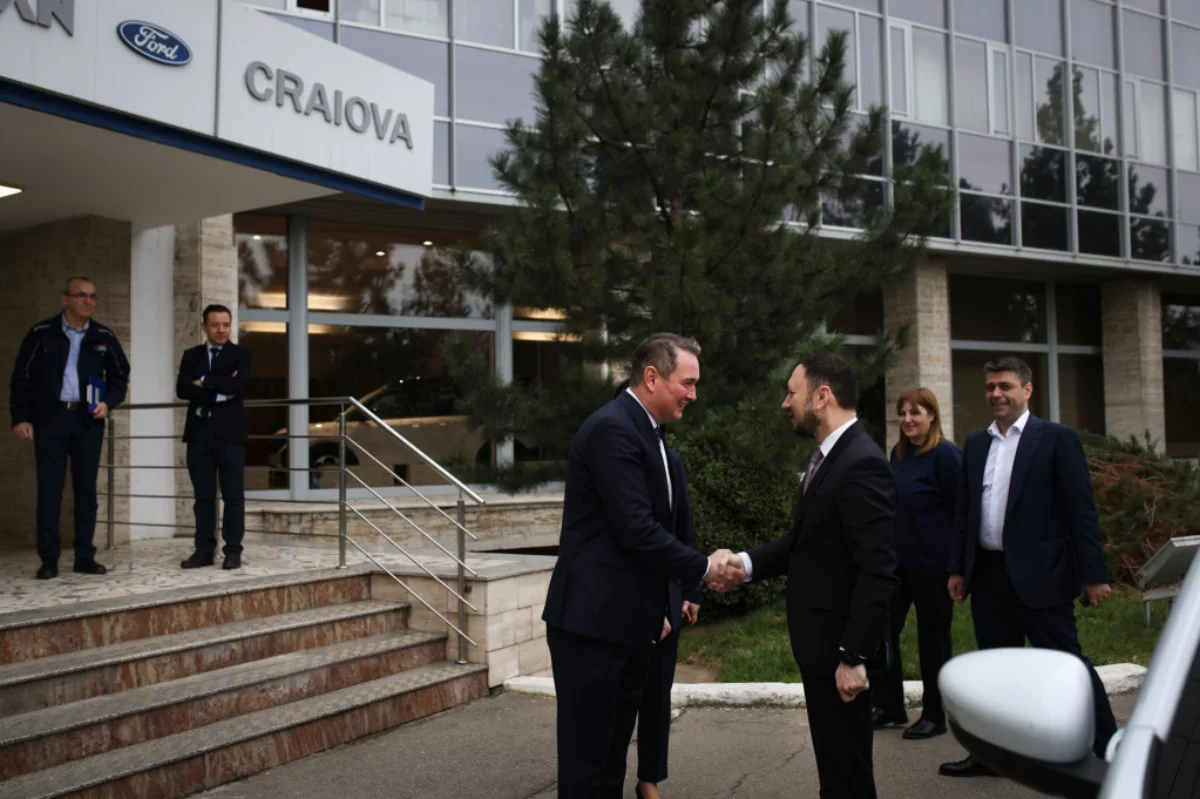
Image: Romanian Ministry of Environment, Waters and Forests — Rabla launch event at Ford Otosan Craiova, 2024.
Sources
- AFM — official Rabla Auto session and allocation table
- AFM via AGERPRES — launch budget, deadline and voucher values
- AFM via AGERPRES — procedure for approved beneficiaries
- Romanian Environment Ministry — manufacturing-origin criterion postponed
- Romanian Environment Ministry — official page for the Craiova Rabla event image
- European Central Bank — euro/Romanian leu reference rate