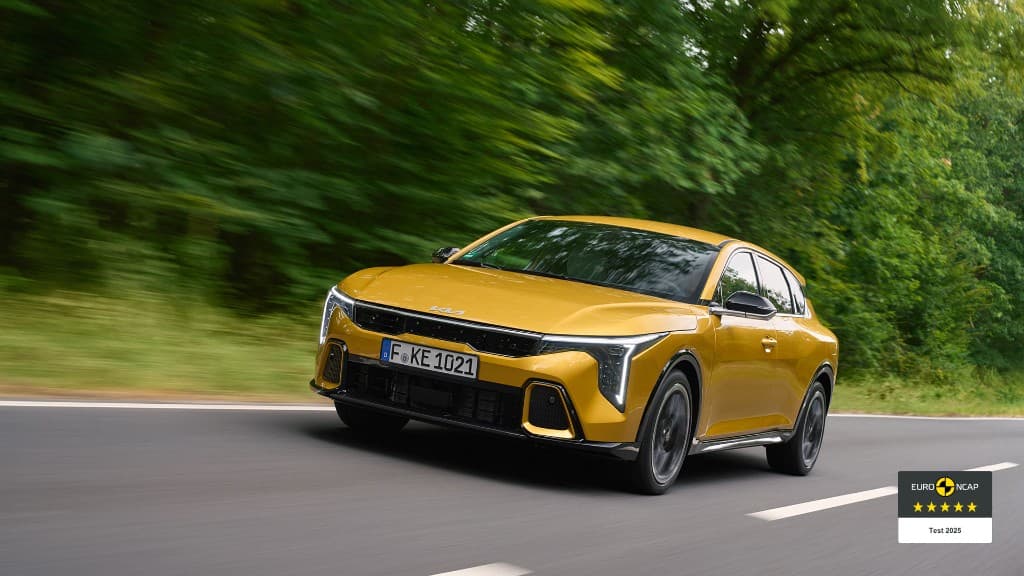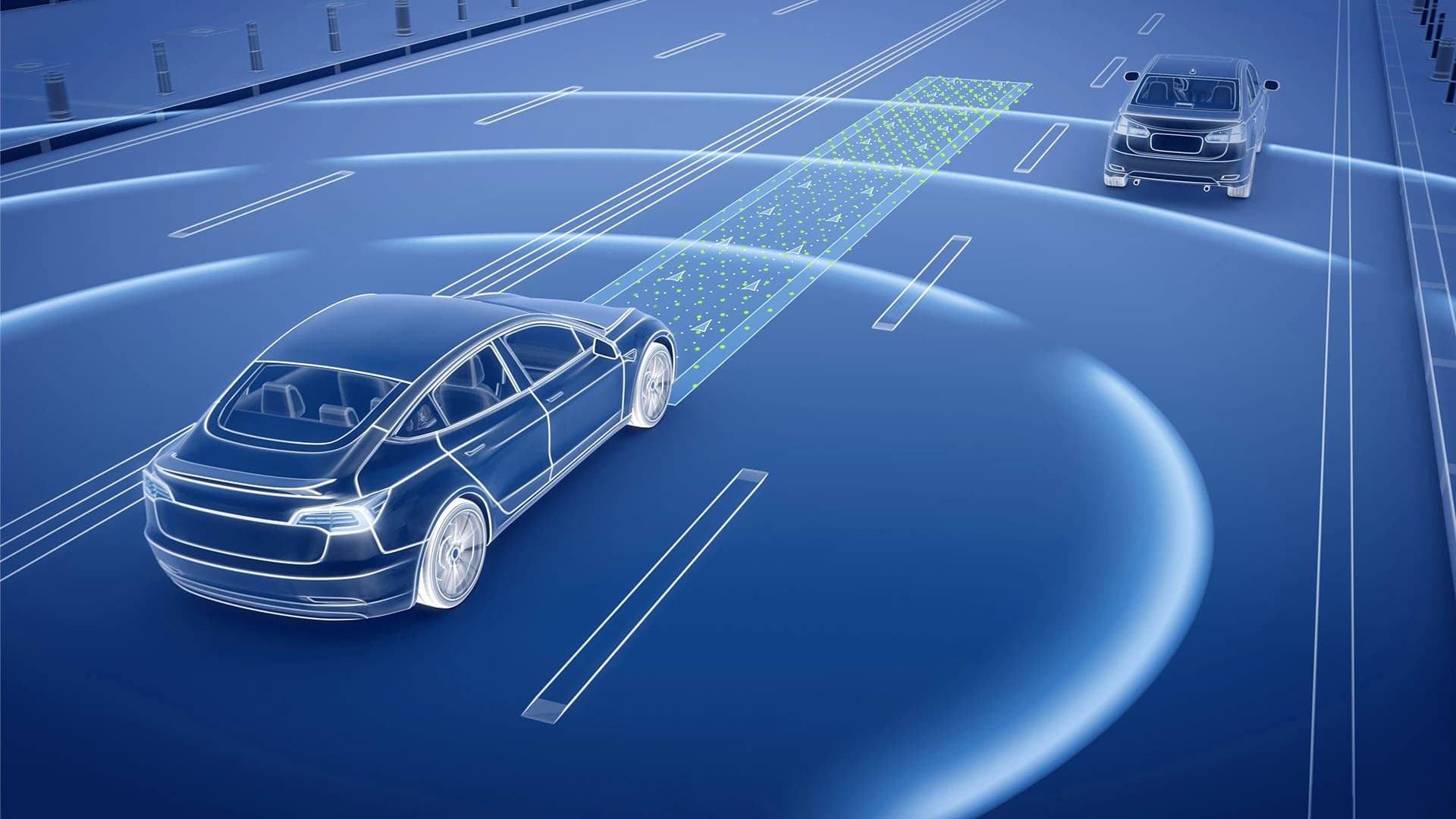
Cameras and radars allow the car to follow lane markings, distance and obstacles. The effectiveness of these systems also depends on how well drivers understand and use them. Illustrative image
One in five drivers says they do not use automatic emergency braking. Why ADAS systems are switched off
New cars have more and more systems that can warn, brake or correct steering, but some drivers choose not to use them. A survey conducted in the United Kingdom shows that 21.3% of respondents whose cars have automatic emergency braking say they avoid this function.
The proportion is similar for lane-keeping assistance, which almost 18% of the drivers surveyed say they do not use. Adaptive cruise control is avoided by 25.9% of those who have it, and another 7% say they do not know how it works.
The results do not prove that one in five Romanian drivers switches off their safety systems. The study was carried out by Censuswide, commissioned by the British dealer group Dick Lovett, on a sample of 1,350 drivers in the United Kingdom, in the summer of 2026. The answers are statements from participants, not data extracted from cars.
Which systems are avoided most often
The survey covered both safety and assistance equipment and comfort functions. Among the systems relevant to driving, the most important results are:
- 25.9% of drivers who have adaptive cruise control choose not to use it;
- 7% do not know how adaptive cruise control works;
- 21.3% say they do not use automatic emergency braking;
- almost 18% avoid lane-keeping assistance;
- 17.1% do not use the augmented-reality head-up display, and 7% do not know how to operate it.
The survey wording must be interpreted carefully. Some systems, especially automatic emergency braking, are active by default and are not “used” through a daily command. Depending on the model, the driver can switch them off temporarily, reduce their sensitivity or believe they are deactivated even though a minimum protection function remains active.
Therefore, the 21.3% figure describes what respondents said about use, not a verified number of cars running with AEB switched off.
Why drivers press the off button
Participants identified interventions perceived as too aggressive or inappropriate as the main problem. This dissatisfaction appears especially with systems that change steering, brake or issue repeated audible warnings.
Lane assistance can intervene incorrectly when markings are worn, when the road narrows or when the driver steers around a pothole without signalling. A speed warning can use an outdated map limit or misread a sign intended for a side road. Attention monitoring can confuse a glance at the mirrors or an intersection with inattention.
In Romania, these situations are amplified by incomplete markings, covered signs, roadworks and frequent lane changes. A driver’s reaction is understandable when the system produces false alarms, but permanent deactivation also removes interventions that could prevent a real accident.
Another cause is the interface. If sensitivity cannot be adjusted or the function is hidden in several menus, the driver has only two choices: accept all warnings or switch the system off. A clear button and correctly explained settings can make the difference between use and rejection.
What each system does and what it cannot do
Automatic emergency braking, known as AEB, watches the road with the help of a camera and, in some cases, radar. If it detects a collision risk and the driver does not react, it can brake to avoid the impact or reduce its severity. It does not guarantee a stop in every situation, and effectiveness depends on speed, weather, visibility and the type of obstacle.
Lane-keeping assistance warns or corrects steering when the car leaves its lane involuntarily. It is not autopilot and can lose markings in rain, snow, strong light or on poorly maintained roads.
Adaptive cruise control maintains speed and distance from the vehicle ahead. It is primarily a comfort function and does not relieve the driver of traffic supervision. Some systems can stop and restart the car in a queue; others deactivate below a certain speed.
These functions should not be treated as equivalent. Switching off adaptive cruise control means giving up comfort, while switching off AEB can remove extra protection in a critical situation.
Why the subject is relevant for drivers in Romania
The European regulation on the general safety of vehicles applies to all new cars sold in the European Union from 7 July 2024. Mandatory equipment includes intelligent speed assistance, drowsiness warning, reversing obstacle detection and an emergency braking signal.
For passenger cars and light commercial vehicles, advanced automatic emergency braking and the emergency lane-keeping system are also mandatory. The same rules apply to new cars sold in Romania.
The legislation allows certain functions to be switched off temporarily. For example, intelligent speed assistance can be deactivated, but it must return to normal mode every time the car is started. That is where the ritual of some drivers looking for the off button or menu immediately after start-up comes from.
The European Commission estimates that the package of mandatory systems can help save more than 25,000 lives and avoid at least 140,000 serious injuries by 2038. The estimate concerns the combined effect of the measures, not the guaranteed performance of each system on every road.
Deactivation or workshop? How to recognise a real problem
A system that intervenes often without reason should not simply be switched off and forgotten. The behaviour can indicate a dirty camera, a displaced radar, a windscreen replaced without calibration, a bumper repaired incorrectly or outdated software.
The driver can carry out a few simple checks:
- clean the windscreen camera area and the sensors in the bumpers;
- consult the manual for the system’s limits and settings;
- check whether there are software updates or service campaigns;
- request a diagnosis and a calibration check after a windscreen change or bumper repair;
- choose a lower sensitivity, if the manufacturer offers that option.
Timing also matters. Searching for a function on the screen while the car is moving can create a greater risk than the warning the driver is trying to stop. Settings should be made before departure.
The problem is not only the driver
The survey results do not show that the technology is useless, nor that users are simply negligent. They show a failure of communication and, sometimes, of design. A safety system produces benefits only if it works predictably and if the driver understands what it does.
Manufacturers need to reduce false alarms, offer commands that are easy to find and explain the functions when the car is handed over. Dealers and workshops need to check sensors and calibrations, and drivers need to know the difference between an inconvenient intervention and a function that can reduce the severity of an accident.
The 21.3% figure cannot be transferred directly to Romania. It is, however, a useful warning: the mandatory installation of ADAS systems does not guarantee their correct use. The quality of interventions and the driver’s trust are just as important as the presence of a camera and radar on the specification sheet.