Toyota Motor Europe sold 936,042 Toyota and Lexus vehicles from January to September 2026, a record for the period and a 0.6% increase from the same nine months of 2025. The headline growth is limited, but the powertrain mix changed much more quickly. Electrified vehicles accounted for 813,623 sales, or 87% of the combined total, while battery-electric vehicles reached 104,832 units after more than doubling year on year.
Toyota published the figures on 22 October 2026. They cover European sales excluding Russia and use Toyota Motor Europe’s regional definition: Western, Central and Eastern European countries, Turkey, Israel, and several markets in the Caucasus and Central Asia. That scope is wider than the European Union, so the result should not be read as an EU registration table.
Toyota’s total volume was nearly flat
The Toyota brand sold 873,445 vehicles during the first nine months, up 0.9% from the comparable period. Toyota says it remained Europe’s second best-selling passenger-car brand. Its electrified sales reached 753,665 vehicles, 15% more than a year earlier, and the brand’s electrified mix rose to 86%, an 11-percentage-point increase.
The word “electrified” is important in this release. Toyota uses it for hybrids, plug-in hybrids, battery-electric vehicles and fuel-cell vehicles. An 86% electrified share therefore does not mean that 86% of Toyota’s European sales were fully electric. Hybrids remain the larger part of the mix, while BEVs are growing from a smaller base.
Yaris Cross Hybrid led Toyota’s passenger-car line-up with 155,066 sales. The Yaris range followed with 125,260 vehicles, while the Corolla range reached 113,583. The Toyota C-HR range, including hybrid and plug-in hybrid versions, recorded 101,139 units. Aygo X sales stood at 82,581 and the RAV4 range at 41,697.
BEV growth came from a broader line-up
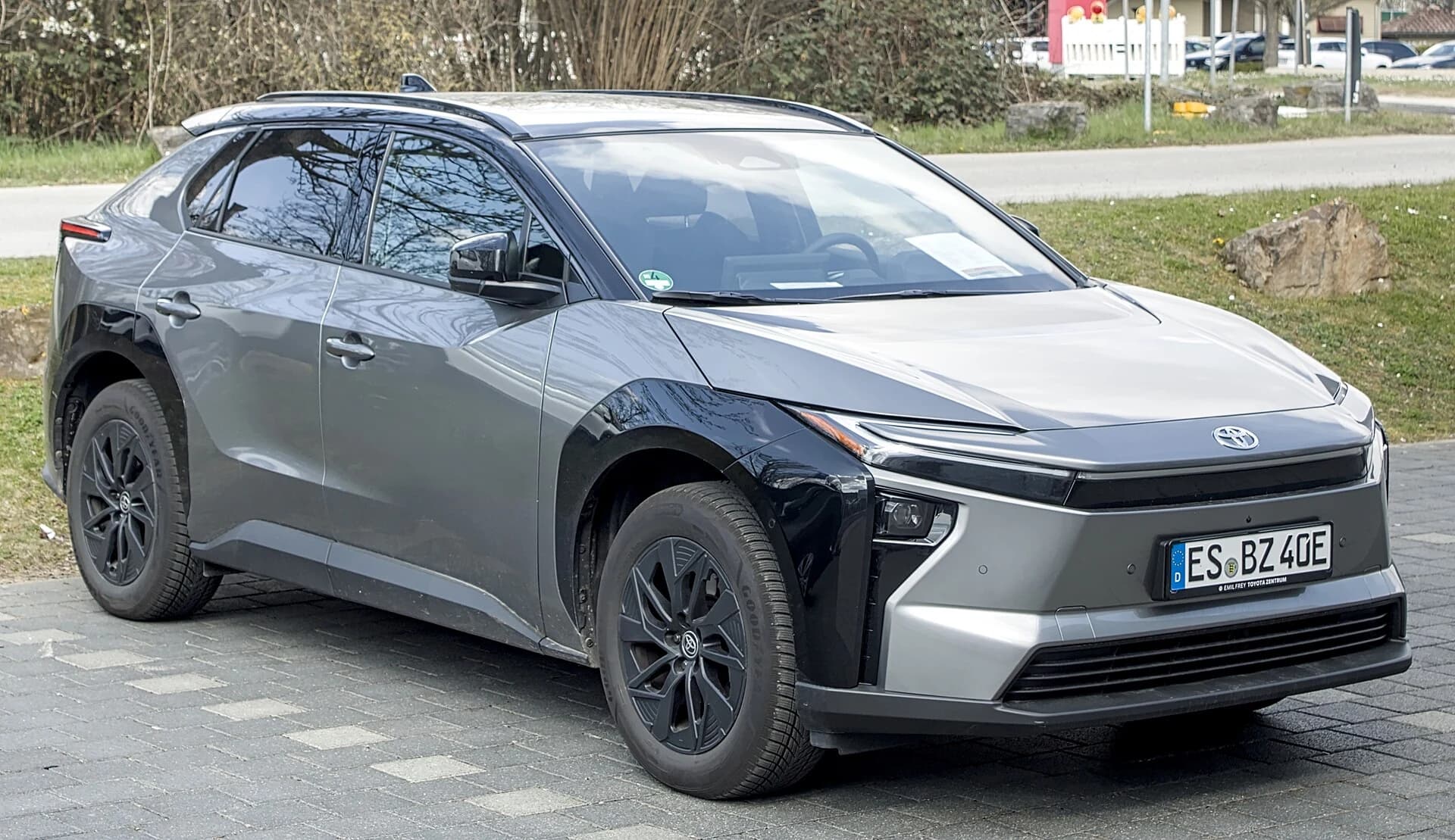
Toyota sold 98,148 battery-electric vehicles in the nine-month period, a 151% year-on-year increase. The Toyota C-HR+ accounted for 29,616 units and the bZ4X for 26,270. The Urban Cruiser recorded 14,172 sales, while the bZ4X Touring reached 8,776.
Those numbers show why the percentage growth is accelerating: Toyota now has several BEV nameplates in the European line-up, rather than relying on a single model. They also show the limits of the comparison. The 98,148 BEVs are still fewer than the brand’s hybrid sales, and the company release does not provide a full national breakdown, average transaction price or discount data.
The C-HR+ is especially relevant because it gives Toyota an electric vehicle positioned alongside a familiar European nameplate. The bZ4X remains part of the electric range, while the Urban Cruiser and bZ4X Touring broaden the body-style choices. Toyota’s figures are sales volumes, not a measure of customer satisfaction, charging performance or real-world range, so those questions require separate testing.
Commercial vehicles added another layer
Toyota Professional recorded 113,352 sales across the Hilux and Proace families. The company reports battery-electric growth inside that commercial range as well: Proace BEV sales rose 25%, Proace City BEV sales rose 27%, and Proace Max BEV reached 3,379 vehicles after a 149% increase. The new Hilux BEV recorded 441 sales.
Toyota reports these vehicles separately from passenger-car performance. A delivery van, a pick-up and a family crossover serve different buyers, tax rules and fleet cycles. Combining them into a single electrification narrative would hide those differences, although the numbers confirm that Toyota is also adding electric options to its commercial line-up.
Lexus was down overall but highly electrified
Lexus sold 62,597 vehicles in Europe, down 4% year on year. Its electrified volume was 59,958, equal to 96% of the brand’s total. The LBX remained the best-selling Lexus with 20,512 vehicles, followed by the NX range at 19,032.
The electric RZ reached 5,654 sales, a 47% increase, while RX plug-in hybrid sales rose 8%. Lexus’s result is therefore not a simple story of every electrified model growing: the overall brand volume and total electrified volume both declined, while selected models gained share or volume. Toyota gives no explanation in this release for the 4% Lexus decline.
Regional differences matter
Toyota Motor Europe reported an electrified mix of 92% in Western Europe, 84% in Central Europe and 59% in Eastern Europe. Lexus reported 100% electrified shares in Western and Central Europe and 61% in Eastern Europe. These figures are regional averages within TME’s own boundaries, not forecasts for individual countries.
The difference between regions is a useful reminder that Europe is not one uniform car market. Company-car taxation, charging access, fleet purchasing and consumer preferences vary by country. A strong BEV increase in the aggregate can coexist with slower adoption in a particular market, while hybrids may remain the practical volume choice where public charging is less convenient.
Till Conrad, Toyota Motor Europe’s executive vice president for sales, said customers were responding to both the hybrid and battery-electric line-up. Toyota points to the Aygo X Hybrid, C-HR+, bZ4X and bZ4X Touring as examples of that strategy. The release does not provide a 2027 sales forecast or a European price plan.
The nine-month figures describe a company keeping total sales broadly stable while shifting the mix toward electrified vehicles. They do not prove that Toyota’s BEV range has overtaken its hybrids, nor do they reveal margins or country-by-country demand. What they do show is a wider electric portfolio, a very high electrified share and a clear acceleration in battery-electric volume across Toyota Motor Europe’s reported markets.