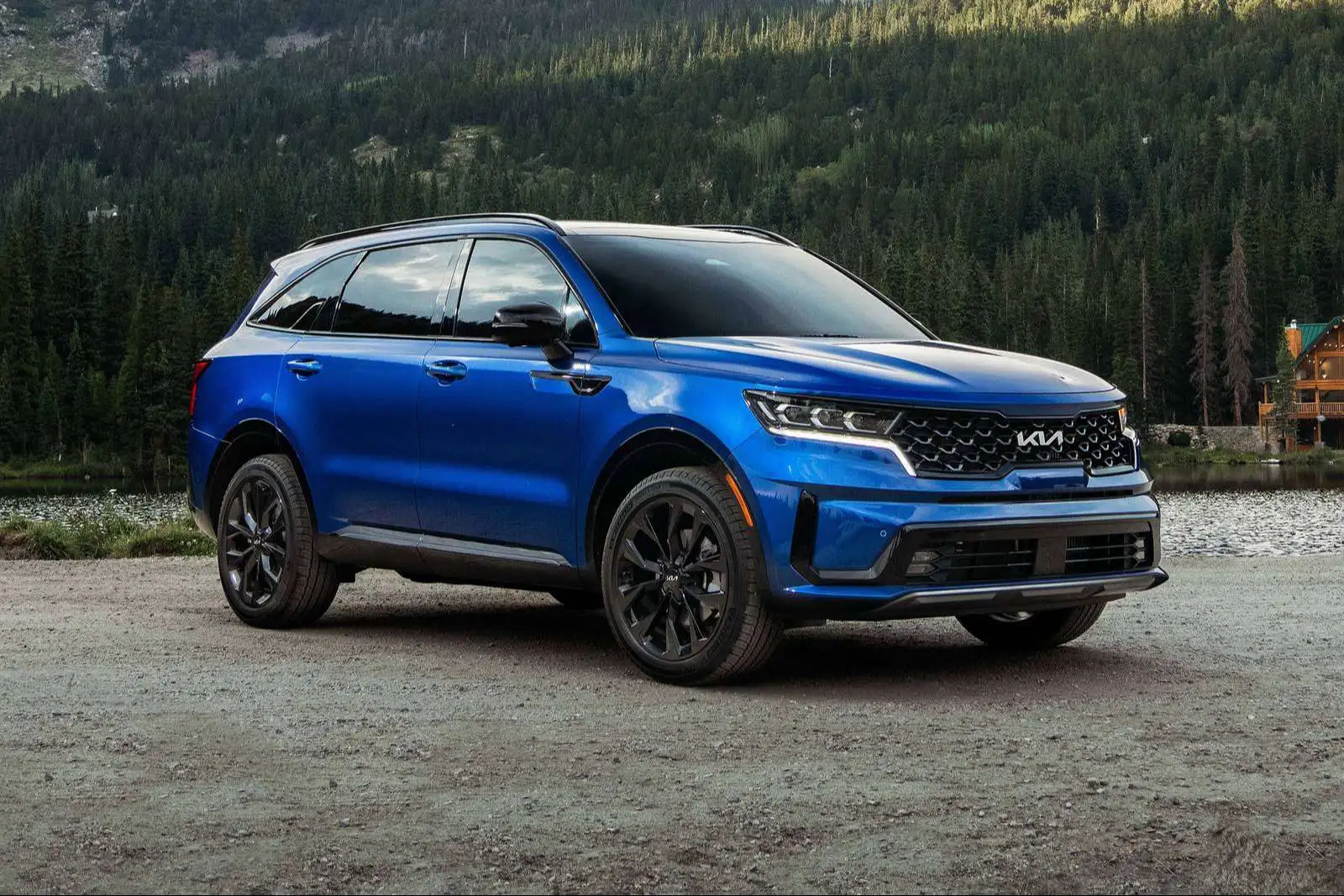
The Kia Sorento is a seven-seat SUV for buyers who actually use all seven seats. Some seven-seaters work if you only need the extra rows occasionally. If you regularly carry up to six passengers, you want third-row access that does not require gymnastic flexibility.
If that sounds like you, the Kia Sorento belongs on your shortlist — alongside the Škoda Kodiaq and Peugeot 5008. With the latest Sorento’s starting price close to €55,000, it is also worth cross-shopping the Land Rover Discovery Sport and Mercedes GLB.
The entry point is now a self-charging hybrid. A plug-in hybrid is available, and Kia still offers diesel.
The design has been updated but the Sorento still reads as a tough SUV, just a little sharper. The grille is new and integrates LED headlights.
At the rear there are vertical tail lamps and the Sorento badge sits low on the tailgate.
Inside, the cabin feels upmarket, with plenty of soft-touch materials and chrome-look trim. The seats are comfortable and the driver’s seat and wheel offer decent adjustment. Lumbar support is standard — welcome for anyone with a bad back.
Every car gets a large digital driver display and a touchscreen infotainment system. It is not as slick as a Mercedes GLB setup, but Android Auto and Apple CarPlay are standard, so phone navigation is easy. USB ports near each seat should keep devices charged.
The party trick is seating space. The new car is longer and wider than its predecessor, and that translates into more room inside.
Three adults should fit reasonably on the middle bench. The seats are not individual capsules like a Peugeot 5008’s, but they slide and recline.
Sixth- and seventh-row adults should be acceptably comfortable — not as flexible as the middle row, but tall passengers fare better here than in a Discovery Sport. Unlike the old Sorento, you can reach the rear seats from both sides.
Three powertrains are offered: a 1.6-litre petrol-electric hybrid with 226 hp, a 2.2-litre turbodiesel with 200 hp, and a 265 hp plug-in hybrid if you want meaningful electric range. All use all-wheel drive and an automatic gearbox.
The hybrids feel strong in town, where initial electric shove helps at junctions. Both use the same 1.6 petrol, which becomes noisy if you rev it hard. Either hybrid can tow a medium caravan, but for heavier trailers or lots of motorway miles, the diesel is the better bet.
Touch the upper dashboard or the doors and the Sorento feels solid, built to last. There is a mix of materials and textures — Kia threw many ideas at its range-topper. The US is a big market for the Sorento and some of that influence shows; a little less might have been more.
Look closely and you will find scratchy plastic on lower doors where premium SUVs stay polished, but overall this is a handsome, high-quality cabin.
Kia now sells the Sorento in a single high specification, above the old range-topper. That means black leather, black headlining, metal sill plates and metal pedals.
Tech includes a head-up display. If you have never driven with one, try it on a test drive — going back is hard.
Physical climate controls, separate from the touchscreen, are easier to use on the move.
Euro NCAP awarded five stars in 2020: 82% adult occupant protection, 85% child occupants, 63% pedestrians and 87% safety assist.
Kia generally scores well in reliability and owner satisfaction surveys. The latest Sorento is still relatively new, but nothing early suggests buyers should worry. Previous generations built a solid reputation.
If something breaks, there is a seven-year, 100,000 km warranty.