The Mini Cooper Cabrio lands in Romania from €32,900, but the technical package is more complex than that entry figure suggests.
An all-new 2.0-litre turbo four-cylinder marks a significant change for the British drop-top. At 1,380 kg kerb weight (1,427 kg quoted for some specs), performance remains strong: 0–100 km/h in 6.9 seconds and a 237 km/h top speed on the Cooper S.
The electric fabric roof defines daily use — opening or closing fully in 18 seconds, even on the move up to 30 km/h. Boot space runs from 160 litres roof-down to 215 litres roof-up, unusual flexibility for a compact premium convertible.
What €32,900 buys: Cooper S specs
At €32,900, the Cooper S justifies premium compact convertible positioning.
Engine: 2.0-litre TwinPower Turbo, 204 hp (150 kW) at 5,000–6,500 rpm, 300 Nm from 1,450–4,500 rpm, with Double-VANOS, Valvetronic and direct injection.
Versus the Cooper C Cabrio, that is +41 hp and +50 Nm — a clear change in character. Transmission: seven-speed dual-clutch automatic; no shift paddles in standard trim (Sport pack or full JCW only). 0–100 km/h: 6.9 s (Cooper C 8.2 s; JCW Cabrio 6.4 s with 231 hp). Top speed: 237 km/h.
Official mixed consumption: 6.6 l/100 km WLTP, 149–150 g/km CO₂. Cooper C is similar on paper despite less power. Real-world use can approach the official figures, so daily driving is viable, not just weekend runs.
Design and cabin
The 2025 Cabrio keeps Mini DNA with cleaner surfacing. The roof mechanism is the technical hero: one button, 18 seconds full cycle, operable up to 30 km/h; intermediate opening works as a sunroof to about 40 cm. Always Open Timer tracks cumulative open-roof time; a wind deflector behind the front seats cuts turbulence roof-down.
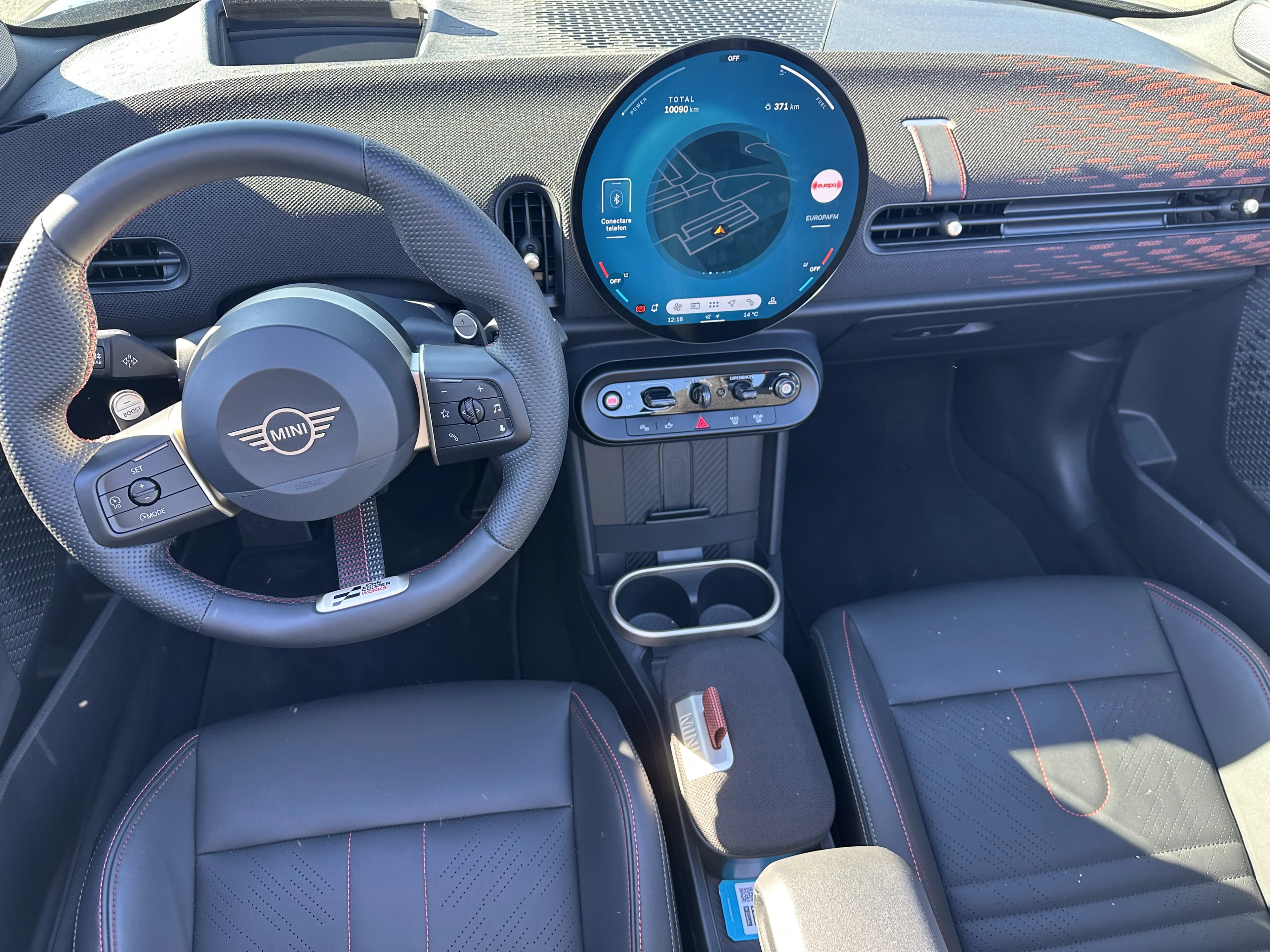
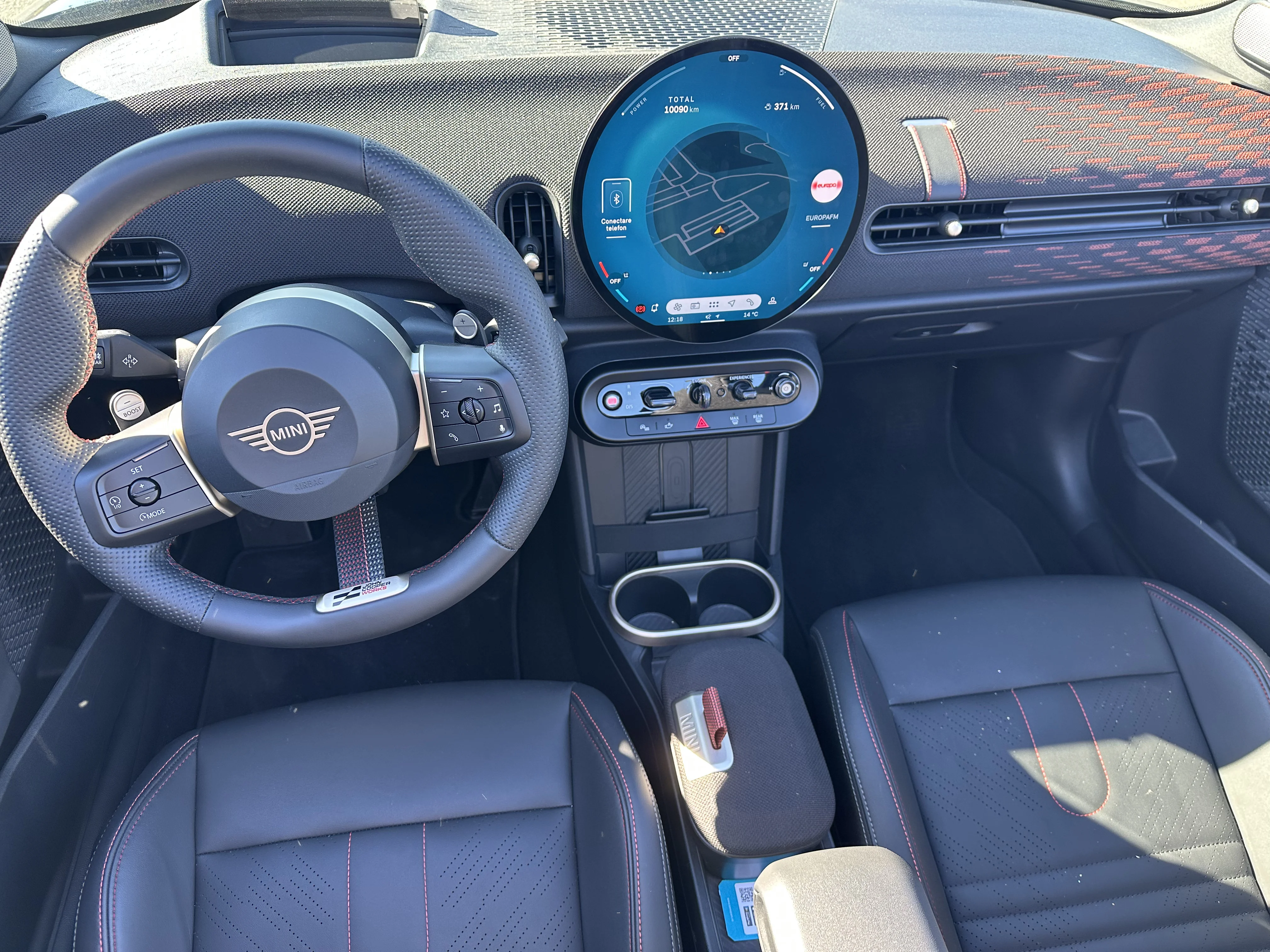
Four seats are offered, but the rear is tight for long trips. “Charismatic Simplicity” drives a minimalist, textile-heavy cabin. New 2D-knit dashboard textile, two-tone black-blue weave, Vescin vegan leather seats (grey or black) with houndstooth perforation, recycled polyester knit on cockpit surfaces.
Trim lines: Classic (dark accents, sport wheel with silver stitching), Exclusive (Vibrant Silver details), Sport (JCW black-red). Ambient lighting is configurable.
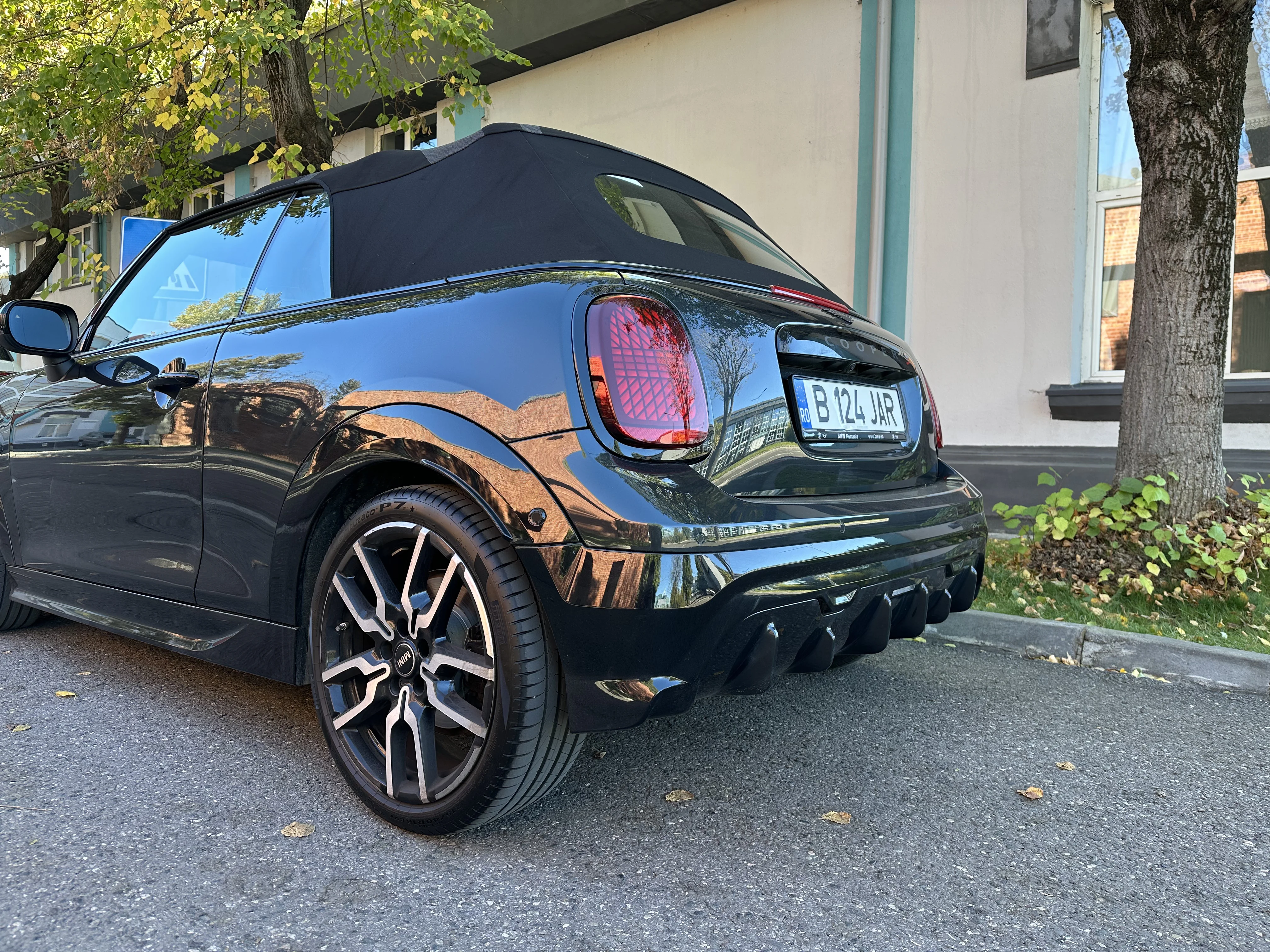
Boot 160–215 litres depending on roof; Easy Load widens the opening; 50/50 rear split expands capacity to 665 litres folded. Union Jack rear lights and colours such as Chili Red, British Racing Green and Midnight Black remain on the menu.
Tech and infotainment
A 9.4-inch (240 mm) circular OLED screen — claimed as the first fully functional circular automotive display — runs MINI OS 9 with touch and voice control. Seven experience modes alter powertrain response and cabin mood: Core, Go-Kart (sharper throttle, firmer steering, g-force readouts), Green (efficiency coaching), Vivid, Timeless, Balance and Personal (custom photos via the Mini app).
Optional head-up display projects speed, limits and nav cues; tapping the speed readout can switch the OLED to a classic Mini speedo layout. Wireless Apple CarPlay and Android Auto; Digital Key Plus uses the phone as a key.
Driving Assistant Plus covers adaptive cruise with stop-and-go, lane keeping to 180 km/h and speed-limit display. Parking Assistant Plus adds automated park, reversing assistant, Surround View 3D and Remote 3D View with twelve ultrasonic sensors and four cameras.
Dynamics
Go-kart feel remains the selling point, with caveats. The DCT shows slight turbo lag in Core; Go-Kart mode tightens throttle mapping and holds ratios longer. Frequency-selective mechanical dampers (since 2021) give excellent body control in bends but feel firm on broken surfaces; short travel shows on potholes.
Torque steer appears under hard acceleration — 300 Nm in a short front-drive cabrio — manageable once speed builds. No standard paddles; Sport pack or JCW paddles help, or “L” on the selector for a sportier shift map.
Prices and rivals
Base Cooper Cabrio from €29,900; Cooper S at €32,900 — below BMW Z4, above Mazda MX-5. Standard kit includes infotainment, automatic climate and lane/park assist. Our Iconic XL test car totalled €46,011 with electric front seats, augmented-reality navigation and full driver assistance.
Rivals: Mazda MX-5 (sportier, less practical), Abarth 124 Spider, BMW Z4 (pricier). Mini is the only four-seat option here, though rear space is tight; MX-5 boot is about 130 litres versus Mini’s 160 litres minimum.
Distinct character, tech and equipment support the price; slower depreciation than some rivals helps resale. Space is the main compromise.
Conclusion
The Cooper S offers a solid technical package from €32,900, competitive in the premium compact convertible class. The 18-second roof up to 30 km/h is the headline feature. The 2.0-litre 204 hp engine delivers 6.9 s to 100 km/h and 6.6 l/100 km mixed official consumption for feasible daily use. Go-Kart mode masks standard-mode turbo lag. The 9.4-inch circular OLED and seven experience modes personalize the cabin; missing standard paddles frustrate keen drivers. Rear seats and 160–215-litre boot limit family use — the car suits couples or frequent two-up travel. At €46,011 the tested Iconic XL is expensive, but resale and brand character can justify it for style-led buyers who accept firm suspension.
Key takeaways
- Roof: 18 seconds, usable on the move to 30 km/h
- Performance: 2.0 turbo, 204 hp, 0–100 km/h in 6.9 s
- Tech: 9.4-inch circular OLED, seven experience modes
- Compromises: small boot (160–215 l), rear seats for short trips only
- Pricing: from €32,900 for Cooper S with strong equipment and resale