Mercedes-Benz seems to have understood that in 2026 it is no longer enough to drop a large battery into an SUV, add a few hundred horsepower and call it electric. Customers now expect genuine range, fast charging, space, comfort and — in the premium band — the feeling they get something extra for the money paid.
The new Mercedes-Benz GLB 350 4MATIC with EQ technology tries to deliver all of that.
After time at the wheel, the most important point is that it does not feel like an improved EQB. It feels like a new car.
The version we tested has 354 hp, 4MATIC all-wheel drive, 85 kWh usable battery and 579 km official range. It reaches 100 km/h from rest in 5.5 seconds and can do 210 km/h.
On paper that sounds almost like a performance electric SUV.
At the wheel, though, the GLB has other priorities.
It does not try to impress at every traffic light
The first serious acceleration shows immediately that the 354 hp are real.
GLB 350 4MATIC leaves decisively and keeps pulling hard beyond urban speeds. Overtakes finish quickly and joining the motorway never feels underpowered.
But Mercedes has not calibrated the car like an electric that wants to rearrange your organs every time you touch the throttle.
Power delivery is progressive.
You can drive very calmly through town without exaggerated pedal reactions, and when you need full power a firmer push is enough.
That seems the right choice for the car’s character.
The GLB is not an AMG electric and does not pretend to be. It is a very fast family SUV.
The difference seems minor, but in daily use it matters.
2.3 tonnes do not vanish, but they do not constantly annoy either
The test car weighed 2,280 kg.
That is a lot.
However well the chassis is tuned, you cannot completely erase almost 2.3 tonnes on a road with many direction changes.
The GLB is not the car you buy to attack mountain passes in a sporty rhythm.
It does not have to be.
Steering is precise enough, all-wheel drive adds confidence and the low-mounted battery keeps the centre of gravity under control. The car changes direction predictably and does not surprise when you enter a corner a little faster.
Its real quality appears when you slow the pace.
GLB 350 4MATIC is quiet, refined and very easy to drive.
In everyday traffic those are probably the traits you will appreciate far more often than cornering limits.
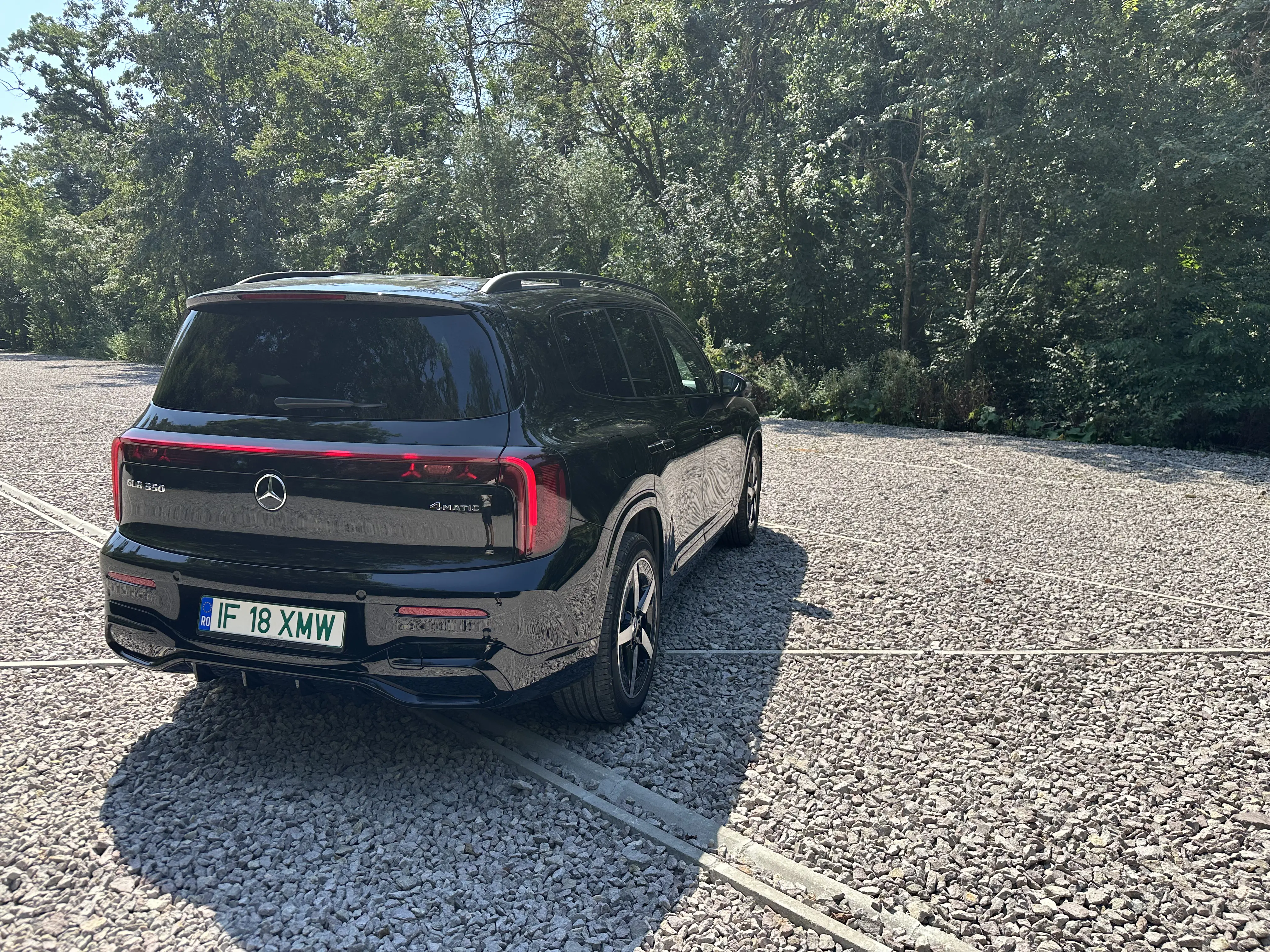
Comfort is one of its strongest arguments
Some electrics feel built around acceleration figures; others are built around people who will sit in them for hours.
The GLB belongs in the second group.
The comfort suspension on our test car filters most bumps well and, even when mass shows on short undulations, Mercedes does not seem to have sacrificed comfort just to claim a sporty character.
On long journeys that approach makes more sense.
You get a good driving position, SUV-appropriate visibility, comfortable seats and low cabin noise.
The front acoustic and thermal glazing on our configuration also adds to the premium feel.
It is the kind of car where after a few dozen kilometres you forget it has 354 hp.
For a Mercedes aimed at families, that is a compliment.
579 km range changes the conversation
The previous Mercedes electric SUV generation could convince in town, but long trips needed more planning.
The new GLB starts from a much better base.
The test car’s battery has 85 kWh usable capacity and 579 km official range, with declared consumption of about 17 kWh/100 km.
Obviously 579 km does not mean you will see that distance in every situation.
On the motorway, in winter or fully loaded, range will drop. In town and on national roads, in good conditions, you can get much closer to the official figure.
What matters is the shift in perspective.
You no longer feel every trip must be organised around the battery.
For an owner in Bucharest, for example, usual runs towards Brașov, Constanța or similar destinations no longer feel like a permanent percentage calculation exercise.
And when you do need to charge, the GLB has another important advantage.
800 volts and up to 320 kW: probably the biggest change
If I had to pick one technical element that most clearly separates the new GLB from the previous generation, I would not choose power or range.
I would choose 800 V architecture.
The GLB can DC charge at up to 320 kW in suitable conditions.
That means on a compatible fast charger with the battery prepared correctly, a charging stop starts to resemble a normal coffee break.
For anyone using an electric on long journeys, that may matter more than the difference between 550 and 580 km WLTP.
Our test car also had a 22 kW AC charger plus the hardware needed for 400 V DC infrastructure.
Those are two technical items I would take very seriously when configuring the car — especially if the GLB will be the family’s only vehicle.
Inside, Mercedes goes all-in on screens
Open the door and you enter a Mercedes of the new era.
Our configuration had MBUX Superscreen and the dashboard is dominated by displays, ambient lighting and decorative surfaces that try to turn technology into the main design element.
It is spectacular.
Especially at night.
Our car also had head-up display, Burmester 3D Surround audio, panoramic roof, MBUX navigation, 5G connectivity, wireless phone charging and Apple CarPlay and Android Auto.
There is even a selfie and video camera and facial recognition.
Mercedes clearly wants to turn the car into a digital device on wheels.
Sometimes that works very well.
Sometimes you conclude a physical button would have been faster.
That is probably one of the most debated aspects of the new Mercedes generation: the technology is impressive, but not every function automatically improves because it moved to a screen.
After a few hours you adapt, but I would have liked some everyday operations to stay simpler.
AMG Line makes it look more expensive than it is
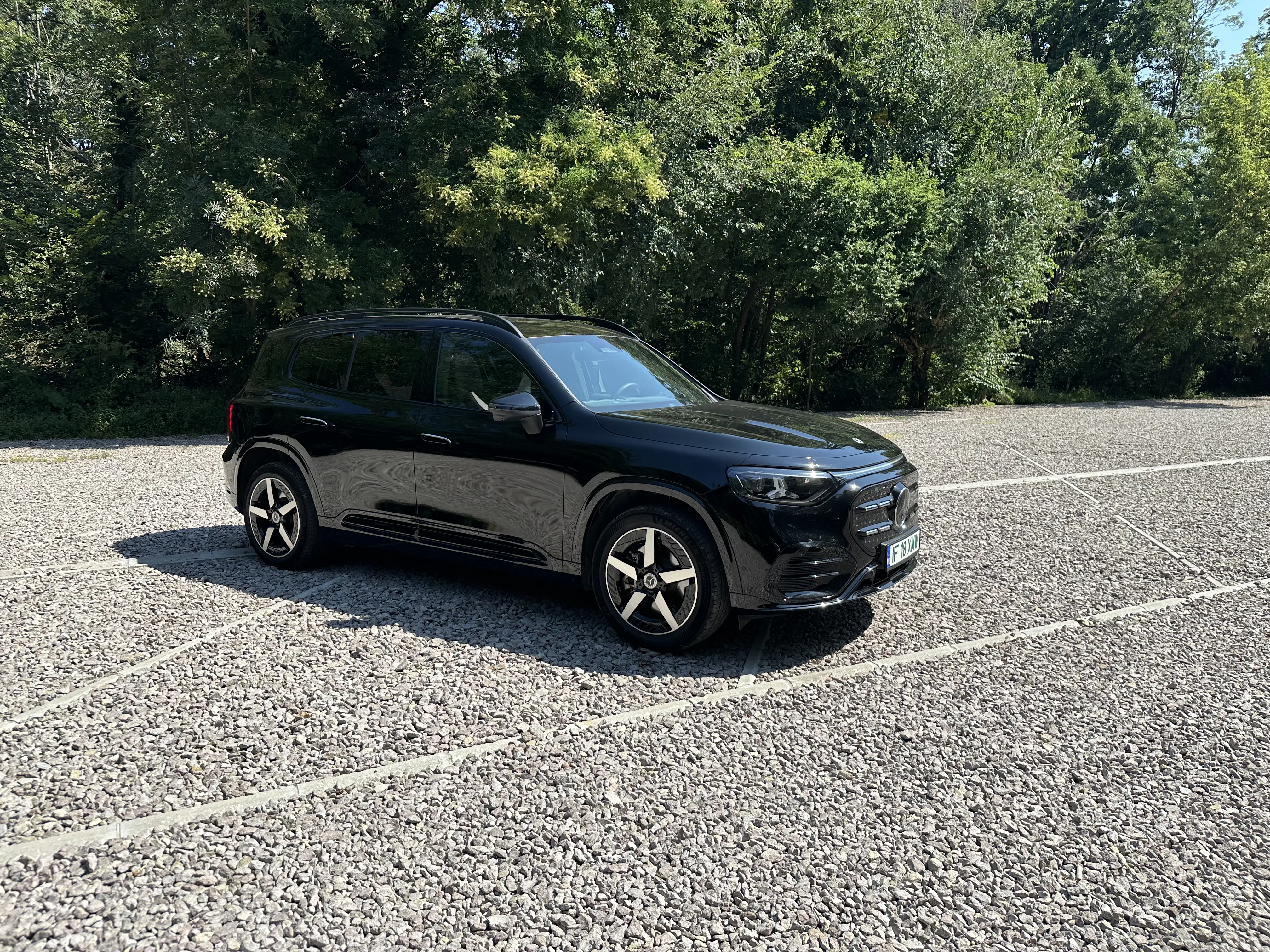
The GLB is not spectacular in the traditional sense.
It does not have the dramatic proportions of a coupé and does not try to look aggressive.
It remains fairly square, and that suits it.
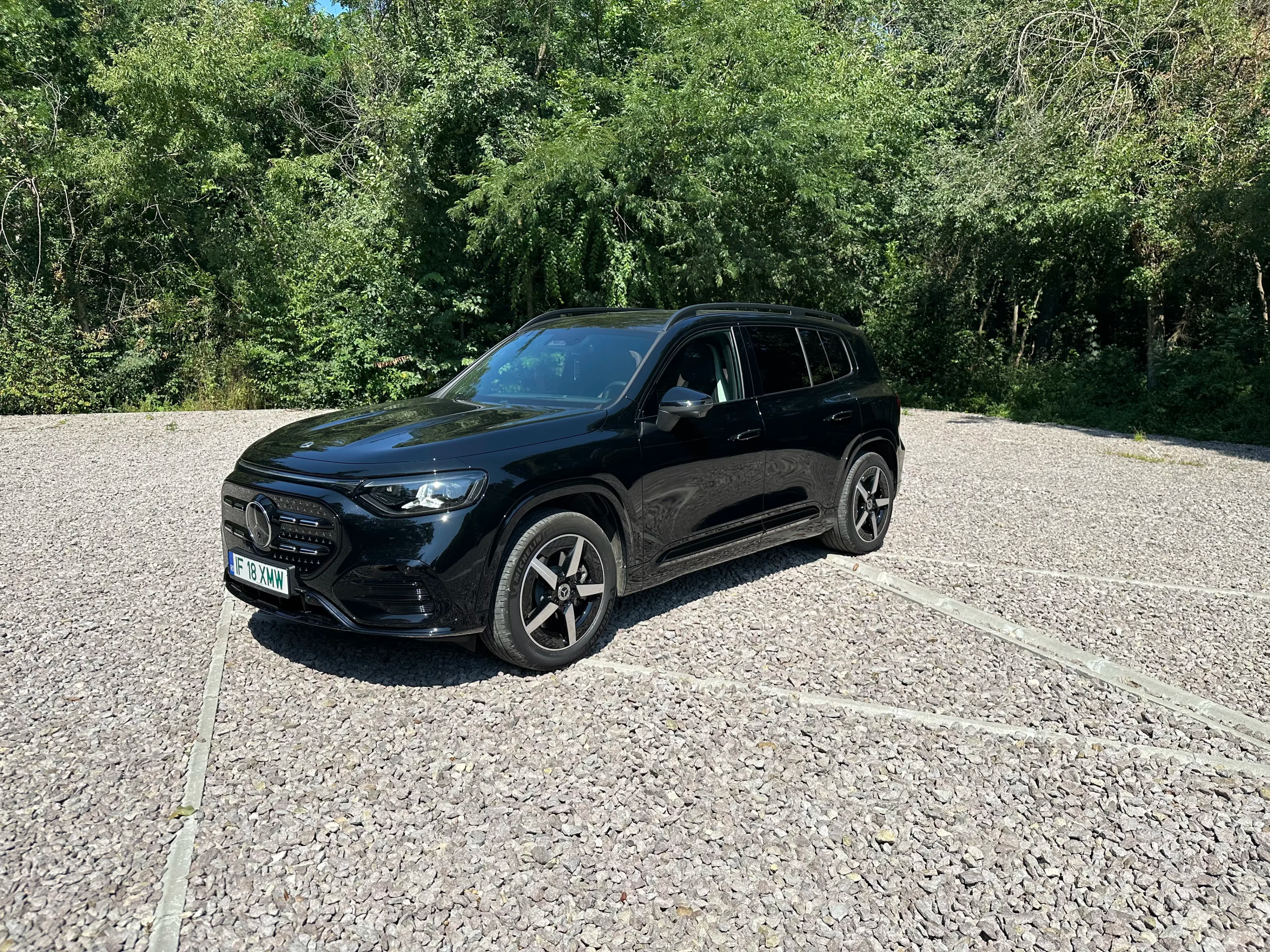
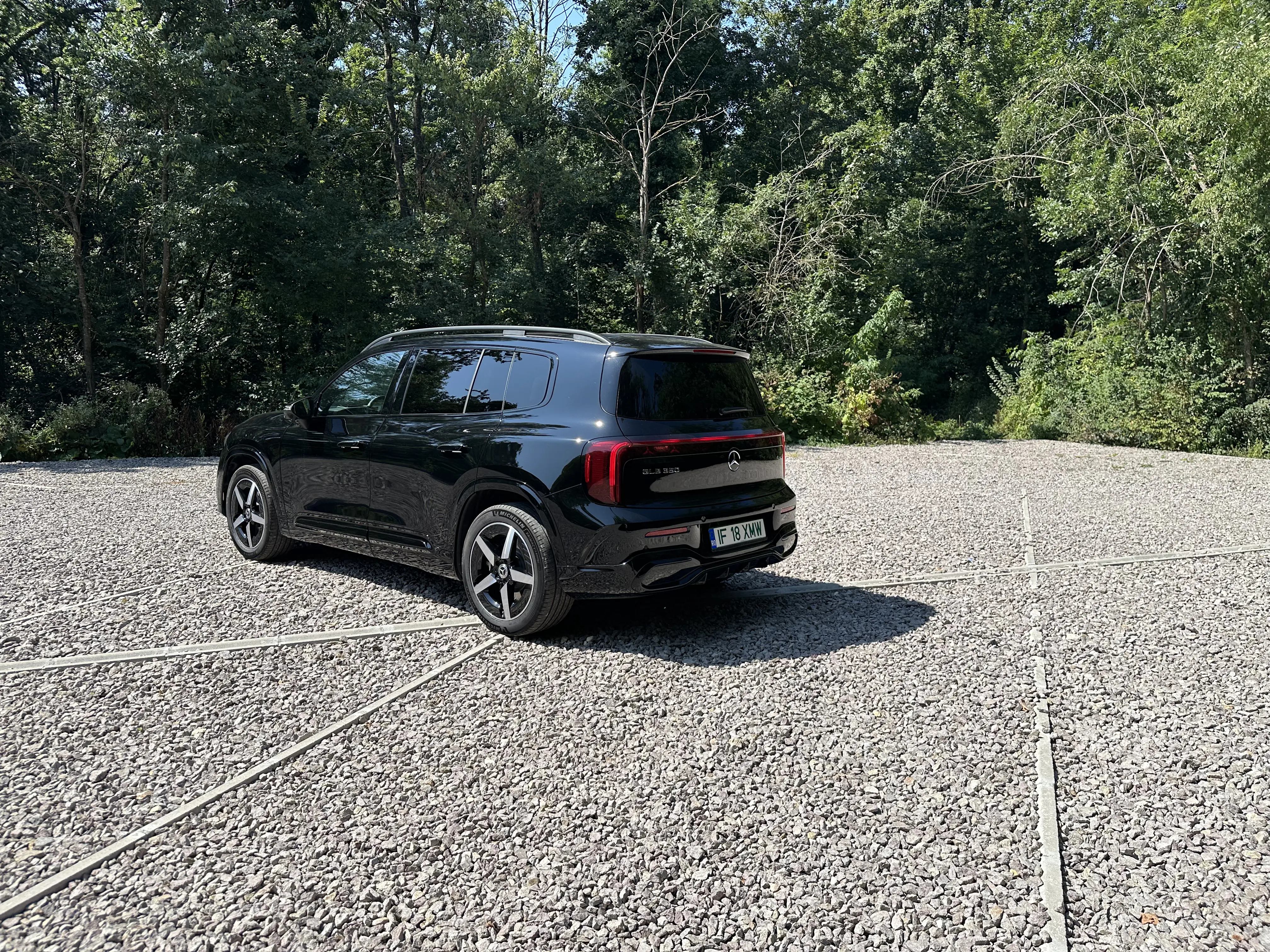
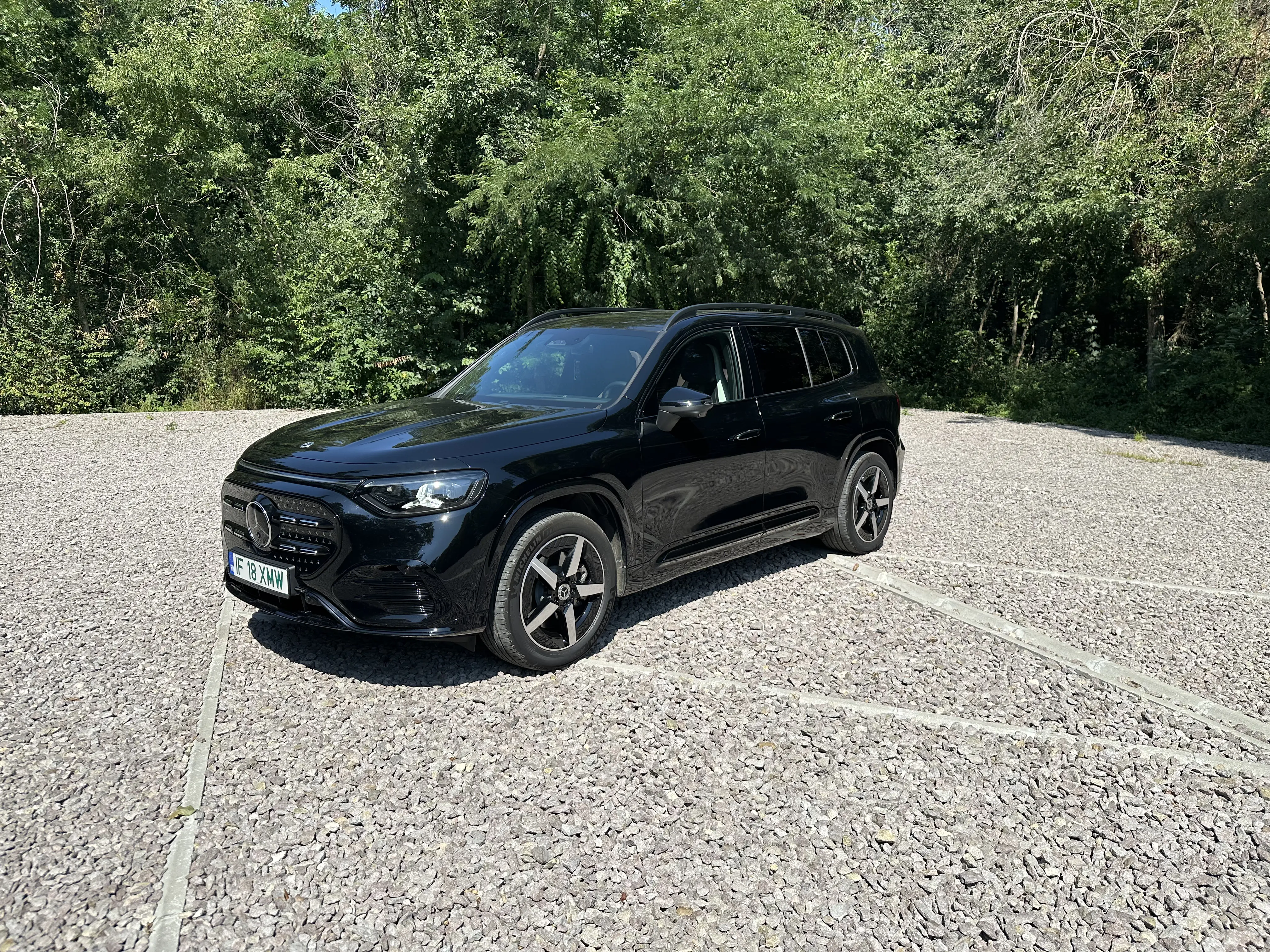
Our test configuration had AMG Line, Night Package, 19-inch AMG wheels and sport seats, and the combination changes the car’s presence quite a lot.
Nocturn black paint and Night Package elements give a more serious look and the 19-inch wheels are large enough to complete the design without wrecking comfort.
I also like that Mercedes did not sacrifice practical shape purely for aerodynamics.
The GLB still looks like an SUV.
More importantly, it behaves like one when you start using it with the family.
Here the GLB starts to make more sense than many premium electrics
Our test car had five seats, but one of the strengths of the new generation is how interior space was used.
The 2,889 mm wheelbase helps a lot in the rear and the bench can be adjusted longitudinally.
That is the kind of detail that seems minor in a configurator but becomes very useful with children, luggage, a pushchair or a holiday departure.
You can choose more rear leg room or more boot space.
The new GLB also has a frunk under the bonnet.
You can store charging cables and other items there instead of stacking them on top of luggage in the main boot.
Small practical decisions that, together, matter more in a family car than another 20 hp.
Mercedes-Benz GLB 350 4MATIC is not cheap
That brings us to the harder part.
The car we tested cost €74,543.80 incl. VAT.
The base price listed in the configuration is about €49,826 excl. VAT, but the options list pushes the total up quickly.
Our car had Premium Plus Package, AMG Line, Night Package, 360-degree parking camera, 22 kW AC charger, 400 V DC charging compatibility, winter pack and many other items.
Premium Plus alone adds a significant sum but includes much of what makes the interior feel special: panoramic roof, Superscreen, Burmester, head-up display and Memory package.
At nearly €75,000, however, you are not buying just a GLB.
You enter a zone with many very good electric SUVs.
Some are larger.
Some are faster.
Some offer even more range.
So Mercedes must win on the combination, not a single number.
And that is where the GLB is convincing.
Is 350 4MATIC the version I would buy?
It depends.
The 354 hp are very pleasant and all-wheel drive is a real advantage in rain, snow or on low-grip roads.
But I am not convinced everyone needs this version.
For a buyer who mainly uses the car in town and on the motorway, a single-motor version may be the more rational choice.
You lose power but will probably get better range and pay less.
GLB 350 4MATIC makes sense if you want the version with few compromises: performance, all-wheel drive, large battery and the ability to go quickly in almost any situation.
It is the emotional choice in a range that remains very rational.
The new GLB makes the old EQB feel much older than it is
Perhaps this model’s biggest achievement is how quickly it makes you forget the EQB.
Not because the old car was necessarily bad.
But because the technology gap is very large.
You get an 85 kWh battery.
You get almost 580 km official range in this configuration.
You get 800 V.
You get charging at up to 320 kW.
You get a completely redesigned interior.
You get more technology and a platform that feels designed from the start for an electric car.
The EQB sometimes felt like a Mercedes SUV converted to electric drive.
The new GLB feels like the opposite.
It is an electric SUV from the outset, with everything that made the GLB popular built on top: practical shape, generous cabin and family orientation.
Verdict
After testing the Mercedes-Benz GLB 350 4MATIC, we were left with the impression that Mercedes has finally found the right formula for its compact family electric SUV.
It is not the sportiest electric SUV.
It is not the cheapest.
And it is certainly not a car you buy for simplicity.
But it does a lot of things well.
It is fast without being tiring. Comfortable without becoming inert. It has enough space to work as a family car and enough range that long journeys no longer feel like a permanent problem.
And 800 V architecture with charging at up to 320 kW fixes one of the previous generation’s biggest weaknesses.
The 354 hp are almost a bonus.
The real evolution is that the electric GLB has become a car you can buy for all the other reasons you would buy a Mercedes SUV.
At €74,543.80 for the tested configuration, the price remains hard to ignore.
But for the first time the electric GLB also has the technical arguments to justify it.
Mercedes-Benz GLB 350 4MATIC is no longer simply the electric alternative in the range. It is probably the GLB version that best shows where Mercedes-Benz is heading.
Frequently asked questions about the Mercedes-Benz GLB 350 4MATIC electric
How much power does the Mercedes-Benz GLB 350 4MATIC have?
Mercedes-Benz GLB 350 4MATIC electric develops 354 hp (260 kW) and uses two electric motors for all-wheel drive.
What battery does the Mercedes-Benz GLB 350 4MATIC have?
The tested version has a battery with 85 kWh usable capacity.
What range does the new Mercedes-Benz GLB 350 4MATIC have?
The tested configuration has 579 km official range. Real-world range varies with temperature, speed, route, climate control and driving style.
How fast is the Mercedes-Benz GLB 350 4MATIC?
The electric SUV accelerates from 0 to 100 km/h in 5.5 seconds and has a top speed of 210 km/h.
How quickly does the Mercedes-Benz GLB electric charge?
The new generation uses 800 V electrical architecture and maximum DC fast-charging power can reach about 320 kW in optimal conditions at a compatible station.
How much did the tested Mercedes-Benz GLB 350 4MATIC cost?
The tested car, equipped with AMG Line, Premium Plus Package, Night Package and numerous other items, was priced at €74,543.80 incl. VAT.
Is the Mercedes-Benz GLB electric available with seven seats?
The new GLB generation can also be offered in seven-seat configurations. Our test car was the five-seat version.