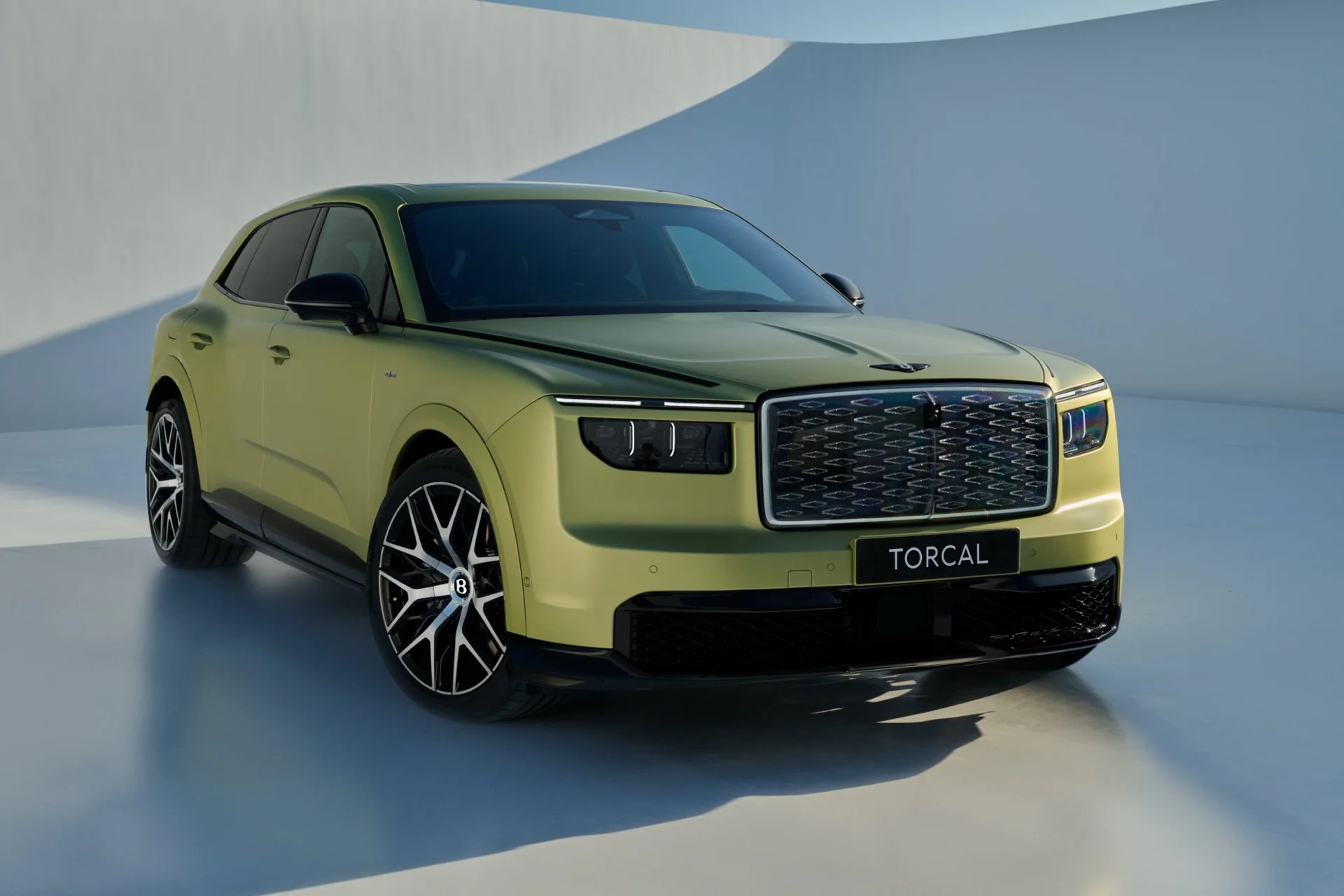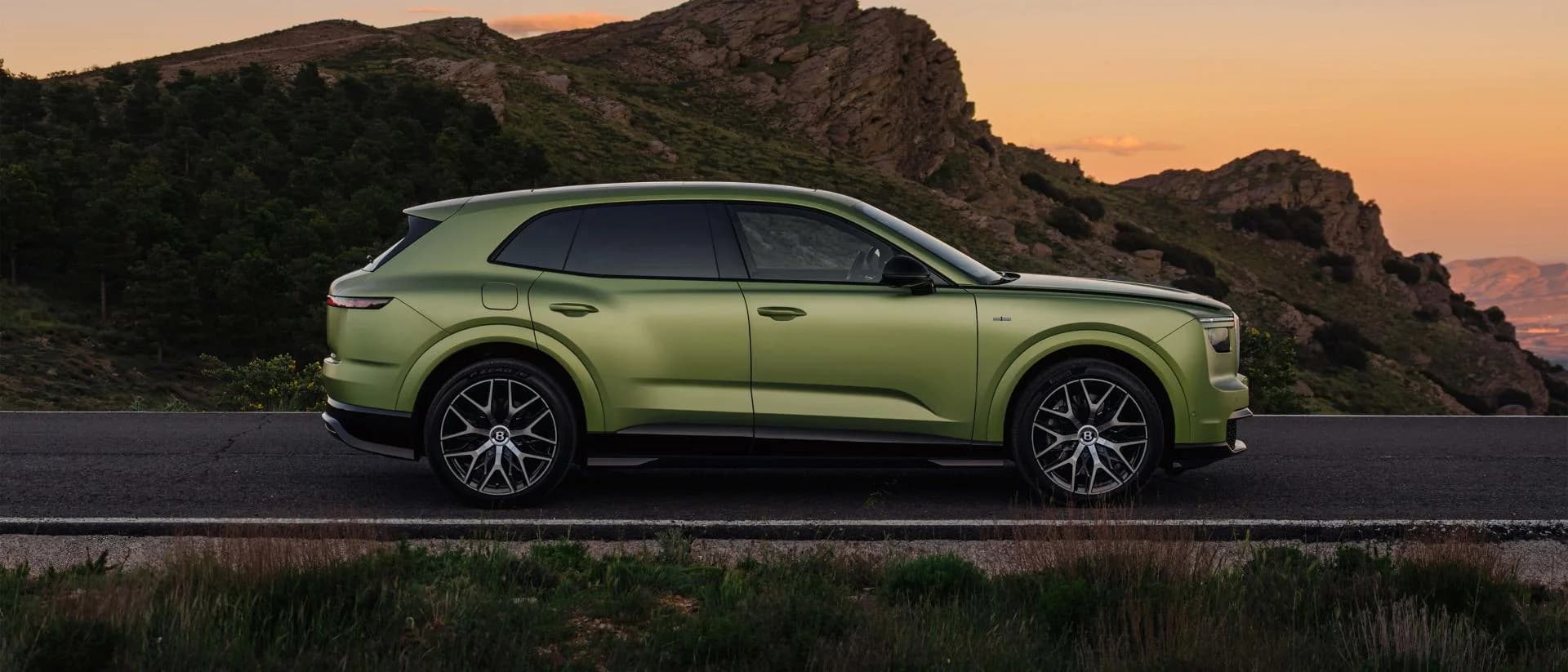
Official Bentley Motors image. Existing press photograph reused for editorial coverage; rights remain with the owner.
Bentley Torcal rejects the front-passenger screen trend
The Bentley Torcal will not offer a dashboard display dedicated to the front passenger. That absence is deliberate. Product Line Director Martin Page said during a media presentation at Bentley's Crewe headquarters that the company had examined the idea and rejected it because technology should contribute something useful instead of taking over the experience, according to Motor1's report.
Page's comments concern one particular device: the screen installed in front of the person sitting beside the driver. The Torcal still has a digital instrument cluster and a curved central display, so this is not a rejection of software, connectivity or touch interfaces as a whole. Bentley has instead left the passenger-side dashboard available for wood veneer, aluminium or carbon fibre, depending on specification.
Discussed during development, rejected for production
Bentley's team considered a passenger display while developing the Torcal. Page characterised it as a feature looking for a problem and said it did not fit the brand's human-focused approach. He left open the possibility that such a screen might make more sense once cars become autonomous, but that is a future scenario rather than a capability promised for the Torcal.
The decision separates Bentley from several other premium manufacturers. It also creates a clear contrast inside the Volkswagen Group. Porsche's Cayenne Electric offers an optional 14.9-inch front-passenger display for entertainment, app operation and video streaming. Porsche says its system can operate while the car is moving without distracting the driver. Bentley uses the passenger side for a continuous material surface even though the Torcal and Cayenne Electric both employ prominent curved central screens.
Those choices answer different usage assumptions. A passenger who regularly joins long trips may value an independent interface for route input, media and streaming. A car that normally carries only its driver may spend most of its life with the extra display switched off. The component also adds software, controls and another feature that a retailer must explain at handover. Bentley has decided that the likely benefit does not justify making that hardware part of the Torcal cabin.
Owner research questions the value of a second dashboard screen
The brand's position is consistent with concerns already recorded in US owner research. The 2024 J.D. Power U.S. Tech Experience Index Study described passenger displays as unnecessary in the view of many owners. Only 10 per cent of vehicles in that study carried a front-seat passenger every day. J.D. Power also noted that a second display made vehicle delivery more complex because dealers already had to teach customers how to use the primary infotainment system.
That 2024 study was based on responses from 81,926 owners of new 2024-model-year vehicles after 90 days of ownership. Its findings apply to the United States, not automatically to European buyers. They nevertheless show why installation rates alone do not establish that a feature is valuable. A large display can be obvious in a showroom while its everyday use remains limited by how often the seat is occupied and whether the passenger prefers a familiar phone or tablet.
Motor1 also reports newer J.D. Power figures saying that 35 per cent of owners whose cars have a passenger display have never tried it, with 21.3 reported problems per 100 equipped vehicles. The article does not turn those figures into a universal verdict, and neither should buyers. In J.D. Power studies, a reported problem can include usability and comprehension as well as a hardware fault. Market, sample and survey timing also matter.
The useful question is therefore not how many screens a cabin contains, but which tasks each screen performs better than the alternatives. Separate route control could help a passenger on a complex journey. Video streaming could occupy someone on a long motorway trip. For short journeys or solo use, both tasks can be irrelevant. Bentley is making that judgement on behalf of Torcal customers instead of putting the decision on the options list.
The Torcal is digital, but it can reduce digital noise
Bentley's official material describes a cabin built around its Curation Engine. The system coordinates lighting, sound, climate, air quality and digital information through four settings: Bentley, Comfort, Sport and Refresh. Comfort Mode includes a digital-detox setting that reduces the flow of information. This is a more precise description of Bentley's policy than saying the company is simply anti-screen.
The Torcal also retains physical controls for frequently used functions. Graphic information still belongs on the central display, while direct adjustments can remain available without several menu steps. Whether that balance works well will require time in a production car; for now, the manufacturer has explained the design intent rather than supplied independent ergonomic test results.
There is a precedent elsewhere in the range. The optional Bentley Rotating Display allows a driver to choose between a 12.3-inch high-resolution touchscreen, three analogue instruments and a full veneer surface. The mechanism does not remove modern infotainment. It lets the owner conceal it when it is not wanted. The Torcal uses different hardware, but the preference for combining physical materials with selective digital content is familiar.
Bentley's official Torcal design material goes further by explaining that its display graphics use imagery derived from real hand-cut crystal objects. The company worked with Cumbria Crystal, filmed light passing through the pieces and used that footage to build a visual signature. That detail reinforces the same proposition: digital content remains important, but it is supposed to support the material and visual character of the cabin rather than fill every available panel.
Rear-seat screens remain a different case
Page's statement should not be read as a ban on every passenger-facing display. Bentley offers a Touchscreen Remote in the Flying Spur Mulliner so rear occupants can inspect trip information, adjust seats and operate audio functions. Bentley Rear Entertainment can stream content from mobile devices to 10-inch high-resolution screens.
The distinction is functional. A rear passenger cannot comfortably reach the central screen, particularly in a chauffeur-driven saloon. A front passenger sits beside it and can also use a personal device. Bentley therefore sees a stronger case for rear controls and entertainment than for another panel across the front fascia.
For buyers comparing the Torcal with the Cayenne Electric or other screen-heavy luxury SUVs, the consequence is clear before an order is placed: there will be no separate front-passenger display to specify. The central interface, physical controls and connected features remain, but the empty dashboard area becomes a place for visible material rather than another application surface. Equipment and connected-service availability may still vary by country, and Bentley has not yet released every market-specific Torcal configuration.
Sources
- Bentley Motors — Torcal cabin atmosphere and Curation Engine modes
- Bentley Motors — Torcal diamond design and digital graphics
- Bentley Motors — technology and the Bentley Rotating Display
- Bentley Motors — Flying Spur Mulliner passenger controls and rear entertainment
- Porsche Newsroom — Cayenne Electric interior and optional passenger display
- J.D. Power — 2024 U.S. Tech Experience Index Study